When stains threaten your favorite fabrics, it’s essential to act quickly. Use natural solutions like baking soda for grease, white vinegar for coffee, and hydrogen peroxide for protein stains. Blot gently with a cloth to avoid spreading. Always test on a hidden area first. With some techniques for specific stains and tips on prevention, you can keep your fabrics looking fresh. Keep exploring for even more effective stain removal strategies and solutions.
Ground Rules for Dealing With Stains
When it comes to tackling stains, acting quickly is essential; the sooner you address them, the better your chances of removal.
Start by identifying the stain type and choose an appropriate cleaning solution. For common stains, mix ¼ teaspoon of dishwashing liquid with 1 cup of lukewarm water.
Before applying any stain remover, always test it on a small, inconspicuous area of the fabric to prevent damage.
When you’re ready to remove the stain, use a white microfiber cloth or paper towel to absorb stains without transferring dye.
Remember to blot stains gently instead of rubbing, as this prevents spreading and protects the fibers. Additionally, consider using natural cleaning solutions like baking soda for effective stain removal, as it acts as a gentle abrasive and neutralizes odors.
Follow these ground rules for effective fabric care and successful stain removal.
Essential Stain-Removal Products
To effectively tackle tough stains, you’ll want to equip yourself with a few essential stain-removal products. These items will help you address various stubborn stains, from protein-based spills to greasy marks.
Equip yourself with essential stain-removal products to tackle tough stains, from protein spills to greasy marks effectively.
- Enzyme-based cleaners: Perfect for breaking down protein-based stains like blood and food.
- Baking soda: Create a paste to absorb oil-based stains on fabrics and carpets.
- White vinegar: This double-duty solution neutralizes odors and breaks down stains, especially for coffee and tea marks.
Combine these with liquid laundry detergent or dish soap for a thorough approach to stain removal. Utilizing natural ingredients in your cleaning routine can provide an eco-conscious method for maintaining your fabrics.
While commercial stain removers target specific stains effectively, these natural cleaning solutions can enhance your stain-fighting arsenal!
Techniques for Specific Stain Types
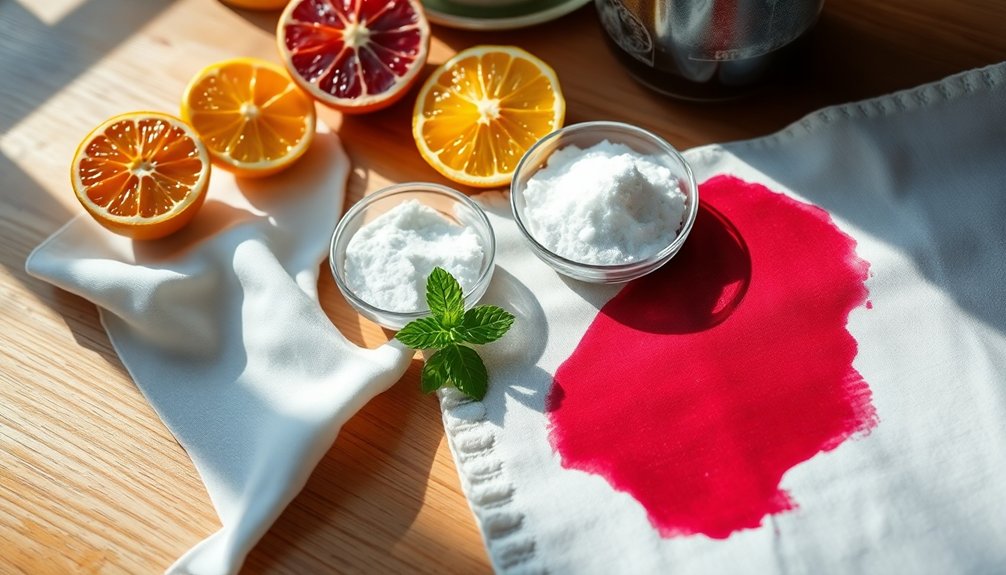
When you’re faced with stubborn stains like coffee, grease, or red wine, knowing the right techniques can save your clothes.
Each type of stain requires a specific approach to guarantee effective removal, whether it’s flushing with cold water or applying vinegar. Proper stain removal techniques can significantly enhance the efficiency of your cleaning efforts.
Let’s explore the best methods for tackling these common culprits.
Coffee and Wine Removal
Coffee and wine stains can be particularly stubborn, but with the right techniques, you can tackle them effectively.
- For coffee stains on washable fabrics, flush the stained area with cold water from the backside and apply a mixture of dish soap and vinegar.
- For wine stains on carpets, blot the stain first, then use hydrogen peroxide and dish soap, gently blotting until the stain is gone.
- Always test cleaning products on an inconspicuous area first to avoid damage.
Remember to use the blotting technique instead of rubbing to prevent spreading.
After treating both stains, rinse the fabric thoroughly and consider using an enzymatic laundry pretreatment to enhance the stain removal process.
Grease and Oil Solutions
Stains from grease and oil can be just as frustrating as those from coffee and wine, often requiring swift action to prevent them from becoming permanent.
Start by blotting excess oil with paper towels to remove as much as possible. For grease stains, apply a baking soda paste or dish soap solution to absorb and break down the stain.
If you’re dealing with washable fabrics, use a mix of enzymatic laundry pretreat and laundry detergent, letting it sit for 5-10 minutes before laundering in cold water. Avoid hot water or dryers, as they can set oil stains, making removal tougher.
For upholstery, use an upholstery cleaner after blotting, repeating until the stain lifts to prevent residue buildup.
Blood and Protein Stains
If you act quickly, blood and protein stains can often be removed before they set. Start by treating fresh blood stains with cold water. Flush the area, apply an enzymatic laundry pretreatment, and wash according to the fabric care instructions.
For dried blood stains, soak the fabric in cold water, then use a mix of water and laundry detergent before laundering as usual.
- Gently blot stains on upholstery with a damp cloth.
- Avoid rubbing to protect the fibers.
- Always test cleaning solutions on inconspicuous areas first.
Natural Solutions for Common Stains
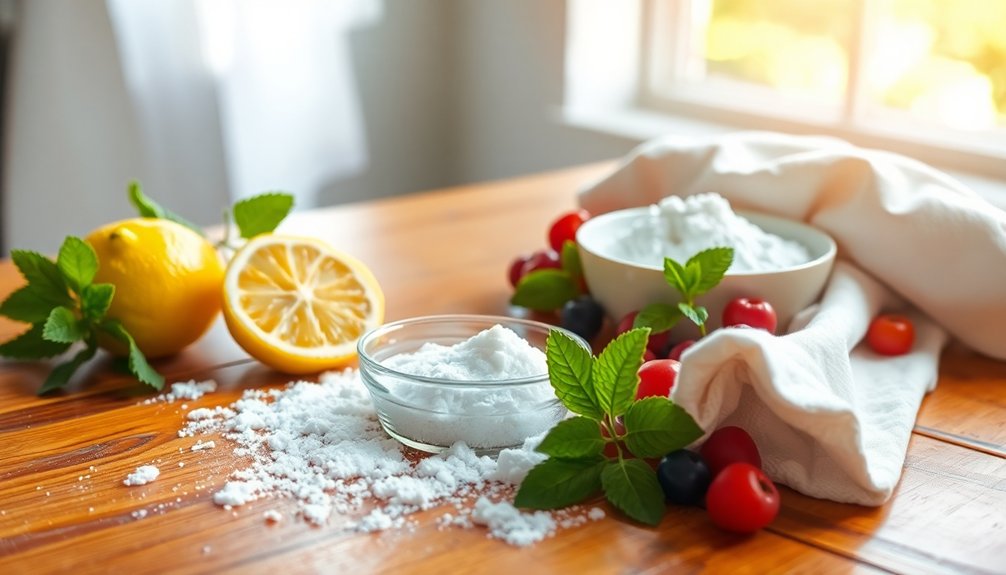
When tackling pesky stains, natural solutions can be surprisingly effective and gentle on fabrics.
For fresh grease stains, sprinkle baking soda or cornstarch on the area, let it sit for 30 minutes, then brush off.
To combat coffee stains, mix equal parts white vinegar and water, apply to the stain, and blot with a clean cloth.
Mix equal parts white vinegar and water to effectively treat coffee stains; simply apply and blot with a clean cloth.
Wine stains respond well to the same vinegar solution.
If you’re dealing with protein stains like blood or sweat, use hydrogen peroxide directly on the stain, let it bubble, and rinse thoroughly.
For white fabrics, lemon juice acts as a natural stain remover; apply directly to the stain, let it sit, and rinse with cold water. Additionally, many of these natural solutions, such as baking soda, also serve as eco-friendly cleaning agents that reduce health risks linked to toxic chemicals.
Stains That Require Extra Care
When it comes to stubborn stains, you’ll need to take extra care to tackle them effectively.
Whether you’re dealing with persistent marks or delicate fabrics, understanding specialized techniques or when to call in professionals can save your items. Regular maintenance of tools ensures effective cleaning and prolongs their lifespan, making it essential to stay prepared.
Let’s explore the best troubleshooting methods and recommendations for these tricky stains.
Persistent Stains Troubleshooting
Dealing with persistent stains can be frustrating, especially if they’ve set in over time. To tackle these stubborn spots, try these effective methods:
- Pre-treat with an enzymatic stain remover to break down proteins and oils.
- Soak the fabric in a solution of equal parts white vinegar and water for 30 minutes to lift set-in stains.
- For old coffee or wine stains, apply a baking soda paste and let it sit for 20-30 minutes.
For grease stains, mix dish soap and baking soda into a thick paste to help absorb oil.
Always test any cleaning solution on an inconspicuous area first, especially when working with delicate materials, to verify you don’t damage the fabric during stain removal.
Professional Cleaning Recommendations
Although you might be tempted to tackle every stain yourself, some require the expertise of professional cleaners to guarantee safe and effective removal.
Delicate fabrics like silk, wool, or cashmere need careful handling, so it’s best to consult professional cleaners for stain removal.
For stubborn stains, such as old red wine or grease, professionals use advanced cleaning solutions and specialized equipment to achieve superior results.
When dealing with extensive staining on carpets or upholstery, their tailored cleaning methods can efficiently manage multiple stains that home remedies often can’t handle.
Don’t hesitate to reach out to professionals; their knowledge and resources ensure you get the best care for your fabrics and surfaces.
Specialized Stain Removal Techniques
While professional cleaners have the expertise to handle a variety of stains, some stains still require specialized techniques for effective removal.
Here are a few methods for those tough stains:
- Oil-based stains: Blot excess, sprinkle baking soda, then apply dish soap to lift the stain.
- Red wine: Blot, apply white vinegar, then use laundry detergent before rinsing with warm water.
- Ink stains: Spot treat with detergent or vinegar, scrub with a washcloth, and rinse with hot water.
For coffee stains, soak in cold water, then apply detergent and scrub gently.
For blood stains, always start with cold water, followed by enzymatic pretreatment and detergent.
These techniques can save your stained fabric from permanent damage.
Tips for Preventing Stains
Preventing stains is easier than you might think, especially with a few simple strategies in place.
Start by using coasters and placemats to protect surfaces from potential stains caused by spills and heat. Regularly clean and maintain your fabrics and carpets to preserve their appearance and prevent stain build-up over time.
Using coasters and placemats, along with regular cleaning, helps protect surfaces and maintain the beauty of your fabrics and carpets.
Store food and drinks properly to minimize accidental spills, particularly in stain-prone areas like living rooms and kitchens. Educate yourself about stains and their sources, so you can take preventive measures before spills occur. Incorporating non-toxic cleaning solutions can also help maintain surfaces and prevent future stains.
Finally, consider applying fabric protectant sprays to your clothing and upholstery, creating a barrier that makes it harder for stains to penetrate.
When to Seek Professional Help
Even with the best preventive measures, stains can still occur, and knowing when to seek professional help can make a significant difference in restoring your items.
Here are some key situations where you should consider consulting a professional:
- When dealing with delicate items or high-value items, like silk or wool, to avoid irreversible damage.
- For persistent stains that resist your DIY stain removal efforts, as professionals use advanced tools and specialized cleaning solutions.
- If you have large or multiple stains on upholstery or carpets, where thorough cleaning is essential to prevent further damage.
- When you are unsure about the fabric cleaning codes and want to ensure the correct cleaning approach is used to avoid damaging your upholstery.
Conclusion
With these natural stain solutions at your fingertips, you’ll feel like a superhero battling the toughest messes! Remember, prevention is key, so keep your fabric protected and act quickly when stains strike. By following the tips and techniques outlined in this guide, you can tackle any stain that dares to challenge you. And if a stubborn stain persists, don’t hesitate to call in the pros – after all, your clothes deserve the best care possible!