To banish grease from your kitchen backsplash, pick a degreaser that suits your surface. Natural options like vinegar and baking soda work wonders, while commercial degreasers are effective too. Always test a small area first to avoid damage. Don’t forget to ventilate your space when cleaning, as it enhances safety and effectiveness. By maintaining a regular cleaning routine, you can keep grease at bay. Keep going to discover more tips and insights on maintaining a spotless kitchen!
Understanding the Importance of a Clean Backsplash
A sparkling clean backsplash not only enhances your kitchen’s aesthetic but also plays an essential role in maintaining hygiene.
Over time, splashes from cooking can lead to grime and bacteria buildup, compromising your kitchen hygiene. Regular backsplash maintenance is vital to prevent this.
Cooking splashes can cause grime and bacteria to accumulate, making regular backsplash maintenance essential for kitchen hygiene.
By keeping your backsplash clean, you create a healthier cooking environment and reduce the risk of foodborne illnesses. Make it a habit to wipe down your backsplash after cooking to remove any grease or stains. Using the right degreasers can simplify this task, ensuring you maintain a spotless surface. Additionally, regular cleaning can significantly reduce the need for aggressive degreasers that might damage your surfaces.
Common Causes of Grease Buildup in Kitchens
When you’re cooking, the methods you choose can considerably impact grease buildup in your kitchen.
Techniques like frying or sautéing release excess oil into the air, especially if your ventilation isn’t up to par.
Understanding these common causes can help you take proactive steps to keep your backsplash clean. Additionally, proper grease removal is essential to prevent backups and maintain a hygienic kitchen environment.
Cooking Methods Impacting Grease
Cooking methods can markedly impact grease buildup in your kitchen, as certain techniques produce more splatter and residue than others.
For instance, frying methods typically create a significant amount of grease that can settle on your backsplash and nearby surfaces. Hot oil can spatter easily, leaving behind stubborn stains that require diligent cleaning.
On the other hand, grilling techniques can also contribute to grease buildup, especially if you’re cooking fatty meats. The drippings can create a mess, even with proper grill covers.
To minimize grease accumulation, consider using alternative cooking methods like baking or steaming. These techniques tend to produce less grease, helping you maintain a cleaner kitchen environment and making it easier to keep your backsplash spotless.
Inadequate Ventilation Issues
Inadequate ventilation can greatly contribute to grease buildup in your kitchen, as it prevents smoke and steam from escaping during meal preparation.
When you cook, the moisture and particles from food linger in the air, settling on your surfaces. This not only creates a greasy mess but also negatively impacts your air quality.
Implementing ventilation improvements, like installing a range hood or opening windows, can notably help. By ensuring proper airflow, you reduce the amount of grease that settles on your backsplash and countertops.
Regularly checking and cleaning your ventilation system is essential, too.
How to Choose the Right Degreaser for Your Backsplash?
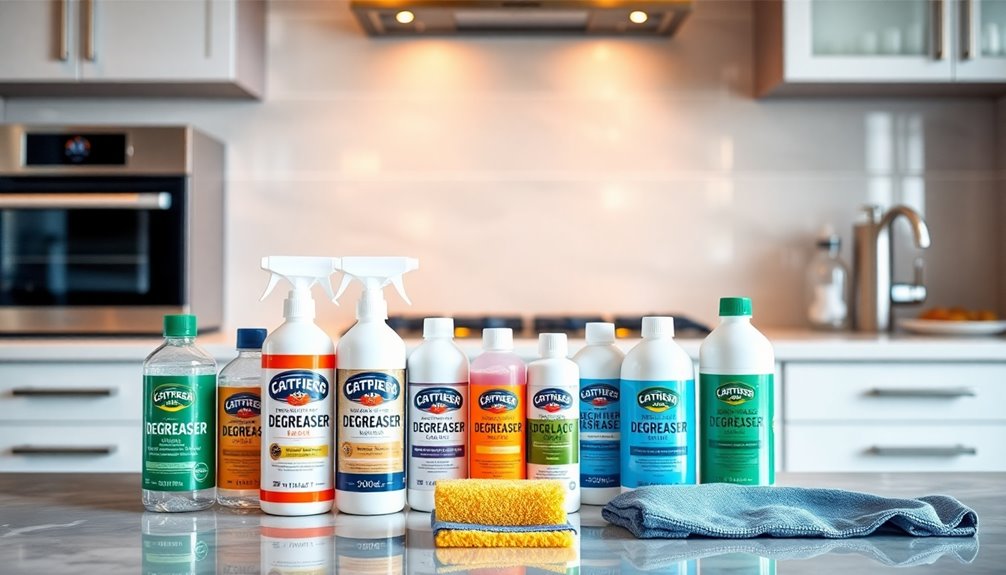
How can you guarantee you’re choosing the right degreaser for your backsplash? Start by considering grease removal effectiveness.
Look for products specifically designed to tackle kitchen grease, ensuring they can handle tough stains without damaging your surfaces.
Next, check for surface compatibility; different materials like tile, glass, or wood may require unique formulations. Always read the label to confirm that the degreaser is safe for your specific backsplash material.
If you’re unsure, test a small area first to avoid potential damage.
Additionally, consider whether you prefer a spray or a gel formula, as this can affect application ease. Remember, specific care for materials is essential to maintain the integrity of your backsplash while effectively removing grease.
Top Ingredients to Look for in Kitchen Degreasers
When it comes to choosing the best kitchen degreasers, there are several key ingredients that can make a big difference in effectiveness.
Look for products featuring:
Look for kitchen degreasers that utilize natural ingredients, enzymatic cleaners, and plant-based surfactants for effective and safe cleaning.
- Natural Ingredients: Ingredients like vinegar and baking soda aren’t only safe but also effective at breaking down grease without harsh chemicals.
- Enzymatic Cleaners: These cleaners use enzymes to break down organic material, making them particularly effective for stubborn grease and grime.
- Plant-Based Surfactants: These enhance cleaning power while being gentle on surfaces, ensuring your backsplash stays shiny and undamaged. Additionally, eco-friendly alternatives such as baking soda and vinegar can provide a non-toxic solution for maintaining a clean kitchen environment.
Comparing Natural vs. Chemical Degreasers
While both natural and chemical degreasers can effectively tackle grease, their approaches and implications differ considerably.
Natural ingredients, like vinegar and baking soda, offer a more eco-friendly option. They’re often safer for your family and pets, but may require more elbow grease and time for tough stains. Additionally, using eco-friendly products can significantly reduce your environmental impact while keeping your home clean.
On the other hand, chemical degreasers boast chemical effectiveness, breaking down grease quickly and efficiently. However, they can contain harsh substances that might irritate your skin or release strong fumes.
When choosing, consider your priorities: if you prefer a gentle, natural solution, go for those with plant-based ingredients. If speed and potency are your goals, chemical options could be your best bet.
Ultimately, it’s about finding the right balance for your cleaning needs.
The Best Degreasers for Tile Backsplashes
Here are three top degreasers that work wonders on tile backsplashes:
- Vinegar and Water Solution: Mix equal parts for a natural option that cuts through grease effectively.
- Baking Soda Paste: Combine baking soda with water for a gentle abrasive that tackles tough stains without damaging your tile.
- Commercial Degreasers: Look for products specifically designed for kitchen surfaces; they’re formulated to address common grease issues while complementing modern backsplash design trends.
Using a vinegar-water mix can also help deodorize your kitchen while cleaning, making it a versatile choice for maintaining your backsplash.
Try these solutions to keep your tile backsplash looking fresh and clean!
Recommended Degreasers for Glass Backsplashes
To keep your glass backsplash looking pristine, selecting the right degreaser is essential, as glass can show smudges and grease more prominently than other materials.
For effective glass cleaner recommendations, consider using a vinegar and water solution. It’s natural, safe, and cuts through grease effectively. Alternatively, a commercial glass cleaner specifically formulated for kitchens will work wonders, as they often contain degreasers designed for tough stains.
When cleaning, use a microfiber cloth for best results; it prevents scratches and guarantees a streak-free shine. Always spray the cleaner directly on the cloth, not the surface, to avoid oversaturation. Additionally, using eco-friendly cleaning solutions can help minimize indoor air pollution while effectively tackling grease.
Effective Solutions for Stainless Steel Backsplashes
When it comes to maintaining the sleek look of your stainless steel backsplash, using the right cleaning solutions makes all the difference.
For effective stainless steel maintenance, you need reliable degreasers that not only remove grime but also leave a polished finish. Here are three effective solutions:
- White Vinegar: Mix equal parts of vinegar and water in a spray bottle. Spray, wipe with a microfiber cloth, and watch the grease disappear.
- Baking Soda Paste: Combine baking soda and water to form a paste. Apply, let it sit for a few minutes, then scrub gently and rinse.
- Commercial Stainless Steel Cleaner: Use a specialized cleaner with polishing techniques to enhance shine and protect against streaks.
Additionally, using natural agents like vinegar not only helps cut through grime but also provides antimicrobial properties that support a cleaner environment.
With these solutions, keeping your backsplash looking pristine is a breeze!
How to Use Degreasers Safely and Effectively
How can you guarantee your cleaning routine is both safe and effective when using degreasers? Start by wearing gloves and ensuring good ventilation in your kitchen. This minimizes your exposure to harsh chemicals.
Ensure a safe and effective cleaning routine by wearing gloves and maintaining good ventilation while using degreasers.
Also, read the label carefully to understand any specific safety precautions related to the degreaser you choose.
For effective application, spray the degreaser directly on the greasy area and allow it to sit for a few minutes to break down the grime. This is crucial as the active ingredients are designed to dissolve and disperse grease efficiently.
Use a soft cloth or sponge to wipe it away, avoiding abrasive materials that could scratch your backsplash. Rinse the area with water to remove any residue.
Step-by-Step Guide: Cleaning Your Backsplash
To clean your backsplash effectively, you’ll first want to gather all the essential supplies. Having the right tools on hand makes applying your cleaning solutions much easier. Make sure to include natural cleaning methods like vinegar, which can effectively disinfect surfaces without harsh chemicals. Let’s walk through the steps to get your backsplash sparkling clean.
Gather Essential Cleaning Supplies
Gathering the right cleaning supplies is essential for effectively tackling your kitchen backsplash.
Having the right tools on hand can make the process smoother and more efficient. Here are three essential tools you’ll need:
- Degreaser: Choose a powerful degreaser specifically designed for kitchen surfaces. It’ll help break down tough grease and grime.
- Microfiber Cloths: These are perfect for wiping down surfaces without leaving lint or scratches. They’re reusable and highly absorbent.
- Scrub Brush or Sponge: Opt for a non-abrasive scrub brush or sponge to help lift stubborn stains without damaging your backsplash.
With these cleaning supplies, you’re well-equipped to tackle any greasy buildup on your backsplash and keep it looking pristine.
Apply Cleaning Solutions Effectively
Once you’ve assembled your cleaning supplies, it’s time to apply the cleaning solutions effectively to your backsplash.
Start by spraying your degreaser directly onto the greasy areas. For targeted cleaning, focus on one section at a time to avoid letting the solution dry out. Let it sit for a couple of minutes to break down stubborn grease.
Then, take a soft cloth or sponge and wipe in a circular motion, ensuring you cover all surfaces. Rinse the cloth frequently to avoid spreading grease around.
After you’ve cleaned the entire area, use a damp cloth to wipe away any residue. Finally, dry the backsplash with a clean, dry towel to restore its shine.
Enjoy your sparkling clean kitchen!
DIY Degreaser Recipes for Eco-Friendly Cleaning
If you want to keep your kitchen backsplash sparkling clean without harsh chemicals, DIY degreasers offer an eco-friendly solution.
These green cleaning methods aren’t only effective but also safe for your family and the environment. Here are three easy recipes you can try:
- Vinegar and Baking Soda: Mix equal parts of white vinegar and water, then add a tablespoon of baking soda. Spray it on the greasy areas and wipe clean.
- Lemon Juice and Olive Oil: Combine 1 cup of lemon juice with 1/2 cup of olive oil. Apply with a cloth to cut through grease naturally.
- Castile Soap Solution: Dilute a few drops of liquid Castile soap in water. Spray and scrub for a gentle yet powerful clean.
These eco alternatives will leave your backsplash gleaming!
Tips for Maintaining a Grease-Free Backsplash
Keeping your kitchen backsplash grease-free is easier than you might think. Start with preventative maintenance tips like using a splatter guard when frying or sautéing. This simple step can greatly reduce grease buildup.
If you notice stains, try alternative cleaning methods such as a mixture of vinegar and water or baking soda paste to tackle tough spots without harsh chemicals. Regularly wiping down your backsplash with a damp cloth after cooking will also help keep it clean.
Don’t wait for grease to accumulate; make these practices a part of your routine. By staying proactive, you’ll maintain a sparkling backsplash that not only looks great but also enhances your kitchen’s overall cleanliness.
How Often Should You Clean Your Kitchen Backsplash?
Regularly cleaning your kitchen backsplash is essential to maintaining its appearance and preventing grease buildup.
To establish an effective cleaning frequency for backsplash maintenance, consider the following guidelines:
- Weekly: Wipe down your backsplash with a gentle cleaner to remove minor splatters and stains, especially after cooking.
- Monthly: Perform a more thorough clean by using a degreaser, focusing on areas that tend to accumulate grime.
- Seasonally: Inspect your backsplash for any signs of wear or stubborn stains.
This is the ideal time to deep clean and refresh its look.
Addressing Stubborn Grease: Advanced Techniques
When stubborn grease clings to your kitchen backsplash, using the right advanced techniques can make a significant difference. Start by applying a degreaser designed for tough stains; let it sit for a few minutes to break down the grease.
For added effectiveness, use specialized tools like a non-abrasive scrub brush or a microfiber cloth. These tools can help lift the grease without damaging your backsplash.
For really stubborn spots, consider creating a paste with baking soda and water. Apply it directly to the grease, scrub gently, and rinse with warm water. Repeat as necessary.
Common Mistakes to Avoid When Using Degreasers
While using a degreaser can simplify your cleaning routine, there are common mistakes that can diminish its effectiveness.
Many people fall for common misconceptions that lead to poor results. Here are three mistakes to avoid when choosing cleaners:
- Not reading labels: Always check the instructions on your degreaser. Some require dilution, while others don’t.
- Using too much product: More isn’t always better. Overusing degreasers can leave residue and make it harder to rinse.
- Neglecting proper ventilation: Failing to ventilate the area can lead to inhaling harmful fumes. Open windows or turn on fans to keep the air circulating.
Conclusion
Keeping your kitchen backsplash grease-free doesn’t have to feel like a chore. With the right degreaser and a bit of regular upkeep, you can easily maintain that sparkling clean look. Imagine whipping up your favorite dish without worrying about splatters ruining your kitchen’s aesthetic. Don’t let stubborn grease linger; tackle it head-on with effective products and techniques. Your kitchen deserves to shine, and you’ll feel proud every time you step into that space!