Basement cleaning is essential for tackling dust, dampness, and disorganization. You should start by decluttering and sorting items into categories: keep, donate, or discard. Regular inspections help catch mold and moisture issues early. Maintaining humidity below 50% with a dehumidifier prevents mold growth and improves air quality. A consistent cleaning schedule keeps your basement organized and pest-free. Want to know more about effective cleaning strategies and essential tools? Stick around for some valuable tips!
Importance of Basement Cleaning and Maintenance
When you prioritize basement cleaning and maintenance, you’re not just tidying up; you’re greatly improving your home’s air quality.
Regular cleanings reduce dust, mold spores, and allergens, creating a healthier environment for you and your family. By catching moisture issues early, you can prevent mold and mildew from developing, which can lead to serious structural issues down the line.
A clean basement minimizes pest attraction, as clutter and dampness can invite unwanted rodents and insects.
Additionally, maintaining an organized space enhances your storage efficiency, allowing you to maximize available space and easily access essential items. Regular cleaning routines ensure consistent hygiene and contribute to overall household well-being, including effective germ prevention.
Step-by-Step Basement Cleaning Process
To get started on cleaning your basement, begin by decluttering and sorting your items into “keep,” “donate/sell,” and “discard” piles.
Once you’ve tackled the mess, focus on dusting surfaces and vacuuming floors to guarantee a clean space.
Don’t forget to wear protective gear and guarantee proper ventilation for your safety throughout the process. Additionally, consider implementing a 10-minute tidy-up routine to maintain your basement’s cleanliness over time.
Decluttering and Sorting Items
Starting the decluttering process can feel overwhelming, but tackling it step-by-step makes it manageable.
Begin by sorting through stored items and categorizing them into three groups: keep items, donate/sell, and discard. Use color-coded bags—black for trash, clear for donations, and paper for recycling—to streamline your organization.
Here’s a simple plan:
- Tackle small areas first to build momentum.
- Systematically sort through unwanted items.
- Measure your space and create an organizational method.
- Regularly reassess belongings to prevent future clutter.
Cleaning Surfaces and Floors
Cleaning surfaces and floors in your basement is essential for maintaining a safe and inviting space. Start by dusting all surfaces—shelves, pipes, and appliances—with damp cloths or a vacuum to keep dust from becoming airborne.
Next, vacuum the concrete floors thoroughly, focusing on corners and under furniture to remove dirt and debris. For a deeper clean, mop the floors using a cleaner made for concrete or a simple soap and water solution.
Don’t forget to wash walls and baseboards with a mild detergent to eliminate grime and stains. This thorough cleaning not only combats mold but also contributes to a healthier living environment.
With these steps, you’ll enjoy a fresher, cleaner basement!
Safety Precautions and Gear
After you’ve tackled the surfaces and floors, it’s time to prioritize safety before continuing with your basement cleaning. Here are essential safety precautions to keep in mind:
- Wear protective gear: Always use gloves, masks, and goggles to shield yourself from dust, mold spores, and harmful chemicals.
- Ensure ventilation: Open windows or use fans to improve air quality and reduce airborne contaminants while cleaning.
- Check for hazards: Before starting, inspect for potential dangers like exposed wiring or structural issues to maintain a safe environment.
- Keep a first aid kit: Having one nearby will help you quickly address any minor injuries that may occur while moving heavy items or handling cleaning supplies.
Using a vacuum with a HEPA filter can also help capture dust and allergens effectively.
Mold and Mildew Management
Since mold and mildew thrive in damp environments, managing these unwanted guests in your basement requires prompt action to identify and eliminate moisture sources.
Start by regularly inspecting for signs of mold growth, which can appear in various colors like black, green, or white. Keeping your humidity levels below 50% with a dehumidifier can greatly reduce the risk of mold spores taking hold. Proper kitchen grease cleanup is also essential to prevent moisture accumulation that can lead to mold growth.
For small surface mold, you can safely remove mold using a bleach-water solution or vinegar spray. However, if you discover mold covering over 10 square feet, it’s essential to seek professional help due to potential health risks.
Consistent cleaning your basement and addressing moisture issues will help maintain a healthier space.
Water Damage and Pest Control
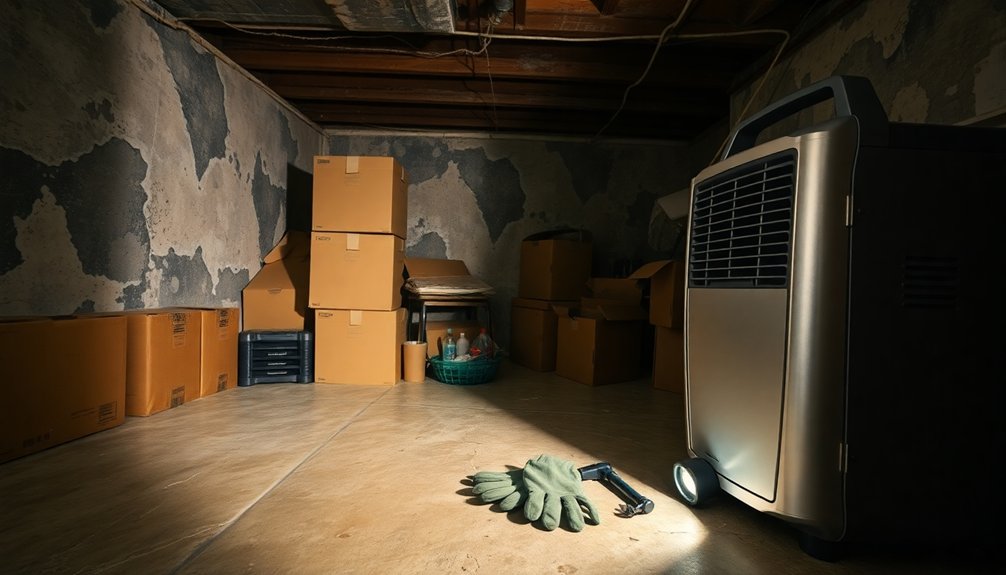
When water floods your basement, acting quickly is essential to avoid mold and structural damage. You also need to tackle any pest issues that arise, as stagnant water can attract unwanted critters. Additionally, employing natural and eco-friendly methods for drain cleaning can help prevent future flooding by maintaining proper drainage systems. Let’s explore effective strategies for both flood response and pest extermination to keep your basement safe and clean.
Flood Response Strategies
Flooding can strike unexpectedly, leaving your basement vulnerable to severe water damage and pest infestations.
Implementing effective flood response strategies is essential. Here’s what you should do:
- Call for professional water extraction services immediately to minimize damage and prevent mold or mildew growth.
- Ensure thorough drying and sanitization of affected areas within 24-48 hours to avoid long-term odors and structural issues.
- Conduct regular inspections for signs of moisture and pests to catch problems early.
- If pest infestations arise, consider hiring professionals, as they can safely handle chemicals and provide a detailed solution.
Effective Pest Extermination Techniques
Effective pest extermination techniques are essential in safeguarding your basement from the aftermath of water damage. When flooding occurs, pests like rodents can invade, posing health risks and leading to further property damage.
Relying on DIY methods may not suffice; these often fail to eliminate the underlying issues attracting these pests. Instead, consider professional intervention. Pest control services utilize specialized chemicals and techniques to guarantee thorough eradication while keeping your home safe.
Timely action can considerably reduce costs associated with pest-related damage. By addressing both water damage and pest infestations, you can effectively eliminate dust and create a healthier living environment.
Don’t wait—invest in expert pest control to protect your basement today.
Preventive Measures for a Dry and Organized Basement
To keep your basement dry and organized, it’s essential to implement preventive measures that tackle moisture and clutter head-on. Here are some effective steps you can take:
- Control moisture levels: Use a dehumidifier to maintain humidity around 50% in summer and 30% in winter to prevent mold growth.
- Ensure proper drainage: Direct downspouts away from your foundation and check for potential water entry points around joints, cracks, and windows.
- Store items wisely: Use moisture-resistant containers for essential items to minimize clutter and deter pests.
- Conduct routine assessments: Regularly inspect for leaks and signs of moisture to maintain a healthy and organized basement environment. Additionally, consider hiring a professional drain cleaning expert to address any hidden drainage issues that may contribute to dampness.
Implementing these preventive measures for a dry and organized basement will help you avoid larger issues down the road.
How Often Should You Clean Your Basement?
Maintaining a dry and organized basement not only involves preventive measures but also regular cleaning to keep it in top shape.
If you have a finished basement, aim for weekly cleanings to tackle high-traffic areas and prevent dust buildup. For an unfinished basement, a thorough cleaning at least once a month is essential to control dust, debris, and allergens.
Regular cleaning helps prevent a cluttered basement, which can lead to mold growth and pest infestations. If you use your basement as a workspace or store items frequently, increase your cleaning frequency. Establishing a consistent cleaning schedule is one of the best basement cleaning tips to maintain organization and hygiene, ensuring a healthy, usable space. Implementing daily declutter routines can also support ongoing organization and cleanliness in your basement.
Essential Tools for Basement Cleaning
Cleaning your basement effectively requires the right tools to tackle dust, debris, and potential moisture issues. Using essential supplies not only makes cleaning easier but also promotes a healthier home.
Cleaning your basement effectively demands the right tools to manage dust, debris, and moisture for a healthier home.
Here are the must-have tools you need:
- High-quality shop vacuum: A wet/dry vacuum with a HEPA filter is perfect for removing dust and debris from carpets and hard surfaces.
- Air purifier: This helps improve air quality by capturing allergens, dust, and mold spores.
- Durable scrub brush: An extendable handle allows you to reach tight spaces for thorough scrubbing.
- Dehumidifier: This maintains ideal humidity levels, preventing mold growth and addressing issues like leaks. Regular cleaning with vinegar is essential for machine upkeep; top-load washers should be cleaned with vinegar at least four times a year, while front-load washers require monthly cleanings for optimal performance.
Regular use of these tools guarantees your basement stays clean and dry.
Quick Cleaning Chores to Maintain Your Basement
While your basement mightn’t be the most glamorous part of your home, regular quick cleaning chores can keep it inviting and functional.
Start by vacuuming the floors with a HEPA-filter vacuum at least once a week to tackle dust and allergens. Wipe down high-touch surfaces like shelves and light fixtures with a microfiber cloth and disinfectant weekly for effective basement cleaning and sanitizing.
Dust surfaces, including windowsills and vents, monthly to maintain air quality. Every few months, mop concrete floors using a suitable cleaner to keep your basement looking its best. Additionally, using microfiber cloths can enhance your cleaning efficiency in hard-to-reach areas.
Don’t forget to regularly empty your dehumidifier’s reservoir and clean its filter—this is key for maintaining a dry environment and preventing mold growth among remaining items.
When to Call for Professional Help
When your basement faces serious issues like mold, water damage, or pest infestations, it’s time to call in the professionals. Ignoring these problems can lead to more extensive damage.
Here are key situations that require professional intervention:
- Mold Growth: If you see extensive mold covering more than 10 square feet, professionals can guarantee safe remediation.
- Water Damage: For large-scale flooding, immediate help is essential for proper extraction and drying to prevent structural issues.
- Persistent Odors: If musty smells linger after cleaning, air quality experts can identify hidden mold sources.
- Pest Infestations: Significant rodent or insect problems need exterminators who can safely handle pest control chemicals and address root causes.
Additionally, neglecting these issues can increase the risk of infections due to harmful bacteria and allergens present in the environment. Don’t hesitate—address these issues promptly!
Conclusion
Just like a garden needs regular tending to thrive, your basement requires consistent care to flourish. By keeping dust at bay, managing moisture, and organizing your space, you’re cultivating a healthy environment. Think of your basement as a hidden treasure waiting to be uncovered; with each cleaning session, you’re revealing its potential. Stay proactive, and your basement will transform from a neglected cave into a vibrant extension of your home, ready to support your needs and dreams.