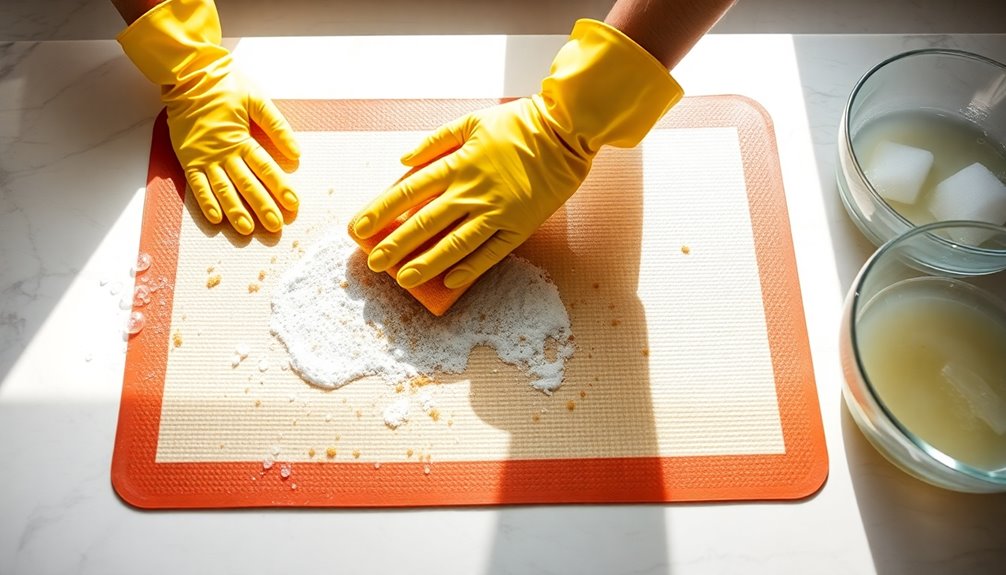
To clean your Silpat baking mat, start by hand washing it with warm, soapy water and a soft sponge. Rinse thoroughly to avoid any soap residue. For stubborn stains, use a baking soda paste or soak it in a mixture of vinegar and warm water. Always air dry it completely before storing. Avoid harsh cleaners and scrubbing too hard, as they can damage the non-stick surface. Keep going to discover more tips for maintaining your mat!
Why Cleaning Your Silpat Mat Is Essential for Longevity
While you may think a quick wipe-down is all your Silpat mat needs, regular and thorough cleaning is essential for its longevity.
This isn’t just about keeping your mat looking good; it’s about maintaining its non-stick surface and preventing any residue buildup. Over time, oils and food particles can accumulate, affecting the mat’s performance.
By incorporating proper silpat maintenance into your routine, you help guarantee that your mat remains effective for baking and cooking. Regular cleaning not only extends the lifespan of your mat but also enhances your overall baking experience. Additionally, using non-toxic cleaners ensures that you maintain a safe and healthy cooking environment.
Best Cleaning Methods for Your Silpat Baking Mat
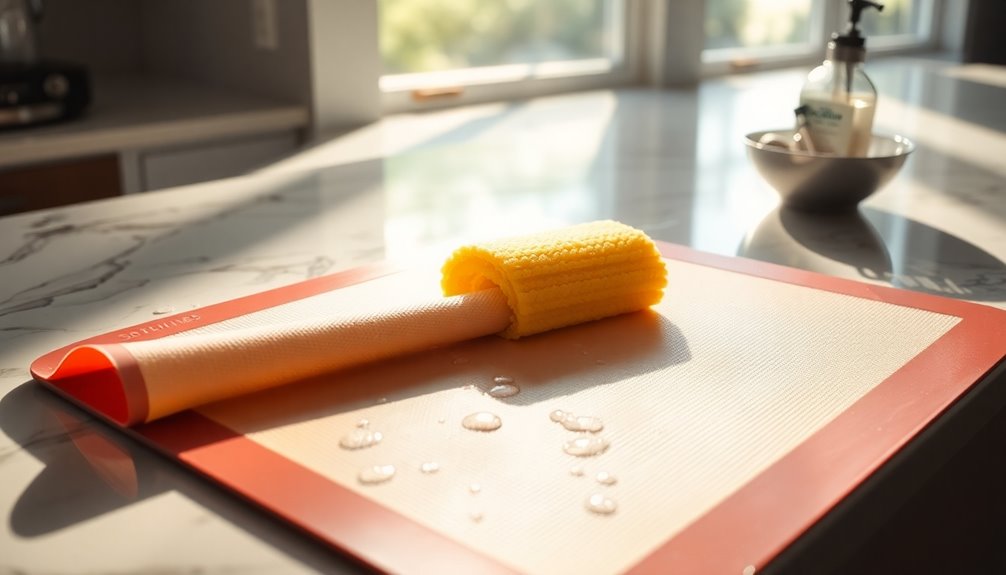
Here are some effective cleaning techniques and maintenance tips to guarantee your mat lasts:
- Hand Wash: Use warm, soapy water and a soft sponge to gently scrub the surface.
- Rinse Thoroughly: Make sure to rinse off all soap residue to avoid any sticky film.
- Air Dry: Lay your mat flat or hang it to dry completely before storing it.
- Avoid Abrasives: Stay away from steel wool or harsh cleaners, as they can damage the non-stick surface.
Additionally, consider using eco-friendly methods that are gentle on your baking mat while also being environmentally sound.
How to Remove Stubborn Stains From Silpat?
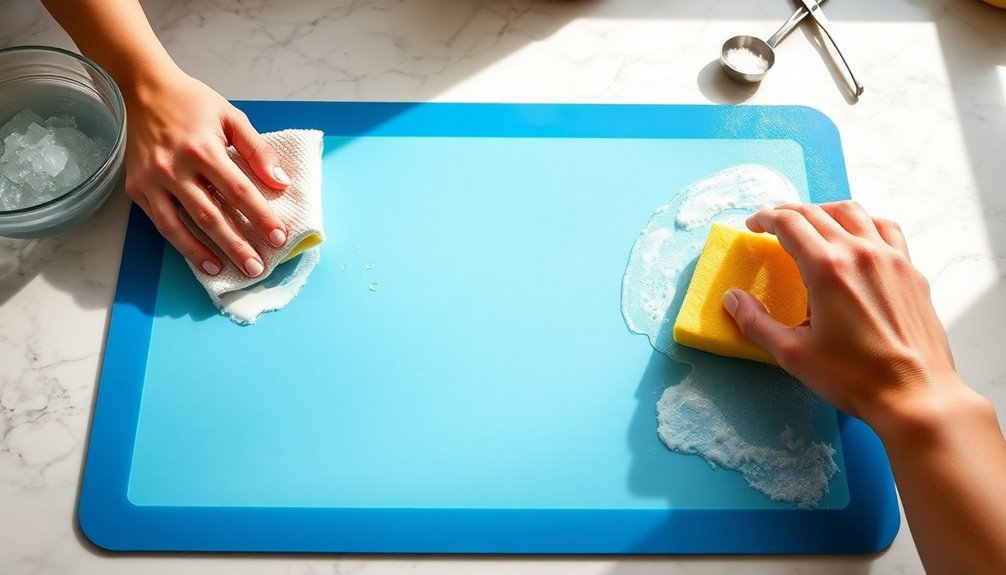
If you’ve got stubborn stains on your Silpat, don’t worry; there are effective ways to tackle them. You can create a baking soda paste or try a vinegar soak to lift those marks. Regular use of baking soda can enhance the cleaning process and help maintain the freshness of your baking mat. Let’s explore these methods to get your baking mat looking fresh again.
Baking Soda Paste
Tackle stubborn stains on your Silpat baking mat with a simple baking soda paste. This effective cleaning paste will help restore your mat to its original glory. Here’s how to create and apply it:
- Mix 2 tablespoons of baking soda with 1 tablespoon of water to form a thick paste.
- Spread the paste over the stained areas of your Silpat.
- Let it sit for 15-20 minutes, allowing the baking soda to lift the stains.
- Rinse the mat thoroughly with warm water and pat dry.
With this method, you’ll see those tough stains disappear, making your Silpat ready for your next baking adventure!
Give it a try, and enjoy a cleaner, more effective baking surface.
Vinegar Soak Method
One effective way to remove stubborn stains from your Silpat baking mat is by using a vinegar soak.
Start by mixing equal parts of white vinegar and warm water in a bowl. Submerge your Silpat mat in this solution and let it soak for about 30 minutes. The vinegar benefits include its natural acidity, which helps break down grease and food residues without damaging the silicone.
After soaking, use a soft sponge to gently scrub the stained areas, then rinse the mat thoroughly with warm water. This method is perfect for tackling those tough stains that won’t budge with regular cleaning.
Finally, dry your Silpat completely before storing it to keep it in great condition for your next baking adventure.
Tips for Preventing Odors and Residue on Your Mat
Keeping your Silpat baking mat in top shape is essential for maintaining its non-stick properties and longevity.
To guarantee effective odor prevention and residue management, follow these tips:
- Wash Immediately: Rinse your mat right after use to prevent food particles from sticking.
- Use Mild Soap: Opt for gentle dish soap instead of harsh chemicals that can leave residues.
- Dry Thoroughly: Air dry your mat completely before storing it, avoiding any musty smells.
- Store Properly: Roll or lay your mat flat in a cool, dry place to keep it fresh and odor-free.
Additionally, consider using eco-friendly products that effectively break down residues without harsh chemicals, ensuring a safe cleaning experience.
Common Mistakes to Avoid When Cleaning Silpat Mats
When cleaning your Silpat mat, it’s easy to make a couple of common mistakes.
Avoid using harsh chemicals, as they can damage the surface and affect its non-stick properties.
Also, be gentle—scrubbing too aggressively can lead to wear and tear over time. Regular maintenance with eco-friendly cleaning methods ensures the longevity and effectiveness of your baking mat.
Using Harsh Chemicals
Although it might be tempting to reach for harsh chemicals to tackle stubborn stains on your Silpat mat, doing so can seriously damage its non-stick surface.
Using harsh cleaners can leave behind chemical residue that not only compromises the mat’s functionality but can also affect your food.
Here are four things to keep in mind:
- Avoid bleach; it can weaken the silicone material.
- Don’t use abrasive cleaners; they scratch and damage the surface.
- Stay away from ammonia; it can degrade the mat over time.
- Skip the oven cleaners; they’re too harsh for silicone.
Instead, stick to gentle soap and warm water for effective cleaning without any harmful effects.
Your Silpat mat will thank you!
Scrubbing Too Aggressively
If you scrub too aggressively, you could damage your Silpat mat’s non-stick surface.
While it might seem tempting to use a tough scrubbing pad to remove stubborn stains, this can lead to scratches and degradation over time. Instead, opt for gentle cleaning methods.
Use a soft sponge or cloth and warm, soapy water to wipe the mat clean. If you encounter difficult spots, let the mat soak for a few minutes before gently scrubbing.
Avoid using abrasive cleaners or tools, as they can compromise the mat’s effectiveness. Remember, a little patience goes a long way.
When to Replace Your Silpat Baking Mat
Knowing when to replace your Silpat baking mat can save you time and enhance your baking results.
Keeping an eye out for certain replacement signs will help you determine your mat’s lifespan.
Here are four key indicators that it’s time for a new mat:
- Visible Wear: Look for cracks, tears, or discoloration that affect its non-stick quality.
- Sticking: If your baked goods start to stick, even after cleaning, it’s a sign the mat’s surface is compromised.
- Foul Odors: A persistent smell after cleaning indicates it may be time to toss it.
- Age: If your mat is over five years old, consider replacing it, even if it seems fine.
Additionally, a well-maintained baking mat can contribute to better cleanliness in your kitchen, similar to how regular cleaning routines help maintain a pristine bathroom environment.
Stay vigilant to keep your baking on track!
Conclusion
Just like a well-tended garden flourishes, your Silpat mat thrives with proper care. By nurturing it through gentle cleaning and avoiding common pitfalls, you’ll guarantee it serves you well for many baking adventures. Remember, every stain you conquer is a lesson learned, and each whiff of lingering odor is a chance to refresh your culinary canvas. So, treat your Silpat like the treasure it is, and it’ll reward you with countless delicious creations. Happy baking!