To shift to sustainable cleaning at home, start by auditing your current supplies and swapping harmful products for eco-friendly alternatives. Look for certifications like Green Seal or EPA’s Safer Choice. Incorporate DIY solutions like vinegar and baking soda for effective cleaning. Use reusable cloths and minimize water waste. Finally, engage your community by sharing tips and organizing workshops. There’s much more you can do to enhance your cleaning practices and create a healthier environment.
Understanding the Need for Green Cleaning
As you consider the importance of maintaining a clean home, it’s vital to recognize the hidden dangers of conventional cleaning products. Many contain potentially harmful chemicals like ammonia and chlorine, which can drastically affect indoor air quality.
Using these products contributes to indoor air pollution, elevating risks of respiratory diseases and other health issues. With around 63 synthetic chemicals lurking in the average American home, it’s important to seek alternatives.
Shifting to green cleaning products not only reduces these risks but also supports sustainable practices that benefit both human health and the environment. By choosing eco-friendly products, you help create a healthier living space while minimizing the negative impact on waterways and ecosystems. Additionally, opting for EPA Safer Choice certified products can significantly enhance the effectiveness of your cleaning routine while being environmentally responsible.
Steps to Transition to Sustainable Cleaning
To start your changeover to sustainable cleaning, conduct an audit of your current supplies and identify harmful ingredients.
Focus on those that contain phosphates, artificial fragrances, and VOCs, which can impact your indoor air quality.
Once you’ve pinpointed these harmful products, you can develop a gradual replacement strategy with safer, eco-friendly alternatives. Incorporating non-toxic cleaning solutions into your routine can enhance safety and promote a healthier home environment.
Audit Current Supplies
A thorough audit of your current cleaning supplies is the first step toward a more sustainable home.
Start by identifying the products you use, paying particular attention to harmful chemicals like phosphates and ammonia that contribute to indoor air pollution.
Follow these steps:
- List all cleaning products: Identify which ones contain hazardous chemicals or artificial fragrances.
- Check labels for red flags: Look for ingredients known to cause respiratory issues or environmental harm.
- Assess sustainability: Prioritize tools and packaging made from sustainable materials or those that are recyclable.
Once you’ve completed your audit, safely dispose of any hazardous chemicals according to local regulations.
This way, you’ll be on your way to a cleaner, healthier home!
Identify Harmful Ingredients
How can you guarantee your cleaning routine is safe for both your health and the environment? Start by auditing your current supplies to identify harmful ingredients. Look for red flags like phosphates and artificial fragrances, which are common in conventional cleaning agents.
Did you know the average American home contains around 63 synthetic chemical products? These harmful chemicals contribute considerably to indoor air pollution, risking your health. Shifting to eco-friendly options is essential for a safer choice.
As you inspect your products, consider replacing hazardous cleaners with safer alternatives whenever supplies run low. Also, make sure you dispose of any hazardous chemicals according to local regulations to protect wildlife and ecosystems.
Your cleaning routine can be both effective and sustainable!
Gradual Replacement Strategy
While shifting to sustainable cleaning, you can make the process manageable by gradually replacing your conventional products. Start by conducting an audit of your cleaning supplies to identify hazardous chemicals.
Then, follow these steps:
- Replace as You Go: Opt for eco-friendly brands when conventional cleaners run low. This guarantees you’re not wasting products while changing over.
- Embrace DIY Cleaning: Create natural cleaning solutions using ingredients like vinegar and baking soda. They’re effective and reduce harmful chemical exposure.
- Check for Certifications: Look for labels like EcoCert or Green Seal on new products to verify they’re genuinely sustainable.
Selecting Eco-Friendly Products and DIY Solutions
When you’re choosing cleaning products, look for eco-certifications like EcoCert or Green Seal to guarantee they’re safe for both your home and the planet. You can also whip up simple DIY solutions using ingredients like vinegar and baking soda that are just as effective as commercial cleaners. Incorporating natural disinfectants like distilled white vinegar into your cleaning routine can enhance both safety and effectiveness.
Certifications to Look For
What should you look for when selecting eco-friendly cleaning products? Certifications play an essential role in finding sustainable cleaning options.
Here are three key certifications to take into account:
- Green Seal: This certification guarantees that products meet stringent environmental and health standards, often using plant-based ingredients.
- EcoCert: Products with this label are verified to be biodegradable and safe for both your home and the environment.
- EPA’s Safer Choice: This label identifies non-toxic options that don’t compromise on cleaning power.
Simple DIY Recipes
Creating your own eco-friendly cleaning solutions not only empowers you to control the ingredients you use but also helps reduce your environmental footprint.
You can whip up a simple all-purpose cleaner by mixing ½ cup of vinegar with 1 cup of water and a teaspoon of unscented liquid castile soap. This blend works wonders while keeping your home safe.
Add a few drops of essential oils like tea tree or citrus for their antibacterial properties and pleasant scent.
Use vinegar and baking soda for tough stains in laundry products or around the house. Not only will you save money, but you’ll also eliminate harmful chemicals and reduce plastic waste by using reusable cleaning cloths.
Enjoy a cleaner, healthier home!
Sustainable Practices for Everyday Cleaning

Here are three effective ways to go green:
- Use Microfiber Cloths: Replace disposable cleaning supplies with reusable microfiber cloths and natural sponges to greatly reduce waste.
- Save Water: Fill a bucket with water and eco-friendly cleaner for mopping instead of letting the tap run. This conserves water and cuts utility costs.
- Homemade Cleaning Solutions: Create your own cleaners with pantry staples like vinegar and baking soda. These cost-effective solutions reduce reliance on chemical-laden commercial products.
Lastly, choose eco-friendly laundry products free from harsh chemicals to promote better indoor air quality. Incorporating green cleaning products into your routine can further enhance your sustainable efforts.
Embrace these sustainable practices for a healthier home!
Engaging With Your Community for Sustainable Change
How can you inspire meaningful change in your community when it comes to sustainable cleaning practices? Start by engaging with others online, sharing tips and eco-friendly recipes that promote sustainable habits. Your conversations can spark interest, encouraging friends and family to adopt greener cleaning practices.
Utilize social media to showcase your successes and raise awareness about the benefits of eco-friendly initiatives. Organize local workshops or clean-up events to foster community engagement and highlight the importance of collective action.
Collaborating with local businesses can further amplify your efforts, promoting eco-friendly products and practices. Together, you can create a cleaner environment and inspire a culture of sustainability within your community. Consider recommending products like Seventh Generation All-Purpose Cleaner, which is effective and gentle on sensitive skin.
Continuous Improvement in Your Green Cleaning Routine
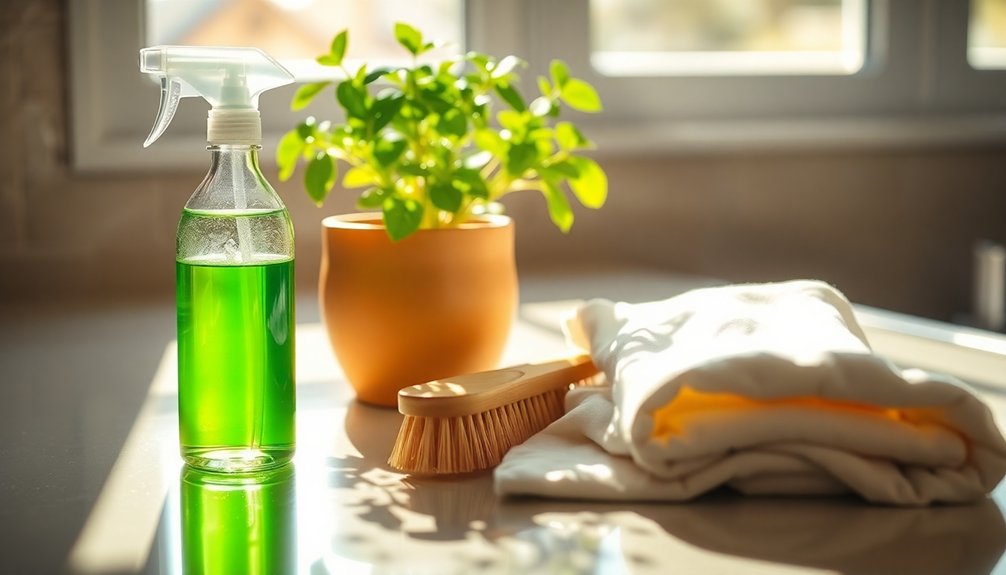
As you endeavor for a greener home, continuously improving your cleaning routine is essential for maximizing sustainability. Here are three steps to enhance your efforts:
- Assess and Adapt: Regularly evaluate your cleaning routine to find opportunities for improvement. Experiment with eco-friendly products, like natural sponges and essential oils, to discover what works best for your household.
- Stay Informed: Engage with online communities dedicated to sustainable cleaning. They’ll keep you updated on innovative practices that conserve water and energy.
- Share Knowledge: Foster a community commitment to eco-friendly habits by sharing your experiences. This collaboration can enhance indoor air quality and strengthen your green cleaning efforts. Additionally, using eco-friendly cleaning products can significantly improve the health of your home environment by reducing harmful chemical exposure.
Conclusion
By embracing sustainable cleaning, you’re not just scrubbing away dirt—you’re also protecting the planet for future generations. While conventional cleaning products may offer quick results, the long-term benefits of eco-friendly alternatives far outweigh the fleeting convenience. Every choice you make, from selecting green products to engaging your community, contributes to a healthier home and environment. So, take that step today; your commitment to green cleaning can spark a ripple effect of positive change beyond your own doorstep.