The future of commercial cleaning technology is all about innovation. You’ll see advanced robotics and automation transforming traditional methods into efficient, eco-friendly practices. IoT integration helps monitor supplies and cleaning needs in real-time, improving effectiveness. Predictive cleaning technologies anticipate requirements, reducing waste and enhancing service quality. With these advancements, workplaces become healthier and more productive. Keep exploring to discover more about how these changes can reshape your cleaning operations.
The Shift From Traditional to Technologically Advanced Cleaning
As businesses evolve, you’ll find that the shift from traditional cleaning methods to technologically advanced solutions is transforming commercial cleaning.
Today, innovative cleaning systems leverage automated systems and smart technology to enhance efficiency and consistency. Predictive cleaning technologies analyze data to forecast cleaning needs, allowing you to create tailored cleaning protocols based on how your facility is used. This approach not only optimizes resource allocation but also minimizes unnecessary labor costs.
Additionally, green cleaning technologies align with sustainability goals, reducing chemical use and environmental impact. Implementing advanced air purification systems with HEPA filters and UV-C light markedly improves indoor air quality, contributing to a healthier workspace. Moreover, the integration of eco-friendly cleaning products ensures that cleaning practices are safe for both occupants and the environment.
This shift marks a notable advancement in the commercial cleaning industry, ensuring cleaner, safer environments for everyone.
The Role of Robotics and Automation in Modern Cleaning
The integration of robotics and automation is at the forefront of this technological transformation in commercial cleaning.
The rise of robotics and automation is revolutionizing the commercial cleaning industry, setting new standards for efficiency and effectiveness.
You’ll find that autonomous cleaning robots are changing the game by handling repetitive cleaning tasks with remarkable efficiency and consistency. Equipped with AI and smart sensors, these robots can:
- Navigate complex environments effortlessly
- Avoid obstacles while cleaning
- Operate continuously without fatigue
- Optimize cleaning routes dynamically
Not only do they reduce labor costs, but they also enhance hygiene standards by minimizing human error. Additionally, implementing these automated systems can lead to a 30% decrease in employee absenteeism as they create more hygienic work environments.
As these automated systems become more widespread, the potential for improved operational efficiency grows, making them an essential investment for future-ready cleaning businesses.
Embracing this technology means staying ahead in the competitive landscape of commercial cleaning.
Integrating IoT for Enhanced Efficiency
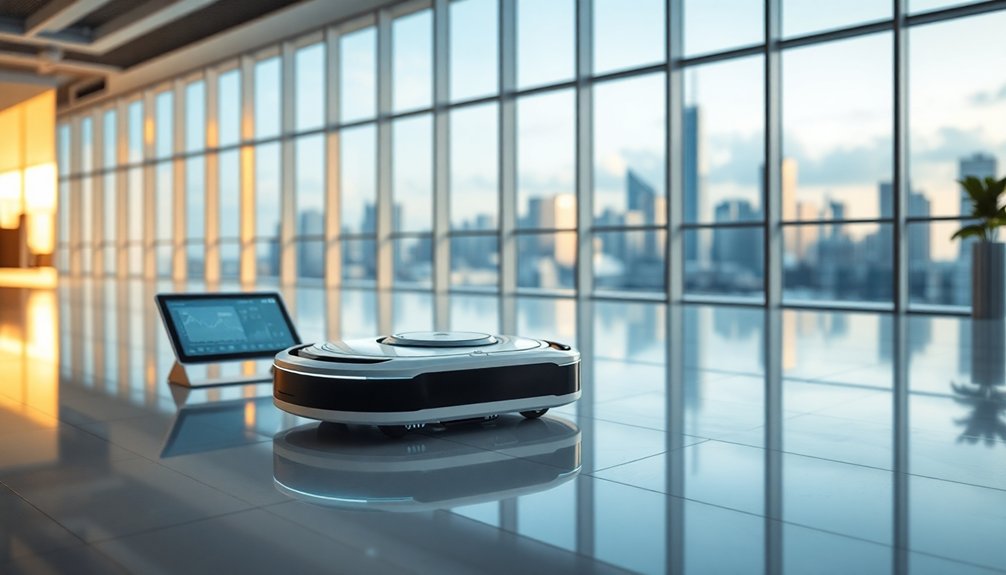
Integrating IoT into commercial cleaning operations not only streamlines processes but also enhances overall efficiency.
With IoT devices, you can track supply levels and maintenance needs in real-time, allowing for proactive replenishment and repairs. This reduces downtime and minimizes operational disruptions.
Smart solutions, like IoT-enabled floor scrubbers, monitor usage patterns and alert your team when maintenance is necessary, ensuring consistent performance and extending equipment lifespan.
Real-time monitoring enhances accountability, giving clients access to data about cleaning activities and outcomes on demand.
By utilizing IoT-enabled smart dispensers, you can minimize supply shortages, ensuring that essential cleaning materials are always available.
Ultimately, this integration optimizes resource management and leads to more efficient cleaning operations. Additionally, implementing a streamlined cleaning routine helps maintain a healthier work environment and boosts productivity.
Eco-Friendly Solutions: Cleaning With a Conscience
While many businesses prioritize cleanliness, adopting eco-friendly solutions guarantees that this commitment extends to protecting the environment and promoting health.
By utilizing eco-friendly cleaning solutions, you can notably reduce harmful chemicals, creating a safer indoor environment for everyone.
- Advanced cleaning technologies like electrostatic disinfection achieve up to 60% reduced chemical usage.
- Microfibre cleaning materials effectively remove 99% of bacteria, often needing just water.
- Energy-efficient cleaning equipment lowers both environmental impact and operational costs.
- Compliance with environmental regulations is enhanced through the integration of green cleaning technologies.
Additionally, using eco-friendly cleaners can greatly improve your cleaning routines while reducing plastic waste.
Embracing these practices not only fosters sustainability but also bolsters your company’s reputation.
Ultimately, cleaning with a conscience leads to healthier spaces and a brighter future for all.
Predictive Cleaning Technologies: Anticipating Needs

Embracing eco-friendly solutions sets a strong foundation for innovative practices in commercial cleaning, such as predictive cleaning technologies.
These technologies leverage data analytics and IoT devices to monitor real-time usage patterns, allowing you to anticipate cleaning needs with precision. By implementing automated scheduling based on actual demand, you can reduce unnecessary labor and material use, promoting sustainability.
Predictive cleaning technologies dynamically adjust cleaning tasks to match operational requirements, optimizing workforce management and minimizing disruptions during low-traffic periods.
Additionally, by using these insights, you can extend the lifespan of your cleaning equipment and prevent costly downtime. Regular maintenance with eco-friendly methods can further enhance the performance and longevity of your cleaning tools.
Ultimately, integrating predictive cleaning fosters a cleaner, healthier environment while supporting your sustainability efforts through reduced waste.
Advanced Air Purification for Healthier Environments
When you invest in advanced air purification systems, you’re greatly enhancing indoor air quality. These systems not only remove allergens and airborne pathogens but also contribute to improved employee well-being. Cleaner air can boost productivity and create a healthier environment for everyone in your space. Additionally, incorporating green cleaning products helps maintain air quality by minimizing harmful chemical exposure.
Enhanced Indoor Air Quality
As you prioritize creating a healthier work environment, advanced air purification technologies play an essential role in enhancing indoor air quality.
Implementing these systems not only helps reduce allergens but also protects against harmful airborne pathogens.
- Advanced air purification systems, like HEPA filters, capture 99.97% of particles as small as 0.3 microns.
- UV-C light further sterilizes the air, creating a safer atmosphere.
- Improved air quality leads to lower sick leave rates among employees.
- A healthier work environment boosts productivity and overall satisfaction.
Allergen and Pathogen Removal
To achieve a healthier work environment, it’s essential to focus on allergen and pathogen removal through advanced air purification technologies.
Utilizing advanced purification systems like HEPA filters, you can capture 99.97% of airborne particles as small as 0.3 microns, greatly improving air quality.
Complementing this, UV-C light air purifiers effectively eliminate viruses and bacteria, reducing health risks further.
With improved air quality, you could see a 20% reduction in respiratory issues among employees, fostering a more productive workforce.
Regular maintenance and monitoring of these systems are vital for sustaining low allergen levels, especially in high-traffic areas.
Integrating smart technology allows for real-time air quality monitoring, enabling proactive adjustments to maintain a consistently safe environment.
Improved Employee Well-being
A healthier work environment directly impacts employee well-being and productivity. By investing in advanced air purification systems, you can enhance the quality of the air your employees breathe.
Cleaner air not only reduces respiratory issues and allergies but also boosts overall focus and energy levels.
- Advanced air purification systems, like HEPA filters and UV-C purifiers, remove 99.97% of airborne particles.
- Improved air quality can lead to a 10-30% increase in workplace performance.
- Healthier environments are essential in high-risk areas like medical facilities and childcare centers.
- Regular air purification contributes to corporate sustainability, lowering your carbon footprint and enhancing your organization’s reputation.
Creating a safer, cleaner workplace benefits everyone involved!
The Impact of Data Analytics on Cleaning Operations
Data analytics is transforming cleaning operations by allowing you to optimize schedules and align tasks with how your facility is used. By analyzing historical data, you can predict cleaning needs, ensuring your resources are allocated effectively and minimizing waste.
Advanced analytics highlight high-traffic areas that require more frequent attention, enhancing hygiene standards and reducing illness rates among employees. Real-time data from IoT devices offers insights into equipment performance, preventing breakdowns and keeping your cleaning operations running smoothly.
This data-driven approach not only improves efficiency but also leads to a measurable increase in client satisfaction, as your services become more tailored and responsive to specific requirements. Embracing data analytics is key to elevating your cleaning operations to the next level, as it supports regular deep cleaning initiatives and ensures a consistently clean environment.
Case Study: Success Stories in Commercial Cleaning
Let’s explore some success stories that highlight measurable health improvements and technology-driven efficiency gains in commercial cleaning.
For instance, a tech company in Sydney saw a 25% rise in employee satisfaction after adopting advanced cleaning methods. These examples show how innovative solutions can lead to healthier workplaces and streamlined operations, ultimately reflecting the impact of time-saving strategies on employee productivity and well-being.
Measurable Health Improvements
While many businesses recognize the importance of cleanliness, measurable health improvements often go unnoticed until innovative cleaning technologies are employed. A Sydney-based tech company saw a 25% boost in employee satisfaction scores after implementing advanced cleaning technologies.
Here’s how these changes made a difference:
- Electrostatic disinfection greatly reduced sick leave linked to allergens.
- HEPA filtration systems captured 99.97% of airborne particles, leading to fewer respiratory issues.
- Real-time monitoring of supplies guaranteed a consistently clean workplace environment.
- Eco-friendly solutions aligned with employee values, enhancing morale and productivity.
These measurable health improvements underscore the positive impact of modern cleaning technologies, proving that a clean workplace is crucial for employee well-being and overall organizational success.
Technology-Driven Efficiency Gains
The measurable health improvements from modern cleaning technologies not only enhance employee well-being but also drive significant efficiency gains in commercial cleaning operations.
For instance, a Sydney-based tech company saw a 25% increase in employee satisfaction after implementing HEPA vacuums and electrostatic disinfection.
Automated floor scrubbers like the i-mop can clean up to 10 times faster than manual methods while using 70% less water, enhancing operational efficiency.
IoT devices enable real-time monitoring of supplies and equipment, preventing shortages and cutting waste.
Furthermore, electrostatic disinfection technology is up to three times more effective than traditional methods, using 60% less disinfectant and reducing downtime.
These advancements optimize cleaning routes, lower labor costs, and improve overall cleaning consistency.
Future Innovations on the Horizon
As commercial cleaning technology evolves, you’ll find that future innovations promise to revolutionize the industry.
With advancements in AI and IoT, you’ll experience enhanced efficiency and effectiveness. Here’s what to look forward to:
Advancements in AI and IoT promise to boost cleaning efficiency and effectiveness like never before.
- Autonomous robots that can operate continuously, reducing labor costs and increasing productivity.
- Predictive cleaning systems that adjust schedules based on real-time facility usage, optimizing operations.
- UV-C disinfection robots offering chemical-free solutions to guarantee thorough sanitization and environmental safety.
- Advanced air purification systems that improve indoor air quality by removing airborne contaminants effectively.
These innovations will enable a seamless collaboration between humans and robots, allowing you to focus on specialized tasks while technology handles the repetitive cleaning duties. Furthermore, integrating eco-friendly methods into cleaning routines will further enhance sustainability within the industry.
Balancing Technology and the Human Touch in Cleaning Services
When it comes to cleaning services, you can’t overlook the importance of human expertise alongside technology.
By integrating advanced tools seamlessly, you enhance accountability and guarantee that every space meets high standards.
Striking this balance not only boosts efficiency but also elevates the personal touch that clients appreciate. Regularly reviewing and adjusting cleaning schedules ensures that both technology and personnel align with evolving cleaning needs.
Emphasizing Human Expertise
While advanced cleaning technologies like autonomous robots and IoT devices streamline operations, the human touch remains indispensable in delivering exceptional cleaning services.
You’ll find that human expertise is essential for interpreting data and adapting cleaning strategies to meet specific needs.
- Professional cleaning requires supervision of complex tasks to guarantee quality control.
- Training staff on new technologies maximizes effectiveness and fosters innovation.
- The blend of technology and human oversight addresses nuanced cleaning challenges machines might miss.
- Emphasizing the human element boosts morale and builds client trust through transparency.
Integrating Technology Seamlessly
The successful integration of technology in cleaning services enhances efficiency without losing the personal touch that clients value.
Smart businesses leverage cleaning technology like artificial intelligence (AI) and the Internet of Things to streamline operations. Autonomous robots handle repetitive tasks, allowing human workers to focus on specialized cleaning roles that require attention to detail.
AI-powered systems provide real-time monitoring and data-driven insights, helping teams adjust their strategies while maintaining high standards. Advanced tools, such as electrostatic disinfection and HEPA filtration systems, guarantee thorough sanitization while improving air quality.
Enhancing Service Accountability
To enhance service accountability in commercial cleaning, integrating technology with a personal touch is essential. By leveraging tools that promote transparency, you can meet client expectations while ensuring high standards.
Here’s how to achieve this balance:
- Utilize digital service tracking for real-time updates and detailed reports.
- Implement AI-driven quality control systems to monitor hygiene compliance.
- Provide before-and-after photo documentation to build trust and confidence.
- Foster communication through mobile apps that enable scheduling and instant feedback.
This combination of technology and human expertise allows your cleaning service to focus on detail-oriented tasks, reinforcing accountability.
Conclusion
As you embrace the future of commercial cleaning, remember that 67% of facility managers believe automation will greatly enhance their cleaning efficiency. By integrating robotics, IoT, and eco-friendly solutions, you can elevate your cleaning operations while reducing environmental impact. Balancing innovative technology with the human touch guarantees a thorough approach that meets both operational goals and customer satisfaction. The future of commercial cleaning isn’t just about mops; it’s about smarter, more efficient solutions that redefine cleanliness.