To guarantee your butcher block remains safe and beautiful, regularly oil it with food-grade mineral oil or fractionated coconut oil. Beeswax and carnauba wax enhance water resistance while adding shine. Avoid oils like olive or walnut, which can go rancid, and stay clear of boiled linseed oil, as it contains harmful chemicals. For best results, oil monthly or when you notice dryness. Curious about more effective care tips and techniques? Keep exploring!
Importance of Oiling Butcher Blocks
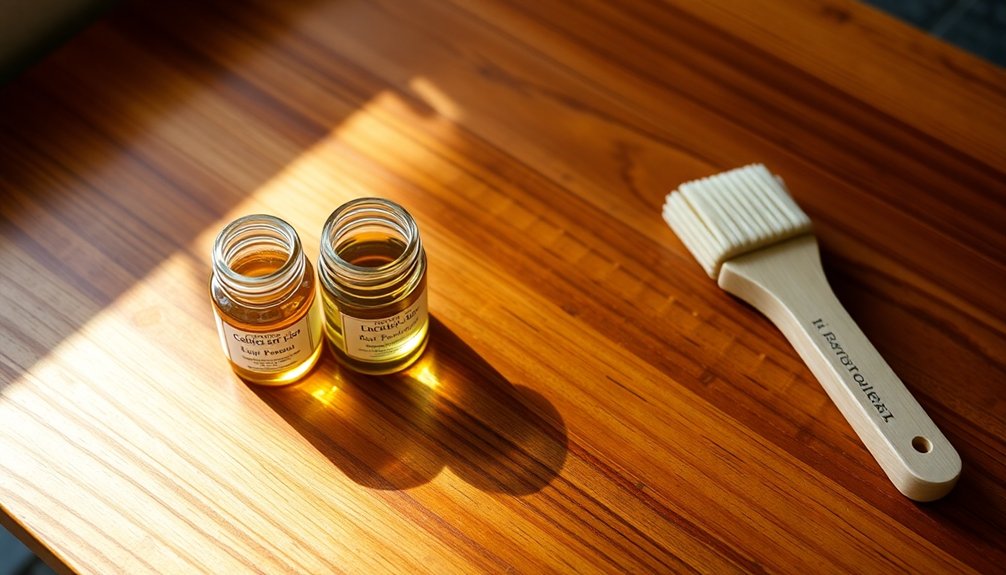
Oiling your butcher block is essential if you want to maintain its beauty and functionality over time. Regularly applying food-grade mineral oil prevents the wood from drying out, cracking, and warping, ensuring longevity and usability.
You should oil your butcher block about once a month or whenever it looks dry, especially in drier climates. This simple process enhances the wood’s appearance, giving it a rich sheen while sealing the pores to protect against bacteria, which is vital for food safety. Additionally, using natural solutions for maintenance can promote overall well-being by reducing chemical exposure in your kitchen.
For added water resistance and durability, consider combining mineral oil with beeswax. This combination not only protects your butcher block but also makes it a safer, more enjoyable surface for food preparation.
Recommended Oils for Food Safety
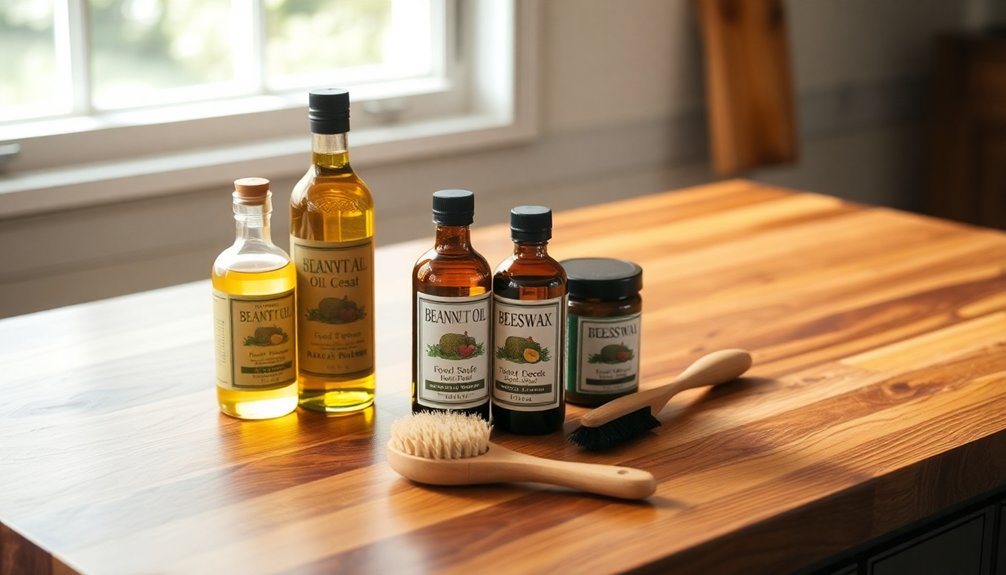
When it comes to maintaining the safety and longevity of your butcher block, choosing the right oils is essential.
Food-grade mineral oil is highly recommended due to its non-toxic, colorless, and odorless properties, ensuring it’s safe for food contact surfaces. Fractionated coconut oil is another great option; it won’t go rancid and effectively nourishes wooden surfaces.
Food-grade mineral oil and fractionated coconut oil are excellent choices for safely nourishing and protecting your butcher block.
For added protection, consider combining beeswax with mineral oil to enhance water resistance and provide a natural sheen. Carnauba wax, when labeled food grade, offers a glossy finish and improved water resistance, making it suitable for your butcher block.
Regularly applying these oils and waxes will prevent wood from drying out, cracking, and harboring bacteria, thereby extending the life of your butcher block. Additionally, selecting gentle yet effective cleaners can help maintain a hygienic kitchen environment without compromising food safety.
Beeswax and Carnauba Wax Benefits
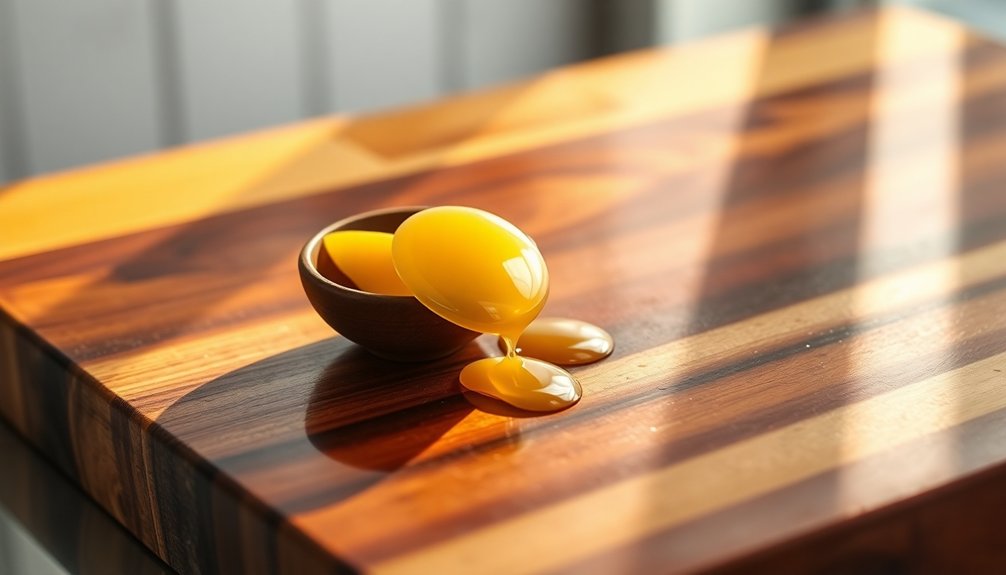
Beeswax and carnauba wax offer exceptional benefits for maintaining your butcher block.
Beeswax is a natural, food-safe option that enhances wood colors and adds shine while providing superior water-repelling properties. When combined with mineral oil, it creates a protective barrier that helps lock in moisture, keeping your wood hydrated.
Carnauba wax, derived from Brazilian palm tree leaves, is known for its hardness and water resistance, making it perfect for adding a glossy finish.
Regularly applying these waxes not only preserves your butcher block’s beauty but also minimizes bacteria growth by creating a moisture barrier. Additionally, using natural cleaning agents can further enhance the safety and longevity of your kitchen tools.
Always choose wax products labeled as food-safe to guarantee they’re suitable for contact with food items.
Oils to Avoid for Butcher Blocks
When caring for your butcher block, it’s essential to avoid certain oils that can cause problems.
Oils like olive, corn, and walnut can go rancid or trigger allergies, while others like boiled linseed oil contain harmful chemicals.
Choosing the right oil guarantees your butcher block remains safe and protective. Additionally, opting for eco-friendly methods ensures a healthier environment and reduces the risk of harmful substances affecting your food safety.
Harmful Chemical Additives
While maintaining your butcher block, it’s crucial to steer clear of certain oils that can pose health risks. Oils like boiled linseed oil often contain harmful additives and may be toxic or flammable.
Tung oil, which can cause allergic reactions, frequently includes toxic chemicals, making it unsuitable for food-safe surfaces. You should also avoid walnut oil due to the risk of allergies and its tendency to go rancid.
Additionally, vegetable oils such as olive, corn, and sunflower oils are prone to rancidity and can compromise the safety and longevity of your butcher block.
Finally, non-food grade oils may contain harmful substances, so stick to oils specifically labeled as food safe to guarantee your health and safety.
Rancidity and Allergies
Choosing the right oils for your butcher block is essential to maintaining its safety and longevity. Oils like walnut oil can trigger allergies in individuals with nut sensitivities, making them a risky choice.
Organic oils, including olive, corn, and sunflower, may seem appealing, but they can go rancid quickly, leading to unpleasant odors and food safety issues. Additionally, unrefined vegetable oils develop rancidity over time, compromising the integrity of your butcher block.
Avoid raw linseed oil due to its long curing time and steer clear of boiled linseed oil, which contains toxic additives. Tung oil may offer durability but often contains allergens and harmful chemicals.
Prioritize oils that guarantee both food safety and the health of your butcher blocks.
Ineffective Protective Finishes
Although many oils may seem suitable for protecting your butcher block, several are best avoided due to their potential risks.
Vegetable oils, like olive, corn, and sunflower oil, can go rancid, leading to unpleasant odors and tastes. Boiled linseed oil contains toxic chemicals, making it harmful for food contact surfaces.
While walnut oil is natural, it poses risks for those with nut allergies and can also spoil over time. Furthermore, varnish and synthetic finishes create a film that chips and peels, risking food contamination.
Instead, stick with food-safe mineral oil, which is both effective and safe for your butcher block, ensuring it remains in great condition without the drawbacks of these ineffective finishes.
Frequency of Oiling and Maintenance
To keep your butcher block in top shape, oiling it regularly is essential—ideally once a month or whenever it looks dry.
The frequency of oiling may need to increase in drier climates, as wood can lose moisture quickly. Look for signs of dryness, like a rough texture or dull appearance, to determine when it’s time to reapply oil.
A quick test involves sprinkling a few drops of water on the surface; if it beads up, your butcher block is well-oiled, but if it soaks in, it needs oil.
For best maintenance, use a food-safe mineral oil and apply a generous amount, letting it sit for at least four hours before wiping off any excess. Regular oiling helps promote a sanitary kitchen environment, ensuring your butcher block remains safe for food preparation.
DIY Solutions for Butcher Block Care
You can create homemade butcher block oil by mixing food-grade mineral oil with beeswax in a 4:1 ratio, nourishing the wood and adding a protective layer.
For a cost-effective sealant, combine coconut oil with beeswax to enhance water resistance and keep the wood moisturized.
A mixture of equal parts mineral oil and carnauba wax gives a glossy finish and increased durability against moisture.
To clean and maintain your butcher block, use a baking soda and water solution to lift stains and odors.
Plus, adding essential oils to your mixtures can protect the wood while creating a pleasant scent in your kitchen. Remember to promote sustainable cleaning practices by avoiding harsh chemicals that can harm both your health and the environment.
User Experiences and Recommendations
When it comes to sealing your butcher block, you’ll find a mix of preferences among users.
Many swear by Odies Oil for its long-lasting results, while others recommend Rubio Monocoat for its durability.
Plus, don’t overlook the DIY treatment options that some say can outperform store-bought products and save you a bit of cash. Additionally, incorporating eco-friendly practices in your cleaning and maintenance routines can enhance the longevity of your butcher block.
Preferred Oil Brands
Choosing the right oil for your butcher block can make a significant difference in its longevity and appearance.
Thirteen Chefs Mineral Oil is a favorite among users for its food-safe, colorless, and tasteless properties, making it perfect for conditioning wood surfaces.
Many swear by Boos Block Mystery Oil for its nourishing and restorative qualities that provide long-lasting protection.
Howard Cutting Board Oil is often recommended for its easy application and ability to enhance the wood’s look while maintaining moisture.
If you’re after superior sealing, Rubio Monocoat delivers excellent results in preserving your butcher block’s integrity.
Finally, Odies Oil is celebrated for its natural composition and long-lasting finish, making it a top choice in the woodworking community.
DIY Treatment Experiences
After selecting the right oil for your butcher block, many users turn to DIY treatments to elevate their care routines.
A popular recommendation combines food-grade mineral oil and beeswax, enhancing water resistance and protection. Some enthusiasts swear by a mixture of fractionated coconut oil and beeswax, appreciating its ability to prevent rancidity while nourishing the wood.
Others enjoy homemade sealants with natural ingredients like citrus oil, which not only protect but also add a pleasant scent. Many community members emphasize the cost-effectiveness of DIY solutions, claiming they can create a gallon of sealant for the price of a small commercial product.
Experimenting with personalized formulations often leads to results that outperform traditional options in both effectiveness and safety.
Best Practices for Food-Safe Finishes
To keep your butcher block safe and in prime condition, it’s crucial to use food-safe finishes like mineral oil and beeswax.
These finishes nourish the wood while protecting against moisture, making them perfect for butcher blocks. Always choose oil finishes that are food-grade and devoid of toxic additives, as harmful solvents can pose risks.
Incorporating wax finishes, like carnauba wax or beeswax, enhances water resistance, further preventing microbial growth.
Remember to re-oil your butcher block every three months for ideal protection. Additionally, using natural cleaning solutions can help maintain the hygiene of your butcher block without introducing harmful chemicals.
Finally, pay attention to curing times based on the finish type and environmental conditions to guarantee it’s safe for food contact before use.
Conclusion
You’ve invested in a beautiful butcher block, and taking care of it is just as important as choosing it. By regularly oiling with food-safe oils and using natural waxes, you not only protect your investment but also create a safe space for preparing meals that nourish your loved ones. It’s a small act that connects you to generations of cooks who cherished their tools. Remember, every swipe of oil is a pledge to keep those delicious memories alive.