Cleaning burned pots is easy with the boiling water and tablet trick. Just fill your pot with water, bring it to a rolling boil, and add a cleaning tablet. The heat loosens burnt residue while the tablet works to break down grime, saving you time and energy. Make sure to use the right scrubbing tools afterward for a thorough clean. Want to explore more tips, tricks, and safety precautions? Keep going to enhance your cleaning skills!
Why Boiling Water and Tablets Work for Cleaning Burned Pots
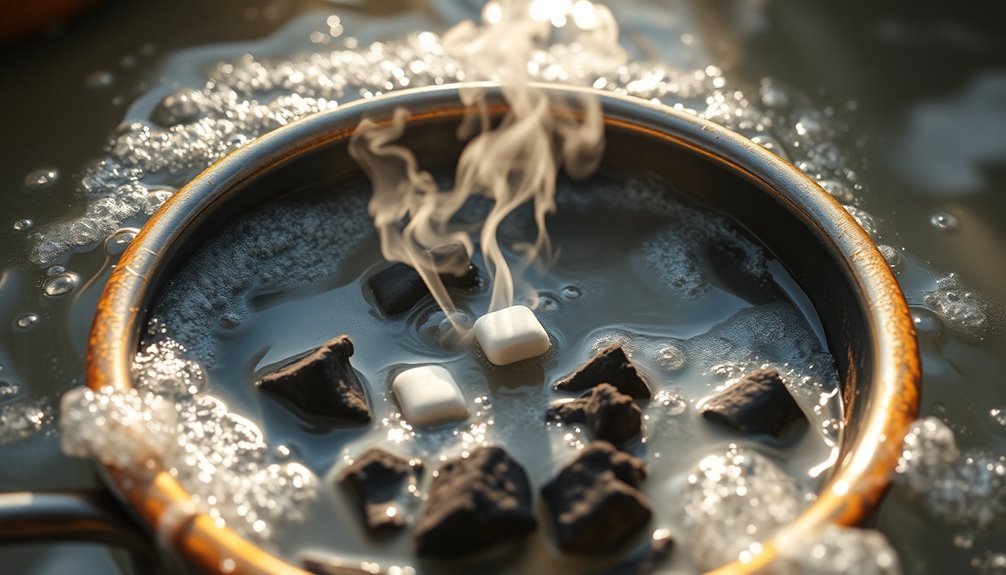
When it comes to cleaning burned pots, boiling water combined with cleaning tablets can work wonders. This method leverages the power of heat to loosen stubborn burned residue that’s stuck to your cookware.
As the water heats up, it creates steam, which permeates the burnt areas, making it easier for the cleaning tablets to break down the residue. These tablets contain powerful ingredients that enhance cleaning efficiency, cutting through grime you might think is impossible to remove.
Just let the mixture sit for a while, and you’ll notice how the combination helps lift the burned material away. This technique saves you time and effort, allowing you to restore your pots to their former glory without scrubbing endlessly. Additionally, using methods like soaking techniques can further enhance the cleaning process for severely burnt pans.
What You Need to Get Started: Supplies and Tools
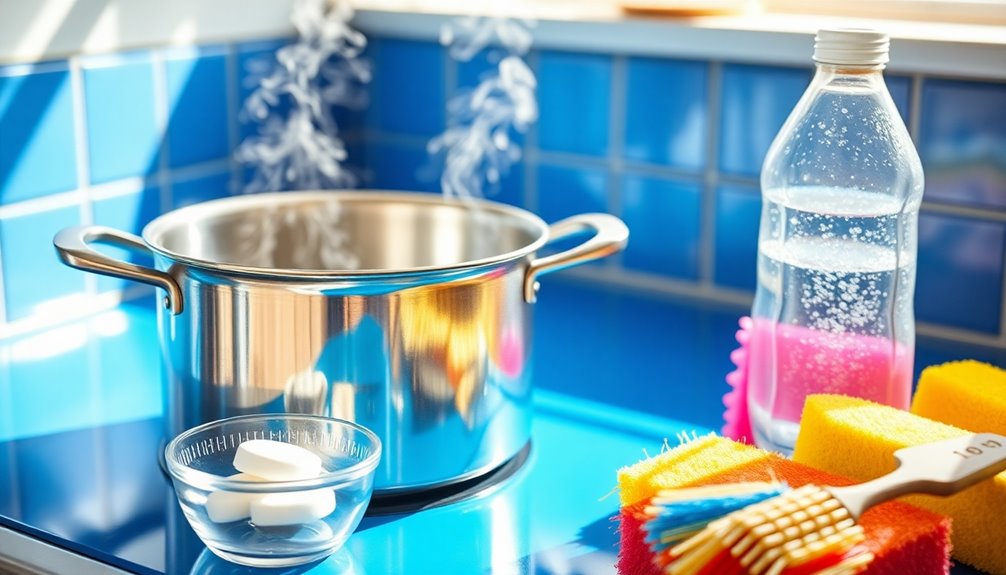
To tackle those burned pots, you’ll need a few essential cleaning supplies and tools at your side.
Gather items like baking soda, vinegar, and a sturdy scrubber to make the job easier. Eco-friendly solutions like vinegar and water can also be effective in restoring your pots.
Don’t forget to take into account safety precautions, like wearing gloves to protect your hands while you scrub away the grime.
Essential Cleaning Supplies
Before you tackle those stubborn burned pots, gather a few essential cleaning supplies to make the job easier.
You’ll need a good-quality sponge or scrubber for scrubbing, along with a soft cloth for drying afterward. Don’t forget a pair of rubber gloves to protect your hands while using stronger cleaning agents. A wooden or silicone spatula can help you scrape off any stubborn bits without scratching the pot’s surface.
For cleaning techniques, a mix of baking soda and vinegar works wonders, so stock up on those too. Finally, have some water handy for boiling, as it’s an effective way to loosen burnt-on food.
With these essential tools, you’ll be well-equipped to tackle any burned pot.
Recommended Tools Needed
Gathering the right tools is essential for effectively cleaning burned pots. Start with a sturdy pot or pan that can withstand boiling water. You’ll also need a box of dishwasher tablets, which work wonders on tough stains.
A heat-resistant spatula or wooden spoon will help you scrape away debris without scratching the surface. For added efficiency, consider using recommended tools like a non-abrasive scrubber or a sponge designed for tough jobs.
If you want to take it up a notch, invest in some specialized cleaning gadgets, such as a pot scraper or a long-handled brush. With these supplies in hand, you’re well on your way to restoring your pots to their former glory.
Safety Precautions To Consider
While you’re preparing to clean burned pots, it’s important to keep safety in mind.
Using the right safety equipment can protect you during your cleaning techniques. Here are some precautions to take into account:
- Gloves: Wear heat-resistant gloves to protect your hands from hot water and harsh chemicals.
- Goggles: Protect your eyes from splashes while boiling water or using cleaning tablets.
- Ventilation: Make sure your workspace is well-ventilated, especially if you’re working with strong cleaning agents.
- First Aid Kit: Keep a kit handy for any unexpected accidents, just in case.
Step-By-Step Guide to Cleaning Burned Pots With This Method

Cleaning burned pots might seem challenging, but with a few simple steps, you can restore them to their former glory.
Start by filling the pot with water, covering the burned areas. Add a couple of dishwasher tablets to the water; these are powerful cleaning agents that aid in pot restoration.
Bring the mixture to a boil and let it simmer for about 15-20 minutes. This heat will loosen the stubborn residue.
Afterward, let it cool slightly, then use a sponge or scrubber to gently remove any remaining charred bits. Rinse thoroughly with warm water.
Additionally, utilizing vinegar and baking soda for tough stains can enhance the cleaning process. Finally, dry your pot completely. This effective method combines useful cleaning techniques, making pot restoration easier than ever!
Tips for Different Types of Cookware: Stainless Steel, Non-Stick, and More
When it comes to cleaning burned pots, different cookware materials require specific care.
For stainless steel, you’ll want to focus on gentle scrubbing techniques, while non-stick surfaces need a softer touch. Regular inspection of brushes for debris and damage ensures continued cleaning efficiency, which is essential for maintaining all types of cookware. Cast iron demands its own maintenance routine to keep it in top shape, so let’s explore those tips.
Stainless Steel Care Tips
To keep your stainless steel cookware looking great and performing well, it’s essential to follow a few simple care tips.
Proper stainless steel maintenance not only enhances its appearance but also guarantees cookware longevity.
Here are four key tips:
- Avoid high heat: Use medium heat to prevent warping and discoloration.
- Use non-abrasive cleaners: Stick to gentle sponges and cleaners to avoid scratches.
- Dry immediately: Wipe your cookware dry after washing to prevent water spots.
- Store properly: Avoid stacking pots and pans without protection to prevent scratches and dents.
Non-Stick Cleaning Techniques
Non-stick cookware offers a convenient way to prepare meals without the hassle of food sticking, but it requires specific cleaning techniques to maintain its surface.
For effective non-stick care, always use gentle sponges or cloths to avoid scratching the coating. Avoid abrasive cleaners and opt for mild dish soap mixed with warm water. If food residue persists, soak the pan for a while before cleaning.
For tough stains, sprinkle baking soda on the surface, add a bit of water, and let it sit for a few minutes before wiping clean.
Always let your cookware cool before washing, as sudden temperature changes can damage the non-stick surface. Following these tips guarantees your non-stick cookware remains in top shape for longer.
Cast Iron Maintenance Advice
Maintaining cast iron cookware requires a different approach than caring for non-stick options.
To keep your cast iron in top shape, follow these essential tips:
- Season Regularly: Apply a thin layer of oil after each use to maintain your cast iron seasoning.
- Clean Carefully: Avoid soap; instead, use hot water and a stiff brush to remove food residue.
- Dry Immediately: To prevent rust, dry your cookware promptly after washing.
- Store Properly: Store your cast iron in a dry place with a paper towel inside to absorb moisture and protect the seasoning.
How to Prevent Future Burning in Your Pots and Pans
While cooking is a joy, it can quickly turn into a frustrating experience if you’re not careful about how you use your pots and pans. To prevent burning, start with high-quality cookware that distributes heat evenly.
Use the right cooking techniques, like preheating your pan properly before adding oil or food. Keep an eye on the heat level; medium to low is often best for most dishes. Stir frequently to avoid sticking, especially with delicate foods.
Don’t overcrowd the pan, as this can trap steam and lead to uneven cooking. Finally, always use a timer to remind you when to check your food. Regularly cleaning your cookware can also prevent grease buildup, which contributes to burning and sticking.
These burn prevention tips will help you enjoy cooking without the hassle of burnt pots.
Alternative Cleaning Solutions: When to Use Baking Soda or Vinegar
Even with the best precautions, accidents happen, and pots can still end up burned. When that happens, you can turn to alternative cleaning solutions like baking soda and vinegar. Each has its unique strengths, so knowing when to use them can save you time and effort.
- Baking Soda: Use it for tough, stuck-on food residue. Mix it with a little water to form a paste and scrub.
- Vinegar Solutions: Great for removing stains and lingering odors. Pour it in and let it soak. Additionally, white vinegar is an environmentally friendly cleaner that can help tackle tough burns.
- Baking Soda and Vinegar Combo: For stubborn burns, sprinkle baking soda, then add vinegar for a fizzing reaction that loosens grime.
- Regular Maintenance: Keep your pots in top shape by using vinegar solutions after every use.
Troubleshooting Common Issues With the Boiling Water Method
When using the boiling water method, you might run into a few common issues.
Consider the type of pot you’re using, as different materials react differently to heat and water.
If stubborn burn residue persists, adjusting the water temperature could make all the difference in your cleaning success. Additionally, using boiling water and dish soap can effectively dissolve and loosen any remaining buildup for easier cleaning.
Pot Material Considerations
Choosing the right method for cleaning burned pots often hinges on the material of the pot itself, since different materials react uniquely to heat and cleaning agents.
Understanding these differences can enhance your cleaning effectiveness while maintaining material durability. Here are four key considerations:
- Stainless Steel: Generally durable, but be cautious with high heat as it can warp.
- Nonstick: Low durability against heat; avoid boiling water as it may damage the coating.
- Cast Iron: Highly durable, but requires special care to prevent rusting.
- Aluminum: Lightweight and effective, but can react with acidic cleaning agents.
Stubborn Burn Residue
Stubborn burn residue can be incredibly frustrating, especially when you’re trying to clean your pots using the boiling water method.
If you find that stubborn stains persist after boiling, don’t worry; there are a few tricks you can try. First, give the process a bit more time. Allow the pot to soak longer to enhance burn residue removal.
If that doesn’t work, consider using a gentle scrubber after boiling to lift those tough stains. Sometimes, adding a little baking soda or vinegar to the water can boost the cleaning power, making it easier to tackle those stubborn spots.
Water Temperature Importance
After tackling those stubborn burn residues, it’s important to pay attention to water temperature when using the boiling water method.
The water temperature effects how effectively you can clean your pot, so aim for ideal boiling points. Here are some key points to take into account:
- Too Low: Water below boiling won’t break down residues effectively.
- Just Right: Use water that’s at a rolling boil for maximum cleaning power.
- Too High: Excessively high temperatures can damage certain pot materials.
- Consistency: Keep the water boiling throughout the cleaning process for best results.
Safety Precautions to Keep in Mind While Cleaning
While cleaning burned pots can be an intimidating task, prioritizing safety is essential to protect yourself and your kitchen.
Start by wearing gloves to shield your hands from harsh cleaning agents and hot surfaces. Make certain to work in a well-ventilated area, especially if you’re using strong chemicals. Always read the instructions on any cleaning products you use to avoid dangerous reactions.
When employing boiling water and tablets, be cautious of splashes that could burn you. Use appropriate cleaning techniques, like gentle scrubbing with non-abrasive tools, to prevent damage to your pots. Additionally, consider using eco-friendly methods to minimize the impact of cleaning products on your health and the environment.
Finally, keep children and pets away from your workspace to minimize distractions and ensure their safety while you tackle the mess.
How to Maintain Your Cookware After Restoration
Once you’ve successfully restored your burned pots, maintaining them is key to prolonging their life and keeping them in great condition.
Maintaining your restored pots is essential for their longevity and optimal performance in the kitchen.
Here are some essential maintenance tips to enhance your cookware longevity:
- Use Non-Abrasive Cleaners: Avoid harsh chemicals that can scratch or damage the surface.
- Dry Immediately: After washing, dry your pots right away to prevent water spots or rust.
- Store Properly: Stack pots with protective cloths in between to avoid scratches.
- Season Regularly: For cast iron, apply a thin layer of oil after cleaning to maintain its non-stick properties. Additionally, regular cleaning with the right products is essential to maintain the appearance of your cookware.
Frequently Asked Questions About Cleaning Burned Pots?
Have you ever wondered how to tackle the challenge of cleaning burned pots? You’re not alone! Many people have questions about effective cleaning techniques.
First, consider the pot materials—stainless steel, cast iron, and non-stick surfaces each require different approaches. For stainless steel, a mixture of baking soda and water works wonders, while cast iron needs gentle scrubbing with salt. Non-stick pots benefit from soaking in warm, soapy water.
Another common query is about the boiling water and tablet trick. Just fill the pot with water, add a dishwasher tablet, and let it boil for a few minutes. This method helps lift stubborn residue without harsh scrubbing. Using dishwasher tablets ensures a more effective cleaning process due to their concentrated formulas and enhanced cleaning power.
Always remember to choose the right technique based on your pot’s material for best results!
Conclusion
In the end, restoring your burned pots isn’t just about cleanliness; it’s a chance to reclaim your kitchen’s heart. By using the boiling water and tablet trick, you’re not only saving your cookware but also embracing the art of cooking without fear. Remember, every pot has a story, and with a little care, you can guarantee yours continues to shine. So, roll up your sleeves and bring those pots back to life—you’ve got this!