You’re likely making your home dirtier with common cleaning mistakes. Using the same rag across surfaces spreads germs, while feather dusters just push dust around. Neglecting your vacuum means it’ll blow allergens back into your space. Tossing kitchen tools in the dishwasher can lead to hidden food residues, and putting a toilet brush back right away traps moisture and bacteria. There’s more to know about other errors that could be costing you clean, fresh spaces.
Using the Same Rag Around the House

When you use the same rag around the house, you’re inviting germs to spread from one surface to another. This practice can lead to cross-contamination, where bathroom bacteria easily transfer to kitchen counters, jeopardizing food safety.
Rags retain grime and bacteria, making it vital to minimize this risk. Instead of using the same rag, consider designating specific microfiber cloths for different areas, or better yet, use a new paper towel for each surface. Regularly washing your microfiber cloths is essential to keep them effective and free from accumulated dirt and bacteria. Additionally, utilizing non-toxic cleaners ensures that harmful chemicals do not contribute to the dirtiness of your home.
Using a Feather Duster
A feather duster might seem like a handy tool for quick cleaning, but it can actually make your home dustier. When you’re using a feather duster, it merely displaces dust particles instead of trapping them, spreading allergens around your room.
Instead of creating a clean environment, you might be making it worse as dust settles back onto surfaces or falls to the ground.
In contrast, microfiber cloths are designed for effective cleaning; they capture and hold dust particles, considerably reducing allergens. To truly eliminate dust and maintain a clean space, opt for a damp microfiber cloth or specialized dusting tools instead of relying on feather dusters. Your home will thank you for it! Additionally, using microfiber gloves can enhance your dusting routine by attracting and trapping dust more effectively.
Not Cleaning the Vacuum
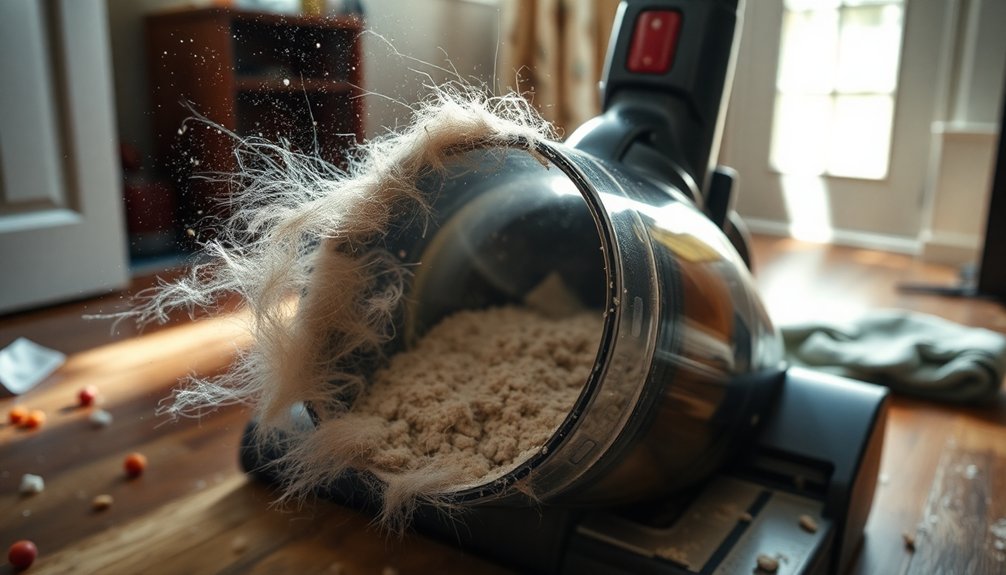
You mightn’t realize that neglecting to clean your vacuum can seriously impact its performance.
A vacuum with a dirty filter or a full bag won’t just struggle to pick up dirt; it can actually blow dust and allergens back into your home. Regular maintenance is key to keeping your vacuum in top shape and ensuring a healthier living environment, as cleaning or replacing filters is essential for maintaining suction power and efficiency.
Reduced Suction Power
While maintaining a clean vacuum may seem like a minor task, neglecting this essential step can lead to considerably reduced suction power.
Dirty vacuum filters can greatly impair your vacuum’s effectiveness, making it less capable of picking up dirt and debris. To guarantee peak performance and improve indoor air quality, follow these tips:
- Clean your vacuum filters every 1 to 3 months to avoid reduced suction power.
- Check vacuum bags or canisters regularly; empty them when full to prevent airflow blockage.
- Inspect brushes and hoses for clogs; removing them maximizes suction efficiency.
- Replace worn-out vacuum parts as needed to maintain peak performance.
Airborne Dust Issues
Neglecting to clean your vacuum not only reduces its suction power but also contributes to airborne dust issues.
When you don’t regularly change or wash your filters, they become dirty, hindering vacuum performance and allowing dust and allergens to recirculate into your home. A full vacuum bag or canister exacerbates this problem, limiting its ability to capture dirt effectively.
As a result, dust can be blown back into the air, negatively impacting your indoor air quality and potentially causing respiratory issues.
To combat this, make it a habit to empty bags or canisters and clean filters frequently. Additionally, wipe down your vacuum’s exterior to guarantee it’s hygienic and to prevent grime buildup while cleaning and disinfecting your home.
Regular Maintenance Importance
Regular maintenance of your vacuum is essential for guaranteeing it operates at peak efficiency.
Neglecting this task can lead to dirty filters and reduced suction power, making your cleaning efforts less effective and increasing indoor air pollution.
Here are four vital maintenance tips:
- Change or wash filters every three to six months to maintain ideal performance.
- Empty vacuum bags or canisters when full to prevent overheating and potential damage.
- Wipe down the exterior and attachments after each use to minimize the spread of germs.
- Inspect hoses and brushes regularly to verify they’re free from clogs.
Tossing Any Kitchen Tool Into the Dishwasher
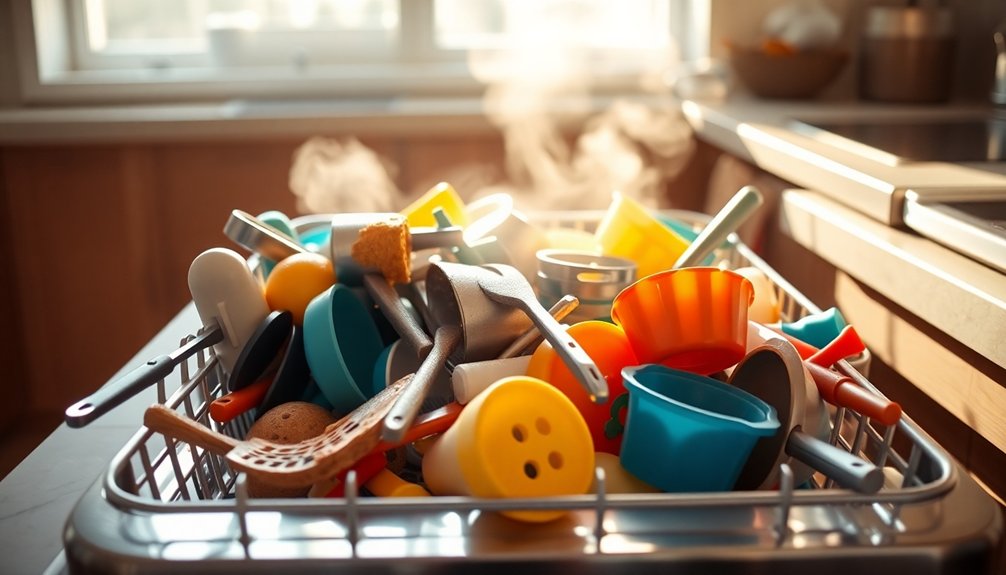
You might think tossing all your kitchen tools into the dishwasher is a quick fix, but it often traps food particles in hard-to-reach spots.
These hidden residues can lead to unpleasant odors and even cross-contamination in your cooking.
For the best results, hand washing your small tools with soap and hot water guarantees they’re truly clean and safe to use. Additionally, using natural degreasers like vinegar and baking soda can help ensure surfaces are free from grease and residues.
Hidden Food Residue
Have you ever wondered what lurks in the corners of your kitchen tools after tossing them in the dishwasher?
You might be surprised to find hidden food residue that can breed bacteria, risking contamination during meal prep. The dishwasher’s water jets often miss those hard-to-reach nooks, leaving behind residue that can harm your kitchen counters.
Instead, consider hand washing your cleaning tools to guarantee thorough cleaning. Here are four items you should always wash by hand:
- Grater
- Whisk
- Measuring spoons
- Silicone spatula
Paying attention to corners and small holes during hand washing not only improves hygiene but also keeps your tools effective in the kitchen.
Don’t let hidden food residue compromise your cooking!
Hand Washing Recommended
While tossing small kitchen tools into the dishwasher might seem convenient, it often leads to trapped food particles in hard-to-reach areas, increasing the risk of mold and contamination.
Dishwashers may leave behind food residue, allowing bacteria to thrive. To maintain proper hygiene, hand washing is recommended for these tools.
Using soap and hot water guarantees thorough cleaning, especially in corners and small holes where dirt can hide. Regular hand washing prevents the buildup of food residue that can cause unpleasant odors and health risks.
By designating specific cleaning methods for various kitchen tools, you enhance hygiene and prolong their usability.
Dishwasher Limitations Explained
Hand washing small kitchen tools is a wise choice, especially considering the limitations of dishwashers. Tossing these items in can lead to food particles getting trapped, resulting in mold growth and contamination.
Here are some key reasons to stick to hand washing:
- Ineffective Cleaning: Dishwashers mightn’t reach all nooks, leaving residue that can harbor bacteria.
- Material Damage: Some materials like wood and certain plastics can warp or melt, ruining your tools.
- Hygiene Concerns: Pay special attention to corners and small holes that dishwashers often miss.
- Thoroughness: Hand washing with soap and hot water guarantees a deeper clean, preventing future issues.
Placing a Toilet Brush Back Into Its Holder Immediately
After using a toilet brush, it’s tempting to simply place it back in its holder, but doing so can trap moisture and create a breeding ground for germs.
This moisture retention not only fosters germ proliferation but also leads to harmful pathogens transferring back to your toilet during the next use. Regular disinfection of the toilet brush and its holder is critical to reducing harmful bacteria and maintaining a sanitary bathroom.
To maintain a sanitary bathroom, allow your toilet brush to dry completely before storing it. Consider using a holder designed with ventilation to minimize moisture retention.
Additionally, regularly cleaning the toilet brush holder is essential to prevent bacteria buildup.
Skipping the Sink
Skipping the sink isn’t just an oversight; it creates a breeding ground for bacteria and mold.
Here are some essential cleaning tips to keep your sink sanitary:
- Wipe Down After Each Use: This removes food residue and prevents grime buildup.
- Use Baking Soda: Sprinkle it in your sink to neutralize odors and clean drains effectively.
- Check for Standing Water: Always verify water drains properly to minimize germ growth.
- Weekly Deep Clean: Use a disinfectant to tackle stubborn bacteria and keep your sink fresh. Regular cleaning routine promotes a hygienic sink environment to ensure optimal cleanliness.
Cleaning From the Ground up
When you clean from the ground up, you’re likely to waste time and effort, as debris from higher surfaces often falls onto freshly cleaned floors.
Instead, adopt a top-to-bottom approach in your cleaning routine. Start with high surfaces like shelves and countertops to catch all the dust and crumbs before they settle down.
This systematic method guarantees a thorough cleaning, preventing dirt from redistributing across already cleaned areas. By following this downward order, you minimize the need for re-cleaning surfaces, saving you valuable time and energy. Regularly cleaning high-touch areas like countertops and shelves ensures that you maintain a hygienic space.
Remember, a well-planned cleaning strategy makes all the difference in maintaining a clean home without the hassle of double work.
Embrace this efficient method to enhance your cleaning results!
Spraying Cleaner Directly on a Surface
Cleaning effectively involves more than just the order in which you tackle surfaces; how you apply your cleaning products matters too.
Spraying cleaner directly onto surfaces can lead to a buildup of residue, making them greasy and attracting more dirt over time. It also makes dirt stick more firmly, which can hinder your future cleaning efforts. To improve your cleaning routine, consider these tips:
- Use a treated cloth for better control.
- Apply cleaner to the cloth, not directly onto surfaces.
- Guarantee even distribution to avoid excess product.
- Wipe surfaces thoroughly to prevent streaks, especially on glass.
Additionally, utilizing microfiber cloths for sanitization can enhance your cleaning effectiveness by trapping dirt and bacteria more efficiently.
Not Cleaning the Washing Machine
You mightn’t realize it, but your washing machine can harbor bacteria and odors that transfer right onto your clothes.
Regular maintenance is essential to keep it clean and fresh, so don’t skip that cleaning cycle. A little effort now can prevent unpleasant surprises in your laundry later. Incorporating regular vinegar cycles can help maintain a fresh and clean washer interior.
Bacteria Lurking Inside Drum
Although many people overlook their washing machines, neglecting to clean them can lead to a hidden buildup of bacteria inside the drum. Your washing machine can harbor up to 100 million bacteria per square centimeter, which is why routine maintenance is essential.
If you don’t clean it regularly, you might notice unpleasant odors on your freshly laundered clothes. Here are some tips to keep your washing machine clean:
- Run a cycle with vinegar and baking soda once a month.
- Wipe down the interior surfaces after each use.
- Leave the washing machine door open for ventilation.
- Check for residual detergent and fabric softener buildup regularly.
Taking these steps will help prevent bacteria growth and keep your laundry smelling fresh.
Odors Transferred to Clothes
If you haven’t been keeping your washing machine clean, unpleasant odors can easily transfer to your clothes during the wash cycle.
Over time, dirty water left in the drum creates a breeding ground for bacteria and mold, contributing to those foul smells. Skin cells, dust mites, and detergent residue accumulate, leading to even more odors transferred to clothes.
To combat this, you should run a cleaning cycle with vinegar and baking soda at least once a month. This not only eliminates buildup but also sanitizes the drum.
Wiping down the interior surfaces after each use and leaving the door open for ventilation helps reduce moisture-related odors, ensuring your laundry stays fresh and clean.
Regular Maintenance Is Essential
Keeping your washing machine clean is just the beginning; regular maintenance is key to preventing issues down the line. Neglecting this can lead to cleaning mistakes that transfer odors back to your freshly laundered clothes.
To keep your washing machine in top shape, follow these steps:
- Deep clean monthly: Use a vinegar and baking soda mixture to remove grime and odors.
- Wipe the interior: After each use, wipe down the drum to prevent residue buildup.
- Leave the door open: This helps air out the machine, reducing mold and mildew.
- Run a cleaning cycle: Regularly schedule a cleaning cycle to keep everything fresh.
Washing a Cutting Board With Dish Soap
When you wash a cutting board with dish soap, you might think you’re effectively cleaning it, but that’s not always the case.
Dish soap may not remove microscopic food particles, leaving harmful bacteria behind. These bacteria can thrive in the cuts and grooves of both wood and plastic boards if not cleaned properly.
Plus, using dish soap on plastic boards can warp or melt them, compromising safety.
To truly sanitize your cutting board, consider soaking it in a hydrogen peroxide or bleach solution to guarantee thorough disinfection. Additionally, regular disinfection of countertops after each use minimizes contamination risks, promoting a cleaner kitchen environment.
After cleaning, rinse it thoroughly and dry it completely to prevent moisture retention, which can encourage bacterial growth.
Proper care is key to maintaining a safe cooking environment.
Conclusion
By avoiding these common cleaning mistakes, you can turn your home from a dusty haven into a sparkling sanctuary. Remember, cleaning is an art, and just like a painter needs the right tools, you need proper techniques to keep your space fresh. So next time you tackle those chores, think twice before you act. With a little know-how, you can transform your cleaning routine and guarantee every corner shines like a diamond. Happy cleaning!