Mixing certain cleaning products can be extremely dangerous. Never combine bleach with vinegar; it produces toxic chlorine gas. Bleach and ammonia create harmful chloramine gas, while bleach and rubbing alcohol result in chloroform, which is highly toxic. Hydrogen peroxide mixed with vinegar forms corrosive peracetic acid, and combining drain cleaner with bleach releases toxic fumes. It’s essential to use these products separately for safety. Curious to find out more about these hazardous combinations?
Bleach and Vinegar
When you mix bleach and vinegar, you’re not just combining two cleaners; you’re creating a dangerous reaction. This mixture produces toxic chlorine gas, which can lead to coughing, breathing difficulties, and irritation in your eyes, nose, and throat.
Even small amounts of chlorine gas can harm your respiratory system, so it’s essential to keep these common household products separate. The acid in vinegar reacts with the sodium hypochlorite in bleach, releasing harmful fumes that can cause severe respiratory issues.
Safety guidelines emphasize avoiding this combination to prevent chemical burns and respiratory damage. Always remember, while cleaning might seem straightforward, some mixtures can turn hazardous, so stick to using bleach and vinegar individually. Your health depends on it! Additionally, using non-toxic cleaners can provide effective alternatives without compromising safety.
Bleach and Ammonia
Mixing bleach and ammonia is another hazardous combination you should avoid at all costs.
Avoid mixing bleach and ammonia, as this dangerous combination can lead to toxic gas and serious health risks.
When these two substances come together, they create chloramine gas, which produces toxic fumes that can cause severe respiratory issues. You might experience shortness of breath, chest pain, or even throat burns if you inhale this dangerous gas.
Many household cleaning products, like glass cleaners and bathroom sprays, may contain ammonia, so it’s vital to check labels before using them. To guarantee your safety and the safety of those around you, always opt to use either bleach or ammonia separately. Additionally, maintaining a clean and hygienic bathing environment through proper disinfection helps reduce the risk of infections and illnesses.
Bleach and Rubbing Alcohol
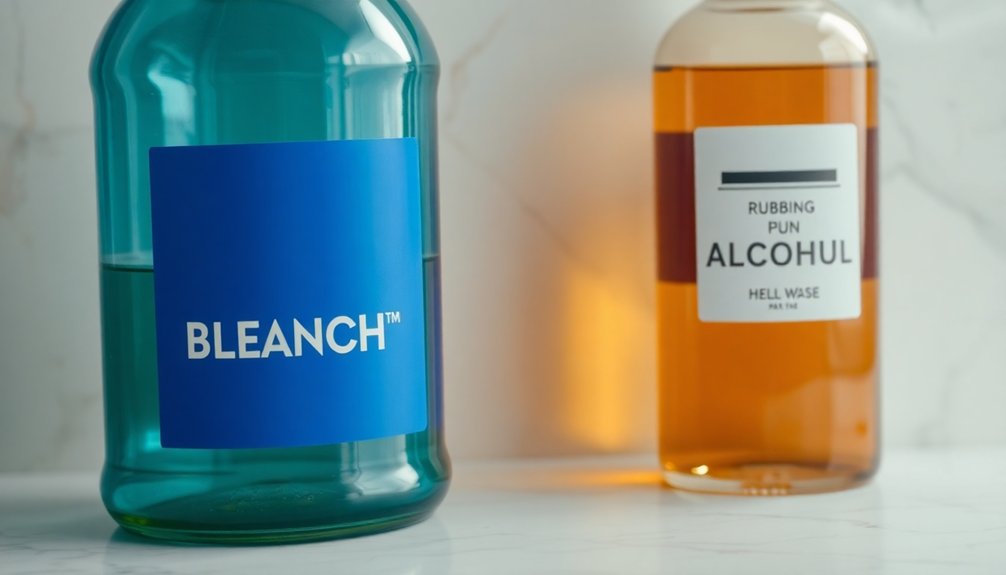
Combining bleach and rubbing alcohol is a recipe for disaster, as it produces chloroform—a highly toxic substance.
When you mix these two common cleaners, you not only create chloroform but also risk producing chlorine gas and other toxic fumes. Inhaling these vapors can lead to serious respiratory issues and even unconsciousness.
Both bleach and rubbing alcohol are effective on their own, but together, they pose severe health risks. Always read labels and never use these products in conjunction.
If you accidentally mix them, ventilate the area immediately and seek medical attention if you experience symptoms like coughing or difficulty breathing. Additionally, using eco-friendly methods for cleaning can help avoid such dangerous combinations altogether.
Your safety is paramount, so steer clear of this dangerous combination.
Hydrogen Peroxide and Vinegar
While hydrogen peroxide and vinegar are both popular cleaning agents on their own, mixing them can be dangerous.
Mixing hydrogen peroxide and vinegar can be hazardous; use them separately for safe and effective cleaning.
When you combine these two, they create peracetic acid, a corrosive substance that can irritate your skin, eyes, and respiratory system. This reaction can also damage surfaces, rendering them unsuitable for cleaning.
Although both hydrogen peroxide and vinegar effectively target different stains and germs when used separately, you must avoid mixing them to prevent the creation of toxic fumes. To enhance safety in your cleaning routine, consider utilizing eco-friendly cleaning products that reduce the risk of harmful reactions.
To stay safe, always rinse surfaces between applications if you plan to use both.
Drain Cleaner and Bleach
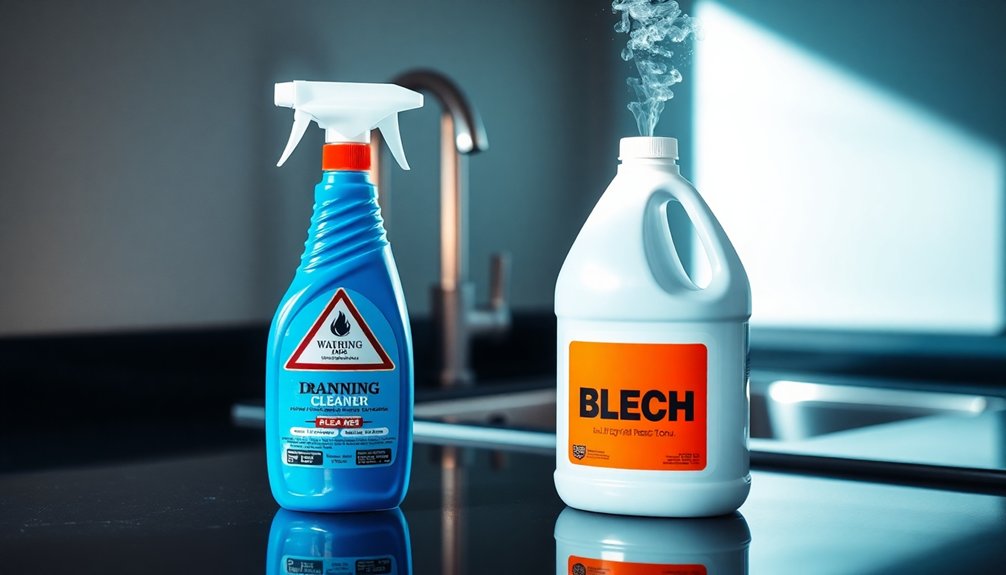
If you ever think about using drain cleaner and bleach together, you should reconsider. Mixing these two products creates toxic fumes, specifically chlorine gas, which can lead to serious respiratory issues and irritation in your eyes and throat.
Many drain cleaners contain strong acids or bases, and when combined with bleach, they can trigger dangerous chemical reactions that damage your plumbing system. Instead of risking your health and home, always read labels carefully and avoid using multiple cleaning products at once. If a drain cleaner fails to clear a clog, it’s much safer to call a professional plumber than to try mixing it with bleach. Emergency services are available from local drain cleaning companies that can handle stubborn clogs safely. Your safety should always come first when tackling stubborn clogs.
Conclusion
Mixing cleaning products can be as dangerous as playing with fire. To keep your home safe, always remember to avoid combining bleach with vinegar, ammonia, rubbing alcohol, or hydrogen peroxide. Even seemingly harmless products can create toxic reactions that harm your health. Just like a recipe gone wrong, the wrong mix can lead to disastrous results. Stick to using each cleaner separately, and your cleaning routine will be both effective and safe.