You can easily assign cleaning tasks to your kids based on their age. Toddlers can sort toys and spray surfaces, while preschoolers enjoy dusting and playing cleaning races. Early elementary kids can wipe down furniture and handle laundry sorting. Older elementary children might take on room cleaning and meal prep. Middle schoolers can manage common area cleanups. As your teens tackle their chores, it builds responsibility. Keep going to discover more age-specific tasks that will empower your kids!
Cleaning Tasks for Toddlers: Simple and Fun Activities

Cleaning with toddlers can be a fun adventure! Turning cleaning into toddler cleaning can keep your little ones engaged while teaching them valuable skills.
Start by creating a treasure hunt for small items around the house. As they search, they’ll be practicing their observational skills. You can also fill a spray bottle with water and let them “clean” surfaces, making it a fun activity.
Create a treasure hunt for small items and let toddlers “clean” with a spray bottle for a fun learning experience!
Encourage them to sort toys into bins, turning organization into a playful game. Singing songs or counting while they clean can add an extra layer of joy. To further enhance their experience, establish daily cleaning routines that provide both structure and enjoyment.
These simple activities not only lighten your cleaning load but also foster a sense of responsibility in your child, making chores a delightful bonding experience.
Age-Appropriate Chores for Preschoolers: Learning Through Play
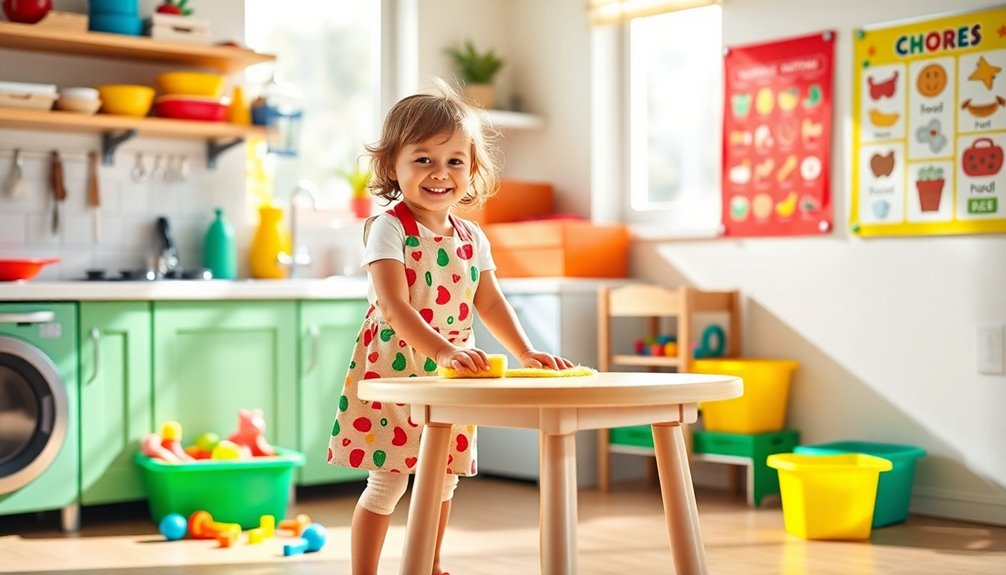
Preschoolers love to learn through play, and you can turn cleaning into a fun game! Simple tasks like sorting toys or wiping surfaces can teach them responsibility while keeping them engaged. Additionally, establishing a consistent cleaning routine helps normalize these chores and makes them part of their daily activities.
Fun Cleaning Games
Turning chores into games can make tidying up an exciting adventure for young children. You can create cleaning races where your preschoolers compete against the clock or each other to see who can pick up toys the fastest. Set a timer for a few minutes, and watch them dash around, giggling and having fun!
Incorporating chore charts adds an element of reward. Let your kids check off tasks as they complete them, turning the mundane into a sense of accomplishment.
For instance, after they’ve helped wipe down tables or sort laundry, they can earn stickers. This combination of cleaning races and chore charts not only keeps your home tidy but also teaches valuable skills while your little ones enjoy the process.
Simple Tasks For Learning
Age-appropriate chores offer a fantastic opportunity for young children to learn important skills while having fun. By introducing task variety, you can enhance their learning outcomes and keep them engaged.
Here are some simple tasks that preschoolers can enjoy:
- Sorting laundry: Kids can learn colors and patterns while helping you separate clothes.
- Dusting furniture: Use a feather duster or cloth to make it feel like a game, developing their motor skills.
- Watering plants: This teaches responsibility and nurtures a love for nature.
These chores not only promote independence but also help instill a sense of accomplishment.
Cleaning Tasks for Early Elementary Kids: Building Responsibility
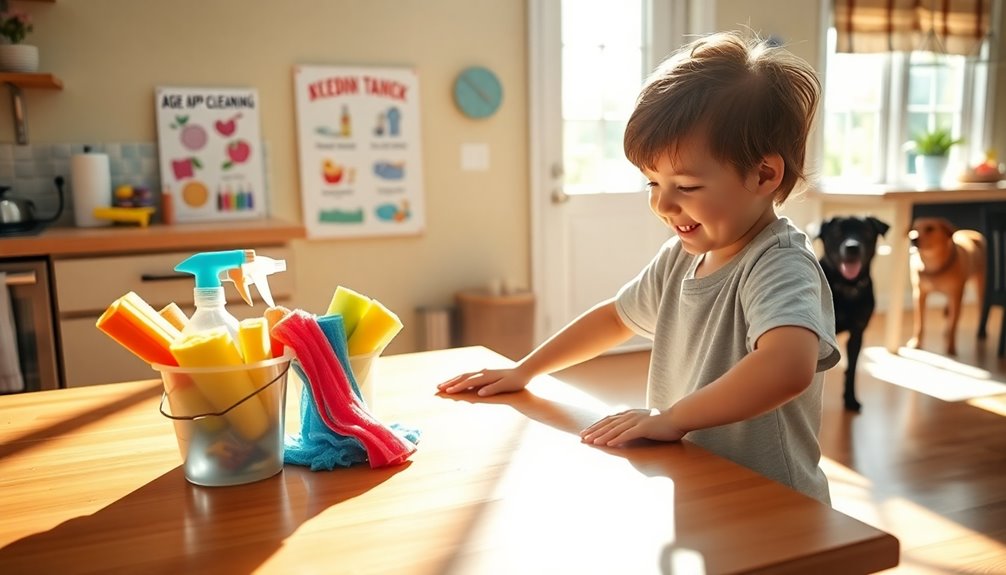
As early elementary kids grow, it’s a great time to introduce them to age-appropriate cleaning tasks that build responsibility. By giving them simple chores, you encourage their independence and help them take pride in their contributions. Let’s explore some effective ways to make cleaning a fun and valuable learning experience. Involving children in chores fosters essential life skills that will benefit them in the future.
Age-Appropriate Tasks
At ages 5 to 8, children are ready to take on simple cleaning tasks that help build their sense of responsibility. Implementing age-appropriate responsibilities through chore delegation strategies can make a difference in their development.
Here are a few tasks you can assign:
- Sorting and putting away toys
- Wiping down surfaces with a damp cloth
- Dusting low furniture
These tasks not only keep your home tidy but also empower your kids to contribute. By delegating these chores, you’re teaching them the value of teamwork and accountability.
Plus, it’s a great way for them to gain confidence in their abilities, setting the stage for more complex responsibilities as they grow.
Encouraging Independence
While kids are mastering simple cleaning tasks, it’s important to encourage their independence in the process. Allowing them to take charge of their responsibilities fosters confidence and helps them develop vital life skills.
Start by assigning age-appropriate tasks, like making their bed or sorting laundry. Celebrate their efforts and achievements, no matter how small, to reinforce the independence benefits. When they feel accomplished, it boosts their self-esteem and motivates them to tackle more challenging tasks.
Encourage them to create a cleaning schedule, promoting ownership of their space. By giving them the freedom to manage their chores, you’re not just teaching cleanliness; you’re nurturing responsible, independent individuals ready to take on the world!
Household Chores for Older Elementary Kids: Encouraging Independence
Encouraging independence in older elementary kids can be a rewarding experience, especially when you introduce them to household chores. By allowing them to take on responsibilities, you help them develop essential independence skills and a sense of task ownership.
Encouraging older elementary kids to take on household chores fosters independence and instills a sense of responsibility.
Here are a few chores that are perfect for this age group:
- Sorting laundry: Teach them to separate colors and whites.
- Preparing simple meals: Let them make breakfast or pack their lunches.
- Cleaning their rooms: Encourage them to organize their belongings and keep the space tidy.
These activities not only foster independence but also boost their confidence. As your kids tackle these chores, they’ll learn valuable life skills while contributing to the household, making the experience beneficial for everyone involved. Additionally, teaching them to handle simple tasks like unclogging drains can further enhance their problem-solving skills and practical knowledge.
Cleaning Responsibilities for Middle Schoolers: Taking It Up a Notch
As your middle schooler grows, it’s time to ramp up their cleaning responsibilities. Assigning age-appropriate tasks not only builds their responsibility skills but also encourages teamwork at home. Involving them in daily cleaning tasks can help instill good habits early on.
Age-Appropriate Tasks
When kids reach middle school, it’s the perfect time to elevate their cleaning responsibilities, ensuring they develop essential life skills. At this age, you can set age-based expectations that challenge them while promoting independence.
Consider implementing a chore rotation that includes tasks like:
- Vacuuming and sweeping common areas
- Cleaning bathrooms, including sinks and mirrors
- Organizing their personal spaces and shared areas
These tasks not only teach them accountability but also encourage teamwork in maintaining your home.
Building Responsibility Skills
While middle schoolers are gaining more independence, it’s important to harness that energy into building responsibility through cleaning tasks. You can delegate chores like vacuuming, doing laundry, or organizing their space.
These tasks not only promote responsibility reinforcement but also facilitate skill development. Encourage them to keep track of their own cleaning schedules, fostering accountability. As they complete these responsibilities, they’ll gain confidence and a sense of ownership over their environment.
Don’t forget to provide guidance initially, but gradually let them take the lead. Celebrate their successes to motivate them further.
Encouraging Teamwork Efforts
To foster a sense of teamwork among middle schoolers, consider assigning group cleaning tasks that encourage collaboration. This not only makes cleaning more enjoyable but also helps them develop teamwork strategies.
Here are some effective ideas for collaborative cleaning:
- Room Makeover: Divide the room into sections and have each child responsible for their area, working together to create a cohesive look.
- Supplies Organizer: Have them sort and organize cleaning supplies as a team, fostering communication and planning.
- Challenge Time: Set a timer and see how quickly they can complete a task together, promoting friendly competition.
Chores for Teens: Balancing Independence With Family Support
As teens grow more independent, finding the right balance between responsibility and support can be challenging for families. You want to encourage their autonomy while ensuring they understand family dynamics.
Start by assigning age-appropriate chores that promote responsibility without overwhelming them. Tasks like laundry, meal prep, or cleaning their rooms can instill a sense of accountability. Incorporating a streamlined cleaning routine can also help them learn effective organization skills while contributing to a clean home environment.
However, it’s vital to provide independence support by being available for guidance when needed. Check in on their progress but resist the urge to micromanage.
This balance helps them develop significant life skills while fostering a sense of belonging in the family. Remember, it’s about creating a nurturing environment where they can thrive as both responsible individuals and valued family members.
The Benefits of Involving Toddlers in Cleaning Tasks
Getting toddlers involved in cleaning tasks can foster a sense of responsibility from an early age. As they help with simple chores, they also enhance their motor skills through fun, hands-on activities. You’ll be amazed at how much they learn while contributing to the family! Engaging them in chores can create a positive atmosphere for collaboration and foster teamwork as they participate in maintaining a tidy home.
Building Responsibility Early
While many parents might hesitate to involve toddlers in cleaning tasks, doing so can lay a strong foundation for responsibility.
Starting early helps your child develop essential habits that last a lifetime. Here are some responsibility benefits of involving your toddler in cleaning:
- They learn the importance of contributing to family life.
- It fosters a sense of pride in their space.
- You create opportunities for teamwork and bonding.
Enhancing Motor Skills
Involving your toddler in cleaning tasks not only teaches responsibility but also enhances their motor skills. Simple activities like wiping surfaces or sorting toys require them to use their hands and develop physical coordination.
As they grasp a cloth or pick up small items, they strengthen their grip and improve hand-eye coordination. These tasks encourage your toddler to move around, promoting overall physical development.
Plus, the repetition of these actions helps solidify their motor skills over time. By making cleaning fun and engaging, you’re giving them the chance to practice these essential abilities while contributing to the household.
Ultimately, you’re not just tidying up; you’re nurturing their growth and development in a meaningful way.
How Can Preschoolers Contribute to Household Chores?
Preschoolers can play a valuable role in household chores, making them feel included and responsible. Engaging them in preschool chores can turn cleaning into fun activities that build their confidence.
Here are some simple tasks you can delegate:
- Sorting laundry: Let them separate colors and whites, making it a colorful game.
- Dusting surfaces: Use a soft cloth and let them explore different textures around the house.
- Picking up toys: Create a race to see how fast they can put their toys away.
These tasks not only help you maintain a tidy home but also teach your little ones about responsibility.
Involving preschoolers in chores makes them feel like important contributors to the family, fostering teamwork and pride in their efforts.
Engaging Early Elementary Kids in Meaningful Cleaning Activities
As kids shift into early elementary school, they’re ready to take on more meaningful cleaning activities that not only lighten your load but also instill a sense of ownership and pride.
Start by incorporating cleaning routines that are simple and age-appropriate. For instance, have them sort laundry by colors or dust furniture with a cloth. These engaging activities make chores feel like fun rather than a burden.
You can also create a cleaning chart that tracks their progress, motivating them to complete tasks. Involving them in meal prep clean-up or organizing toys can further cultivate responsibility. Additionally, utilizing visual tools like wall planners can help children understand and manage their cleaning tasks effectively.
Developing Skills Through Chores for Older Elementary Kids
By the time kids reach older elementary school, they can handle more complex chores that not only contribute to household upkeep but also help them develop valuable skills.
Engaging them in these tasks fosters responsibility development and boosts chore motivation. Here are some effective chores for this age group:
- Laundry management: Sorting, washing, and folding clothes teaches organization.
- Meal prep: Simple cooking tasks encourage planning and time management.
- Cleaning common areas: Regularly tidying shared spaces develops teamwork and pride in their environment.
These chores not only lighten your load but also empower your kids with essential life skills. Additionally, implementing a structured daily cleaning schedule can help them understand the importance of consistent upkeep in a home.
Encouraging Teamwork Among Siblings With Shared Cleaning Tasks
While siblings often squabble over chores, turning cleaning tasks into a cooperative effort can strengthen their bond and teach them valuable teamwork skills.
By assigning shared responsibilities, you encourage sibling cooperation that fosters communication and problem-solving. For instance, have them tackle the same room together—one can dust while the other vacuums.
This not only makes cleaning more enjoyable but also helps them appreciate each other’s efforts. Set a timer for added excitement; they’ll work together to finish before time runs out.
Celebrate their accomplishments with a small reward, reinforcing their collaboration. Over time, they’ll learn that teamwork makes tasks easier and more fun, turning chores into an opportunity for bonding rather than a source of conflict. Implementing a daily tidy-up routine can also help them stay organized and engaged in their cleaning responsibilities.
Teaching Time Management Skills Through Middle School Chores
To help middle schoolers develop essential time management skills, assigning them specific chores can be an effective strategy. By giving them responsibilities, you encourage chore organization and help them learn to balance tasks.
Consider these chores to enhance their skills:
- Daily clean-up: Set a time limit for tidying their room or common areas.
- Weekly laundry: Teach them to schedule and prioritize their laundry day.
- Meal prep: Allow them to plan and prepare meals, managing their time efficiently.
These tasks not only foster a sense of responsibility but also provide valuable lessons in planning and execution.
Fostering responsibility through chores teaches essential planning and execution skills for future challenges.
As they tackle these chores, they’ll master the art of time management, preparing them for future challenges.
How to Motivate Teens to Take on Household Cleaning Responsibilities?
Motivating teens to take on household cleaning responsibilities can be challenging, especially when they’d rather be engrossed in their social lives or hobbies.
To get your teens involved, try incentivizing chores with rewards they value, like extra screen time or a night out with friends. You might find that peer influence plays a significant role; if their friends see cleaning as a normal part of life, your teen may feel more inclined to join in.
Make the tasks more appealing by turning them into a friendly competition or group effort. Highlight the benefits of a clean space, like having friends over without embarrassment, and watch their motivation grow! Engaging them in the process can make all the difference.
Creating a Cleaning Schedule That Works for All Ages
Getting everyone involved in cleaning can be much easier with a well-organized schedule that accommodates all ages. A cleaning checklist helps everyone know their tasks, while chore rotation keeps things fresh.
A well-organized cleaning schedule with chore rotation fosters teamwork and keeps everyone engaged in maintaining a tidy home.
Here’s how to create a schedule that works for your family:
- Assign age-appropriate tasks: Younger kids can handle simple chores, while teens can tackle more complex responsibilities.
- Rotate chores weekly: This keeps everyone engaged and prevents boredom.
- Set specific days: Designate days for particular tasks, like vacuuming or laundry, so everyone knows when to pitch in.
Tips for Making Chores Enjoyable for Kids of All Ages
While chores might seem like a drag, there are plenty of ways to make them fun for kids of all ages. Start by turning tasks into a game; set a timer and challenge them to finish before it goes off.
Use music to create an upbeat atmosphere—dancing while cleaning can boost chore motivation! You can also set up a rewards system, where kids earn fun rewards like extra screen time or a small treat for completing their chores.
Involve them in choosing their tasks and let them personalize their cleaning space. By making chores enjoyable, you’ll not only lighten the load but also instill a sense of responsibility and accomplishment in your kids.
Common Challenges and Solutions When Delegating Chores
Although delegating chores can foster responsibility, it often comes with its own set of challenges. You might face chore resistance, especially with kids who feel overwhelmed or uninterested.
Delegating chores can build responsibility, but it often leads to resistance from kids feeling overwhelmed or uninterested.
Additionally, age gaps can complicate teamwork, making it tough to assign age-appropriate tasks. Here are some common challenges and solutions:
- Inconsistent effort: Set clear expectations and check in regularly.
- Resistance to chores: Make chores fun by incorporating games or rewards.
- Uneven workload: Balance tasks based on each child’s age and ability, so everyone contributes fairly.
Conclusion
By involving your kids in cleaning tasks, you’re not just tidying up; you’re planting seeds of responsibility and teamwork. Think of it like gardening: with a little guidance, kids can grow into capable helpers, just like seedlings flourish into strong plants. As you create a cleaning schedule and find ways to make chores fun, you’ll watch them thrive, building essential life skills while keeping your home in order. So, roll up your sleeves and dig in together!