To conquer grease and grime on your stove, establish a consistent cleaning routine. Wipe down surfaces after cooking to prevent buildup and tackle spills immediately. Use effective supplies like white vinegar, baking soda, and mild dish soap to cut through stubborn grease. Different stove types require specific techniques, so adapt your cleaning method accordingly. By staying on top of maintenance, you guarantee a hygienic cooking space. Discover more tips for achieving a spotless stove along the way!
The Importance of Regular Stove Cleaning
When you neglect to clean your stove regularly, you increase the risk of grease buildup, which can attract pests and create health hazards in your kitchen.
Regular cleaning is essential for maintaining hygiene and preventing grease from becoming a stubborn problem. Wiping down your stovetop after each use can save you time during deep cleaning sessions, keeping your kitchen looking fresh.
Incorporate maintenance tips like cleaning stovetop grates at least once a week, especially if you cook frequently. A clean stove not only improves stove efficiency but also enhances the overall aesthetic appeal of your kitchen. Additionally, proper grease removal prevents health hazards that can arise from accumulated grease and grime.
Understanding Kitchen Grease and Its Effects
Kitchen grease isn’t just a nuisance; it can lead to serious health risks if left unchecked. You risk attracting pests and contaminating your food, all while compromising your indoor air quality. Understanding how grease builds up and taking steps to prevent it is essential for a safe and clean cooking space. Regular cleaning is crucial to prevent sticky grease layers.
Health Risks of Grease
Although cooking can be a joyful experience, neglecting grease buildup in your kitchen can lead to serious health risks. Accumulated grease and grime create a breeding ground for harmful bacteria, increasing the risk of foodborne illnesses when you prepare food in contaminated spaces.
Additionally, the presence of grease contributes to poor indoor air quality, releasing unpleasant odors and potentially harmful fumes when heated.
Furthermore, cooking with excess grease poses a fire hazard, as grease fires are a leading cause of residential fires, especially when ignited by high heat.
Regularly using effective cleaning techniques to remove grease not only promotes a cleaner environment but also enhances the efficiency and longevity of your kitchen appliances and stove top, minimizing health hazards.
Grease Buildup Prevention Tips
To keep grease buildup at bay, it’s vital to establish a consistent cleaning routine in your cooking space.
Start by wiping down your stovetop surface daily after cooking to prevent grease accumulation. Clean spills immediately, as letting them harden makes the cleaning process more challenging.
For stainless steel surfaces, use effective cleaning supplies like natural cleaning solutions, such as lemon juice or club soda, for a thorough cleaning.
Don’t forget to regularly soak range hood filters in soapy water to maintain a grease-free kitchen.
Finally, guarantee proper ventilation by running a fan or opening windows while cooking.
These simple steps will help you conquer grease and maintain a spotless stove.
Essential Cleaning Supplies for a Spotless Stove
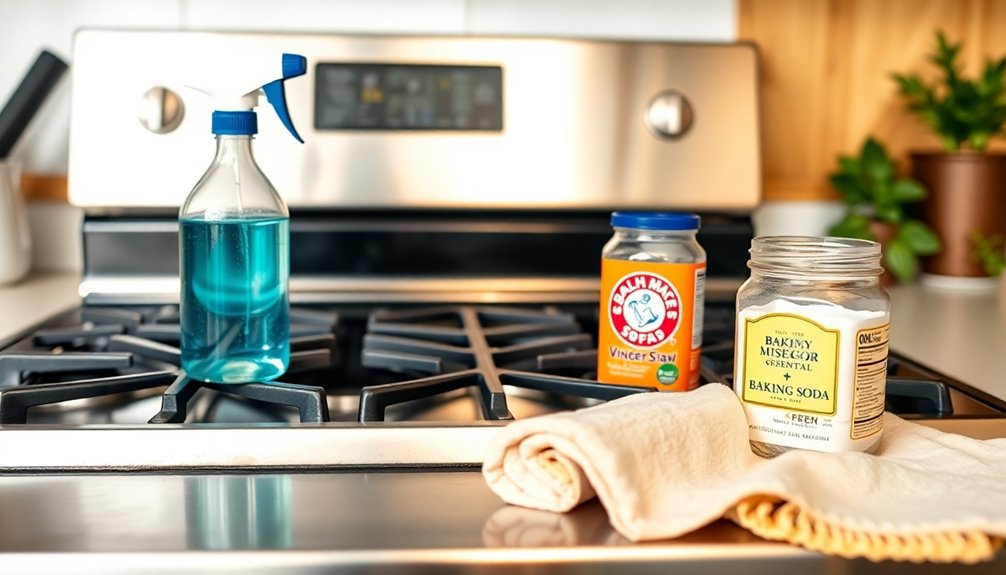
A few essential cleaning supplies can make all the difference in achieving a spotless stove. Start with white vinegar and baking soda; vinegar cuts through grease while baking soda absorbs odors and provides gentle abrasion.
Combine mild dish soap with warm water for a powerful cleaning solution that breaks down oil without damaging your stove’s surface. Use microfiber cloths and soft sponges to trap dirt effectively, protecting delicate finishes.
For tougher grime, a scrub brush or a non-abrasive sponge like Scotch Brite Heavy Duty Scour Pads can help tackle stubborn stains without scratching.
Consider mixing vinegar, warm water, and dish soap in a spray bottle for easy application on greasy areas, ensuring your stove shines after every clean. Additionally, incorporating eco-friendly alternatives in your cleaning routine not only enhances effectiveness but also promotes a healthier kitchen environment.
Step-by-Step Guide to Cleaning Gas Stoves
Cleaning your gas stove doesn’t have to be an intimidating task; with the right approach, you can have it looking brand new in no time.
Start by ensuring the stove is completely cool and turning off the burners. Remove the grates and burner caps, soaking them in warm soapy water for 15-30 minutes to loosen any grease or food debris.
For tough stains, make a baking soda paste with vinegar, apply it to the spots, and let it sit for 10-15 minutes before scrubbing with a non-abrasive sponge.
After scrubbing, wipe down the stovetop surface with a damp cloth. Proper kitchen grease cleanup is essential for maintaining a safe and healthy cooking environment.
Finally, dry all components thoroughly before reassembling to prevent moisture issues and keep your gas stove in top shape.
How to Clean Electric and Induction Stoves
While it might seem challenging at first, keeping your electric or induction stove spotless is quite manageable with the right techniques.
Start by ensuring the coils are completely cool. Use a damp cloth to wipe them down, then make a paste with baking soda for tough stains. Apply it and let it sit for 10-15 minutes before you scrub gently with a non-abrasive sponge.
Ensure coils are cool, wipe with a damp cloth, then use a baking soda paste for tough stains.
For dirty drip pans, remove them and wash in warm soapy water, using baking soda to tackle any remaining grime. For stubborn stains, mix equal parts vinegar and baking soda, apply it, and let it sit before scrubbing. Additionally, maintaining cleanliness with monthly cleaning can help prevent buildup and keep your stove looking great.
Finally, rinse with warm water and dry with a clean dry cloth for a sparkling finish.
Techniques for Cleaning Glass-Top Stoves
When it comes to maintaining your kitchen, glass-top stoves require a slightly different approach than electric or induction models.
Start by wiping down the surface with a soft cloth to remove loose debris. For stubborn stains and grease, sprinkle baking soda over the stovetop and spray white vinegar on top for a fizzing reaction that lifts grime.
Use hot, soapy water on a damp sponge, placing it on the stove for 15 minutes to loosen stuck food. For tough stains, make a baking soda paste with equal parts water, apply it, and let it sit for 10-15 minutes before gently scrubbing with a non-abrasive scrubber. A clean oven enhances cooking performance and efficiency.
If needed, use a razor blade at a 45-degree angle to scrape off any remaining debris.
Routine Maintenance to Prevent Grease Buildup
To keep your stove looking pristine, daily maintenance is essential. Wipe down your stovetop and counters with a damp cloth after cooking to remove grease and food residue before they harden. Address spills immediately; the longer you wait, the tougher the stains will be.
On a weekly basis, use baking soda on greasy spots for effective scrubbing. Don’t forget to soak your range hood filters in soapy water monthly to maintain their grease removal efficiency and prevent lingering odors.
Additionally, ventilate your kitchen by running a fan or opening windows while cooking. This simple routine will greatly reduce grease buildup and keep your kitchen clean, minimizing the need for costly cleaning services down the line. Using an effective disinfectant spray can further enhance your kitchen’s cleanliness and safety.
Natural Alternatives for Effective Degreasing
Natural alternatives for effective degreasing can make your cleaning routine both eco-friendly and efficient.
You’ll love how easily these natural degreasers tackle stubborn grease stains on your stove.
Try these powerful cleaning agents:
- Baking soda paste for tough spots
- Vinegar for grease-cutting power
- Lemon juice mixed with water for a fresh scent
- Cornstarch to absorb excess oil
- Club soda for lifting light grease
Combine equal parts baking soda and water to form a paste, applying it to pesky grease stains.
Let it sit for 10-15 minutes, then scrub it away.
Use vinegar alone or with baking soda for a foaming reaction that loosens grime.
Your stove will shine! Additionally, using natural cleaning agents like vinegar and baking soda minimizes exposure to harmful chemicals.
Conclusion
Keeping your stove clean isn’t just about looks—did you know that 28% of kitchen fires are caused by grease buildup? By regularly cleaning your stove, you’re not only enhancing your kitchen’s appearance but also ensuring the safety of your home. Remember, a little maintenance goes a long way in preventing dangerous situations. So, grab your cleaning supplies and make it a habit; your stove—and your peace of mind—will thank you!