To deep clean your freezer, unplug it and empty all items. Defrost it using hot water, then wipe surfaces with a vinegar-water mix. For stubborn stains, use a baking soda paste. Organize foods by category and label containers with dates. Regular cleaning prevents odors and guarantees freshness, while an updated inventory helps you reduce waste. Stick around for more tips on maintenance and maximizing your freezer’s efficiency.
Why Regular Freezer Cleaning Is Essential
Cleaning your freezer helps prevent ice buildup, ensuring energy efficiency and lowering electricity costs by allowing your appliance to operate effectively. A clean freezer also promotes food safety, reducing health risks linked to mold and bacteria growth, which can lead to food contamination. Plus, maintaining a well-organized freezer enables easier inventory management, so you can locate items quickly and minimize food waste by using older products first. Regular cleaning eliminates unpleasant odors, ensuring a more pleasant experience when accessing frozen food. Ultimately, it can prolong the lifespan of your freezer, maintaining its performance for years to come. Additionally, regular maintenance prevents buildup and odors in both the sink and garbage disposal, enhancing overall kitchen hygiene.
Step-by-Step Guide to Cleaning Your Freezer
Maintaining a clean freezer is straightforward with the right approach. Follow these steps to guarantee your freezer is hygienic and organized:
Keeping your freezer clean is easy with the right steps, ensuring a hygienic and well-organized space.
- Unplug and Empty: Start by unplugging the freezer and removing all food items. Keep perishables cool with ice packs.
- Defrost: Leave the door open or place a bowl of hot water inside to speed up defrosting. Lay towels at the bottom to soak up water.
- Clean: Use a gentle cleaning agent, like a mix of vinegar and water, to wipe down surfaces, including removable shelves and gaskets. Regularly using non-toxic cleaners ensures a safe cleaning process while maintaining hygiene.
For stubborn stains, apply a baking soda paste, let it sit for 15-20 minutes, then rinse.
Finally, replace the shelves and organize your food items to eliminate mildew odors and reduce waste.
Recommended Cleaning Supplies and Solutions
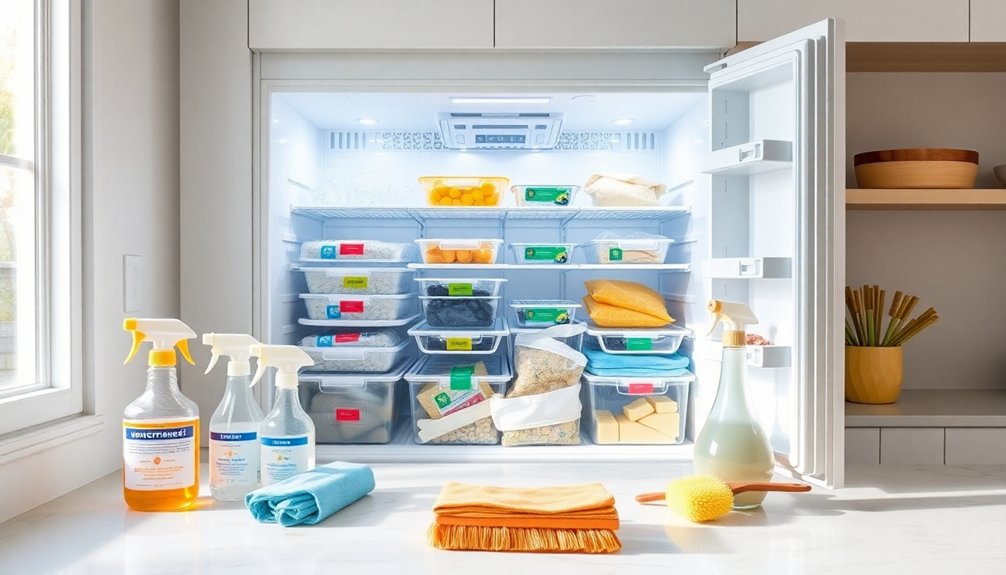
To effectively clean your freezer, you’ll need a few essential supplies that make the process easier and more efficient.
Start with a cleaning solution; you can use a homemade mix of equal parts white vinegar and warm water, which acts as a natural disinfectant. For tough stains, combine baking soda with warm water—1 to 2 tablespoons in a cup works well for deodorizing.
You’ll also need mild dish soap mixed with warm water for cleaning removable shelves and drawers. Equip yourself with microfiber cloths, sponges, and paper towels for scrubbing and drying.
Avoid harsh chemicals, as they may leave residue. By sticking to these natural solutions, you’ll achieve a thorough clean while ensuring your freezer remains hygienic. Additionally, consider using eco-friendly options like Seventh Generation All-Purpose Cleaner, which is effective and safe for sensitive skin.
Tips for Dealing With Unpleasant Odors
To tackle unpleasant odors in your freezer, start by identifying the sources of those smells. Using natural deodorizers like baking soda can help absorb unwanted scents, while regular maintenance guarantees your freezer stays fresh. Regularly cleaning surfaces and sealing porous materials is essential for maintaining a pristine kitchen environment and preventing odor buildup. Let’s explore how to keep your freezer odor-free with some effective tips.
Identify Odor Sources
Unpleasant odors in your freezer can stem from a few common sources, making it essential to identify them early.
To tackle these odors effectively, consider the following steps:
- Inspect Food: Regularly check for expired or spoiled food items. Remove and discard anything that’s freezer-burned or long past its expiration date.
- Clean Spills: Any spills should be thoroughly cleaned. Use a solution of one tablespoon of bleach per gallon of water for deep cleaning.
- Address Ice Buildup: Ice buildup can trap odors. Remove it during your cleaning process and place an open box of baking soda in the freezer to neutralize lingering smells.
Use Natural Deodorizers
Identifying odor sources is just the first step in ensuring your freezer stays fresh. To tackle unpleasant smells, consider using natural deodorizers like baking soda. Simply place an open box in your freezer; it’ll absorb odors for up to three months.
For disinfecting and odor neutralization, mix vinegar with water in a spray bottle and wipe down surfaces. Activated charcoal is another fantastic option for odor absorption—just leave a container inside.
If lingering odors persist, try placing a bowl of ground coffee or cat litter in there for a few days.
Regular Maintenance Tips
While it might seem tedious, regular maintenance is key to keeping your freezer smelling fresh and free of odors. Here are some effective tips to help you out:
1. Clean the interior: Use a solution of equal parts white vinegar and water for thorough cleaning.
For persistent odors, scrub with a bleach solution and air out the freezer for two days.
2. Use baking soda: Place an open box inside to absorb odors, replacing it every three months for best effectiveness.
3. Discard any expired or freezer-burned items: Regularly inspect your food stash to keep your appliance hygienic and food safe.
Organizing Your Freezer for Maximum Efficiency
To maximize efficiency, start by categorizing your food items into groups like meats, veggies, and desserts.
Use clear containers and label them with contents and dates to keep track of what you have.
This simple organization system makes it easy to find what you need and reduces food waste. Additionally, consider implementing drawer dividers to further enhance organization and visibility within your freezer.
Categorize Food Items
Organizing your freezer by categorizing food items can transform the way you access and manage your meals.
To maximize efficiency and minimize food waste, follow these steps:
- Group similar items together: Organize food categories like meats, vegetables, and prepared meals to streamline meal preparation.
- Use clear bins: Label each bin with contents and expiration dates for easy inventory management.
- Prioritize accessible locations: Place frequently used items at eye level and implement the “first in, first out” method to guarantee older items are used first.
Use Clear Containers
After categorizing your food items, it’s time to enhance your freezer’s organization further by incorporating clear containers.
Use clear containers to boost visibility, allowing you to quickly locate items and reduce rummaging time. Stackable clear containers maximize vertical space, helping you organize efficiently and preventing items from being lost in the back.
Opt for freezer-safe options to maintain food quality, reducing the risk of freezer burn while allowing you to store items in convenient portion sizes.
Additionally, regularly reorganizing your clear containers facilitates better air circulation, enhancing energy efficiency and prolonging the lifespan of your stored food.
Prioritize labeling your containers to streamline inventory management and minimize food waste.
Label and Date
Proper labeling and dating of food items in your freezer can greatly reduce food waste and save you time. By using clear, waterproof labels on freezer-safe containers, you can quickly identify contents and keep an organized freezer.
Follow these tips to maximize efficiency:
- Group similar items together (meats, vegetables, prepared meals) for easy access.
- Use the first in, first out method to guarantee you’re consuming older items before newer ones.
- Create a freezer inventory list on the door to track contents and expiration dates.
These strategies help you manage freezer space effectively and guarantee you’re using items in a timely manner, ultimately reducing food waste.
Maintenance Tips for a Long-Lasting Freezer
To keep your freezer running efficiently and prolong its lifespan, regular maintenance is crucial.
Start by cleaning your freezer every 3 to 6 months with a deep cleaning session. Wipe down surfaces, clean the coils, and check door seals for cracks. This helps reduce energy consumption and maintains consistent temperatures.
Regularly clean your freezer every 3 to 6 months to enhance efficiency and ensure consistent temperatures.
Don’t forget to defrost your freezer to minimize ice buildup. Immediately clean spills to prevent odors and mold growth, and monitor for any unpleasant smells.
Use storage bins to keep items organized and practice the “first in, first out” method for stock rotation.
Finally, vacuum the coils and compressor every 5-8 months to guarantee ideal airflow and cooling performance—your freezer will thank you! Additionally, consider the benefits of using eco-friendly tools for cleaning to protect both your health and the environment.
Conclusion
Cleaning your freezer might seem like a chore, but it’s essential for maintaining food safety and maximizing storage space. Did you know that a clean freezer can improve energy efficiency by up to 30%? By following the steps outlined, you’ll not only enjoy a more hygienic environment but also save money on energy bills. So, roll up your sleeves, grab those cleaning supplies, and give your freezer the attention it deserves for a more organized, efficient kitchen.