Descaling your kettle with citric acid is effective because it naturally dissolves limescale buildup from calcium and magnesium. It’s safe, eco-friendly, and cost-effective compared to commercial descalers. By using citric acid, you enhance your kettle’s performance while preventing future mineral deposits. Plus, it’s easy to apply with a simple mixture of water and citric acid. If you’re looking for more tips on descaling and alternative methods, there’s plenty more to discover.
Understanding Limescale and Its Impact on Kettles
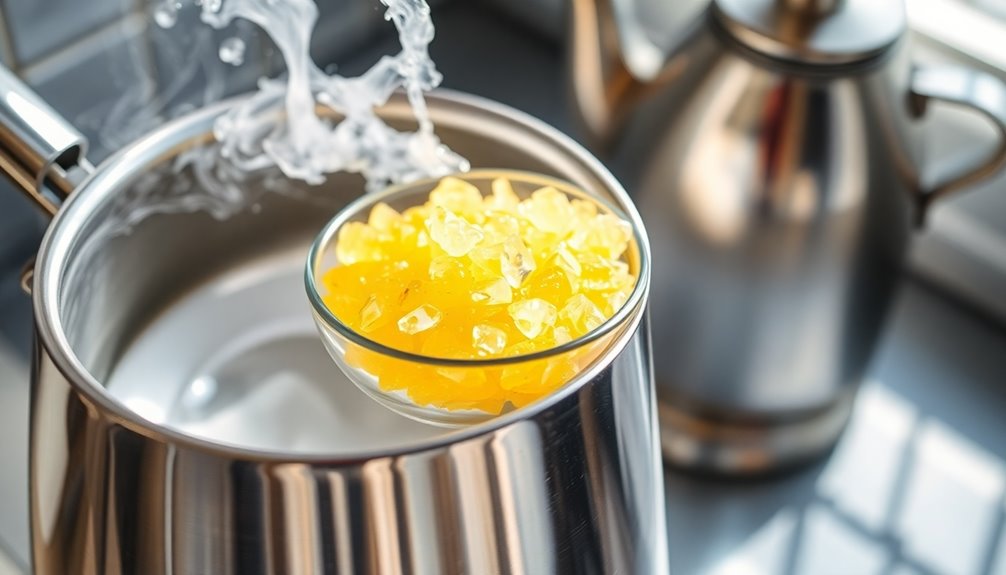
Limescale is an unwelcome guest that can wreak havoc on your kettle. As you repeatedly heat water, minerals like calcium and magnesium build up, leading to limescale formation.
This buildup not only affects the kettle’s efficiency but can also alter the taste of your hot beverages. Regular kettle maintenance is key to preventing limescale from becoming a serious issue. If you notice a white, chalky residue, it’s time to take action. Ignoring limescale can result in longer boiling times and even damage your kettle over time. Additionally, using non-toxic cleaning solutions can help ensure a safer kitchen environment while effectively removing limescale.
Why Choose Citric Acid for Descaling?
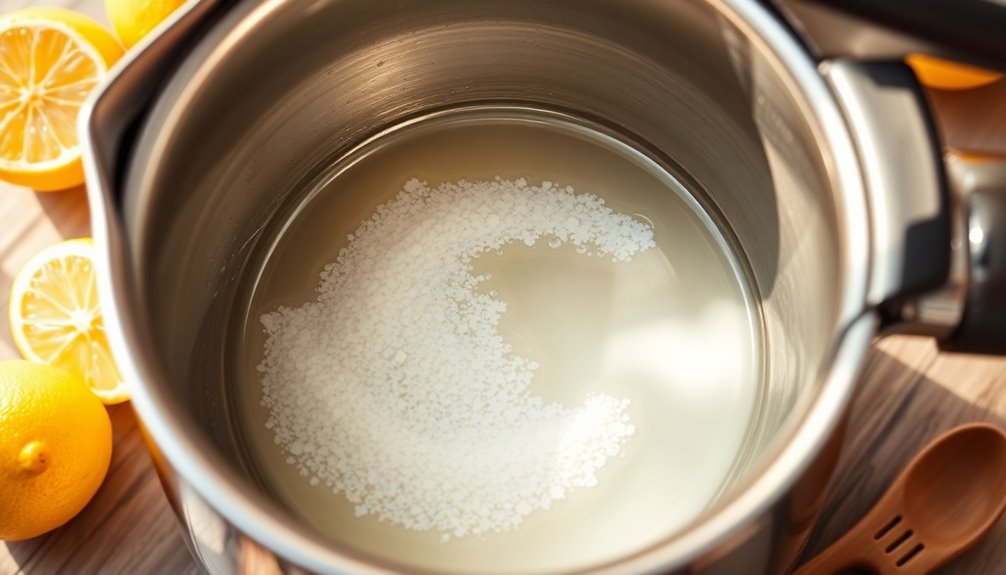
Many people prefer using citric acid for descaling kettles due to its effectiveness and natural properties.
Citric acid is a popular choice for descaling kettles, thanks to its natural effectiveness and eco-friendly properties.
It’s a safe, eco-friendly option that offers several citric acid benefits.
Here’s why you should choose citric acid for your descaling needs:
- Non-toxic: Safe for you and the environment.
- Cost-effective: An affordable solution compared to commercial descalers.
- Versatile: Works on various appliances, not just kettles.
- Easy to use: Simple application process that saves you time.
- Limescale prevention: Helps inhibit future build-up, prolonging your kettle’s lifespan. Additionally, using baking soda and vinegar can be an effective method for maintaining other appliances in your home.
How Citric Acid Works to Remove Limescale
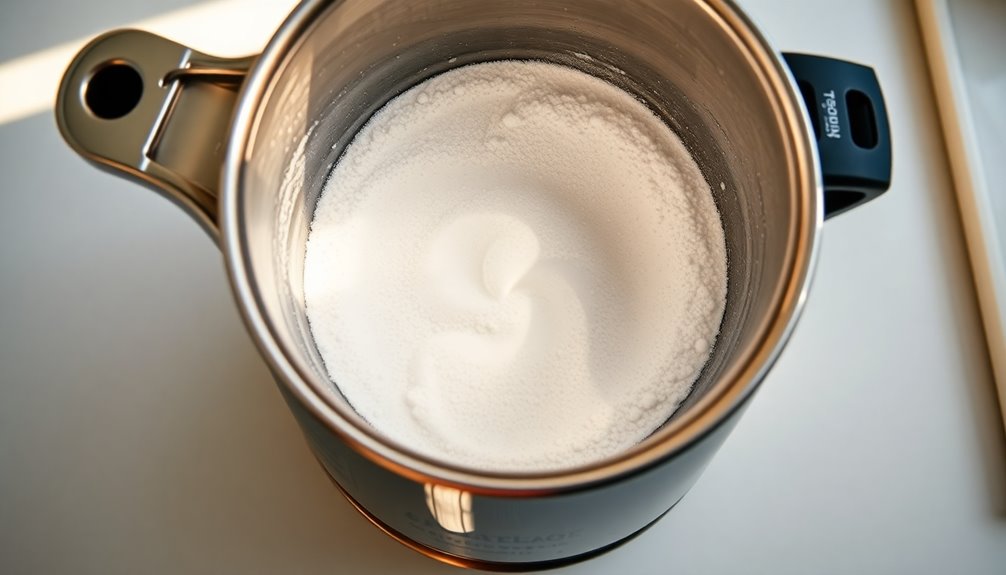
Citric acid’s natural acidic properties make it a powerful tool for tackling limescale buildup in your kettle. When you use it, the acid effectively dissolves the minerals that create that stubborn residue. Plus, it’s safe for all kettle materials, so you don’t have to worry about damaging your appliance. Additionally, using citric acid aligns with eco-friendly products, promoting a healthier cleaning choice for both your kettle and the environment.
Natural Acidic Properties
When you tackle limescale buildup in your kettle, the natural acidic properties of citric acid come into play effectively. This powerful ingredient works by creating acidic solutions that interact with the mineral deposits.
Here’s how it helps:
- Breaks down calcium deposits
- Dissolves magnesium buildup
- Prevents future limescale formation
- Enhances kettle performance
- Safe for your appliances
These natural acids are gentle yet effective, ensuring your kettle remains in top shape without harsh chemicals.
By using citric acid, you’re not just cleaning; you’re also prolonging the life of your kettle while enjoying perfectly boiled water.
Embrace the power of citric acid and keep your kettle limescale-free!
Effective Limescale Dissolution
As you tackle limescale in your kettle, understanding how citric acid works can make the process much easier.
Citric acid, a natural compound found in citrus fruits, effectively dissolves limescale formation due to its ability to break down calcium carbonate deposits.
When you mix citric acid with water and heat it, the acid reacts with the minerals, causing them to dissolve and wash away.
This reaction not only helps remove existing limescale but also aids in preventing future buildup, making it an essential part of your kettle maintenance routine.
Safe For Kettle Materials
While many descaling agents can be harsh on kettle materials, citric acid stands out as a safe and effective option. It gently removes limescale without damaging your kettle, making it a top choice for maintenance.
Here are some reasons why citric acid is a preferable solution:
- Non-toxic: It’s safe for you and the environment.
- Gentle: It won’t scratch or corrode kettle materials.
- Cost-effective: Citric acid is inexpensive and widely available.
- Natural: Derived from citrus fruits, it’s a safe alternative to synthetic chemicals.
- Versatile: Besides kettles, it can be used on various appliances.
Using citric acid guarantees your kettle remains functional and aesthetically pleasing, proving that effective descaling doesn’t have to come at the cost of safety.
Comparing Citric Acid to Other Descaling Agents
When choosing a descaling agent, you’ll want to weigh citric acid against other options. Consider how effectively each one tackles limescale and whether they’re safe for your kettle materials. This comparison can help you select the best option for keeping your kettle in top shape. Regular cleaning helps maintain the pristine look of your kettle and prevents mineral buildup.
Effectiveness Against Limescale
Although various descaling agents are available, citric acid stands out for its effectiveness against limescale buildup.
When it comes to kettle maintenance, you’ll find that citric acid efficiently tackles limescale formation, often outperforming other options.
Here’s why it’s a top choice:
- Naturally derived and eco-friendly
- Non-toxic and safe for everyday use
- Easily accessible and affordable
- Works quickly to dissolve limescale
- Leaves no harmful residue behind
Safety For Kettle Materials
To guarantee your kettle remains in top condition, it’s essential to take into account the safety of the materials when selecting a descaling agent.
Citric acid stands out for its excellent material compatibility, ensuring it won’t damage the interior surfaces of your kettle. Unlike harsher chemicals, citric acid is gentle yet effective, preserving the integrity of your kettle and extending its lifespan.
Other descalers, like vinegar or commercial products, may not be as safe and can potentially corrode or degrade certain materials over time.
By choosing citric acid, you’re not just tackling limescale; you’re also protecting your kettle’s materials, ensuring it serves you well for years to come.
Prioritize safety, and your kettle will thank you!
Step-By-Step Guide to Descaling Your Kettle With Citric Acid
Descaling your kettle with citric acid is a simple and effective process that can restore its efficiency and prolong its lifespan. Here’s how to do it using the best descaling techniques:
- Gather your materials: citric acid, water, and a measuring spoon.
- Mix 1-2 tablespoons of citric acid with a full kettle of water.
- Pour the mixture into your kettle and let it sit for about 15-30 minutes.
- Boil the solution to allow the citric acid benefits to take effect, breaking down limescale.
- Rinse the kettle thoroughly with fresh water to remove any residue.
Following these steps not only keeps your kettle clean but also guarantees it operates at peak performance. Additionally, using natural remedies for cleaning appliances can help maintain a healthier home environment. Enjoy your perfectly descaled kettle!
Recommended Citric Acid Concentrations for Effective Descaling
When you’re using citric acid to descale your kettle, it’s essential to know the right concentration for effective results. A solution that’s too weak may not remove the limescale, while one that’s too strong could damage your kettle. Let’s explore the ideal levels and some safety tips to guarantee a successful descaling process. Additionally, using vinegar as an alternative can provide effective cleaning results for other household items.
Ideal Concentration Levels
For effective descaling, using the right concentration of citric acid is essential. The ideal citric concentrations can make a significant difference in your kettle’s cleanliness.
Here are some suitable descaling ratios to take into account:
- 1-2 tablespoons of citric acid per liter of water for light scale buildup.
- 3 tablespoons for moderate scaling, ensuring thorough cleaning.
- 4 tablespoons for heavy scale deposits, maximizing effectiveness.
- Dilute the mixture with hot water to enhance solubility.
- Soak for at least 30 minutes for best results.
Safety Considerations When Descaling
While you’re focused on restoring your kettle’s shine, it’s essential to keep safety in mind. When using citric acid for descaling, consider wearing personal protective equipment like gloves and goggles to protect your skin and eyes from irritation.
Even though citric acid is a natural substance, it’s still wise to handle it with care. Make sure you work in an area with proper ventilation to avoid inhaling any dust or fumes that might arise during the process.
Always mix your citric acid solution in a well-ventilated space, and never exceed the recommended concentration levels to minimize any risks. By taking these precautions, you can effectively descale your kettle while keeping safety a top priority.
Safety Precautions When Using Citric Acid
Here are some handling precautions to keep in mind:
- Wear gloves to protect your skin from irritation.
- Use eye protection to prevent splashes from getting into your eyes.
- Work in a well-ventilated area to avoid inhaling any dust.
- Store citric acid in a cool, dry place, away from children and pets.
- Always read the label for specific instructions or warnings. Additionally, consider utilizing non-toxic cleaners to ensure a safer cleaning process.
Maintaining Your Kettle After Descaling
After you’ve successfully descaled your kettle, it’s crucial to maintain it properly to prolong its lifespan and guarantee peak performance.
Start with regular cleaning; make it a habit to wipe down the exterior with a damp cloth to remove any spills or stains. Inside, rinse the kettle after each use to prevent mineral buildup.
For deeper cleaning, you can use a mix of vinegar and water once a month. Also, avoid leaving water in the kettle for extended periods, as this can promote scale and odors. Additionally, implementing a regular cleaning routine can help maintain the kettle’s efficiency and prevent future buildup.
Finally, check the power cord and base for any signs of wear. By following these kettle maintenance tips, you’ll make sure your kettle stays in great shape for years to come.
Frequency of Descaling: How Often Should You Do It?
How often should you descale your kettle to keep it running smoothly? The answer depends on your water quality and usage.
How frequently you should descale your kettle varies based on your water quality and how often you use it.
Regular kettle maintenance is essential to prevent buildup and maintain performance. Here are some guidelines for descaling frequency:
- If you use your kettle daily, descale every month.
- For weekly use, aim for every 2-3 months.
- In areas with hard water, consider descaling monthly.
- If you notice scaling or reduced performance, descale immediately.
- Always check the manufacturer’s recommendations.
Alternative Natural Descaling Solutions to Consider
If you’re looking for natural ways to descale your kettle, several effective solutions can help you tackle mineral buildup without harsh chemicals.
A vinegar solution is a popular choice—simply mix equal parts water and white vinegar, fill your kettle, and let it sit for about an hour. Afterward, boil the mixture, then rinse thoroughly.
Another option is using baking soda. Mix a couple of tablespoons of baking soda with water in your kettle, bring it to a boil, and let it sit for about 30 minutes. This combination not only helps remove scale but also neutralizes odors. Regular maintenance with these natural ingredients promotes sustainable cleaning habits that are safe for your home.
Whichever method you choose, remember to rinse your kettle well to avoid any lingering tastes before your next use.
Common Mistakes to Avoid When Descaling
When you’re descaling your kettle, it’s easy to overlook some common pitfalls that can hinder the process.
Avoiding these common descaling errors will guarantee your kettle stays in great condition:
- Not measuring citric acid accurately, leading to improper citric usage.
- Skipping the rinse step, which can leave a sour taste.
- Using hot water instead of cool, which can affect effectiveness.
- Forgetting to descale regularly, allowing buildup to worsen.
- Assuming all kettles are the same; check your manufacturer’s instructions.
Incorporating regular maintenance into your cleaning routine will help prevent mineral buildup and prolong the life of your kettle.
Eco-Friendly Benefits of Using Citric Acid
While many descaling agents contain harsh chemicals, citric acid offers a natural and eco-friendly alternative that effectively removes limescale buildup.
By choosing citric acid, you’re embracing sustainable cleaning practices that benefit both your kettle and the environment. It’s derived from citrus fruits, making it a safe option for your home and family.
Unlike synthetic cleaners, citric acid breaks down easily, reducing harmful residues in water systems. Plus, it’s an excellent organic alternative for those looking to minimize their ecological footprint.
You can trust that by using citric acid, you’re making a responsible choice that aligns with your values.
Troubleshooting: What to Do If Limescale Persists?
Citric acid is a powerful tool for tackling limescale, but sometimes it just doesn’t do the trick on stubborn buildup.
If you’re facing persistent limescale issues, try these troubleshooting techniques to get your kettle back in shape:
- Increase the concentration of citric acid in your solution.
- Soak for longer than the recommended time—overnight works well.
- Use vinegar as an alternative descaler if citric acid fails.
- Scrub gently with a non-abrasive sponge to dislodge remaining deposits.
- Consider a commercial descaler specifically designed for your kettle type.
Conclusion
To sum up, using citric acid to descale your kettle is like giving it a rejuvenating spa day, banishing limescale and enhancing its performance. With its natural effectiveness and eco-friendly benefits, you’ll not only enjoy a cleaner kettle but also a better-tasting brew. So, the next time you spot that pesky buildup, grab your citric acid and let it work its magic. Your kettle will thank you with every steaming cup!