To achieve sparkling dishes every time, you need to know a few essential secrets. Start by selecting the right cycle for your load and maintain your dishwasher regularly for peak performance. Clear the filter monthly and use white vinegar for a deep clean. Baking soda can help neutralize odors, and don’t forget to check for hard water build-up. Using salt can also extend your dishwasher’s life. Stick around, and you’ll discover even more effective tips to elevate your dishwashing routine.
Understanding Your Dishwasher’s Cycle

Have you ever wondered what really happens during your dishwasher’s cycle? Understanding the different cycle types can help you choose the best option for your dishes.
Most dishwashers offer several cycle types, such as normal, heavy, and quick wash. Each type caters to specific cleaning needs, from everyday loads to heavily soiled pots and pans.
Cycle duration varies based on the selected option; a quick wash might take only 30 minutes, while a heavy cycle could last up to two hours.
During the cycle, your dishwasher uses a combination of water temperature, spray patterns, and detergent to tackle grime and bacteria. By utilizing eco-friendly settings, you can limit water and soap usage, further reducing your environmental impact.
The Importance of Regular Maintenance
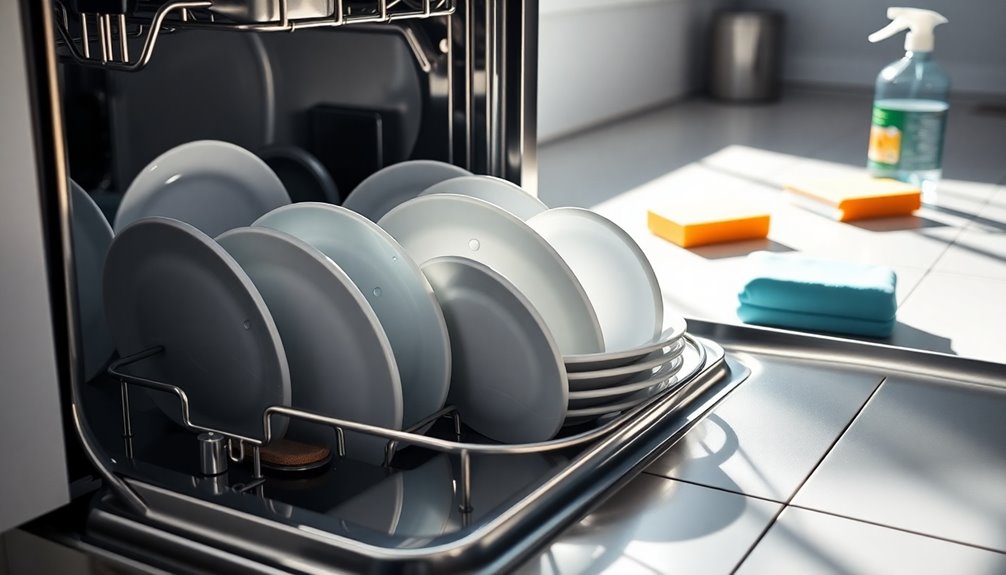
While it might be easy to overlook, regular maintenance of your dishwasher is essential for its longevity and performance.
Taking a few preventive measures can save you from costly repairs and guarantee your appliance runs efficiently.
Regular maintenance can help you avoid expensive repairs and ensure your dishwasher operates at peak efficiency.
Here are some key practices you should adopt:
- Clean the filter regularly to prevent clogs.
- Check and clean the spray arms for ideal water flow.
- Wipe down the door seals to prevent mold and odors.
- Run a monthly cleaning cycle with vinegar or a specialized cleaner.
- Regular maintenance extends the lifespan of the dishwasher, similar to a well-tuned engine.
How to Clear the Filter for Optimal Performance
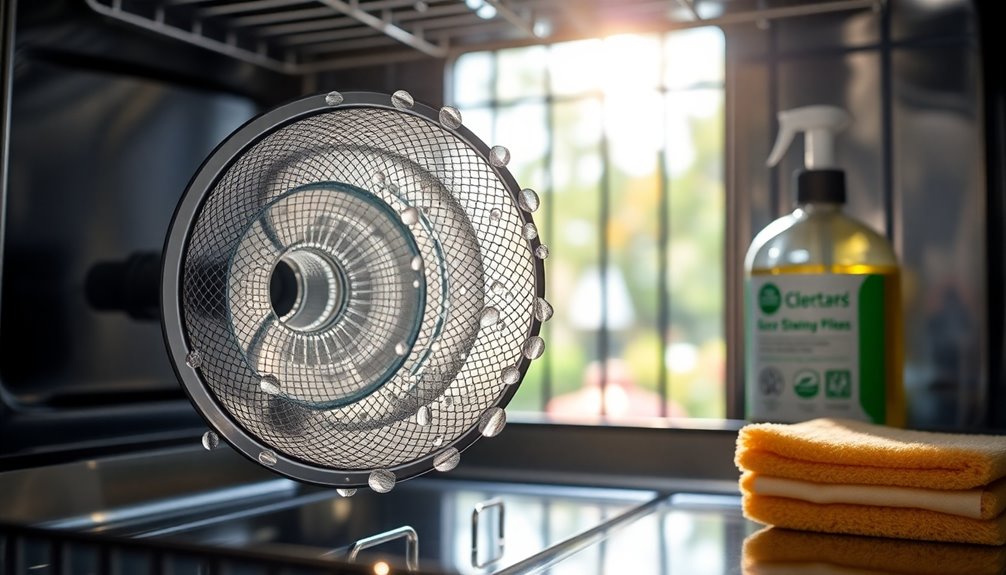
To keep your dishwasher running smoothly, you need to locate and clear the filter regularly. A clogged filter can lead to poor performance, so cleaning and rinsing it thoroughly is essential. Regular maintenance prevents performance issues and ensures your dishwasher operates at its best. Let’s explore how you can easily tackle this task and maintain peak efficiency.
Locate the Dishwasher Filter
Your dishwasher’s filter plays a crucial role in maintaining its efficiency, so locating and clearing it regularly is essential for maximum performance.
Depending on the filter types, the process may vary slightly, but here’s how to find and maintain it:
- Open the dishwasher door and pull out the bottom rack.
- Look for the filter at the bottom, usually a cylinder or flat screen.
- Check your user manual for specific instructions on removing it.
- Rinse the filter under warm water to remove food particles and debris.
Regular filter maintenance guarantees your dishwasher runs smoothly, preventing clogs and guaranteeing sparkling dishes every time.
Make it a habit to check the filter monthly for peak performance!
Clean and Rinse Thoroughly
After locating the dishwasher filter, it’s time to clean and rinse it thoroughly to guarantee peak performance.
Start by removing the filter and rinsing it under hot water. Use a soft brush to scrub away any stubborn debris. Incorporating pre rinse techniques before loading your dishes can help reduce the buildup in the filter, making your cleaning routine easier.
Once you’ve scrubbed the filter, place it back and run a rinse cycle to confirm any remaining particles are washed away.
This simple maintenance step not only keeps your dishwasher running efficiently but also confirms your dishes come out sparkling clean.
Regular cleaning of the filter will extend the life of your dishwasher and enhance its overall performance.
Using Vinegar for Deep Cleaning
While many people overlook the importance of deep cleaning their dishwashers, using vinegar can make a significant difference in maintaining its efficiency.
This natural cleaner not only disinfects but also helps eliminate odors and mineral buildup.
To harness vinegar benefits effectively, follow these steps:
- Fill a cup with white vinegar and place it on the top rack of your empty dishwasher.
- Run a hot water cycle to allow the vinegar to break down grime and grease.
- Wipe down the interior with a cloth after the cycle completes for a thorough clean.
- Repeat monthly to keep your dishwasher in top shape. Regular cleaning with vinegar is essential for machine maintenance and odor control.
Baking Soda: A Natural Odor Eliminator
If you’re dealing with unpleasant odors in your dishwasher, baking soda can be your best friend.
This natural odor neutralizer is easy to apply and works wonders to freshen things up.
Let’s explore the benefits of using baking soda to keep your dishwasher smelling clean and inviting. Additionally, baking soda is an effective deodorizer that outperforms harsh chemical cleaners, making it a safe choice for your home.
Natural Odor Neutralizer
When it comes to keeping your dishwasher fresh, baking soda stands out as a powerful natural odor neutralizer. This versatile ingredient not only combats unpleasant smells but also works well with other odor absorbing materials.
By using baking soda, you can effectively maintain a pleasant environment for your dishes. Plus, you can enhance its effectiveness by adding essential oil blends for a fresh scent.
Here are some benefits of using baking soda:
- Absorbs stubborn odors from food residues
- Helps eliminate moisture that causes mildew
- Works well with vinegar for a deep clean
- Safe and eco-friendly alternative to harsh chemicals
Incorporating baking soda into your routine guarantees your dishwasher stays fresh and your dishes sparkle every time.
Easy Application Methods
Baking soda isn’t just a great odor neutralizer; it’s also incredibly easy to use in your dishwasher cleaning routine.
Simply sprinkle a cup of baking soda across the bottom of your empty dishwasher. This simple step acts as a powerful deodorizer and helps tackle any lingering smells.
For a deeper clean, combine it with vinegar—another natural cleaning agent. Pour a cup of vinegar into a dishwasher-safe container and place it on the top rack before running a hot cycle.
These quick fixes are some of the best cleaning hacks you can use to keep your dishwasher and dishes smelling fresh. Integrating baking soda into your routine makes keeping your dishwasher clean effortless and effective.
Enjoy sparkling, odor-free dishes!
Baking Soda Benefits
While you mightn’t think of baking soda as a cleaning powerhouse, it’s actually one of the best natural odor eliminators available. Its versatility shines through in various baking soda applications, making it essential for your dishwasher routine.
Here are some benefits you can enjoy:
- Neutralizes unpleasant odors lingering in your dishwasher.
- Enhances the effectiveness of your regular cleaning products.
- Acts as a gentle abrasive, helping remove stubborn stains.
- Works well with baking soda recipes for homemade cleaning solutions.
The Power of Lemon Juice for Freshness
If you’re looking for a natural way to keep your dishwasher smelling fresh, lemon juice is your secret weapon. Not only does it provide a delightful fresh scent, but it also brings a multitude of lemon juice benefits to your cleaning routine.
Simply squeeze some lemon juice into a bowl and place it on the top rack of your empty dishwasher. Run a hot cycle, and you’ll notice the difference immediately.
The acidity in lemon juice cuts through grease and grime, leaving your dishwasher sparkling clean. Plus, it neutralizes unpleasant odors, ensuring your dishes come out smelling fresh every time. Additionally, the natural acidity in lemon juice is effective against bacteria and odors, similar to how vinegar works in cleaning.
Choosing the Right Dishwasher Detergent
After you’ve freshened up your dishwasher with lemon juice, the next step is selecting the right detergent for ideal cleaning.
With various detergent types available, you’ll want to choose one that meets your needs while being effective and, if possible, eco-friendly.
Choosing the right detergent is essential for effective cleaning and can also be eco-friendly.
Here are some options to evaluate:
- Powder Detergents: Budget-friendly and effective for tough stains.
- Liquid Detergents: Great for grease and easy to measure.
- Tabs or Pods: Convenient, pre-measured, and often contain rinse aid.
- Eco-Friendly Options: Plant-based ingredients, less harmful to the environment.
How to Load Your Dishwasher for Maximum Cleanliness
Loading your dishwasher properly can make all the difference in achieving a spotless clean. Start by familiarizing yourself with your dishwasher design; each model has unique features that affect loading.
Use the bottom rack for larger items like pots and pans, placing them facing downward to catch water effectively. On the top rack, load smaller items like cups and glasses, guaranteeing they’re secure to prevent movement during the wash cycle.
Avoid overcrowding; it can block water spray and hinder cleaning. For utensils, use the designated basket and alternate their direction for best exposure to soap and water. Regular cleaning of your dishwasher ensures optimal performance and longevity of the appliance.
The Best Temperature Settings for Effective Cleaning
Choosing the right temperature setting on your dishwasher is crucial for achieving the finest clean possible.
Proper temperature calibration guarantees that your dishes come out sparkling and sanitized. Here are some excellent settings to take into account:
- Hot Wash (140-150°F): Ideal for greasy pots and pans.
- Sanitize Cycle (160°F): Kills bacteria, perfect for baby bottles and cutting boards.
- Normal Wash (120-130°F): Great for everyday dishes and glassware.
- Eco Mode (110°F): Energy-efficient option for lightly soiled items. Additionally, using eco-friendly methods can enhance your overall cleaning routine while promoting a healthier environment.
Rinsing Dishes: To Rinse or Not to Rinse?
When considering whether to rinse your dishes, it’s crucial to weigh the benefits against potential drawbacks.
Rinsing can help remove stubborn food particles, but it might also waste water and energy.
To maintain your dishwasher’s performance, regular cleaning is essential, as it prevents buildup of grime and ensures efficient operation.
Let’s explore the best practices to determine what works best for your dishwasher routine.
Rinsing Benefits Explained
While some people believe rinsing dishes before loading them into the dishwasher is unnecessary, it can actually improve cleaning efficiency.
Using effective rinsing techniques and adjusting your rinsing frequency can make a significant difference in your dishwashing experience. Here’s how rinsing can help:
- Removes food particles: Rinsing helps eliminate stubborn bits of food that could hinder the dishwasher’s performance.
- Prevents odors: It keeps your dishwasher smelling fresh by reducing the buildup of leftover food.
- Improves cleaning: A quick rinse guarantees that detergents work more effectively during the wash cycle.
- Reduces residue: Rinsed dishes lead to cleaner results, minimizing the chances of spotting or filming.
Potential Drawbacks Discussed
Despite the benefits of rinsing dishes before loading them into the dishwasher, some people argue against the practice. They point out potential drawbacks, including the fact that modern dishwashers are designed to handle food residues.
Rinsing can waste water and energy, especially if you’re using hot water. Additionally, rinsing might remove food particles that the dishwasher’s sensors need to optimize cleaning cycles. This could lead to inefficient washing due to dishwasher limitations, as the appliance may not detect the need for a more intense cleaning cycle.
Ultimately, it’s important to weigh these concerns against your specific situation and preferences. You might find that skipping the rinse saves you time and resources while still achieving clean dishes.
Best Practices Recommended
Choosing whether to rinse your dishes before loading them into the dishwasher can greatly impact your cleaning results.
Many dishwasher myths suggest that rinsing is always necessary, but that’s not always true. Here’s what you should consider:
- Food particles: Most modern dishwashers handle small bits of food without issue.
- Detergent efficacy: Rinsing can dilute the detergent, making it less effective.
- Water waste: Skipping the rinse is an eco-friendly alternative that saves water.
- Cleaning cycle: A good dishwasher should tackle tough messes, so trust its power.
Cleaning the Spray Arms: Why It Matters
Cleaning the spray arms in your dishwasher is vital for ensuring your dishes come out sparkling clean.
These arms distribute water during the wash cycle, and if they’re clogged or dirty, your dishes won’t get the thorough cleaning they need. Regular spray arm maintenance helps prevent grime buildup and keeps the water flowing properly.
To maintain your spray arms, use effective cleaning techniques like removing them and rinsing under warm water. Check the small holes for any debris and use a toothpick to clear out any blockages. By dedicating a few minutes to this task, you’ll enhance your dishwasher’s performance and enjoy spotless dishes every time. Additionally, keeping the rubber gasket clean can help prevent mold growth and ensure optimal water distribution. Don’t overlook this important step in your dishwasher cleaning routine.
Checking for Blockages in the Drain
How often do you check for blockages in your dishwasher’s drain? Regular drain inspection is vital for keeping your dishwasher running smoothly and guaranteeing your dishes come out sparkling.
Here’s what you should look for during your checks:
- Food debris or residue trapped in the filter
- Objects like utensils or small plates lodged in the drain
- Signs of standing water at the bottom of the dishwasher
- Any unusual sounds during the wash cycle indicating a blockage
If you find any issues, prompt blockage removal is necessary. Clear out any debris, and run a quick cycle to verify everything is functioning properly.
This simple maintenance step can save you from costly repairs and ensure your dishwasher operates efficiently.
Descaling Your Dishwasher: When and How?
While you mightn’t think about it often, descaling your dishwasher is vital for maintaining its performance and longevity.
If you notice mineral buildup or your dishes aren’t coming out as clean, it’s time to descale. You should aim to do this every 3 to 6 months, depending on your water hardness.
There are several effective descaling methods. One popular option is using a commercial descaling agent specifically designed for dishwashers.
Alternatively, you can use white vinegar, which is a natural solution. Simply place a cup of vinegar in the top rack and run a hot cycle.
For the best results, choose the ideal products that suit your dishwasher’s model and follow the manufacturer’s recommendations.
Keeping your dishwasher in top shape guarantees sparkling dishes every time!
Essential Tools for Keeping Your Dishwasher Clean
To keep your dishwasher in top shape, you’ll need a few essential cleaning supplies and tools.
Knowing what to use can make the cleaning process quick and efficient.
Let’s explore the must-have items that will help you maintain your appliance.
Essential Cleaning Supplies
When it comes to keeping your dishwasher in top shape, having the right cleaning supplies can make all the difference.
To guarantee your dishwasher stays sparkling clean, stock up on these essentials:
- Microfiber cloths: Perfect for wiping down surfaces and removing grime without scratching.
- Eco-friendly cleaning products: Gentle on the environment while effectively tackling grease and odors.
- White vinegar: A natural disinfectant that helps eliminate buildup and odors.
- Baking soda: Great for deodorizing and removing stubborn stains.
With these supplies on hand, you can easily maintain your dishwasher’s cleanliness, guaranteeing your dishes come out sparkling every time.
Regularly using these tools will keep your machine running efficiently and extend its lifespan.
Recommended Cleaning Tools
Keeping your dishwasher clean requires the right tools to tackle tough grime and buildup effectively.
Start with high-quality cleaning brushes. These are perfect for scrubbing away food particles and debris from the filter and spray arms. Look for brushes with stiff bristles to guarantee you can reach every nook and cranny.
Next, grab some microfiber cloths. They’re fantastic for wiping down the interior and exterior surfaces of your dishwasher, leaving them streak-free and sparkling. Microfiber is gentle yet effective, so it won’t scratch any surfaces.
Together, these tools will help you maintain your dishwasher’s cleanliness, assuring your dishes come out spotless every time.
Make it a habit to use them regularly for the best results.
Tips for Cleaning Your Dishwasher’s Exterior
Although it may seem trivial, regularly cleaning your dishwasher’s exterior can enhance its appearance and prolong its lifespan. You want to maintain that sleek look while guaranteeing it functions effectively.
Here are some simple tips to achieve a streak-free shine:
- Wipe down the exterior with a damp cloth to remove dust and grime.
- Use a gentle cleaner specifically designed for stainless steel or your dishwasher’s material.
- Apply exterior polish to give it that extra shine and protection.
- Buff with a microfiber cloth to guarantee a streak-free finish.
Preventing Hard Water Build-Up in Your Dishwasher
To keep hard water build-up at bay, you’ll want to incorporate a few simple habits into your routine.
Regularly rinsing your dishwasher with vinegar can help dissolve mineral deposits, while using a water softener will make a big difference.
Plus, maintaining the right temperature during washes guarantees your dishes come out sparkling clean.
Regular Vinegar Rinse
A regular vinegar rinse can be a game-changer in preventing hard water build-up in your dishwasher. By incorporating this simple step into your cleaning routine, you’ll enjoy several vinegar benefits that keep your dishwasher in top shape.
With regular usage, you can expect:
- Spotless dishes: Vinegar helps remove residue, leaving your dishes sparkling.
- Odor elimination: It neutralizes unpleasant smells, ensuring your dishwasher smells fresh.
- Increased efficiency: Clean appliances run better, improving their overall performance.
- Cost-effective solution: Vinegar is an inexpensive way to maintain your dishwasher without harsh chemicals.
Make it a habit to add a cup of vinegar to your dishwasher’s bottom before running a hot cycle once a month. Your dishes—and your dishwasher—will thank you!
Use Water Softener
Using a water softener can greatly enhance your dishwasher’s performance by preventing hard water build-up.
Hard water can leave mineral deposits that cloud your dishes and damage your appliance over time. By investing in a water softener, you can choose from various types, such as salt-based, salt-free, or magnetic systems, each offering unique benefits of softening.
Salt-based softeners are the most effective, while salt-free options can be easier to maintain. You’ll notice cleaner dishes, reduced film on glassware, and improved efficiency in your dishwasher.
Not only will your dishes sparkle, but your appliance will also last longer. So, consider adding a water softener to your routine for a noticeable difference in your dishwashing experience!
Maintain Proper Temperature
Maintaining the right temperature in your dishwasher is essential for preventing hard water build-up. Proper temperature settings help dissolve detergent effectively and reduce mineral deposits.
Here are some tips to guarantee your dishwasher operates efficiently:
- Set your dishwasher to the recommended temperature (usually between 120°F and 150°F).
- Run hot water before starting the cycle to guarantee the dishwasher starts with hot water.
- Avoid overloading to allow proper water circulation and heating.
- Use energy-efficient cycles whenever possible to save on energy costs while maintaining effectiveness.
The Role of Salt in Dishwasher Maintenance
While many homeowners overlook the importance of salt, it plays a significant role in keeping your dishwasher running efficiently.
Different salt types, such as coarse or dishwasher-specific salt, help soften hard water, preventing mineral buildup in your dishwasher. If you live in an area with hard water, proper salt usage is indispensable.
Using coarse or dishwasher-specific salt is crucial for softening hard water and preventing mineral buildup in your dishwasher.
Regularly check and refill the salt compartment to guarantee peak performance. When you maintain the right salt levels, you’ll notice cleaner dishes and fewer maintenance issues.
Remember, using the right type of salt is essential; standard table salt can damage your dishwasher.
Seasonal Dishwasher Care: Preparing for Heavy Use
As the holiday season approaches and gatherings become more frequent, it’s essential to prepare your dishwasher for heavy use.
With all that holiday cooking, your appliance needs to be in prime condition to handle the workload. Here are some quick steps to get ready:
- Run a cleaning cycle: Use a dishwasher cleaner to tackle any buildup.
- Clear the filter: Remove debris and food particles for maximum drainage.
- Check the spray arms: Verify they’re free from clogs to enhance cleaning power.
- Inspect hoses: Look for any leaks or wear that could cause issues during heavy usage.
Taking these steps now will help guarantee your dishes sparkle and shine throughout the festive season!
Conclusion
By following these 18 cleaning secrets, you’ll keep your dishwasher running smoothly and your dishes sparkling. Remember, “A stitch in time saves nine”—regular maintenance can save you from bigger headaches down the road. Make it a habit to check filters, use natural cleaners, and stay on top of hard water build-up. With a little effort, you’ll guarantee your dishwasher remains in top shape, delivering spotless results every time you load it up. Happy cleaning!