Ditching harmful chemicals in your kitchen isn’t just about cleaning; it’s about protecting your health. Conventional cleaners often contain toxic ingredients like ammonia and formaldehyde that can cause respiratory issues and hormonal imbalances. Opt for safe alternatives like Mrs. Meyers or try DIY solutions using vinegar and baking soda. Store your food in glass containers to avoid chemical leaching. Discover how creating a supportive community can enhance your journey to a non-toxic kitchen lifestyle.
The Importance of Non-Toxic Cleaning in the Kitchen
When you choose non-toxic cleaning in the kitchen, you’re not just protecting your health; you’re also creating a safer environment for your family.
Conventional cleaners often contain toxic chemicals like ammonia and phthalates, which can lead to serious health problems, including hormone disruption and respiratory issues.
Conventional cleaners may expose you to harmful chemicals, risking serious health issues like hormone disruption and respiratory problems.
Surprisingly, only a small fraction of the chemicals used in cleaning products have been evaluated for safety by the EPA, leaving you at risk.
By shifting to non-toxic cleaning methods, you greatly reduce indoor air pollution and minimize exposure to harmful volatile organic compounds (VOCs).
Eco-friendly cleaning alternatives not only support your personal health but also promote sustainable living practices, ensuring a healthier kitchen for everyone in your home. Additionally, using natural ingredients in your cleaning routine can enhance disinfection while safeguarding family health.
Common Harmful Ingredients in Conventional Cleaners
You might be surprised to learn that many conventional cleaners contain harmful ingredients that pose serious health risks. Chemicals like ammonia and formaldehyde can irritate your eyes and respiratory system, while others, such as parabens, may disrupt your hormones. Being aware of these toxic substances is the first step toward creating a safer kitchen environment. Transitioning to natural disinfectants can help you eliminate these harmful chemicals and promote a healthier living space.
Toxic Chemical Risks
Many conventional cleaners contain toxic chemicals that pose significant health risks. When you use these cleaning products, you might unknowingly expose yourself to:
- Ammonia – irritates eyes, skin, and respiratory system.
- Ethylene glycol monobutyl acetate – can cause skin irritation and breathing issues.
- Formaldehyde – linked to serious health problems, including cancer.
- Parabens – hormone disruptors associated with reproductive health problems.
These harsh chemicals not only affect your well-being but can also linger in your home environment.
By choosing safer alternatives, you can protect yourself and your loved ones from the adverse effects of these toxic substances.
It’s essential to be aware of what you’re bringing into your kitchen and how it could impact your health.
Common Harmful Ingredients
Although conventional cleaners may seem effective, they often contain harmful ingredients that can jeopardize your health. Common harmful ingredients like ammonia and ethylene glycol monobutyl acetate can irritate your eyes, skin, and respiratory system, making cleaning a less pleasant experience.
Many air fresheners include artificial fragrances, formaldehyde, and p-dichlorobenzene, which have been linked to cancer and neurological damage. Additionally, substances like parabens and triclosan are recognized as endocrine disruptors, potentially affecting reproductive health and antibiotic resistance.
Harsh chemicals like sodium hypochlorite in bleach can also cause skin and respiratory irritation. When you choose non-toxic cookware and cleaning products, you can create a safer environment for yourself and your family, avoiding these harmful chemicals.
Health Impact Awareness
While the convenience of conventional cleaners is tempting, it’s essential to recognize their potential health impacts. Many of these products release toxic fumes that can harm you and your loved ones.
Consider these harmful ingredients:
- Parabens – linked to reproductive health problems and cancer.
- Ammonia – irritates your eyes, skin, and respiratory system.
- Formaldehyde – associated with serious risks, including cancer and brain damage.
- Ethylene glycol monobutyl acetate – can cause skin irritation and airway issues.
Being aware of these dangers is vital.
By switching to non-toxic cookware and cleaning solutions, you can protect your family’s health and create a safer home environment.
Embrace health impact awareness for a cleaner, healthier lifestyle.
Effective Store-Bought Alternatives for Safer Cleaning
When you’re looking to keep your kitchen clean without harmful chemicals, opting for effective store-bought alternatives can make a significant difference.
Brands like Mrs. Meyers, Seventh Generation, and Puracy offer eco-friendly cleaning products free from toxic chemicals like parabens and phthalates. As you choose these alternatives, be certain to read labels carefully to avoid green-washing and ascertain you’re selecting truly non-toxic options.
Many of these products utilize natural ingredients, including essential oils, vinegar, and baking soda, which effectively clean while minimizing health risks. For added confidence, check the Environmental Working Group’s database to evaluate cleaning products. Additionally, EPA Safer Choice certified products ensure adherence to environmental and health standards, providing consumers with safer choices.
Shifting to these reputable brands not only reduces exposure to harmful ingredients but also fosters a healthier home environment.
DIY Non-Toxic Cleaning Solutions
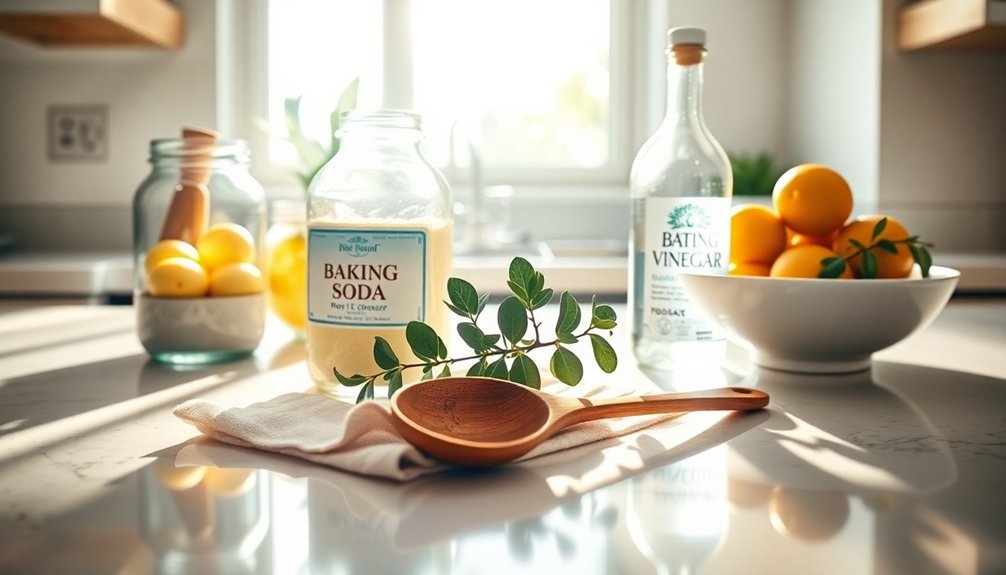
DIY non-toxic cleaning solutions are effective and easy to make. Here are four ideas to get you started:
- All-Purpose Cleaner: Mix equal parts vinegar and water in a glass container for a versatile cleaner.
- Scrubbing Paste: Combine baking soda and water to create a paste for tough stains.
- Citrus Infusion: Soak citrus peels in vinegar for a fragrant, powerful cleaner.
- Essential Oil Boost: Add a few drops of your favorite essential oils for a fresh scent.
Incorporating these solutions promotes sustainable cleaning practices that benefit both your home and the environment. With these homemade cleaners, you’re fostering creativity and sustainability while keeping your home safe.
Essential Pantry Staples for Homemade Cleaners
To effectively make your own non-toxic cleaners, you’ll want to stock your pantry with a few essential staples.
White vinegar is a powerful disinfectant and deodorizer, making it a must-have.
Baking soda, or sodium bicarbonate, serves as a gentle abrasive and deodorizer, perfect for scrubbing surfaces.
Hydrogen peroxide is versatile for sanitizing and removing stains, essential for any cleaning solution.
Castile soap, derived from vegetable oils, is biodegradable and cuts through grease and dirt effortlessly.
You can also utilize food scraps like citrus peels and herbs to minimize waste while adding natural fragrances and antibacterial properties to your cleaners. Additionally, incorporating eco-friendly alternatives such as vinegar and baking soda can enhance the effectiveness of your homemade cleaning solutions.
Tips for Maintaining a Non-Toxic Kitchen Environment
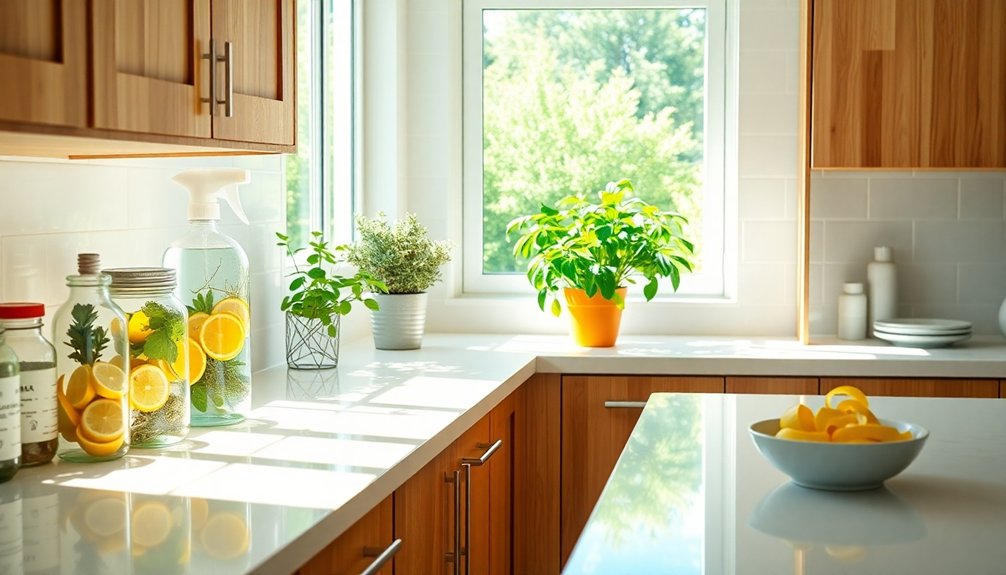
To keep your kitchen non-toxic, start by stocking essential natural cleaning supplies that are safe for your family. You’ll also want to adopt safe food storage practices, using glass or BPA-free options to protect your meals. Finally, choosing eco-friendly cookware can help guarantee you’re cooking without harmful chemicals. Additionally, consider using eco-friendly cleaners that promote sustainable cleaning practices and reduce plastic waste.
Essential Natural Cleaning Supplies
A clean kitchen doesn’t have to mean using harsh chemicals that can harm your health and the environment.
By stocking up on essential natural cleaning supplies, you can maintain a non-toxic kitchen while still achieving effective results.
Here are four must-haves:
- White vinegar – A powerful disinfectant and deodorizer that tackles tough odors.
- Baking soda – Perfect for scrubbing surfaces and neutralizing unpleasant smells.
- Hydrogen peroxide – An effective sanitizer for cutting boards and kitchen counters.
- Reusable dish towels – Ditch single-use paper towels and reduce waste with these eco-friendly alternatives.
Embracing these items not only keeps your kitchen clean but also supports a healthier planet and lifestyle.
Safe Food Storage Practices
Maintaining a non-toxic kitchen environment hinges on safe food storage practices that protect both your health and the planet.
Choose glass or stainless steel containers for food storage, as they’re non-reactive and won’t leach harmful chemicals like BPA and phthalates found in plastic containers.
For a zero-waste approach, opt for silicone bags and wraps instead of traditional plastic wrap. Ceramic-coated containers also offer a safe, scratch-resistant option.
Regularly assess your food storage solutions and replace any old or scratched plastic items to prevent harmful substances from seeping into your food.
Finally, wash your glass and stainless steel containers with non-toxic cleaners to extend their lifespan and guarantee a safe kitchen environment.
Eco-Friendly Cookware Choices
While selecting cookware, opting for eco-friendly materials can markedly enhance your kitchen’s non-toxic environment.
By choosing non-toxic cookware, you’re not just making a meal; you’re prioritizing your health and the planet. Here are some great options to reflect upon:
- Cast Iron: Durable and versatile, perfect for various cooking tasks.
- Stainless Steel: A non-reactive surface that’s safe for acidic foods.
- Enameled Cast Iron: Easy to clean and ideal for both high and low-heat cooking.
- Carbon Steel: Lightweight and durable, but remember to season it regularly.
Steer clear of traditional non-stick cookware that can leach harmful chemicals.
Embrace these eco-friendly choices to create a safer cooking experience for you and your family!
Building a Supportive Community for Non-Toxic Living
Building a supportive community for non-toxic living can greatly enhance your journey towards creating a healthier home. Connecting with like-minded individuals allows you to share experiences, tips, and recommendations that help reduce chemical exposure in your kitchen and throughout your home.
Engaging in this community offers motivation, making gradual changes to non-toxic practices feel manageable rather than overwhelming. You’ll find resources like guides and product swaps, empowering you to make informed choices.
Sharing personal challenges and successes fosters accountability, reinforcing your commitment to healthier lifestyles. Participating in community events or online forums dedicated to non-toxic cleaning not only enhances your knowledge but also connects you with others on the same path, providing inspiration and support along the way. Additionally, discussing sustainable cleaning practices can broaden your understanding of eco-friendly solutions.
Conclusion
By choosing non-toxic cleaning solutions, you’re not just protecting your health; you’re creating a safer space for your loved ones. You’re embracing a cleaner kitchen, breathing in fresher air, and nurturing a sustainable lifestyle. You’re inspiring others to rethink their habits, to join you in this journey toward a healthier home. So, let’s ditch the chemicals, fill our pantries with safe ingredients, and cultivate a supportive community that champions non-toxic living together.