To make DIY citrus-infused vinegar, start by collecting 8-12 clean citrus peels and a quart-sized mason jar. Pour 2 cups of white vinegar over the peels, seal the jar, and place it in a sunny spot for 2-4 weeks, shaking it occasionally. Once infused, strain the mixture and store it in a clean container. This natural cleaner works great for many surfaces. Curious about additional tips and variations? Keep going to discover more!
Ingredients Needed
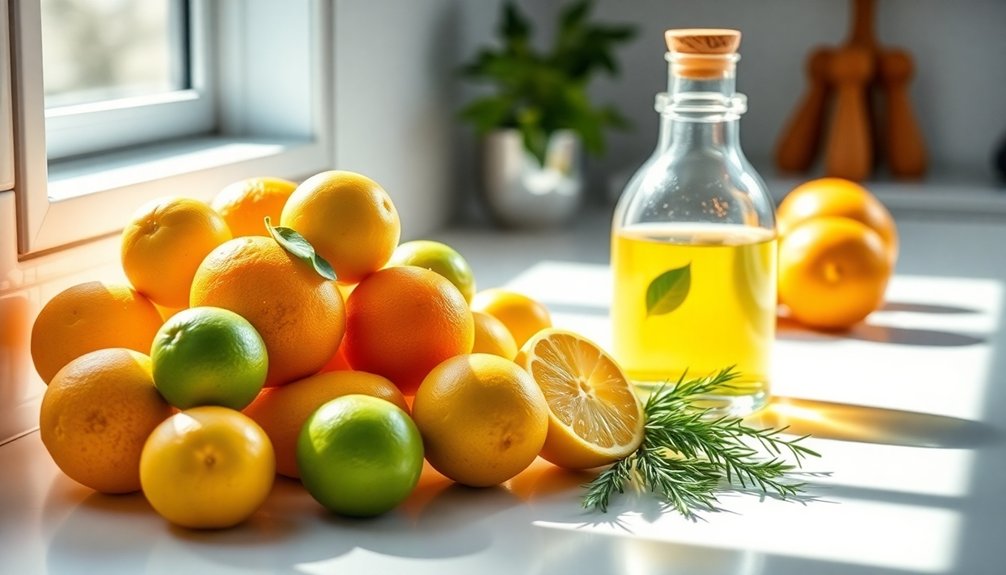
To create your own citrus-infused vinegar, you’ll need to gather a few key ingredients.
Start with 8-12 clean citrus peels from fruits like lemons, limes, grapefruits, or oranges. These peels not only provide vibrant flavor but also contain natural antibacterial properties.
You’ll also need 2 cups of plain white vinegar to completely submerge the citrus peels in a glass storage container, ideally a quart-sized mason jar.
For an extra touch, consider adding a cinnamon stick and 10 whole cloves, which enhance both fragrance and cleaning effectiveness.
Finally, if you’re feeling adventurous, fresh herbs can elevate the scent and potency of your citrus-infused vinegar. Regular use of natural ingredients promotes sustainability and protects both appliances and the environment.
Just remember to use a non-metal lid to avoid corrosion!
Preparation Steps
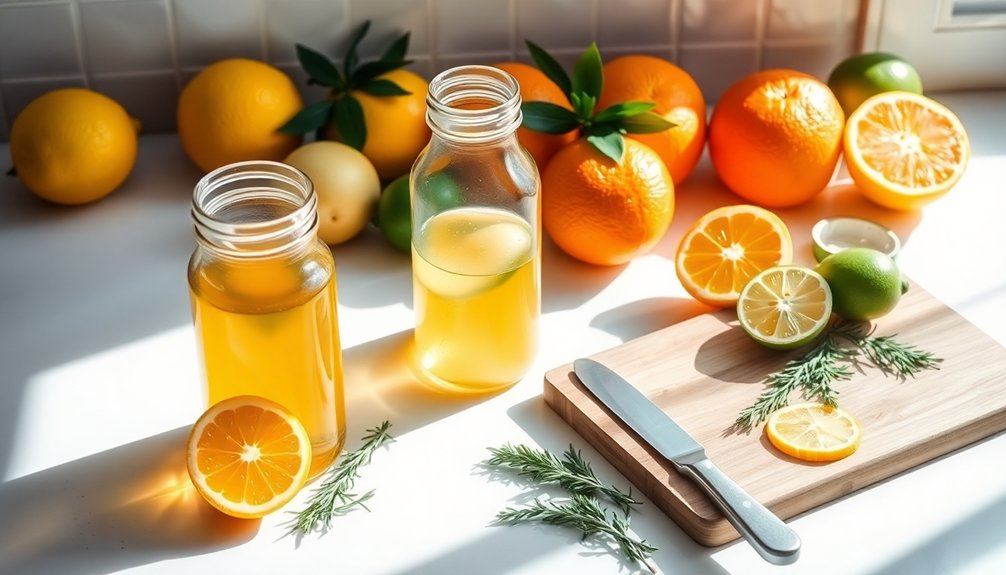
To get started on your citrus-infused vinegar, gather your citrus peels and vinegar. You’ll want to follow a simple infusion process to guarantee the flavors meld perfectly. Additionally, using non-toxic cleaners like citrus-infused vinegar can enhance your cleaning routine while keeping your home safe. Finally, I’ll share some tips for straining and storing your delicious concoction.
Gather Required Ingredients
Gathering the right ingredients is essential for creating your citrus-infused vinegar. Start by collecting 8-12 clean citrus peels from fruits like lemons, oranges, or grapefruits.
Make sure they’re free from pesticides to guarantee a safe infusion. Next, grab a quart-size glass mason jar with a non-metal lid to prevent corrosion.
Once you have your jar, pour in 2 cups of plain white vinegar, covering the citrus peels completely. For added fragrance and cleaning properties, you might consider tossing in a cinnamon stick and 10 whole cloves.
After sealing the jar tightly, you’re ready to move forward. With these ingredients gathered, you’ll be well on your way to creating a deliciously fragrant vinegar.
Infusion Process Overview
Once you’ve got your citrus peels and vinegar ready, the infusion process can begin.
Start by filling a quart-sized glass mason jar with 8-12 clean citrus peels, like lemon, lime, orange, or grapefruit, making sure it’s at least half full.
Pour 2 cups of white vinegar over the citrus peels, fully covering them.
Seal the jar tightly with a non-metal lid to prevent corrosion, then place it in a sunny spot for ideal flavor extraction.
Allow the mixture to infuse for 2-3 weeks, shaking the jar gently every few days to enhance the infusion.
This homemade cleaning product will soon be ready to brighten your cleaning routine with a revitalizing citrus scent!
Straining and Storage Tips
After your citrus peels have infused in the vinegar for 2 to 3 weeks, it’s time to strain the mixture.
Use a fine mesh sieve or coffee filter to separate the liquid from the solid peels.
Once strained, store the citrus-infused vinegar in a clean glass container, preferably in a cool, dark place to preserve its quality.
Don’t forget to label the container with the infusion date; it’s best used within 6-12 months.
If you want to use it as a vinegar cleaner, mix it in a spray bottle with an equal part of water for a milder solution.
Before each use, shake it well and monitor for any changes in smell or appearance, indicating spoilage.
Infusion Process

Now that you’ve prepared your citrus peels, it’s time to focus on the infusion process.
You’ll need to choose the right peels and determine how long to let them sit, ensuring maximum flavor extraction. This infusion process not only enhances the scent but also allows you to harness the natural oils found in citrus peel, which can help break down grease effectively. Finally, you’ll strain the mixture to create your fragrant citrus-infused vinegar.
Selecting Citrus Peels
When selecting citrus peels for your infusion, it’s best to choose a variety like lemon, orange, grapefruit, or lime. These options not only enhance the scent but also boost the cleaning properties of your homemade citrus vinegar.
Make sure the citrus peels are clean and free from pesticides; opting for organic fruits is a smart choice for the best outcomes. Pack the mason jar tightly with the peels, filling it at least halfway to maximize the infusion process.
Once you’ve done that, pour white vinegar over the peels, ensuring they’re completely submerged. This step is essential for proper flavor extraction.
Finally, let the mixture infuse in a sunny spot for ideal results.
Infusion Timeframe
The infusion timeframe for your citrus-infused vinegar typically spans 2 to 4 weeks, allowing the vibrant flavors and beneficial properties of the citrus peels to blend beautifully with the vinegar.
For best flavor extraction, place the jar in a sunny area and give it a gentle shake every few days during the infusion process.
Keep in mind that the type of citrus you use may affect the infusion time; longer periods generally yield a stronger citrus scent and enhanced cleaning power.
Patience is key here; monitor the mixture for any changes in smell or appearance, as this can indicate it’s time to strain.
The longer you wait, the more potent your cleaning spray will be!
Straining Process
Once your citrus peels have infused in the vinegar for 2 to 3 weeks, it’s time to strain the mixture and separate the liquid from the solids.
Follow these steps for an effective straining process:
- Use a fine mesh sieve or coffee filter to catch all solid pieces.
- Pour the contents of the jar through the strainer into a clean container, discarding the leftover citrus peels.
- Make sure the strained vinegar is stored in a glass container at room temperature for best longevity.
Properly strained and stored, your citrus-infused vinegar can last for several months, maintaining its cleaning properties and delightful scent.
Enjoy your homemade cleaner that’s both effective and aromatic!
Usage Tips
To get the most out of your citrus-infused vinegar, shake the spray bottle well before each use; this guarantees the infused vinegar and water mix effectively for best cleaning.
For tough stains or greasy surfaces, use the citrus-infused vinegar undiluted. For a milder solution, mix equal parts infused vinegar and water.
This natural cleaning product is perfect for kitchen countertops, sinks, cutting boards, tubs, and showers, but steer clear of granite or marble due to its acidity. Additionally, using natural cleaning products can further enhance your cleaning routine by reducing exposure to harmful chemicals.
For deodorizing and disinfecting, spray the solution on surfaces and wipe with a clean, damp cloth afterward. The essential oils from the citrus peels enhance the cleaning power, leaving your home fresh and inviting.
Enjoy your eco-friendly cleaning!
Storage Recommendations
After you’ve enjoyed using your citrus-infused vinegar for cleaning, proper storage is important to keep it effective. Here are some recommendations:
- Use a Glass Jar: Store your vinegar in a glass jar to preserve its quality better than plastic.
- Cool, Dark Place: Keep the jar in a cool, dark location, like a pantry or the refrigerator, to maintain potency and extend its shelf life.
- Monitor for Changes: Regularly check the vinegar for any changes in smell or appearance, which could signal spoilage.
For ideal freshness, aim to use your citrus-infused vinegar within 6-12 months. Notably, environmentally friendly ingredients like those found in eco-friendly cleaners can enhance the effectiveness of your cleaning routine.
If strained properly, it can last even longer, allowing you to enjoy the benefits of those citrus peels for many cleaning tasks ahead!
Additional Tips and Variations
While experimenting with your citrus-infused vinegar, you can enhance its effectiveness and fragrance by adding herbs like rosemary or thyme during the infusion process. This not only boosts the scent but also adds antiseptic properties to your homemade cleaner. If you’re concerned about the acidity, dilute the citrus vinegar with equal parts of distilled or boiled water for sensitive surfaces. Don’t hesitate to mix different citrus peels, like lemon and orange peels, to tailor unique scents and cleaning properties. To minimize waste, collect and freeze your citrus peels until you’re ready to use them. For a stronger scent, let the peels infuse in vinegar for 3 to 4 weeks, shaking the jar occasionally to improve extraction. Additionally, consider using biodegradable ingredients in your cleaning solutions to further enhance their eco-friendliness.
Conclusion
Now that you’ve crafted your own citrus-infused vinegar, it’s time to enjoy the fruits of your labor—quite literally! Use it in dressings, marinades, or even as a cleaning agent. Just remember, much like a well-used smartphone, it’s all about finding the right applications. Store it properly, and you’ll have a zesty companion for months to come. Get creative with variations, and let your culinary adventures flourish. Happy infusing!