You won’t believe how easy cleaning can be with these DIY hacks! Use vinegar to dissolve grime around faucets. Sprinkle salt on oven spills while it’s hot, and let it work wonders. A lemon with coarse salt can refresh your cutting board. Revive baking sheets with baking soda and hydrogen peroxide. Ice cleans your garbage disposal naturally. Plus, olive oil gives stainless steel a shine. Want more genius tips? Keep exploring to reveal even more cleaning secrets!
Use Vinegar to Clean the Gunk Around a Faucet
Cleaning the gunk around your faucet can feel like an intimidating task, but it doesn’t have to be. One of the best cleaning hacks is using vinegar, a natural cleaner that dissolves hard water minerals and grime.
Simply soak a cloth in vinegar and wrap it around the base of your faucet, ensuring it touches the dirty areas. Let it sit for a couple of hours to work its magic. Afterward, wipe away the loosened stains with a clean cloth, revealing a sparkling finish.
This eco-friendly method eliminates harsh chemicals, making it safer for your home. Regularly cleaning with vinegar not only improves your faucet’s appearance but also helps prevent mineral buildup, extending its lifespan. Additionally, using natural cleaning agents like vinegar is a great way to maintain a healthier home environment.
Use Salt to Clean a Messy Oven
After tackling the grime around your faucet, you might find your oven needs some attention too.
For a quick and effective cleaning tip, sprinkle salt on any spills while the oven’s still hot. The heat activates the salt, allowing it to absorb grease and food particles. This helps form a crust that makes cleanup easier once the oven cools down.
After the oven has cooled, simply wipe away the hardened salt crust along with the debris. You’ll be left with a cleaner oven, and the best part? It’s a non-toxic alternative to harsh chemical cleaners. For tougher stains, opt for coarse salt, as its abrasive texture works wonders. This method aligns with using eco-friendly cleaning solutions, which can effectively clean without risks. Give this method a try; you’ll be amazed at the results!
Clean a Cutting Board With Lemon
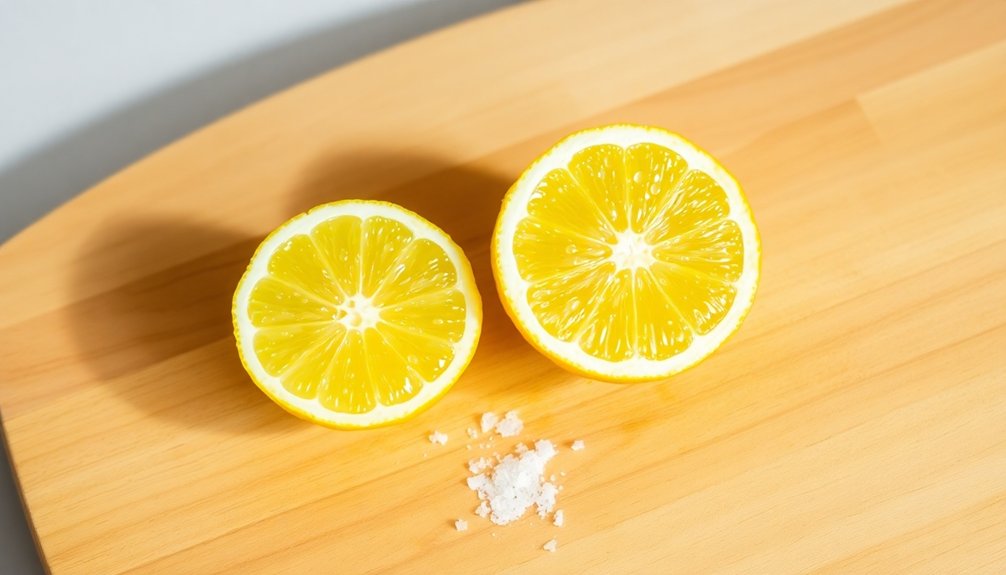
Cleaning your cutting board with lemon is an effective way to tackle stains and neutralize odors. By using a simple technique that combines salt and lemon juice, you not only remove grime but also maintain the board’s longevity. Regularly applying this method keeps your wooden board looking fresh and extends its life. Additionally, using natural ingredients like lemon juice aligns with eco-friendly practices that promote sustainable living.
Stain Removal Technique
A fresh-cut lemon can be your best ally in tackling stains on a wooden cutting board. Start by sprinkling coarse salt over the stained area; this cleaning hack will help absorb odors and stains.
Cut the lemon in half and use one half to scrub the salted surface in circular motions, allowing the natural acidity to break down residues. For stubborn stains, let the lemon juice sit for a few minutes before rinsing for enhanced effectiveness.
After scrubbing, rinse the board under warm water to remove all residues, then dry it thoroughly with a clean towel. If needed, you can use an old toothbrush to get into any crevices for a deeper clean.
Odor Neutralization Benefits
While you mightn’t realize it, using lemon to clean your cutting board offers more than just stain removal; it effectively neutralizes unpleasant odors, too. The natural acidity of lemons helps eliminate odors and neutralize bacteria, making your board fresh and hygienic.
To utilize this cleaning hack, sprinkle salt on the board and scrub it with half a lemon. This combination not only lifts stubborn stains but also leaves a delightful scent behind.
After scrubbing, rinse the board with water to remove any residual lemon juice and salt. Regularly cleaning with lemon can prolong your cutting board’s lifespan by preventing odor buildup and bacteria, ensuring a cleaner kitchen environment.
Embrace this simple yet effective method for ideal odor neutralization!
Maintenance for Wooden Boards
Maintaining the freshness and longevity of your wooden cutting board is essential for a hygienic kitchen. Here’s a quick and effective way to clean it using lemon:
- Sprinkle coarse salt over the board to create an abrasive surface.
- Cut a lemon in half and scrub the salted board with the exposed half; the juice actually helps lift stains and odors.
- Rinse the board thoroughly with warm water to remove any salt and lemon residue.
- After cleaning, dry the board with a soft cloth and apply a food-safe mineral oil or olive oil to protect it and prevent drying.
Repeat this process as needed, especially for particularly stained boards, to keep your cutting board in top shape!
Revive a Grimy Baking Sheet
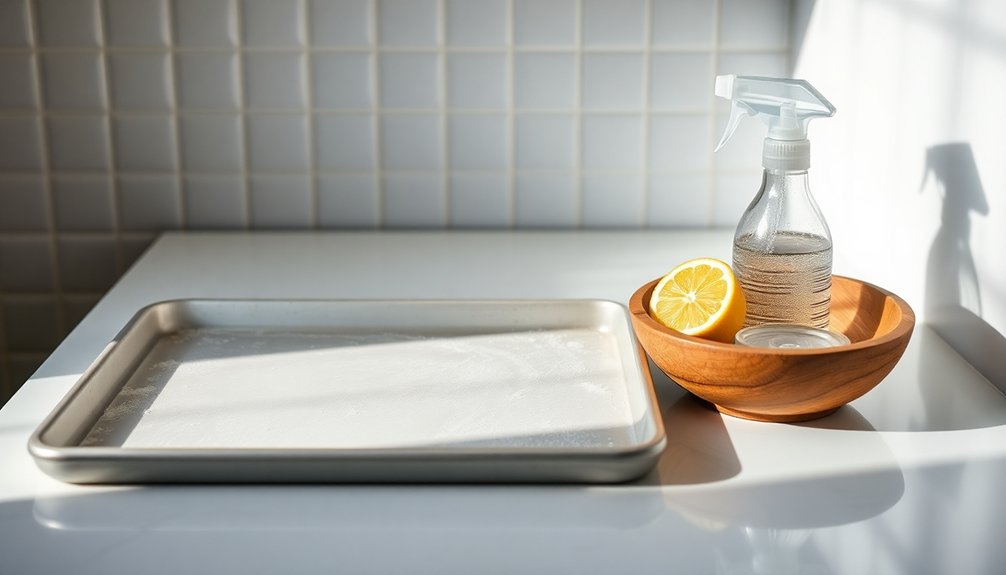
Reviving a grimy baking sheet doesn’t have to be an intimidating task. Start by sprinkling a generous amount of baking soda evenly across the surface.
Next, pour hydrogen peroxide over the baking soda, making sure it’s fully saturated to form a paste. Let’s see—allow this mixture to sit for at least two hours or even overnight for those stubborn stains to break down.
Pour hydrogen peroxide over the baking soda to create a paste, then let it sit for two hours or overnight for tough stains.
After the soaking period, grab a sponge or cloth and scrub the baking sheet to remove the loosened grime.
Finally, rinse the baking sheet with warm water and dry it thoroughly to restore its shine and cleanliness. Incorporating baking soda paste can enhance your cleaning results, as it is a gentle yet effective method for tackling tough stains.
With just a few simple steps, you’ll have a sparkling baking sheet ready for your next cooking adventure!
Clean Your Garbage Disposal With Ice
Cleaning your garbage disposal can be a breeze with a simple trick: ice. This method not only helps you clean but also sharpens the blades, enhancing performance. Here’s how to do it effectively:
- Add a handful of ice cubes to the disposal.
- Optional: Mix the ice with a small amount of salt for extra deodorizing and scrubbing power.
- Run cold water while operating the disposal to flush away debris properly.
- Turn on the disposal and let it grind the ice for a few moments.
Regularly cleaning your garbage disposal with ice can extend its lifespan by preventing buildup and maintaining ideal functionality. Additionally, regular maintenance is vital for reducing the frequency of deep cleaning tasks in your kitchen.
Give it a try, and enjoy a fresher, cleaner kitchen!
Olive Oil Hack for Stainless Steel
Stainless steel appliances can shine like new with just a simple olive oil hack. To get started, apply a small amount of olive oil to a paper towel. Wipe the stainless steel surface in the direction of the grain to polish and maintain its shine.
This method not only enhances the appearance but also creates a protective barrier that helps repel fingerprints and smudges. Plus, olive oil is an eco-friendly alternative to harsh commercial cleaners. Regular maintenance with natural agents can also help preserve the appliance’s integrity and appearance.
For the best results, make sure your stainless steel is clean and dry before applying the olive oil; this will help you achieve a streak-free finish. Regularly using this technique can save you time and effort on deep cleaning.
Use a Dryer Sheet to Clean a Casserole Dish
After polishing your stainless steel appliances with olive oil, you might find yourself facing the challenge of a dirty casserole dish. Don’t worry; a simple dryer sheet can save the day!
Here’s how to use it:
- Fill your casserole dish with hot water.
- Add an unused dryer sheet to the water.
- Let it soak for about 15 minutes to loosen baked-on food and grease.
- After soaking, use a non-abrasive sponge or cloth to clean the dish.
The dryer sheet’s fabric softening agents break down tough stains, making scrubbing a breeze. Additionally, this method is akin to the natural and eco-friendly cleaning methods that utilize common household items for effective cleaning.
Plus, this method helps eliminate odors, leaving your casserole dish fresh and ready for your next meal.
Give it a try—you’ll be amazed!
Deodorize Your Refrigerator With Coffee
If you’ve noticed unpleasant odors lingering in your refrigerator, using coffee can be a simple and effective solution.
Place a bowl of dry ground coffee inside your fridge, and it’ll work as a natural deodorizer. Coffee traps and neutralizes odor molecules, making it an eco-friendly alternative to chemical air fresheners.
Not only does it eliminate odors, but it also adds a subtle, pleasant aroma when you open the fridge. For the best results, use fresh, dry coffee, as damp coffee can promote mold growth instead of combating odors.
To enhance your cleaning routine, consider incorporating baking soda as it effectively removes grime and odors. Remember to replace the bowl every few weeks to maintain its effectiveness.
With this easy hack, you’ll enjoy a fresher-smelling fridge in no time!
Use a Potato to Scrub Cast Iron
You can easily clean your cast iron skillet using a potato.
By combining its natural scrubbing power with coarse salt, you’ll lift stuck-on food without harming the skillet’s seasoning.
This simple method offers an efficient and eco-friendly way to keep your cookware in top shape. Additionally, regular maintenance helps prevent stuck-on food from building up in the first place.
Natural Scrubbing Power
When it comes to cleaning cast iron cookware, using a potato can be a game changer. This natural scrubber is effective and much easier than traditional methods. Here’s how to do it:
- Sprinkle salt in your cast iron skillet to act as an abrasive.
- Cut a potato in half and use it to scrub in a circular motion.
- Let the moisture from the potato help dissolve stuck-on food particles.
- Rinse the skillet with hot water, then dry it immediately to prevent rusting.
This technique not only cleans but also preserves the non-stick surface of your cookware, making it last longer.
You’ll find it’s a far better option than using a harsh toilet bowl cleaner!
Easy Cleaning Method
Cleaning cast iron doesn’t have to be a chore, especially with the clever use of a potato. When you really need to clean your skillet, start by sprinkling a generous amount of salt on its surface.
Cut a potato in half and use the flat side to scrub in a circular motion. The salt acts as an abrasive, while the potato’s natural moisture and starches help lift food residue and stubborn stains.
After scrubbing, rinse your skillet with warm water and dry it immediately to prevent rust. This method not only cleans effectively but also preserves the seasoning of your cast iron, ensuring its longevity.
If you have any questions or need tips, let me know!
Conclusion
With these clever DIY cleaning hacks up your sleeve, you’ll be ready to tackle any mess like a pro. From using vinegar to banish faucet gunk to reviving that grimy baking sheet, these tips are your secret weapons in the battle against dirt. Remember, a clean home is a happy home, and with these tricks, you’ll turn cleaning from a chore into a breeze. So roll up your sleeves and let the transformation begin!