If you’re looking for DIY cleaning recipes, you’ve come to the right place! Homemade cleaning products are safe, effective, and budget-friendly. Common ingredients like white vinegar, baking soda, and essential oils can tackle messes in every room, from kitchens to bathrooms. Plus, they improve indoor air quality and reduce plastic waste. You’ll love customizing these recipes to suit your needs, and you’ll discover even more amazing tips and tricks along the way!
Why I Love Homemade Cleaning Products
When you switch to homemade cleaning products, not only do you reduce your exposure to harsh chemicals, but you also create a safer environment for your family.
I love using natural cleaning products because they’re effective and versatile, working wonders on various surfaces. Plus, DIY cleaning recipes often utilize simple ingredients like vinegar and baking soda, which saves you money and cuts down on plastic waste.
Regularly using homemade cleaners also helps improve indoor air quality, making your home healthier, especially for kids and pets. You can customize your cleaning solutions to match your scent preferences, making the experience enjoyable. Additionally, eco-friendly products like vinegar and baking soda provide antimicrobial properties, ensuring a safe and clean home.
Embracing homemade cleaners not only fosters creativity but also contributes to a greener planet.
Common Ingredients in Homemade Cleaners
When it comes to homemade cleaners, you’ll find that essential natural ingredients play a key role. Ingredients like white vinegar, baking soda, and lemon juice not only offer versatile cleaning properties but also save you money compared to commercial products. Additionally, using these ingredients can significantly reduce water pollution when cleaning, making them a great eco-friendly choice.
Essential Natural Ingredients
Creating your own cleaning products can be both eco-friendly and effective, especially when you use essential natural ingredients.
Vinegar cuts through dirt and grease, making it a powerhouse in your cleaning arsenal. Baking soda adds gentle abrasion and deodorizing capabilities, perfect for tackling tough stains.
Essential oils, like tea tree and lavender, not only elevate the scent of your cleaners but also provide antibacterial and antifungal properties to enhance their effectiveness.
Citric acid from lemon juice works wonders for hard water stains, while salt serves as an excellent scrubbing agent.
For extra scrubbing power, Epsom salt can help remove grime from surfaces, making it a versatile addition to your DIY cleaning recipes.
Versatile Cleaning Properties
While many commercial cleaners contain harsh chemicals, you can achieve impressive results using common ingredients found in your home.
White vinegar and baking soda make an effective all-purpose cleaner, cutting through grease and odors while disinfecting surfaces naturally. Essential oils, like tea tree and lemon, not only add pleasant scents but also enhance your cleaning power with their antibacterial properties.
You can use cornstarch to clean windows and polish furniture, offering a safe alternative to toxic products. Citric acid from lemon juice effectively removes hard water stains and acts as a natural disinfectant.
Finally, Epsom salt serves as a gentle abrasive, perfect for scrubbing surfaces without harming your health or the environment. Embrace these versatile cleaning properties for a healthier home!
Cost-Effective Solutions
Making your own cleaning products not only promotes a healthier home but also saves you money. Common ingredients like baking soda and white vinegar are effective, non-toxic, and easily found in most households.
By using these staples, you can create homemade cleaning products that rival commercial options while cutting costs by up to 50%. Buying in bulk further reduces expenses and helps minimize plastic waste.
Plus, adding a few drops of essential oils can enhance the cleaning power and fragrance of your solutions, making the task more enjoyable.
With simple ratios, you can customize your cleaners to tackle specific messes, ensuring you’ve got a cost-effective and eco-friendly solution for every room in your home.
Homemade Non-Toxic Cleaning Recipes
When it comes to homemade non-toxic cleaning recipes, you’ll find that simple ingredients can make a big difference. From room-specific cleaners to eco-friendly benefits, these recipes not only keep your home clean but also protect your health and the environment. Let’s explore some effective and safe solutions you can easily whip up at home. Additionally, using natural ingredients in your cleaning recipes can enhance disinfection while ensuring a safe environment for your family.
Essential Ingredients Overview
Creating your own non-toxic cleaning solutions can be both cost-effective and environmentally friendly, especially when you know the essential ingredients to use.
White vinegar is a powerhouse for cutting through grime, while baking soda serves as a gentle scrubber and deodorizer. For a fresh scent and added antibacterial properties, essential oils like tea tree and lemon are fantastic choices.
Citric acid from lemon juice is excellent for tackling hard water stains and disinfecting surfaces. Cornstarch can clean windows and polish furniture, making it a versatile addition to your cleaning arsenal.
Finally, Epsom salt acts as a natural scrubber and can enhance your bath experience. By purchasing these ingredients in bulk, you save money and reduce plastic waste, supporting eco-friendly practices.
Room-Specific Cleaning Recipes
As you tackle cleaning tasks in each room of your home, having tailored recipes on hand can make the process easier and more effective.
Here are three room-specific natural cleaners you can whip up:
- All-Purpose Spray: Mix equal parts white vinegar and water, adding a few drops of your favorite essential oil for a pleasant scent and antibacterial properties.
- Homemade Toilet Bowl Cleaner: Combine 1 part white vinegar with baking soda. Let it sit for a few minutes before scrubbing for a fresh clean.
- Kitchen Surface Cleaner: Use ½ cup white vinegar, 2 tablespoons baking soda, and essential oils to tackle everyday messes safely.
These simple recipes will help you maintain a fresh, non-toxic home!
Eco-Friendly Benefits Explained
Using room-specific cleaning recipes not only simplifies your cleaning routine but also paves the way for adopting more eco-friendly practices.
Homemade non-toxic cleaning solutions use natural ingredients like vinegar, baking soda, and essential oils, effectively cleaning without harmful chemicals found in conventional products. By making your own all-natural cleaning solutions, you help reduce plastic waste, as these recipes often utilize refillable containers, promoting sustainability.
With studies showing a notable percentage of toxic exposure from household cleaners, switching to homemade alternatives can considerably mitigate health risks. Plus, essential oils boost cleaning power and provide delightful fragrances without synthetic additives.
Over time, opting for bulk ingredients can lead to substantial cost savings compared to single-use commercial cleaners.
Kitchen Cleaning Recipes
When you want a sparkling clean kitchen without harsh chemicals, DIY cleaning recipes offer effective and eco-friendly solutions. You can whip up your own homemade all-purpose cleaner to tackle various surfaces. Here are three easy recipes:
- All-Purpose Cleaner: Mix ½ cup white vinegar, 2 tablespoons baking soda, and 10 drops of essential oil in a spray bottle.
- Soft-Scrub Cleaner: Combine 1 ½ cups baking soda with ½ cup liquid laundry soap and 10 drops of essential oil, storing it in an airtight container for stubborn grime.
- Disinfectant Wipes: Soak cloth squares in a solution of 1 cup water, ¼ cup vinegar, and 24 drops of essential oils for a convenient cleaning option.
These homemade cleaning ingredients will keep your kitchen sparkling and safe! Additionally, using eco-friendly cleaners can enhance your cleaning routine while contributing to a healthier planet.
Bathroom Cleaning Solutions
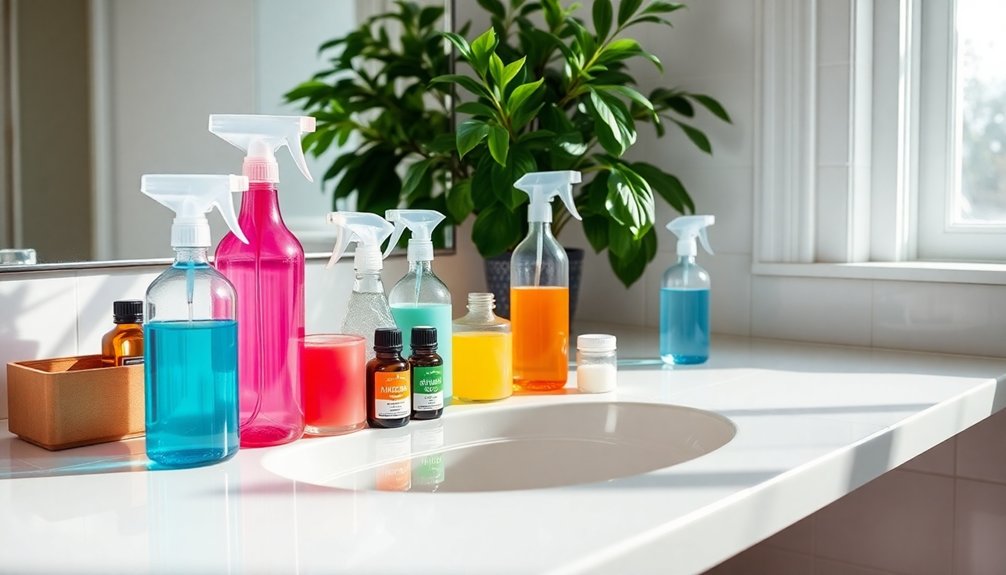
Maintaining a clean bathroom is just as important as keeping your kitchen spotless, and DIY cleaning solutions make it easy and safe to tackle the task.
For a simple toilet bowl cleaner, mix 1 part white vinegar with baking soda and 10 drops of your favorite essential oil. Let it sit for 5 minutes before scrubbing and flushing.
To get your mirrors sparkling, combine ¼ cup white vinegar, ¼ cup isopropyl alcohol, and 1 tablespoon cornstarch in a spray bottle for a streak-free shine.
For a mold-free environment, spray 12 oz of white vinegar mixed with 15 drops of tea tree oil on affected areas. Using natural cleaning products not only reduces exposure to harmful chemicals but also promotes sustainability in your home.
Finally, create an air freshener by mixing essential oil with water in a spray bottle.
Laundry Room Cleaning Recipes
Cleaning your laundry room with DIY recipes not only guarantees a fresh environment but also saves you money.
Transform your laundry room with DIY cleaners that ensure freshness while being budget-friendly.
Here are three easy recipes to get you started:
- Laundry Detergent: Mix ½ cup Borax, ½ cup washing soda, and ½ cup Dawn dish soap with hot water in a gallon jug. You’ll have a powerful, non-toxic cleaner!
- Stain Remover: Use natural alternatives like lemon juice or vinegar to tackle stubborn stains. They’re effective and eco-friendly.
- Fabric Softener: Combine distilled white vinegar with your favorite essential oils for a homemade softener that reduces static cling and softens clothes. Additionally, using natural cleaning solutions can help minimize environmental impact while maintaining a fresh and spotless laundry area.
General Cleaning Tips and Solutions for Living Areas
A tidy living area greatly enhances your home’s atmosphere and comfort.
For effective cleaning without harsh chemicals, dust surfaces regularly with a DIY dusting spray made from 1 Tbsp of castile soap, 15 drops of lemon essential oil, and 2 cups of water.
Keep carpets fresh by mixing 1 cup of baking soda with 10 drops of essential oil, sprinkling it on, and vacuuming after 30 minutes.
For a versatile all-purpose cleaner, combine equal parts white vinegar and water, adding essential oils to mask the vinegar smell.
To nourish wooden furniture, use a homemade polishing spray made of ¾ cup olive oil, ¼ cup white vinegar, and juice from half a lemon, ensuring your living area remains inviting and clean. Incorporating streamlined cleaning processes can save time and enhance the effectiveness of your DIY cleaning solutions.
Community Feedback and Adjustments
With the rise in popularity of DIY cleaning recipes, community feedback plays a vital role in refining these approaches.
You’ll find that sharing experiences helps everyone improve their homemade solutions. Here are some common insights:
- Vinegar and Baking Soda Reactions: Many users report foaming issues when combining these ingredients, prompting discussions about alternative methods.
- Ingredient Availability: Concerns about finding ingredients like Borax lead to suggestions for effective substitutes, ensuring you can still create natural cleaning products.
- Mixing Techniques: Participants often mention baking soda settling at the bottom of solutions, causing sprayer clogs, which has led to better storage and mixing tips.
Additionally, many community members advocate for using eco-friendly ingredients to enhance the effectiveness of their cleaning solutions, promoting a healthier cleaning environment.
This collaborative atmosphere fosters better cleaning solutions and helps you optimize your DIY cleaning journey!
Importance of Natural Cleaners
Natural cleaners offer a safer alternative to conventional products, helping you avoid harsh chemicals that can irritate your skin and affect your respiratory health.
By choosing eco-friendly cleaning solutions made from household ingredients like vinegar and baking soda, you create a healthier indoor environment, especially important if you have children or pets.
Conventional cleaners often contain toxic substances linked to long-term health risks, so opting for non-toxic products reduces these dangers.
Additionally, homemade cleaners are cost-effective, allowing you to make larger batches while minimizing plastic waste. Regular use of natural cleaners not only improves indoor air quality by reducing allergens and irritants but also promotes sustainability by preventing harmful chemicals from entering our water systems. Furthermore, using natural cleaning agents enhances the effectiveness of your cleaning routine while being gentle on your fixtures and the environment.
Conclusion
As you embrace the simplicity of homemade cleaning solutions, think of each recipe as a brushstroke on the canvas of your home. With every spritz and scrub, you’re not just cleaning; you’re weaving a tapestry of health and sustainability. These natural ingredients symbolize your commitment to a safer environment, transforming your space into a sanctuary. So, let your creativity flourish, and let these DIY recipes be the light guiding you toward a fresher, cleaner home.