Making a DIY dusting spray is easy and environmentally friendly. Combine 1/4 cup white distilled vinegar, 2 tablespoons olive oil, 1 cup distilled water, and a few drops of essential oil for a natural disinfectant. Just spray it on a microfiber cloth, then wipe your surfaces for a dust-free shine. This method skips harmful chemicals, keeps your home safe, and enhances air quality. Discover more tips for maintaining a clean and healthy environment.
Why Choose a DIY Dusting Spray?
When you consider the impact of household cleaning products on your health and the environment, choosing a DIY dusting spray makes perfect sense.
Homemade dusting sprays use natural ingredients like vinegar and olive oil, so you’re reducing your exposure to harmful chemicals often found in commercial products. Plus, it’s incredibly cost-effective—you can create twice the amount for just a few cents.
By opting for a DIY dusting solution, you help minimize allergy triggers in your home, steering clear of artificial fragrances and synthetic ingredients. Not to mention, these eco-friendly sprays support sustainable cleaning practices that lessen environmental harm. Incorporating natural cleaning agents like vinegar can further enhance your cleaning routine.
Choosing a DIY dusting spray reduces allergens and supports eco-friendly cleaning practices, benefiting both your home and the planet.
When paired with microfiber cloths, your DIY dusting spray will lift and trap dust more effectively than traditional methods.
Essential Ingredients for Your Dusting Spray
Creating your own dusting spray involves selecting a few key ingredients that work together to clean and shine surfaces naturally.
Start with 1/4 cup of white distilled vinegar, which acts as a natural disinfectant and deodorizer. Add 2 tablespoons of olive oil for shine and surface conditioning.
For the base, use 1 cup of distilled or filtered water to guarantee purity and prevent mineral buildup. Incorporate 3-4 drops of dish soap to help emulsify the oil with the other ingredients.
To enhance the fragrance and add antimicrobial properties, include 10-15 drops of essential oils, like lemon. Regular use of DIY non-toxic cleaners effectively maintains hygiene without harmful chemicals.
Mix everything in a spray bottle, and remember to shake well before each use for best results!
Step-by-Step Instructions to Make Your Dusting Spray
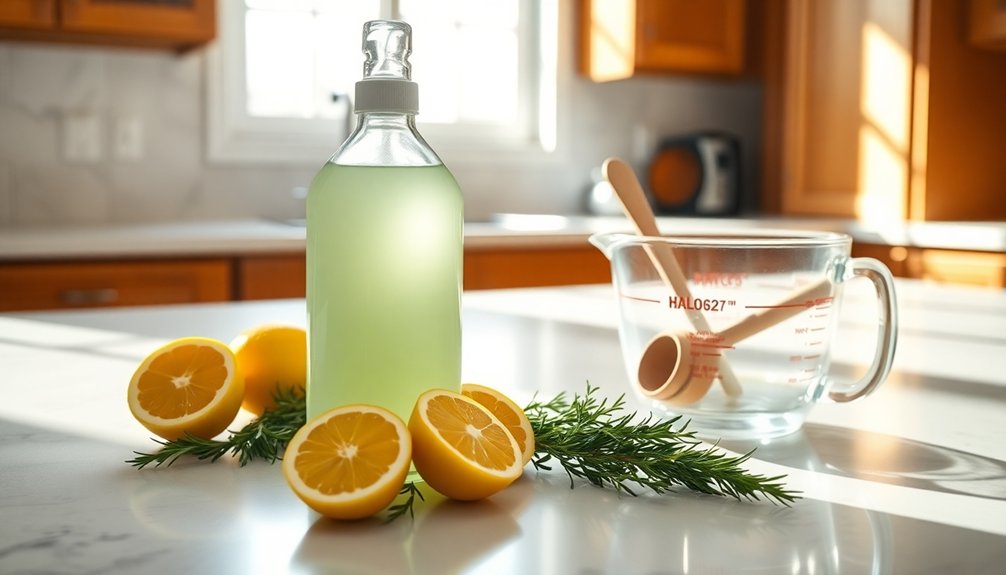
Start by gathering your ingredients and tools to make an effective dusting spray. You’ll need:
- 1/4 cup of white distilled vinegar
- 1/4 cup of distilled water
- 2 tablespoons of olive oil (or virgin olive oil)
- 10 drops of lemon essential oil
Combine these natural ingredients in a spray bottle. Shake the bottle thoroughly to mix the solution before each use to guarantee the oil and vinegar blend well. Additionally, using natural cleaning methods can enhance your overall cleaning routine and promote a healthier home.
When you’re ready to dust, spray the mixture onto a microfiber cloth instead of directly onto surfaces. This prevents oversaturation and allows for even application. Wipe surfaces to effectively lift and trap dust while restoring shine.
Store any unused homemade dust spray in an airtight container away from sunlight for up to one month.
Incorporating Essential Oils for a Fresh Scent
Incorporating essential oils into your DIY dusting spray not only elevates its fragrance but also enhances its cleaning power. Oils like lemon and lavender add a pleasant aroma while providing natural antimicrobial properties.
For the best effect, add 10-15 drops of your chosen essential oil per spray bottle—this amount infuses your solution with scent without overwhelming the natural cleaning agents. Lemon essential oil is especially effective at cutting through grease and grime, making your home smell fresh and clean.
Plus, these oils can elevate your mood and promote relaxation, turning your cleaning routine into an enjoyable experience. Remember to shake the spray bottle before each use to guarantee even distribution and maintain the oils’ effectiveness. Using organic ingredients in your cleaning solutions supports a healthier living environment and contributes to overall well-being.
Effective Application Techniques for Dusting Spray
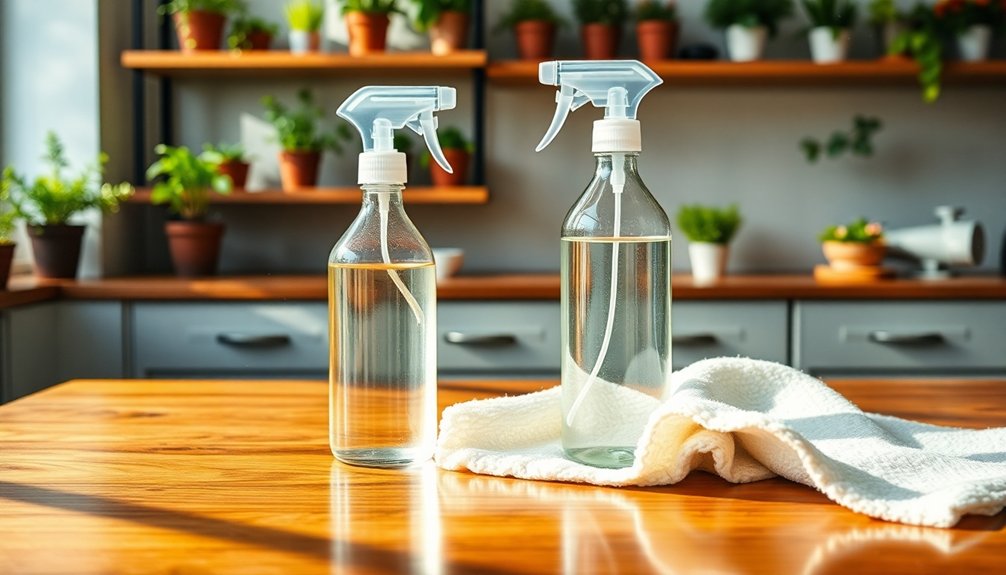
To get the best results from your DIY dusting spray, focus on your application techniques. Always spray the solution onto a microfiber cloth instead of directly on surfaces, and choose the right cloth for the job. Utilizing microfiber dusters can enhance your cleaning effectiveness by attracting dust particles efficiently.
Proper Spray Technique
Achieving a thorough dusting requires mastering the proper spray technique for your DIY dusting spray.
Always spray the mixture onto a microfiber cloth, not directly onto surfaces, to prevent overspray and damage. For ideal spray consistency, shake the bottle before each use to mix the oils and liquids effectively.
- Use a light mist on the cloth for better dust capture.
- Wipe surfaces in a circular motion for even coverage.
- Work in small sections to avoid letting the spray dry.
- After dusting, buff with a clean, dry microfiber cloth for added shine.
Optimal Cloth Selection
Selecting the right cloth can make all the difference when using your DIY dusting spray. Microfiber cloths are highly recommended for dusting due to their unique fiber structure, which effectively lifts and traps dust particles.
When you apply the spray, always mist it onto the cloth instead of the surface to prevent overspray and guarantee an even application. For the best results, use a clean, dry microfiber cloth to buff surfaces afterward, enhancing shine and reducing streaks.
To maintain their dust-trapping capabilities, wash your microfiber cloths regularly without fabric softeners. You can also consider using different colored microfiber cloths for various cleaning tasks to avoid cross-contamination and streamline your cleaning process.
Surface-Specific Applications
When dusting various surfaces, it’s important to tailor your application techniques for the best results.
Different surfaces have varying levels of surface sensitivity, so adjusting your method helps prevent damage while effectively cleaning.
Here are some effective techniques:
- For wood furniture, spray the dusting solution on a microfiber cloth to avoid overspray.
- Lightly spray the cloth when dusting electronics to prevent moisture damage.
- Add a few drops of essential oil for glass surfaces, then buff immediately to avoid streaks.
- Always test on painted or varnished surfaces in an inconspicuous area first.
Best Practices for Storing Your Dusting Spray
To keep your DIY dusting spray effective, store it in a dark, cool place away from direct sunlight. Use an amber or cobalt glass spray bottle to protect the essential oils and seal it tightly. Additionally, opting for sustainable packaging options can further enhance the eco-friendliness of your cleaning solutions.
Optimal Storage Conditions
Proper storage is essential for keeping your DIY dusting spray effective and safe.
To guarantee your homemade solution lasts, follow these ideal storage conditions:
- Use an airtight spray bottle to prevent contamination.
- Keep it in a cool, dry place away from direct sunlight.
- Opt for a dark amber or cobalt blue glass bottle to shield the ingredients from light exposure.
- Aim to use the spray within one month, as it lacks preservatives.
Always shake the bottle before each use to mix the ingredients well, as oil can separate from the water-based components.
Recommended Container Types
Choosing the right container for your DIY dusting spray is essential for maintaining its effectiveness and safety.
Opt for a dark amber glass spray bottle, as it prevents oxidation and preserves the natural ingredients. If you prefer plastic, make sure it’s BPA-free and compatible with vinegar to avoid chemical reactions.
An airtight spray bottle is vital for keeping the solution fresh and preventing contamination from outside elements.
Don’t forget to label your spray bottle clearly to avoid confusion during use.
Finally, store your dusting spray in a cool, dry place away from direct sunlight. This will help prolong its shelf life and maintain its cleaning efficacy, ensuring you get the most out of your homemade solution.
Shelf Life Considerations
After selecting the right container for your DIY dusting spray, it’s important to focus on how to store it effectively. Proper storage plays a vital role in maintaining the shelf life of your spray, ensuring its effectiveness.
- Use an airtight, dark-colored glass bottle to prevent oxidation.
- Store it in a dry, cool place, away from direct sunlight.
- Aim to use the spray within one month since it lacks preservatives.
- Always test on an inconspicuous area before widespread use, especially if it’s been stored for a while.
If you notice any separation, just shake the bottle before each use to remix the ingredients and keep your dusting spray performing at its best.
Ideal Surfaces for Using Dusting Spray
Dusting spray is a versatile cleaning solution that shines on various hard surfaces. Its surface compatibility makes it perfect for wood, metal, and glass, efficiently removing dust and fingerprints without leaving a residue.
You can confidently use it on countertops, shelves, and furniture, where the olive oil adds shine and protection. However, steer clear of fabrics and upholstery, as the oil can attract more dust over time.
For electronics, apply the spray to a microfiber cloth instead of directly on the device to guarantee safety. Regular use of DIY dusting spray not only cleans but also creates a barrier on surfaces, helping reduce future dust accumulation and maintenance frequency. Incorporating daily cleaning habits into your routine can further enhance the effectiveness of your cleaning efforts.
Enjoy a cleaner, more inviting home!
Benefits of Using Natural Cleaning Solutions
While many commercial cleaning products contain harmful chemicals, opting for natural cleaning solutions, like DIY dusting spray, can create a healthier indoor environment.
By choosing these eco-friendly options, you’re not only contributing to sustainable living but also reaping several benefits:
- Reduces exposure to harmful chemicals in your home.
- Cleans and conditions surfaces with natural ingredients like vinegar and olive oil.
- Saves money since natural ingredients are often cheaper than commercial products.
- Minimizes allergy triggers, making your space safer for sensitive individuals.
Additionally, using natural cleaning solutions helps to enhance your kitchen cleanliness while reducing your environmental footprint.
Switching to natural cleaning solutions not only improves air quality but also protects our planet.
You’ll feel good about cleaning your home while caring for your health and the environment.
Tips for Maintaining a Dust-Free Home
To keep your home as dust-free as possible, it’s essential to adopt a proactive cleaning routine. Start by regularly dusting surfaces with a microfiber cloth at least once a week. This practice is vital for effective dust prevention.
Implement a no-shoes policy indoors to minimize dirt and dust tracked in from outside. Using an air purifier with a HEPA filter can greatly improve indoor air quality by capturing airborne dust particles. Additionally, consider using allergen-proof bedding covers to create a barrier against dust mites and other allergens in your sleeping environment.
Keep humidity levels between 40-60% to discourage dust mites and mold growth. Finally, make it a habit to wash bedding, curtains, and rugs regularly, as these items can harbor dust and allergens.
Following these tips will help you maintain a cleaner, healthier home environment.
Community Feedback and Experiences With DIY Cleaning
With over 25.2K public engagements, it’s clear that the community’s enthusiasm for DIY cleaning solutions, including homemade dusting sprays, is thriving.
User experiences shared in 384 comments illustrate the effectiveness and satisfaction derived from these natural alternatives. Many users highlight:
- Reduced dust accumulation
- Eco-friendly ingredients
- Customization with essential oils
- Cost-effectiveness
These insights reflect a collective appreciation for DIY cleaning methods. Additionally, many community members emphasize the benefits of natural cleaning methods, which are eco-friendly and promote a healthier home environment.
Community members actively encourage experimentation, suggesting that you try different formulations to find what works best for your home.
The popularity of 7.4K Reels showcases various techniques, emphasizing that you’re not alone in your cleaning journey.
Conclusion
Incorporating a DIY dusting spray into your cleaning routine not only promotes a healthier home but also reduces your exposure to harmful chemicals. Did you know that nearly 70% of conventional cleaning products contain hazardous ingredients? By opting for natural solutions, you’re taking a significant step toward a safer environment for you and your family. So, grab your essential oils and get started! With a little effort, you can enjoy a cleaner, fresher home without the toxins.