You can whip up budget-friendly DIY kitchen cleaners for under $1 using common ingredients. Try mixing equal parts vinegar and water for a versatile cleaner, or create a powerful paste with baking soda and water for tough stains. Lemon juice serves as a natural deodorizer and disinfectant. Add a few drops of essential oils for a revitalizing scent. To make the most of your cleaners, keep them stored properly, and stick around for more tips on effective use!
The Power of Vinegar: A Versatile Cleaner
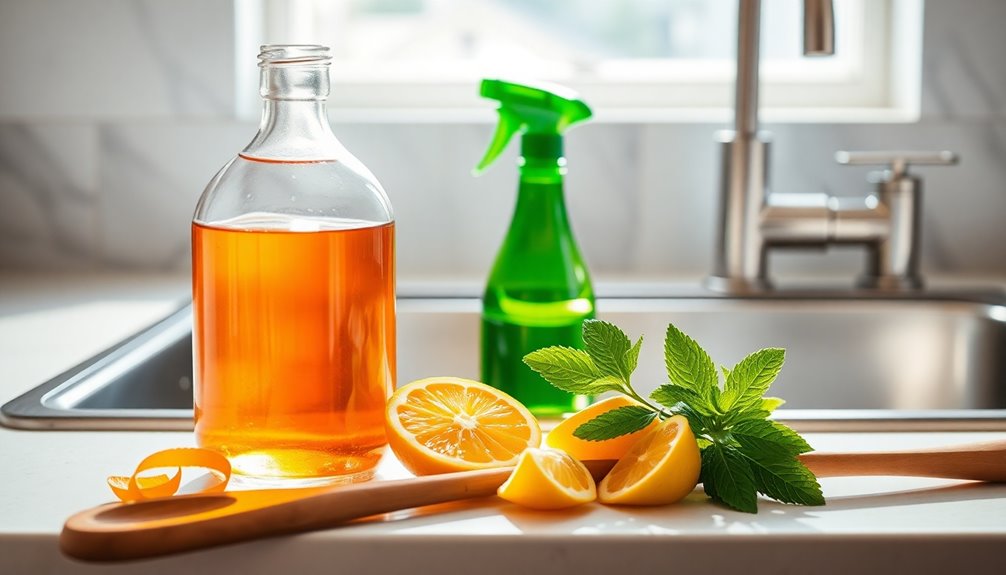
When you’re looking for an effective and eco-friendly cleaner for your kitchen, vinegar stands out as a versatile powerhouse. Its acidity cuts through grease and grime, making it perfect for cleaning countertops, stovetops, and even windows.
You’ll appreciate the vinegar benefits, like its ability to eliminate odors and disinfect surfaces without harsh chemicals. To harness its cleaning potential, try simple vinegar recipes: mix equal parts vinegar and water in a spray bottle for a quick all-purpose cleaner, or use it straight to tackle stubborn stains. Additionally, vinegar contains 4-6% acetic acid, which is effective against bacteria and odors.
You can also soak cloths in vinegar to freshen up your kitchen towels. With vinegar, you’ve got a natural solution that’s both budget-friendly and effective for keeping your kitchen sparkling clean.
Baking Soda Magic: Tackling Tough Stains
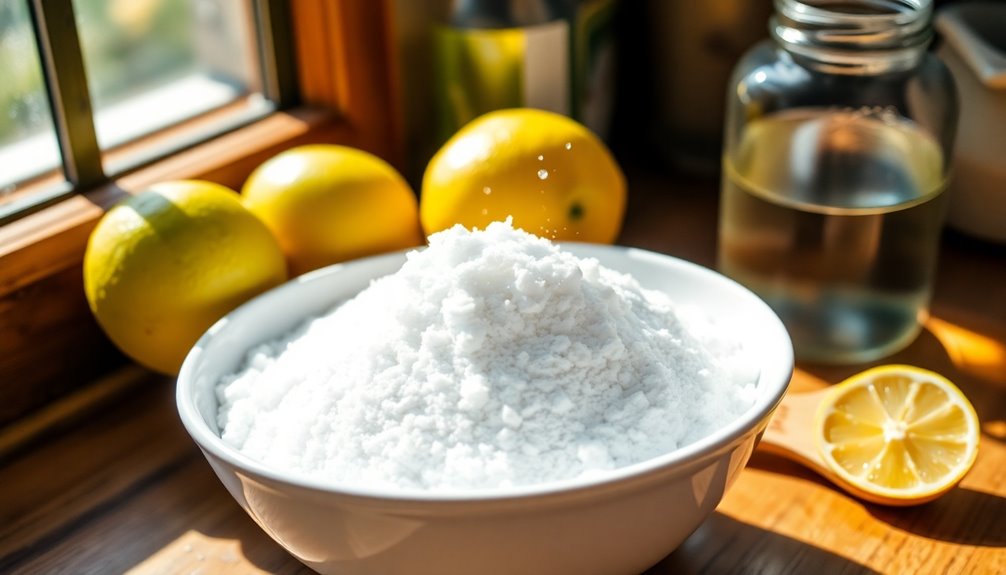
Vinegar may be a fantastic cleaner, but baking soda brings its own magic to the table, especially when it comes to tackling tough stains.
You can create a powerful baking soda paste by mixing equal parts of baking soda and water. This simple concoction works wonders on stubborn stains like grease or food spills on your countertops and stovetop.
Just apply the paste directly to the stain, let it sit for about 15 minutes, and scrub gently with a sponge or cloth. Rinse thoroughly with water, and watch as those tough stains disappear.
This eco-friendly solution isn’t only effective but also budget-friendly, making it an essential tool in your kitchen cleaning arsenal. Plus, its gentle abrasive action ensures that surfaces remain scratch-free while effectively lifting stains.
Give it a try!
Lemon Juice: Nature’s Deodorizer and Disinfectant

Lemon juice is a powerhouse in your kitchen cleaning routine, acting as both a deodorizer and disinfectant. Its natural acidity makes it perfect for cutting through grease and grime while eliminating unpleasant odors.
You can easily mix lemon juice with water to create an effective surface cleaner. Don’t forget about the lemon zest benefits; adding it to your cleaner enhances the citrus cleaning properties and gives your kitchen a revitalizing scent.
You can even use lemon juice to tackle stubborn stains on countertops and cutting boards. Plus, it’s safe for most surfaces, so you don’t have to worry about harmful chemicals. Regular incorporation of lemon juice helps maintain a healthier indoor air quality in your home.
Embrace lemon juice as your go-to solution for a cleaner, fresher kitchen!
Essential Oils: Adding Fresh Scents to Your Cleaners
If you’re looking to elevate your DIY kitchen cleaners, adding essential oils can transform your cleaning experience with delightful scents and added benefits.
These oils not only smell amazing but can also enhance the effectiveness of your cleaners. You can mix various essential oil blends to create unique scent combinations that invigorate your space.
Consider trying these popular options:
- Lemon and Lavender: Fresh and calming, perfect for countertops.
- Peppermint and Tea Tree: Invigorating and antibacterial, great for bathrooms.
- Orange and Eucalyptus: Uplifting and rejuvenating, ideal for any surface.
Experiment with different blends to find what works best for you. Additionally, using oils with proven antibacterial properties can further boost the disinfecting power of your cleaners.
With just a few drops, you’ll enjoy a cleaner that smells as good as it works!
Tips for Storing and Using Your DIY Cleaners
Once you’ve crafted your DIY kitchen cleaners and infused them with your favorite essential oils, proper storage and usage become key to maintaining their effectiveness.
Use airtight storage containers to keep your cleaners fresh and prevent them from degrading. Glass spray bottles are ideal, as they’re non-reactive and help preserve the essential oils. Additionally, consider using natural ingredients in your cleaners, as they promote a healthier home environment.
Label each container clearly to avoid confusion.
When using your DIY cleaners, always test them on a small, inconspicuous area first to verify compatibility with your surfaces.
Keep your cleaning tools, like microfiber cloths and sponges, clean and separate from other items to avoid contamination.
With these simple tips, you’ll maximize the potency of your homemade cleaners and enjoy a fresher, cleaner kitchen!
Conclusion
By making your own kitchen cleaners, you’re not just saving money—you’re crafting a healthier home environment. Each DIY cleaner is like a small seed planted in your kitchen; with a little care, it grows into a cleaner space that reflects your values. Embrace the power of natural ingredients, and let your home shine with freshness. So, gather your supplies and start cleaning; your kitchen deserves this touch of love and care!