Don’t neglect your mattress—keeping it clean and deodorized is essential for a healthy sleep space. Start by stripping the bed and washing linens in hot water. Vacuum the mattress surface, spot-clean any stains, and sprinkle baking soda to absorb odors for 30 minutes. Air it out in a well-ventilated spot. Regular maintenance, like using a mattress protector and washing linens weekly, can keep your mattress fresh. Want to know more about prolonging its life?
Importance of Cleaning Your Mattress
A clean mattress is essential for a healthy sleep environment. Regular cleaning of your mattress not only removes dead skin cells and sweat but also helps eliminate dust mites and bacteria.
If you skip this important task, you might face unpleasant odors and potential health issues. By cleaning your mattress at least every six months, you guarantee a hygienic sleeping space that promotes better sleep. Additionally, using natural cleaning agents like baking soda and hydrogen peroxide can enhance the cleaning process and eliminate stains effectively.
A well-maintained mattress contributes to restorative rest, enhancing your mental and physical health. Plus, investing time in cleaning protects your financial investment, as quality mattresses can be expensive and are meant to last for years.
Initial Steps for Cleaning
Before diving into the cleaning process, you’ll want to prepare your mattress properly.
Start by stripping the bed of all sheets, pillowcases, and blankets. Wash these in hot water to eliminate dust mites and allergens. Check care labels on your pillows and other bedding items to guarantee they’re machine washable, and follow the manufacturer’s instructions.
Next, inspect the mattress for any visible stains or discoloration, marking areas needing special attention.
Inspect your mattress for visible stains or discoloration, noting areas that require extra care and attention.
Now, vacuum the entire mattress surface using an upholstery attachment to remove dust, dirt, and debris. This step is vital before applying any cleaning solution.
Finally, gather your cleaning supplies, like baking soda and a clean rag, to deodorize your mattress effectively. Incorporating non-toxic cleaning solutions ensures a safer environment for your family while maintaining hygiene.
Supplies Needed for Cleaning
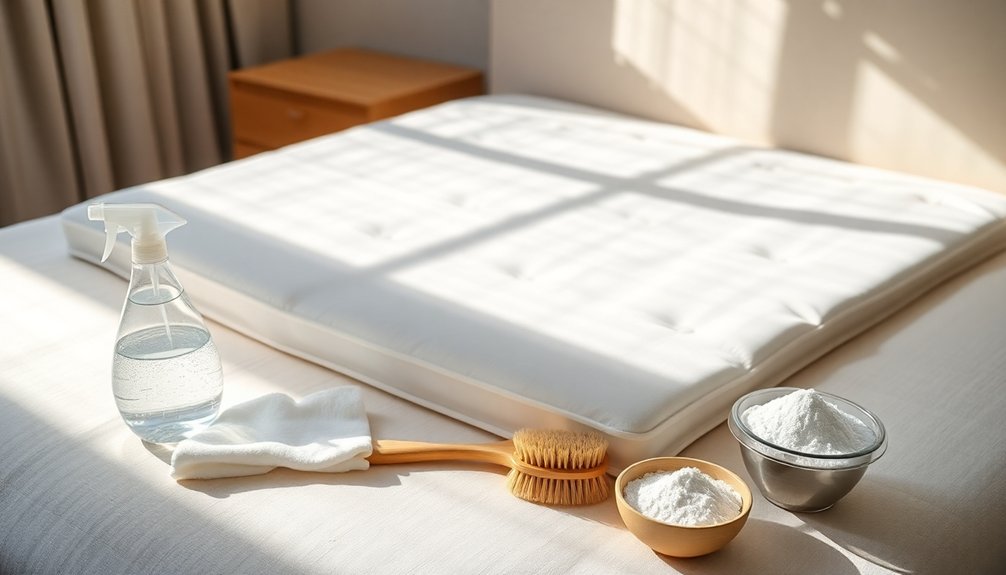
To effectively clean and deodorize your mattress, you’ll need a few essential supplies at your fingertips. Start with cold water, clean rags or towels, and baking soda.
A gentle, bleach-free laundry detergent is crucial for spot cleaning stains without damaging the fabric. If tough spots arise, consider using dish soap or an enzyme cleaner specifically designed for stain removal. Avoid harsh soaps and strong fragrances that might irritate your skin.
Don’t forget to have a vacuum cleaner with an upholstery attachment on hand to thoroughly clean the mattress surface and crevices. Additionally, incorporating regular cleaning routines can help maintain a fresh and clean mattress over time.
Finally, a mattress cover can help protect your mattress from future stains and odors, making maintenance easier in the long run.
Effective Cleaning Process
Once you have your supplies ready, it’s time to tackle the cleaning process.
Start by stripping the bed and washing all linens in hot water to eliminate germs and dust mites.
Strip the bed and wash all linens in hot water to effectively eliminate germs and dust mites.
Next, vacuum the entire surface of the mattress, covering all sides and crevices to remove dust and allergens.
If you find any stains, spot-clean them using a gentle upholstery stain remover or a mixture of baking soda and water.
After addressing stains, sprinkle baking soda evenly over the mattress and let it sit for at least 30 minutes—baking soda helps absorb odors. Incorporating efficient cleaning tools can enhance the effectiveness of your mattress cleaning routine.
Finally, thoroughly vacuum it up and consider airing out the mattress in a well-ventilated space or sunlight to let it air dry before protecting your mattress with fresh bedding.
Deodorizing Techniques
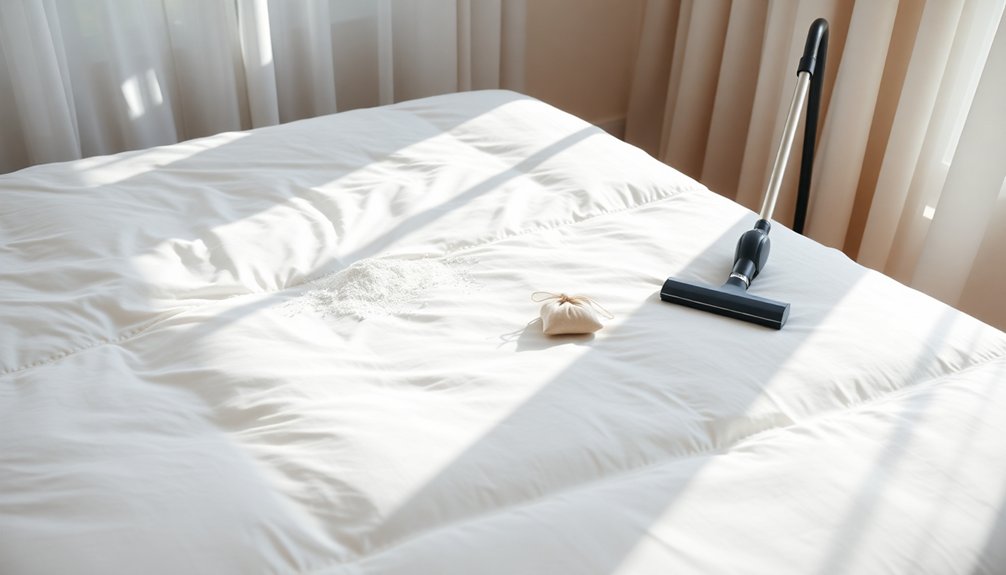
Deodorizing your mattress can be a simple yet effective process that enhances your sleeping environment.
Start by sprinkling baking soda evenly over the surface, letting it sit for 30 minutes to two hours to absorb odors. For a pleasant scent, add a few drops of essential oils like lavender before application.
If you encounter stubborn odors, lightly spritz a mixture of equal parts distilled white vinegar and water on the mattress—just don’t soak it. Follow this with air drying.
You can also mix cornstarch and baking soda for quick deodorizing, absorbing body oils and odors; vacuum it up after one hour. Regularly wash your bedding to help prevent odors from returning, as changing bed linens regularly can significantly improve the freshness of your sleeping environment.
Regular Maintenance Tips
To keep your mattress fresh and lasting longer, regular maintenance is key.
You’ll want to establish a cleaning routine that includes vacuuming, washing linens, and deodorizing. Incorporating HEPA-filter vacuums into your routine will help capture dust mites and allergens, enhancing your mattress’s cleanliness.
Let’s go over some essential tips and supplies to help you maintain a clean and comfortable sleeping environment.
Cleaning Frequency Recommendations
Cleaning your mattress at least twice a year is essential for maintaining a healthy sleep environment.
To effectively clean a mattress, you should vacuum the mattress surface monthly to eliminate allergens, dust mites, and odors. Spot clean any stains immediately to prevent them from setting, and consider deep cleaning every 6 to 12 months for ideal maintenance.
Don’t forget to use mattress protectors to safeguard against spills and dirt. Additionally, washing your bedding weekly in hot water (at least 130°F) helps keep germs and dust mites at bay.
Flipping and rotating your mattress regularly can also maintain comfort and extend its lifespan, ensuring a restful night’s sleep for years to come.
Essential Cleaning Supplies
Maintaining a clean mattress starts with having the right supplies on hand. Gather essential cleaning supplies like baking soda, cold water, a gentle bleach-free laundry detergent, rags or towels, and a vacuum cleaner with upholstery attachments.
Use the vacuum cleaner at least once a month to remove dust, dirt, and allergens from the mattress surface, ensuring a healthier sleep environment. When you spot-clean stains, remember to blot, not rub, to protect the fabric.
Regularly wash your bed linens in hot water (at least 130°F) to eliminate dust mites and germs—aim for once a week. Finally, invest in a waterproof mattress protector to shield against spills and allergens, greatly reducing the need for deep cleaning.
Effective Deodorizing Techniques
Keeping your mattress fresh is essential for a good night’s sleep. To effectively deodorize a mattress, start by regularly sprinkling baking soda on it. Let it sit for 30 minutes to two hours, then vacuum your mattress to eliminate odors.
Enhance the scent by adding essential oils like lavender or chamomile to the baking soda. For deeper cleaning, mix equal parts distilled white vinegar and water in a spray bottle. Lightly spritz it on the mattress, then air out the mattress to guarantee it dries completely.
Don’t forget to vacuum your mattress at least every six months to remove dust mites and allergens that contribute to unpleasant smells. Using a mattress protector can also help combat odors and make maintenance easier.
Preventive Measures for Freshness
To guarantee your mattress stays fresh and odor-free, regularly air it out by stripping the bed and letting it breathe for a few hours.
Use a waterproof mattress protector to shield against spills and allergens, helping keep your mattress in top shape.
Wash your bed linens weekly in hot water to eliminate germs that contribute to odors.
Make it a habit to vacuum your mattress monthly; this removes dust, dirt, and dead skin cells, preventing odor accumulation.
You can also deodorize a mattress without harsh chemicals—just let the mattress sit with baking soda for a few hours.
Finally, exposing your mattress to sunlight periodically can help neutralize odors and inhibit mold growth, keeping it fresh longer. Additionally, maintaining optimal indoor humidity levels can further help in reducing odor accumulation and prolonging the freshness of your mattress.
Signs Your Mattress Needs Replacement
A worn-out mattress can seriously affect your sleep quality and overall health. If you’re waking up with aches or stiffness, it’s a clear sign you need to replace your mattress.
Look for visible sagging, lumps, or indentations; these indicate that your mattress isn’t providing the support your body needs. Additionally, if you’ve noticed an increase in allergy symptoms like sneezing or congestion, it might mean your mattress is harboring dust mites and allergens that regular cleaning isn’t removing.
Persistent odors, even after deodorizing, can suggest mold or mildew, further indicating it’s time for a replacement. Regular disinfection of your sleeping environment is crucial to prevent harmful bacteria that can exacerbate health issues.
Don’t ignore these signs—investing in a new mattress can greatly improve your sleep and overall well-being.
Conclusion
To sum up, don’t overlook your mattress; it’s essential for your sleep and health. By cleaning regularly, deodorizing effectively, and maintaining it properly, you can enjoy a fresher, healthier sleeping environment. Remember, a clean mattress promotes better rest, a happier mood, and enhanced well-being. So, take action now: refresh your mattress, protect your investment, and prioritize your comfort. Your sleep deserves it!