Essential oils like lemon, tea tree, and eucalyptus are fantastic for disinfecting kitchen surfaces. They contain natural antibacterial properties that effectively combat harmful bacteria and leave behind a pleasant scent. Mixing lemon or tea tree oil with vinegar creates a powerful disinfectant, while clove and cinnamon oils tackle tough bacteria. Just remember to dilute them properly to guarantee safety. If you’re curious about more effective blends and eco-friendly ideas, there’s plenty more to explore.
The Benefits of Using Essential Oils for Kitchen Cleaning
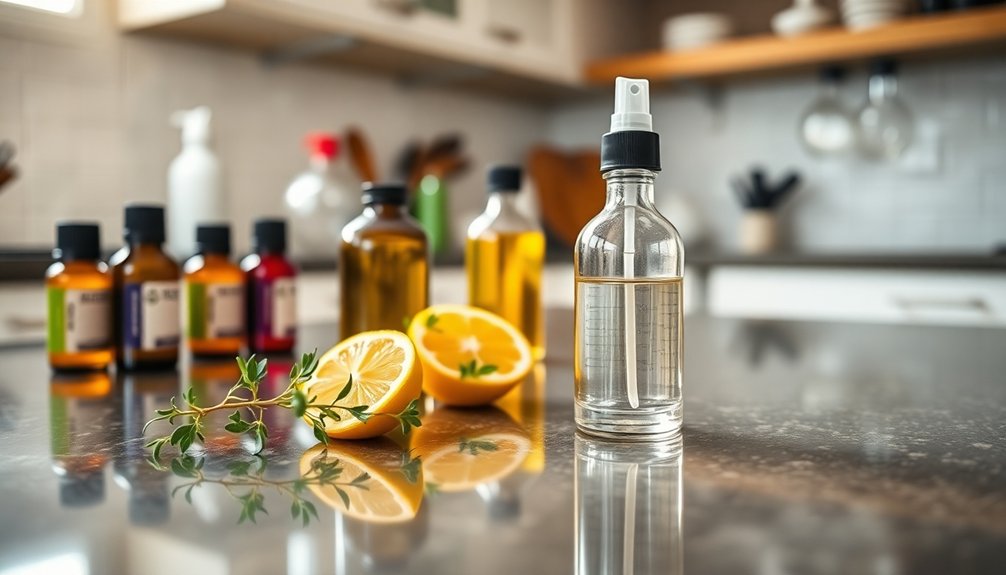
When you choose essential oils for kitchen cleaning, you’re not just opting for a pleasant scent; you’re also harnessing powerful natural disinfectants.
Essential oils like lemon essential oil and tea tree oil boast impressive antibacterial properties, effectively tackling germs on your surfaces. Eucalyptus essential oil purifies the air while eliminating bacteria, creating a fresher environment.
Essential oils like lemon and tea tree oil are powerful antibacterial agents, tackling germs while eucalyptus purifies the air for a fresher environment.
You can also enjoy the fresh aroma of lemongrass essential oil, which breaks down stubborn biofilms from tough bacteria. By incorporating these natural ingredients into your DIY cleaning solutions, you reduce reliance on synthetic chemicals, promoting eco-friendly cleaning practices. This shift not only contributes to a healthier indoor air quality but also supports sustainability by minimizing plastic waste, aligning with eco-friendly practices that prioritize family safety and environmental health.
Top Essential Oils for Disinfecting Surfaces
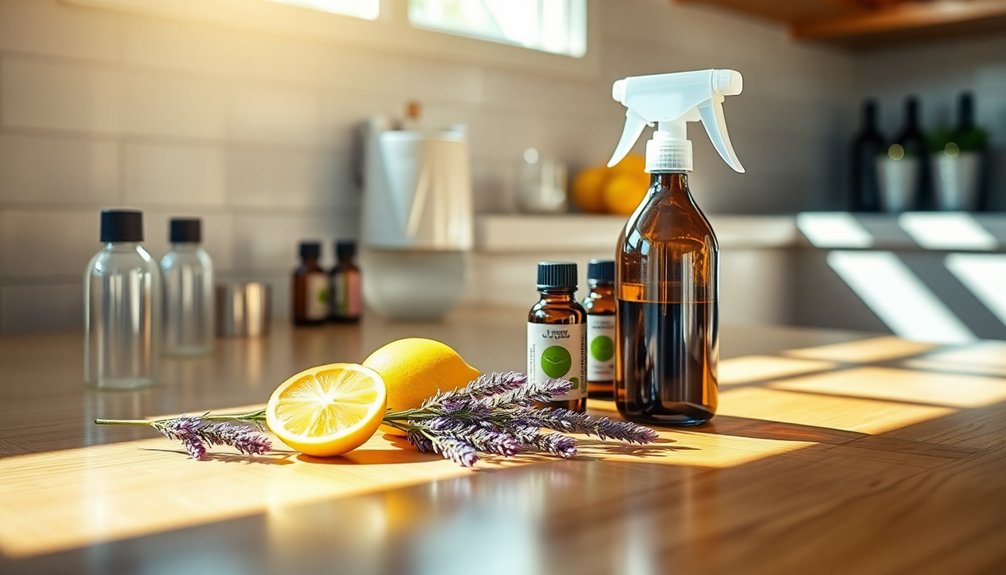
When it comes to disinfecting surfaces, knowing which essential oils to use can make a big difference. You’ll find that oils like lemon and tea tree not only smell great but also pack a powerful antimicrobial punch. Let’s explore the best essential oils for keeping your kitchen clean and germ-free. Additionally, natural disinfectants such as tea tree oil are ideal for cutting boards due to their strong antimicrobial properties.
Antimicrobial Properties Explained
While many cleaning products claim to kill germs, essential oils stand out for their potent antimicrobial properties, making them excellent choices for disinfecting kitchen surfaces.
Tea tree essential oil and eucalyptus effectively eliminate bacteria like E. coli and S. aureus. Lemon essential oil not only disinfects but also boasts antifungal and antiseptic qualities, perfect for cutting boards.
Clove oil disrupts bacterial cell membranes, showcasing strong antibacterial activity against various pathogens. Cinnamon oil excels against 98% of pathogenic bacteria, adding value to your natural cleaning solutions.
Additionally, lemongrass oil breaks down biofilm from stubborn bacteria, even those that are drug-resistant. Incorporating these essential oils into your kitchen cleaning routine can enhance both cleanliness and safety.
Best Oils for Surfaces
To keep your kitchen surfaces sparkling clean and free from harmful germs, choosing the right essential oils is essential.
Lemon essential oil not only leaves a fresh scent but also boasts antifungal and antiseptic properties, making it perfect for cleaning surfaces like countertops and cutting boards.
Tea tree essential oil and eucalyptus oil effectively combat common bacteria such as E. coli, ensuring thorough disinfecting.
For high-touch areas, consider clove oil, which targets drug-resistant bacteria by disrupting their cell membranes.
Additionally, lavender essential oil offers antibacterial qualities while creating a calming atmosphere.
Combining oils like lemon and tea tree enhances their cleaning effectiveness, providing both antibacterial and antiviral properties for all-encompassing surface disinfection.
How to Effectively Clean With Essential Oils
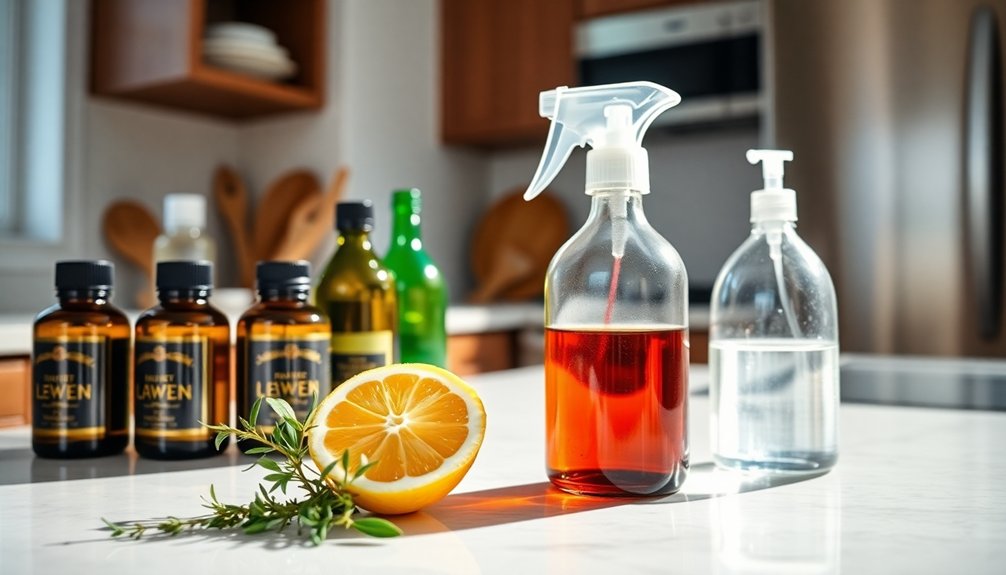
Cleaning with essential oils can transform your kitchen into a fresh and inviting space, especially when you combine them with effective ingredients like water and vinegar.
To create a powerful disinfectant, mix lemon oil or tea tree oil with vinegar in a spray bottle. This solution effectively targets bacteria and germs on your cleaning surfaces.
For stubborn stains or odors, try a scrubbing mixture of baking soda and essential oils like clove or lavender, which not only enhances cleaning power but also adds a pleasant aroma.
Just remember to dilute essential oils properly, using a maximum concentration of 5% for safe application. Always perform a patch test on surfaces to guarantee compatibility and avoid potential damage. Additionally, using natural ingredients in your cleaning routine promotes a non-toxic approach to maintaining a safe cooking and eating environment.
Creating Your Own Essential Oil Cleaning Solutions
Creating your own essential oil cleaning solutions is both simple and rewarding. You can mix various essential oils to enhance their cleaning power and tailor them to your preferences. Let’s explore some effective DIY recipes that will keep your kitchen fresh and germ-free. Additionally, using eco-friendly cleaning products can further improve your cleaning efforts while promoting sustainability.
Essential Oil Combinations
Crafting your own essential oil cleaning solutions can be both fun and effective, especially when you combine the right oils for maximum impact.
Essential oils offer powerful antimicrobial properties that enhance your cleaning products. Here are four essential oil combinations to take into account:
- Lemon and Tea Tree: This blend tackles germs and odors, making it ideal for kitchen surfaces.
- Eucalyptus and Peppermint: Boosts disinfecting power while providing a rejuvenating aroma.
- Sweet Orange and Clove: Creates a citrusy spray that disinfects and leaves a vibrant scent.
- Herbal Mint Blend: Combining eucalyptus, tea tree, and spearmint effectively fights tough bacteria and mold.
With these combinations, you can enjoy customized cleaning solutions that meet your needs while ensuring a cleaner, healthier kitchen environment.
DIY Cleaning Recipes
Harnessing the power of essential oils in your homemade cleaning solutions not only enhances their effectiveness but also fills your kitchen with delightful aromas.
For a DIY all-purpose cleaner, mix 1 cup of distilled water, 1 cup of white vinegar, and 10-15 drops of lemon or tea tree essential oil for disinfecting with a fresh scent.
To create a natural scrubbing paste, combine ½ cup of baking soda with 10-15 drops of eucalyptus or peppermint essential oil.
For odor elimination, blend equal parts water and vinegar in a spray bottle, adding 10-20 drops of clove or lavender essential oil for an antimicrobial boost.
Finally, a glass cleaner can be made with water, vinegar, and lemon essential oil for a streak-free shine.
The Science Behind Essential Oils and Antimicrobial Properties
While many cleaning products rely on harsh chemicals, essential oils offer a natural alternative with powerful antimicrobial properties. They effectively combat various pathogens, enhancing your kitchen hygiene.
Essential oils provide a natural, powerful alternative to harsh cleaning chemicals, effectively enhancing kitchen hygiene.
Here are some essential oils with notable disinfecting capabilities:
- Tea Tree Oil: Effective against drug-resistant bacteria like Staphylococcus aureus.
- Lemon Oil: Exhibits strong antifungal and antiseptic qualities, boosting its disinfecting capabilities.
- Eucalyptus Oil: Eliminates bacteria from surfaces and air, promoting a purifying effect.
- Clove Oil: Targets bacteria responsible for foodborne illnesses, enhancing safety.
These essential oils demonstrate broad-spectrum efficacy against both Gram-positive and Gram-negative bacteria, making them reliable natural disinfectants for your kitchen cleaning routine. Additionally, incorporating natural cleaning solutions can further enhance your kitchen’s cleanliness and reduce environmental impact.
Safety Considerations When Using Essential Oils
When using essential oils for cleaning, it’s crucial to prioritize safety to guarantee a healthy environment. Start by diluting essential oils, keeping the maximum concentration at 5% to avoid skin irritation.
Always perform a patch test before your first use to check for any allergic reactions or sensitivities. Be aware that some essential oils can cause respiratory irritation, so maintain proper ventilation, especially if you or others have sensitivities.
Pregnant individuals should avoid certain oils, particularly in the first 16 weeks of pregnancy, to protect the developing fetus. Additionally, store your essential oil cleaning products safely out of reach of children to prevent accidental ingestion or exposure. Prioritizing these safety considerations will help create a safer cleaning routine. Regular cleaning with eco-friendly methods can also enhance the effectiveness of your essential oils while minimizing environmental impact.
Effective Essential Oil Blends for Kitchen Cleaning
Here are some great options:
- Eucalyptus & Tea Tree Blend: Combine 4 drops of eucalyptus oil, 3 drops of tea tree oil, and 3 drops of spearmint oil for antimicrobial surface disinfection.
- Kid-Friendly Lavender Mix: Use 7 drops of lavender oil and 3 drops of lemon oil for a pleasant, antibacterial aroma in family kitchens.
- Spicy Citrus Blend: Mix 4 drops of sweet orange, 2 drops of lemon, and 2 drops of clove oil for a revitalizing scent and effective bacteria-fighting.
- Customizable Cleaning Spray: Create a powerful spray with equal parts vinegar and water, adding essential oils like tea tree or lemon to disinfect surfaces. Using essential oils can enhance your cleaning routine while supporting eco-friendly practices, making it a sustainable choice for your home.
Eco-Friendly Alternatives to Conventional Cleaners
As you seek eco-friendly alternatives to conventional cleaners, consider the power of essential oils. Oils like tea tree, lemon, and eucalyptus boast natural antimicrobial properties that effectively disinfect surfaces without harmful chemicals.
By incorporating essential oils into your cleaning routine, you promote healthier indoor air quality and reduce exposure to synthetic ingredients found in many traditional cleaners. These oils combat a wide range of bacteria and viruses, making them a potent disinfecting option with minimal environmental impact. Additionally, the antimicrobial properties of vinegar complement the effectiveness of essential oils, providing a comprehensive natural cleaning solution.
Plus, using essential oils allows you to create custom cleaning products while greatly cutting down on plastic waste through reusable containers. Shifting to essential oils not only supports sustainability but also enhances your natural cleaning efforts.
Conclusion
Using essential oils for kitchen cleaning not only leaves your space fresh but also harnesses nature’s power to disinfect. As you blend these oils into your cleaning routine, you might find a surprising connection: the same ingredients that uplift your mood can also protect your home. It’s a beautiful coincidence that the scents you love can double as effective cleaners. Embrace this natural approach, and you’ll find that a cleaner kitchen can lead to a healthier, happier life.