As fall allergies approach, it’s essential to create a healthier home. Start at your entryway by implementing a shoes-off policy and keeping mats clean. In the living room, opt for easily dustable furniture and use HEPA air purifiers. Manage moisture in the kitchen and bathroom to prevent mold, while your bedroom should stay pet-free for better sleep. With these strategies in mind, you’ll enhance your indoor air quality and comfort. Discover more tips for each room in your home.
Entryway: Your First Line of Defense
Your entryway serves as your first line of defense against fall allergies, so it’s essential to take proactive steps.
Implement a shoes-off policy at each entrance to minimize outdoor allergens from being tracked indoors. This simple change can greatly reduce pollen and dirt entering your home.
Adopting a shoes-off policy at every entrance significantly cuts down on outdoor allergens entering your home.
Use washable mats with tightly woven fibers to trap dirt and pollen, cleaning them weekly to maintain effectiveness.
Create a designated shifting zone for outdoor items, which helps prevent allergen spread throughout your living space.
Position mats strategically to enhance the allergen airlock effect, ensuring allergens stay contained.
Regularly inspect and clean your entryway to maintain a tidy environment, further reducing allergen accumulation before it enters your home. Additionally, consider using microfiber gloves for effective dusting of surfaces in the entryway to further minimize allergens.
Living Room: Where Comfort Meets Clean
While creating a cozy living room, it’s essential to maintain a clean environment to keep allergens at bay.
Opt for leather, vinyl, or wood furniture, as these materials won’t trap dust and dander like upholstery. Regularly dust surfaces with a damp cloth, especially on shelves and electronics, to prevent stirring up allergens.
Use washable curtains made of plain cotton or synthetic fabric; they’re easier to clean and reduce allergen buildup. Position air purifiers with HEPA filters centrally to optimize air circulation and capture airborne allergens, improving your indoor air quality.
During high pollen counts in fall, keep windows closed and clean mold from frames and sills to prevent outdoor allergens from sneaking in. Additionally, incorporating effective dusting techniques into your routine can significantly enhance your efforts to minimize allergens in your living space.
Kitchen: Hidden Allergen Havens

Your kitchen can be a hidden haven for allergens if you’re not careful.
To keep it mold-free and pest-free, you need to focus on effective food storage, regular cleaning, and quick repairs.
Let’s explore some key strategies to maintain a healthier cooking space. Regular cleaning is crucial to prevent sticky grease layers that can harbor allergens and attract pests.
Mold Prevention Strategies
Since the kitchen often harbors hidden allergens, implementing effective mold prevention strategies is essential for maintaining a healthy environment.
To prevent mold, start by regularly cleaning your refrigerator; discard expired food and wipe down surfaces with mold-killing solutions. Use a vented exhaust fan while cooking to reduce moisture buildup, which can promote mold growth.
Don’t ignore leaks under sinks—fix them promptly and address any damp spots to deter mold development in hidden areas. Additionally, store food, including pet food, in sealed containers.
This not only keeps your kitchen organized but also prevents attracting pests that contribute to mold issues. By following these strategies, you can create a healthier kitchen space free from harmful allergens.
Pest Control Tips
To keep your kitchen free from hidden allergens, effective pest control is essential. By following these simple tips, you can minimize allergen exposure and maintain a healthier space:
- Clean up food crumbs and spills immediately to prevent mold growth and deter pests that can trigger allergies.
- Store food, including pet food, in sealed containers to minimize exposure to allergens and prevent attracting unwanted pests.
- Maintain cleanliness in trash cans and recycling bins by regularly cleaning them to eliminate potential allergen sources.
- Fix leaks under sinks promptly to prevent moisture accumulation that can lead to mold growth and attract pests.
Food Storage Solutions
Keeping your kitchen allergen-free goes beyond pest control; proper food storage is key to maintaining a healthy environment.
Start by using food storage solutions like sealed containers for all food, including pet food, to reduce exposure to allergens in your home. Regularly clean your refrigerator and pantry to avoid mold growth and dispose of expired items that can harbor allergens.
Don’t forget to wash dishes daily and scrub sinks to create a clean food prep area. Empty your trash can daily, opting for one with an insect-proof lid to keep pests at bay.
Finally, be aware of food cross-reactivity, especially if you have pollen allergies, as certain foods may trigger reactions during specific seasons.
Bathroom: Moisture Management
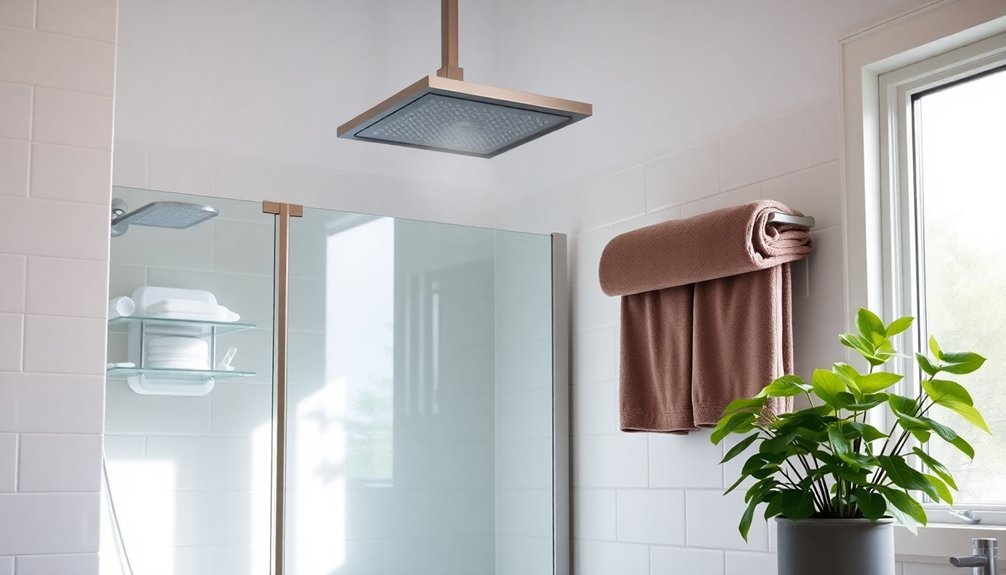
To keep your bathroom mold-free, you need to manage moisture effectively.
Use an exhaust fan or open windows during and after showers to lower humidity levels.
Additionally, regularly clean surfaces and dry towels to prevent mold growth and maintain a healthy environment. Incorporating non-toxic cleaning solutions into your routine can further enhance your efforts against mold and promote a safer living space.
Exhaust Fan Usage
While you might enjoy a hot shower, the steam it produces can lead to increased humidity in your bathroom, which is a prime environment for mold growth and allergens.
To maintain a healthy space, consider these exhaust fan usage tips:
- Run the exhaust fan for at least 20-30 minutes after showering to reduce moisture and keep humidity levels below 50%.
- Verify the exhaust fan is vented outside to effectively expel warm, moist air, preventing indoor allergens from accumulating.
- Perform regular maintenance by cleaning the fan to avoid dust build-up, which enhances air quality improvement.
- Monitor humidity levels regularly to verify your bathroom remains a mold-free zone and promotes overall well-being.
Mold Prevention Techniques
After utilizing your exhaust fan, it’s important to implement additional mold prevention techniques in your bathroom.
First, choose tile, vinyl, or linoleum flooring, as these materials resist moisture better than carpeting.
Regularly clean your shower curtains and tiles with mold-killing products to eliminate any existing mold and prevent future growth.
Use towel bars instead of hooks to help towels dry completely, minimizing moisture accumulation.
Rotate your towels frequently, especially during humid months, to guarantee they dry properly and reduce the likelihood of mold growth.
Bedroom: Your Allergy Sanctuary
Creating a bedroom that serves as your allergy sanctuary is essential for a restful night’s sleep. To minimize allergens and keep your space clean, follow these tips:
Transform your bedroom into an allergy sanctuary for a peaceful, restful night’s sleep.
- Encase pillows, mattresses, and box springs in dust-mite-proof covers to markedly reduce exposure to dust mites.
- Wash your sheets, pillowcases, and blankets weekly in water heated to at least 130°F (54°C) to eliminate allergens and dust mites.
- Keep pets out of the bedroom to minimize pet dander, and bathe them weekly to reduce dander in your home.
- Use hypoallergenic bedding materials, like cotton or synthetic fabrics, and vacuum regularly with a HEPA filter to capture dust particles and allergens effectively.
- Regular cleaning prevents buildup of allergens and promotes a healthier sleeping environment.
Home Office: Technology and Allergies
Your home office can become a breeding ground for allergens if you don’t take proactive measures to keep it clean. To tackle dust mites and mold, establish a regular cleaning routine that includes dusting electronic devices with a specialized cloth. This helps reduce indoor allergens and improve your air quality.
Store documents in closed cabinets to minimize paper clutter, which can trap dust and exacerbate allergy symptoms. Position printers away from your workspace to further limit the release of particulate matter.
Creating a clutter-free environment enhances your workspace and reduces allergens accumulating on surfaces. Regularly using microfiber cloths for dusting can significantly improve cleaning efficiency and contribute to better air quality. If you experience severe allergy symptoms, consider seeking professional medical advice to find additional solutions tailored to your needs.
HVAC System: Your Whole-Home Solution
While many overlook their HVAC system when tackling allergies, it plays an essential role in maintaining a healthy indoor environment.
Many neglect their HVAC system’s impact on allergies, yet it is vital for a healthy indoor atmosphere.
To enhance your home’s air quality and reduce allergens, follow these tips:
- Install a HEPA filter: This captures airborne allergens effectively, easing allergy symptoms.
- Monitor humidity levels: Keep them between 30-50% to prevent mold growth and control dust mites.
- Change filters regularly: Regular maintenance of your HVAC system can greatly improve indoor air quality by reducing allergens.
- Schedule professional inspections: Routine checks can identify issues, ensuring your HVAC system operates at peak efficiency and maintains a healthy environment. Additionally, consider using disinfectants for surfaces to further reduce allergen presence in your home.
Basement: Preventing Allergen Accumulation
Basements can often become a breeding ground for allergens if not properly managed. To prevent this, keep humidity levels below 45% using a dehumidifier, as high humidity encourages mold growth and dust mites.
Regularly inspect for leaks in plumbing or walls, since moisture can lead to mold infestations, a common indoor allergen. Guarantee proper ventilation by installing exhaust fans or opening windows when possible; this helps reduce moisture and improves air quality.
Additionally, apply mold-resistant paint to your basement walls and ceilings to inhibit mold growth and facilitate easier cleaning.
Store items in airtight containers instead of cardboard boxes to limit dust mite exposure and prevent mold, as cardboard can trap moisture and allergens. Furthermore, consider using eco-friendly methods for plumbing maintenance to prevent leaks and further moisture issues in your basement.
Entire House: General Strategies for Allergen Control
To effectively control allergens throughout your entire home, it’s essential to create an environment that discourages their growth.
Creating a home environment that discourages allergen growth is key to effective allergen control.
Here are some strategies to help you achieve better air quality:
- Maintain indoor humidity below 50% to prevent mold growth and reduce dust mites.
- Use a vacuum with a HEPA filter to regularly clean carpets and surfaces, capturing allergens like pet dander and dust mites.
- Implement a no-shoes policy indoors and place washable mats at entrances to minimize outdoor allergens.
- Utilize air purifiers with HEPA filters in different rooms to enhance air quality and reduce airborne allergens.
- Incorporate eco-friendly cleaning practices to further reduce chemical pollution and improve overall indoor air quality.
Conclusion
By tackling allergens in each room, you’re setting the stage for a healthier home this fall. You might think it sounds overwhelming, but imagine walking into a fresh, welcoming space where dust and mold are kept at bay. With just a few simple changes—like using an air purifier or regularly washing linens—you can create an allergy-friendly environment. Embrace these strategies, and you’ll breathe easier, enjoy your home more, and say goodbye to seasonal sniffles!