To prepare your house for winter, start with a deep declutter to create a calm space. Organize your closets for winter clothing and clean out your garage and shed. Don’t forget to check and replace HVAC air filters and inspect your heating system for efficiency. Service your lawn equipment, plan seasonal decor changes, and evaluate your home’s insulation. If you want more tips to keep your home in shape, there’s plenty more to explore.
Start With a Deep Declutter of Your Home
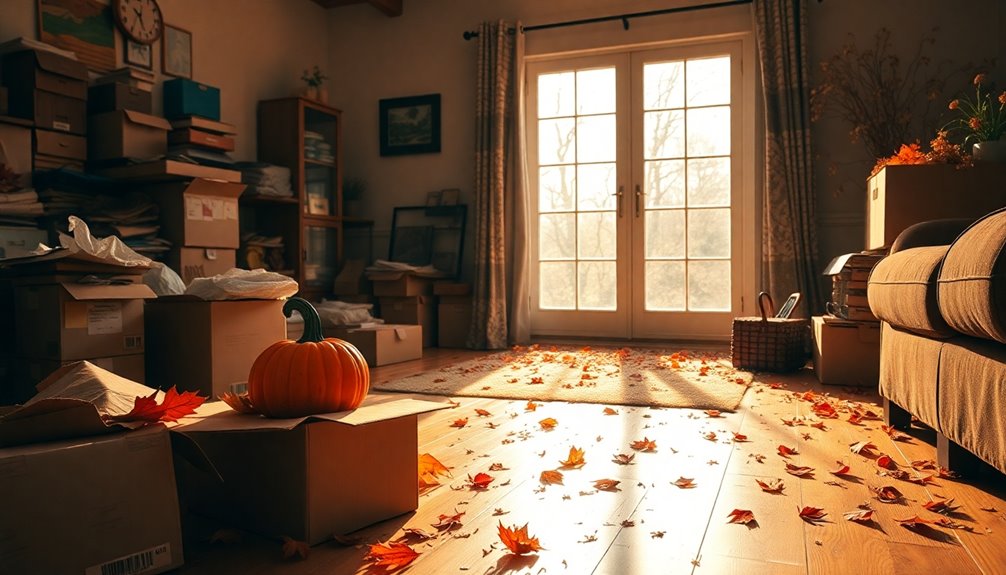
As the leaves change and the air turns crisp, it’s the perfect time to tackle a deep declutter of your home.
Start by using effective declutter techniques, like the Marie Kondo method or the four-box system. This helps you sort items into categories: keep, donate, sell, or toss.
As you go through your belongings, consider the minimalism benefits; a simpler space can lead to reduced stress and increased focus. Let go of items that no longer serve you or bring joy. Engaging in decluttering not only nurtures your space but also reduces stress levels, fostering a peaceful and calm mind.
Organize Your Closets for Winter Clothing

As winter approaches, it’s time to sort through your closet and make space for seasonal items.
Start by donating any unused clothing to free up room and give back.
With everything organized, you can use storage solutions effectively to keep your winter wardrobe easily accessible. Consider incorporating drawer divider trays to maintain an organized space for your accessories and winter gear.
Sort Seasonal Items First
Sorting seasonal items is an essential step in preparing your closet for winter. Start by tackling seasonal sorting, which involves separating summer clothing from winter wear.
Pull out everything and categorize items into groups: heavy coats, sweaters, and accessories. This item categorization helps you see what you have and what you might need. As you sort, check for any damage or items that need cleaning.
Make sure to arrange your winter clothing for easy access, placing frequently worn pieces at the front. Use bins or storage for off-season items, keeping your closet organized and functional.
Donate Unused Clothing
While you’re organizing your closet for winter, don’t forget to donate any unused clothing that no longer fits your style or needs.
This is a great opportunity to declutter and make space for your winter wardrobe. Check local donation centers or participate in clothing drives in your community. They often welcome gently used items, ensuring they go to those in need.
It’s a win-win—you’ll feel great about giving back while creating a more organized space. As you sort through your clothes, be honest about what you truly wear and love.
If you haven’t touched an item in over a year, it’s likely time to let it go. Your closet will thank you, and so will someone in need.
Use Storage Solutions Effectively
How can you maximize your closet space for winter clothing? Start by sorting through your items and removing anything you won’t wear this season.
Invest in sturdy storage bins to keep your off-season clothes organized and out of the way. Clear plastic bins let you see what’s inside, making retrieval easy.
Next, optimize your vertical shelving. Utilize the upper shelves for items like extra blankets or rarely used accessories, while keeping your winter clothing at eye level for easy access.
Use cascading hangers to save space and keep your outfits visible.
Finally, consider adding hooks on the inside of your closet door for scarves and hats.
With these solutions, you’ll create a tidy and functional closet ready for winter.
Clean Out Your Garage and Shed
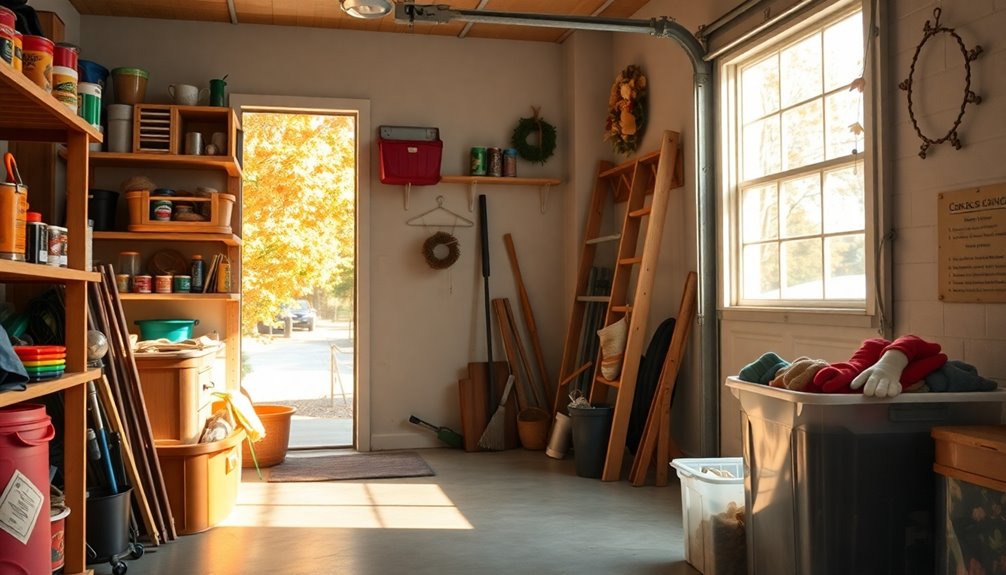
Cleaning out your garage and shed is essential this fall. You’ll want to sort and organize your tools, properly store seasonal equipment, and safely dispose of any hazardous materials. Taking these steps won’t only clear up space but also keep your items in good condition for the months ahead. Additionally, implementing proper safety protocols during this process ensures a secure environment while handling tools and materials.
Sort and Organize Tools
Tackling the task of sorting and organizing tools in your garage or shed can make a world of difference in both functionality and safety.
Start by evaluating what you have—discard broken or unused tools to declutter your space. Next, consider tool maintenance; clean and sharpen items to guarantee they’re ready for use.
To maximize your storage solutions, invest in pegboards or shelving units to keep tools visible and accessible.
Group similar items together, such as hand tools, power tools, and gardening equipment. Use bins or labeled containers for smaller items, making it easier to find what you need.
Dispose of Hazardous Materials
Before you plunge into your fall cleaning, take a moment to assess any hazardous materials lurking in your garage or shed.
Look for items like old paint, pesticides, batteries, and solvents. These substances need proper hazardous waste disposal to keep you and the environment safe.
Don’t just toss them in the trash; check for local regulations and guidelines. Many communities offer safe recycling options for these materials, making it easier for you to dispose of them responsibly.
Gather everything you need to get rid of and plan a trip to your local waste facility. Taking this step not only clears out your space but also guarantees a safer home as winter approaches.
Store Seasonal Equipment Properly
As you prepare for the colder months, storing seasonal equipment properly becomes essential to keep your garage and shed organized. This guarantees you can easily access what you need while protecting your tools from harsh weather.
Start with some equipment maintenance to extend the life of your items:
- Clean and dry all outdoor tools
- Wipe down lawn furniture and store it indoors
- Drain fuel from lawn mowers and trimmers
- Organize gardening supplies in labeled bins
- Hang bikes and other equipment on hooks
Implementing effective seasonal storage practices not only maximizes your space but also keeps your gear in prime condition for next year.
A little effort now can save you time and trouble when spring rolls around!
Check and Replace Air Filters in Your HVAC System
To guarantee your HVAC system runs efficiently throughout the colder months, checking and replacing air filters is vital. Clogged filters can restrict airflow, making your system work harder and increasing energy costs. You should inspect your filters monthly, especially during peak usage times.
If they’re dirty or blocked, swap them out for clean ones to enhance air quality and maintain energy efficiency.
Regular HVAC maintenance, including filter checks, not only prolongs the life of your system but also guarantees it operates at peak performance. Clean filters can reduce allergens and pollutants in your home, creating a healthier environment. Additionally, neglecting regular maintenance can lead to increased repair costs, further straining your finances.
Don’t overlook this simple task; it’s a vital step in preparing your home for winter while saving money on energy bills.
Inspect and Clean Your Heating System
Get ready to cozy up this winter by inspecting and cleaning your heating system.
Proper system maintenance not only enhances heating efficiency but also guarantees your home stays warm and safe. Regularly cleaning your heating system can help prevent hard water buildup that may affect its performance.
Here’s a quick checklist to help you get started:
- Check the furnace or boiler for dust and debris
- Inspect ducts for blockages or leaks
- Clean vents and radiators to improve airflow
- Examine the thermostat for accurate readings
- Schedule a professional inspection if needed
Test Smoke and Carbon Monoxide Detectors?
Now’s the perfect time to test your smoke and carbon monoxide detectors to guarantee they’re working properly.
Regular testing can save lives, and it’s easy to do with just a few simple steps.
Plus, knowing when to replace them keeps your home safe year-round. Additionally, using non-toxic cleaners during your fall cleaning ensures a safe environment while preparing your home for winter.
Importance of Regular Testing
While it might seem easy to overlook, testing your smoke and carbon monoxide detectors regularly is essential for your safety.
These devices are your first line of defense against deadly threats, and regular maintenance guarantees they function properly when you need them most. Incorporating seasonal checks into your routine can save lives.
- Reduces risk of false alarms
- Guarantees detectors are up to date
- Helps you stay compliant with safety regulations
- Instills peace of mind for your family
- Protects your home investment
Testing Procedure Steps
To guarantee your smoke and carbon monoxide detectors are working properly, follow these simple testing procedure steps.
First, locate the test button on each device and press it. You should hear a loud alarm if it’s functioning correctly. If it doesn’t respond, check the batteries and replace them if necessary.
For added safety, use testing methods that involve a can of canned smoke or a carbon monoxide test gas. Always make certain there’s adequate ventilation when testing.
After testing, review the expiration date on your detectors—if they’re expired, it’s time to replace them.
Remember to follow all safety precautions to make certain your family’s protection. Regular testing helps keep your home safe during the winter months ahead.
Replacement Timeline Recommendations
Since smoke and carbon monoxide detectors play an essential role in your home’s safety, it’s important to replace them on a regular timeline.
Adhering to a replacement schedule not only guarantees your detectors function properly but also provides peace of mind during the colder months.
It’s wise to make timely upgrades based on the following recommendations:
- Replace smoke detectors every 10 years.
- Replace carbon monoxide detectors every 5-7 years.
- Test detectors monthly to guarantee they’re working.
- Consider upgrading to smart detectors for added features.
- Keep a record of replacement dates for easy tracking.
Clean and Inspect Your Chimney and Fireplace
As the chilly autumn air settles in, it’s vital to clean and inspect your chimney and fireplace to guarantee they’re safe and ready for cozy fires.
Start by checking for any creosote build-up, which can pose a fire hazard. A thorough chimney sweep will guarantee proper airflow and prevent dangerous blockages.
Don’t forget to inspect the flue and damper for functionality.
Next, examine your fireplace for cracks or loose bricks that could affect its safety.
Make certain your smoke detectors are working, too. Regular disinfection of surfaces not only enhances fireplace safety but also extends the life of your heating system.
Regular chimney maintenance not only enhances fireplace safety but also extends the life of your heating system.
Wash Windows and Screens Inside and Out
Clean windows can transform your home’s appearance and let in more natural light.
To achieve sparkling results, it’s crucial to use effective washing techniques for both the glass and screens.
Let’s explore how to make your windows shine inside and out. Additionally, using a squeegee after each shower can help prevent hard water spots on your glass surfaces.
Importance of Clean Windows
While you might overlook your windows during regular cleaning, their clarity greatly impacts your home’s overall appearance and ambiance.
Clean windows not only enhance your view but also allow more natural light to enter, creating a warm and inviting atmosphere.
Here are some essential window maintenance tips to contemplate:
- Prevent mold and mildew buildup
- Extend the life of your window frames
- Improve energy efficiency by enhancing insulation
- Boost your home’s curb appeal
- Increase property value with a well-maintained look
The benefits of clean windows are undeniable, as they contribute to a healthier living environment and a more enjoyable home.
Effective Washing Techniques
A sparkling finish can transform your windows and screens, making them look brand new. To achieve this, start with effective washing techniques that guarantee every inch is spotless.
First, gather your supplies: a squeegee, microfiber cloths, and eco-friendly detergents. Mix a solution of warm water and your chosen detergent in a bucket.
Begin by washing the windows with a cloth, applying the solution generously. Don’t forget to tackle the screens; gently scrub them with the same mixture. Rinse thoroughly with clean water to remove any soap residue.
Finally, use the squeegee to wipe the glass from top to bottom, assuring no streaks remain. With these methods, your windows and screens will gleam, welcoming winter with a crystal-clear view.
Deep Clean Carpets and Rugs
Deep cleaning carpets and rugs is essential, especially as the seasons change and dirt and allergens accumulate.
Regular carpet cleaning not only enhances your home’s appearance but also promotes a healthier environment.
Here are some steps to guarantee effective rug maintenance:
- Vacuum thoroughly to remove loose dirt and debris.
- Spot clean stains immediately with a suitable cleaner.
- Use a steam cleaner for deep-set dirt and allergens.
- Allow carpets and rugs to dry completely to prevent mold growth.
- Schedule professional cleaning at least once a year.
Incorporating a natural disinfectant during your cleaning routine can further enhance the hygiene of your carpets and rugs.
Dust and Wipe Down Baseboards and Crown Molding
Dusting and wiping down baseboards and crown molding is often overlooked, yet it’s essential for maintaining a clean home. These areas collect dust, dirt, and allergens, which can affect your indoor air quality.
Start your baseboard cleaning by gathering a microfiber cloth and a gentle cleaner. Wipe along the edges where dust tends to accumulate. Don’t forget the crown molding; it adds elegance but can also trap grime. You might need a step stool to reach higher spots, so be careful.
For stubborn stains, a damp cloth can help lift the residue without damaging the finish. Regularly tackling these tasks will keep your home looking polished and inviting as you prepare for the winter months ahead. Incorporating regular dusting into your cleaning routine can significantly reduce allergens in your home.
Clean Ceiling Fans and Light Fixtures
When it comes to cleaning ceiling fans and light fixtures, you’ll want to gather the right supplies first.
Using safe techniques will help you avoid damage while ensuring everything shines.
Plus, regular maintenance tips can keep these areas dust-free and looking great all season long.
Gather Necessary Cleaning Supplies
To tackle cleaning ceiling fans and light fixtures effectively, you’ll need a few essential supplies. Having the right tools on hand not only makes the job easier but also guarantees you’re ticking off items on your cleaning checklist.
Opt for eco-friendly supplies to keep your home safe and healthy.
Here’s what you’ll need:
- Microfiber cloths for dusting
- A step ladder for reaching high fixtures
- Eco-friendly all-purpose cleaner
- A gentle brush or vacuum attachment for fans
- A bucket of warm soapy water for washing
With these supplies gathered, you’ll be well-prepared to make your ceiling fans and light fixtures shine, setting a clean and cozy atmosphere for the winter months ahead.
Safe Cleaning Techniques
As you prepare to clean ceiling fans and light fixtures, it’s crucial to prioritize safety to prevent any accidents.
Start by turning off the power to the fixtures at the circuit breaker to avoid electrical hazards. Use a sturdy step ladder to reach high areas safely, and make sure it’s on a stable surface.
When selecting cleaning solutions, opt for eco-friendly products to protect both your home and the environment. A microfiber cloth works wonders for dusting without harmful chemicals.
Remember to wear gloves to protect your hands and goggles to shield your eyes from dust and debris.
Regular Maintenance Tips
Regularly maintaining your ceiling fans and light fixtures not only enhances their appearance but also improves their efficiency.
As part of your seasonal maintenance, take the time to clean these areas to guarantee they’re functioning at their best.
Here are some proactive upkeep tips:
- Dust ceiling fans with a microfiber cloth to prevent buildup.
- Wipe down light fixtures with a damp cloth to eliminate grime.
- Replace any burnt-out bulbs to maintain brightness.
- Check for loose screws or fittings to guarantee safety.
- Consider using energy-efficient bulbs for better performance.
Empty and Clean Out Your Refrigerator and Freezer
Cleaning out your refrigerator and freezer is essential for maintaining a healthy kitchen, especially as the seasons change.
Start by emptying both appliances, checking expiration dates, and tossing anything that’s gone bad. This is also a great time to wipe down shelves and drawers, removing spills and crumbs.
For effective refrigerator organization, group similar items together and use clear containers to keep things tidy. Don’t forget to check the temperature settings; they should be at or below 37°F for the fridge and 0°F for the freezer.
After cleaning, restock your fridge with fresh produce and essentials. Keeping your appliances clean and organized not only enhances your cooking experience but also helps prevent food waste.
Prepare Your Kitchen for Holiday Cooking
With your refrigerator and freezer now cleaned and organized, it’s time to prepare your kitchen for holiday cooking.
To guarantee smooth holiday meal prep, you’ll want to focus on kitchen organization. Start by decluttering countertops and getting rid of unnecessary items.
Here are some key tasks to tackle:
- Clear out old spices and restock essentials.
- Organize your pots, pans, and baking sheets for easy access.
- Set up a designated prep area for chopping and mixing.
- Gather all your holiday recipes and keep them handy.
- Ascertain your kitchen gadgets are clean and functional.
Stock Up on Winter Essentials and Supplies
As the temperatures drop and winter approaches, it’s vital to stock up on the supplies that will keep your home cozy and functional.
Start by checking your winter clothing. Confirm you’ve got warm coats, hats, gloves, and scarves ready to go. If you find anything worn out, replace it before the cold sets in.
Next, focus on emergency supplies. Stock your pantry with non-perishable foods, and don’t forget essentials like batteries, flashlights, and a first-aid kit.
If you live in an area prone to snowstorms, consider having extra blankets and a portable heater. By preparing now, you’ll guarantee your home remains a warm, safe haven throughout the chilly months ahead.
Review and Update Your Home Emergency Kit
An updated home emergency kit can make all the difference when unexpected situations arise.
An updated home emergency kit is crucial for staying prepared in unexpected situations.
As winter approaches, it’s essential to guarantee your emergency supplies are ready. Take some time to review and refresh your kit, so you’re prepared for anything.
Here are five items to take into account adding or updating:
- Flashlight and extra batteries
- First-aid supplies
- Non-perishable food and water
- Warm blankets and clothing
- Battery-powered radio
Inspect and Secure Windows and Doors
Ensuring your windows and doors are secure is essential for keeping your home safe and energy-efficient as temperatures drop.
Start by checking your window insulation; look for any gaps or cracks that could let cold air in. If you find any issues, use caulk or weatherstripping to seal them up.
Next, inspect your door seals. Make sure they’re intact and fit snugly against the frame. If they’re worn out, replace them to prevent drafts. Also, consider adding a door sweep for extra protection.
Finally, lock all windows and doors securely to deter intruders. Taking these steps will help maintain a comfortable indoor environment while reducing your energy bills this winter.
Service Your Lawn Equipment and Outdoor Tools
Before the winter chill sets in, it’s essential to service your lawn equipment and outdoor tools to guarantee they’re ready for the next season.
Proper lawn maintenance now will save you time and effort come spring. Here’s a quick checklist to help you with the process:
Taking care of your lawn equipment now will ensure a hassle-free spring season ahead.
- Clean and sharpen mower blades
- Change the oil in your lawn mower
- Drain fuel from gas-powered tools
- Inspect and repair any damaged equipment
- Store tools in a dry, organized space
Plan for Seasonal Decor Changes
As fall approaches, it’s a great time to plan for seasonal decor changes that will refresh your home’s ambiance.
Start by swapping out your bright summer accents for warm, earthy tones. Think about incorporating cozy throws, decorative pillows, and seasonal decor like pumpkins and gourds.
You might also want to hang autumn-themed wreaths on your doors or use fall-scented candles to create a welcoming atmosphere.
Don’t forget about your outdoor spaces; adding festive touches like string lights or hay bales can elevate your curb appeal.
As you make these changes, keep in mind that simplicity often works best, allowing the natural beauty of the season to shine through.
Enjoy transforming your home for fall!
Check Your Home’s Insulation and Weatherstripping
After you’ve refreshed your home with cozy fall decor, it’s time to turn your attention to insulation and weatherstripping. Ensuring your home is properly insulated can considerably reduce heating costs during winter.
As the seasons change, prioritize insulation and weatherstripping to keep your home warm and energy-efficient this winter.
Check various insulation types, like fiberglass, foam, or cellulose, to see if they need an upgrade.
Don’t forget about weatherstripping materials; they’ll help seal gaps around windows and doors, preventing drafts.
Here’s what to focus on:
- Inspect attic insulation for thickness.
- Check for gaps in wall insulation.
- Look for worn or damaged weatherstripping.
- Replace any old, ineffective weatherstripping.
- Seal cracks around windows and doors.
Taking these steps will keep your home warm and energy-efficient throughout the winter months.
Schedule Professional Cleanings as Needed
While you might tackle many cleaning tasks on your own, scheduling professional cleanings can take your fall cleaning to the next level.
Consider hiring experts for deep carpet cleaning, window washing, or gutter cleaning. These tasks often require specialized equipment and expertise that you may not have.
Incorporating professional cleaning into your seasonal maintenance routine guarantees your home remains in top shape as winter approaches.
Not only does it save you time, but it also helps prevent potential issues, like mold or water damage, during the colder months.
Conclusion
As you shift from the vibrant colors of fall to the quiet stillness of winter, your home deserves the same care. A clutter-free, organized space can feel like a warm hug amid the chill outside. By tackling these cleaning tasks, you’re not just preparing for the cold; you’re creating a cozy sanctuary that welcomes you in. So, roll up your sleeves and embrace the crisp air, knowing that inside, comfort and warmth await.