Granite and quartz have distinct compositions that require different cleaning methods. Granite, being porous, needs pH-neutral stone cleaners and regular sealing to prevent stains, while quartz, an engineered stone, is non-porous and just needs mild dish soap and warm water for upkeep. Using the wrong cleaner can damage your surfaces. If you want to guarantee the longevity of your countertops, exploring the details of each material’s care is essential for effective maintenance.
Understanding the Composition of Granite and Quartz
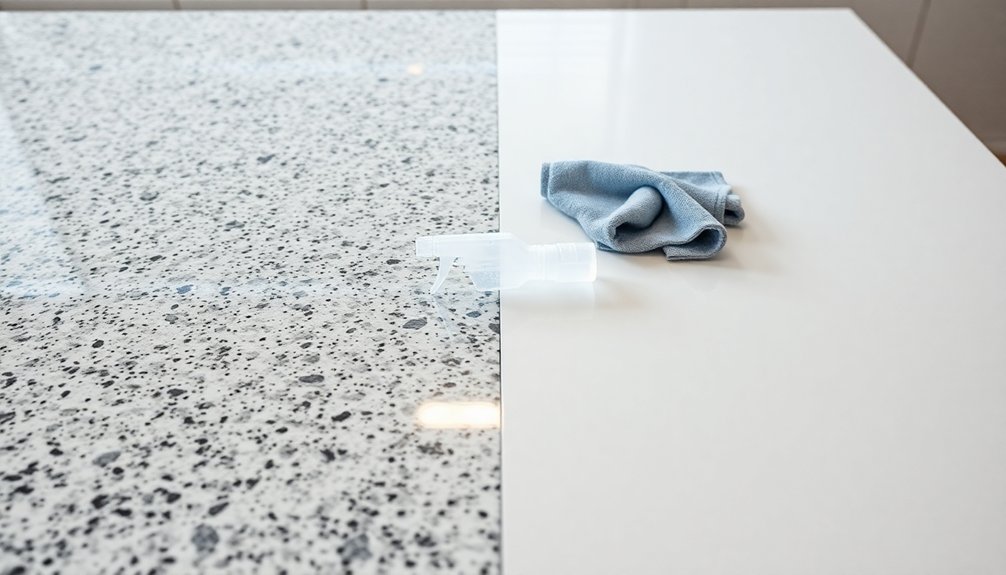
When choosing between granite and quartz for your countertops, it’s essential to understand their distinct compositions.
Granite is a natural stone composed of minerals like feldspar, quartz, and mica, giving it unique patterns and colors. In contrast, quartz is an engineered stone made up of 90-95% crushed quartz crystals mixed with resins and pigments, resulting in a more uniform appearance.
Granite boasts unique patterns from natural minerals, while quartz offers a uniform look through engineered crushed crystals and resins.
This difference makes granite a porous stone, which can absorb liquids and stains if not sealed properly. Meanwhile, quartz offers a nonporous surface that resists staining without needing sealing. Regular sealing is vital for granite to protect against liquid absorption and maintain its beauty.
These compositions also dictate the cleaning methods; granite requires pH-neutral cleaners to maintain its integrity, while quartz can be easily cleaned with mild dish soap and warm water.
Daily Cleaning Requirements for Granite and Quartz
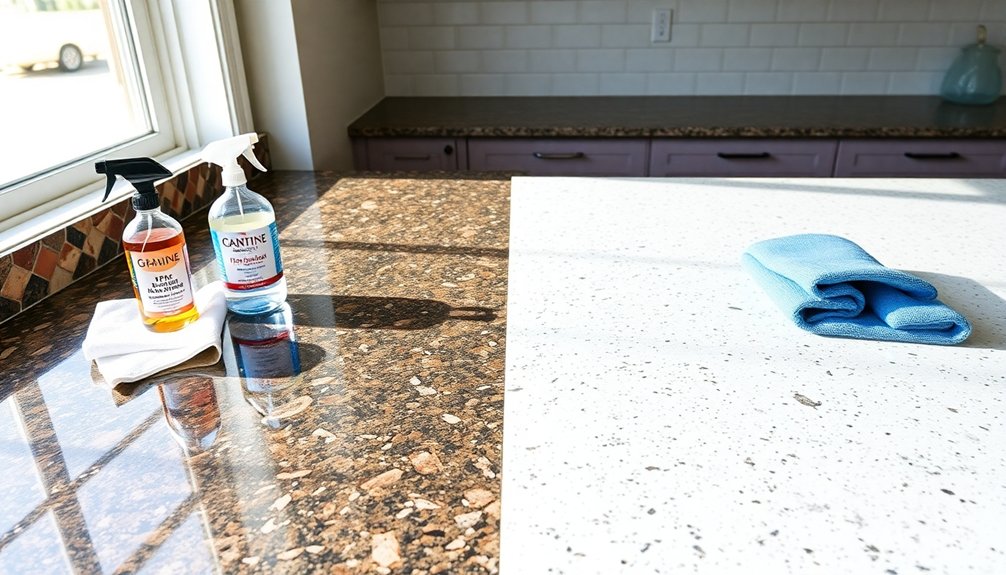
Although both granite and quartz have unique cleaning requirements, maintaining their surfaces can be straightforward with the right approach.
For daily cleaning, quartz countertops need a soft microfiber cloth and warm water, making upkeep easy. If you encounter tougher stains on quartz, a mild dish soap mixed with warm water will do the trick.
In contrast, granite countertops benefit from a pH-neutral stone cleaner. Since granite is slightly porous, it’s crucial to blot spills immediately to prevent staining. Regular sealing enhances countertop longevity and helps maintain their appearance and performance.
Avoid using harsh chemicals on both surfaces; granite specifically requires non-acidic cleaners to protect its finish.
Sealing and Long-term Protection: What You Need to Know
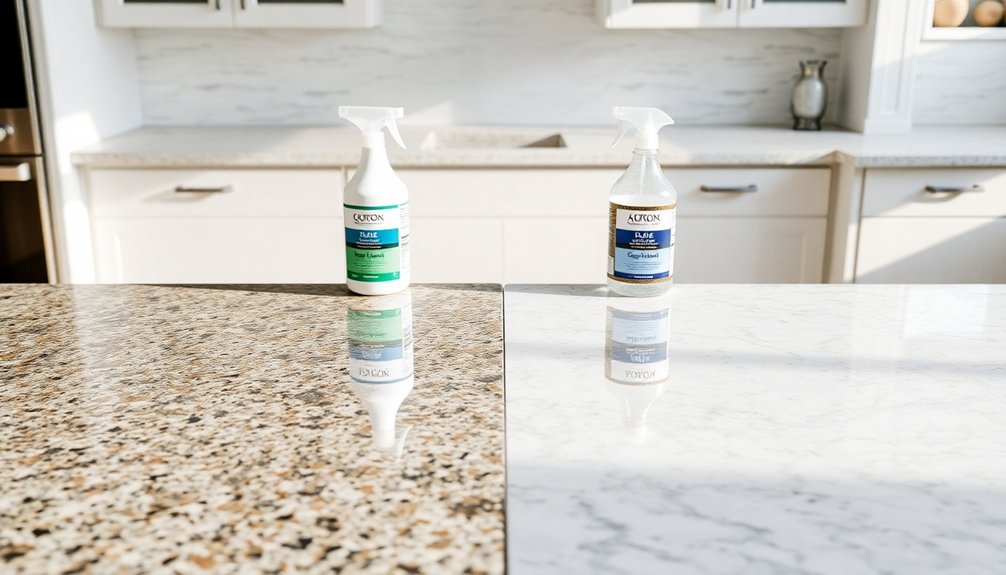
When it comes to sealing your countertops, you should know that quartz doesn’t need sealing at all, thanks to its non-porous surface.
On the other hand, granite requires sealing every 1-3 years to keep it protected from stains and moisture. Regular maintenance is key to ensuring both materials stay beautiful and last for years to come, and using non-toxic cleaners can help maintain their integrity without damaging the surfaces.
Quartz Does Not Require Sealing
Since quartz countertops are engineered with a non-porous surface, they don’t require sealing like granite does.
This feature makes them a low maintenance option for your kitchen or bathroom. The resin used in the manufacturing of quartz provides a permanent seal that protects against stains and liquid penetration, eliminating worries about spills.
Regular cleaning with soap and water is all you need to keep your quartz countertops looking fantastic.
Unlike granite countertops, which can absorb liquids and need sealing every 1-3 years, quartz inherently resists stains due to its composition.
This means you save time and money on maintenance while enjoying a durable and beautiful surface in your home.
Granite Sealing Frequency Guidelines
While quartz countertops boast a low-maintenance appeal, granite requires more attention to keep it in top shape.
Granite countertops require periodic sealing every 1 to 3 years to maintain their stain and moisture barrier. The sealing process is straightforward: clean the granite surfaces with mild soap, apply the sealer, and buff it for a protective layer.
You can even perform a simple water test; if the water beads, the seal is intact. If it absorbs, it’s time to reseal.
Though professional sealing services can cost between $200 and $400, DIY options are available for those looking to save.
Regular care and prompt spill management are essential for extending the life of the seal and preserving your granite’s beauty.
Importance of Regular Maintenance
Regular maintenance is essential for keeping your granite countertops looking their best and ensuring their longevity.
Unlike quartz countertops, granite requires periodic sealing every 1-3 years to maintain its stain resistance and protect against moisture absorption. You can perform a simple water test to check the seal’s effectiveness—if water beads, you’re good to go; if it absorbs, it’s time to reseal.
Regular cleaning with pH-neutral cleaners helps preserve the appearance of your granite. Immediate spill cleanup and using cutting boards are vital to prevent staining.
While professional sealing services can be costly, DIY options are available.
Prioritizing maintenance not only extends the life of your granite but also enhances its beauty.
Stain Resistance: How Each Material Holds Up
When it comes to stain resistance, quartz clearly has the upper hand with its non-porous surface that repels spills effortlessly. In contrast, granite’s porous nature can lead to staining if it isn’t sealed and maintained properly. Understanding the best stain management techniques for each material is essential for keeping your countertops looking their best. Regular cleaning is crucial to prevent sticky grease layers and maintain both granite and quartz surfaces effectively.
Quartz’s Non-Porous Advantage
Because quartz countertops are non-porous, they provide a significant advantage in stain resistance compared to granite. This non-porous surface prevents liquids from penetrating, allowing you to repel common spills like wine and coffee without worry.
You won’t need to seal quartz every few years, eliminating the extra maintenance required for granite, which can absorb spills if not properly sealed. Regular cleaning with mild soap and water effectively maintains quartz’s stain resistance, while granite demands specific pH-neutral cleaners to protect its seal.
The engineered composition of quartz, made up of 90-95% ground quartz and 5-10% resins, guarantees a consistent barrier against stains, unlike the variable porosity of granite.
Enjoy easy upkeep with quartz countertops!
Granite’s Porous Nature
While granite’s natural beauty is undeniable, its porous nature poses challenges when it comes to stain resistance. This characteristic means granite can absorb liquids and stains if not properly sealed, making regular maintenance essential.
You’ll need to use a specific pH-neutral cleaner to maintain its appearance and protective seal. In contrast, quartz is non-porous and highly stain-resistant, requiring only mild soaps or quartz-specific cleaners for daily upkeep.
To keep granite’s stain resistance effective, you should seal it every 1-3 years. Quick cleanup of spills is critical to prevent stubborn stains, especially oil-based ones.
Stain Management Techniques
Understanding how to manage stains is essential for maintaining the beauty of both granite and quartz countertops.
Quartz countertops are non-porous, giving them excellent stain resistance. You can clean them easily with mild soap and water, as spills won’t penetrate the surface.
In contrast, granite countertops are slightly porous and require careful stain management. For granite, immediate spill cleanup is vital, and specific cleaning methods, like baking soda for oil-based stains, may be necessary.
Regular sealing every 1-3 years helps maintain granite’s stain resistance, while quartz doesn’t need sealing.
Both materials benefit from gentle cleaning methods, but remember that granite can be more susceptible to scratches and heat damage if not properly cared for.
Choosing the Right Cleaners for Each Surface
When choosing the right cleaners for granite and quartz surfaces, it’s crucial to recognize their unique properties and needs.
For quartz countertops, stick to a gentle, pH-neutral cleaner, as harsh chemicals can discolor the resin surface. Cleaning quartz is simple—just use warm water and a microfiber cloth.
In contrast, granite countertops require a pH-neutral stone cleaner to maintain their sealant and natural beauty. For granite stains, you’ll need specific solutions; oil-based stains often need a baking soda paste, while water-based ones may call for baking soda mixed with hydrogen peroxide.
Avoid abrasive cleaners and acidic substances on both surfaces, as they can scratch and degrade the finish over time. Additionally, using the right disinfectant sprays ensures that your countertops remain clean and germ-free. Proper care guarantees your countertops remain beautiful and functional.
Cost Implications of Cleaning and Maintenance
Cleaning and maintaining your countertops can have significant cost implications, especially when comparing granite and quartz.
Granite countertops require specific pH-neutral cleaners to avoid surface damage, which can increase your maintenance costs over time. Additionally, the periodic sealing of granite, costing between $200-$400 for professional services, adds to those expenses.
Granite countertops necessitate pH-neutral cleaners and regular sealing, leading to increased maintenance costs over time.
In contrast, quartz countertops are easier to maintain, typically needing only mild dish soap and water for cleaning. This reduces the frequency and variety of cleaning products you’ll need.
Over the long run, the cumulative costs of maintaining granite can surpass those of quartz, making quartz a more budget-friendly option with lower maintenance needs and no sealing requirements. Moreover, using eco-friendly cleaners can further enhance your cleaning routine while supporting sustainable practices.
Conclusion
To summarize, treating your granite and quartz surfaces with the right cleaners is like choosing the right tools for a job. Just as you wouldn’t use a hammer to screw in a lightbulb, using the wrong cleaner can damage your countertops. Remember, granite’s porous nature requires a gentle touch, while quartz thrives with a little more vigor. So, invest in the right products, and your kitchen will shine brighter than a freshly polished apple!