To effectively clean your stovetop and backsplash, first gather non-abrasive sponges, microfiber cloths, and suitable cleaning solutions. For glass stovetops, use a vinegar and baking soda paste for tough stains. Gas stove tops require removing grates and using a gas range cleaner or vinegar. Tackle spills immediately to prevent buildup, and regularly maintain your surfaces for a cleaner look. Want some tips and techniques for a pristine finish? There’s more helpful advice ahead!
Before Getting Started
Before you plunge into cleaning your stovetop and backsplash, make sure all stove controls are turned off and that the surface is completely cool to prevent burns or injuries.
Next, gather your cleaning supplies, including non-abrasive sponges, microfiber cloths, a spray bottle, and suitable cleaning solutions like dish soap, vinegar, or a commercial degreaser.
Gather your cleaning supplies: non-abrasive sponges, microfiber cloths, a spray bottle, and effective cleaning solutions like dish soap or vinegar.
Assess the type of stove you have—glass, gas, or electric—as each one requires specific cleaning methods for the best results.
Don’t forget to perform a spot test on a small, inconspicuous area before applying any cleaning solution.
To make future cleanings easier, regularly maintain a cleaning schedule to prevent grease accumulation and keep your stovetop and backsplash looking their best. Additionally, regular maintenance can significantly reduce the frequency of deep cleaning tasks.
What You’ll Need
Now that you’re ready to clean, gather the tools and supplies you’ll need to make the process efficient and effective.
First, prepare a cleaning solution by mixing 1/2 teaspoon of dish soap in hot water and pour it into a spray bottle for easy application.
You’ll also want non-abrasive sponges and microfiber cloths handy for wiping down surfaces.
For those stubborn grease stains, keep a single-edged scraper nearby, using it at a low angle to avoid damage.
Baking soda can be a lifesaver, acting as a natural abrasive when applied to a sponge.
Finally, consider having commercial cleaners like gas range or all-purpose cleaners on hand for tougher jobs, but always follow the manufacturer’s instructions. Additionally, regular cleaning is essential to maintain a safe and healthy cooking environment, preventing grease from becoming a breeding ground for pathogens.
How to Clean a Glass Stove Top
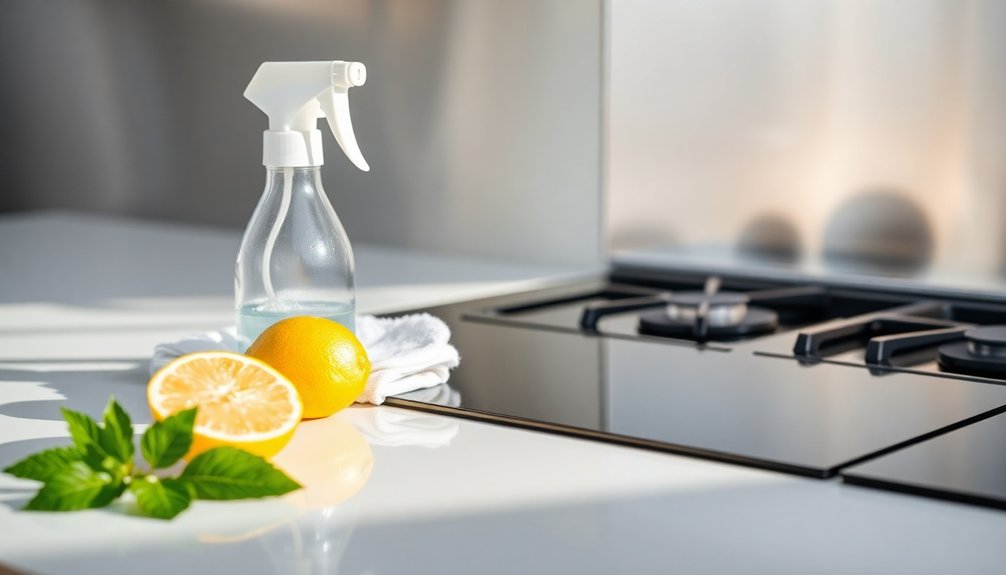
Cleaning a glass stove top can be a quick and easy task if you follow the right steps. First, make sure your stove top is completely cool.
For tough stains, mix vinegar and baking soda, apply it to the area, and let it sit for a few minutes. Then, wipe it away using a damp cloth or sponge.
For stubborn, baked-on stains, use a single-edged scraper at a low angle.
To maintain your stove top, follow these cleaning tips:
- Wipe with a microfiber cloth soaked in warm, soapy water after each use.
- Avoid abrasive tools to prevent scratches.
- Always follow the manufacturer’s recommendations.
- Use non-abrasive cleaners designed for glass.
- Regularly check for grease buildup to keep it sparkling clean. Additionally, incorporating daily maintenance such as consistent wiping can help prevent excessive grease accumulation.
How to Clean Stains on a Glass Stove Top
Stains on a glass stove top can be a frustrating sight, but tackling them doesn’t have to be difficult. Start by making a baking soda paste with water and apply it directly to the stained area. Let it sit for 10-15 minutes to break down tough stains.
After that, spray vinegar over the paste; the foaming reaction will help lift the stains. Now, take a non-abrasive sponge and gently clean with it, ensuring you don’t scratch the surface.
For stubborn, baked-on stains, use a single-edged scraper at a low angle to carefully remove residue. Always wait until the stove top is cool before cleaning, and remember, regular maintenance helps prevent future stains! Additionally, using eco-friendly alternatives can help maintain a safe cooking environment while effectively cleaning.
How to Clean a Gas Stove Top
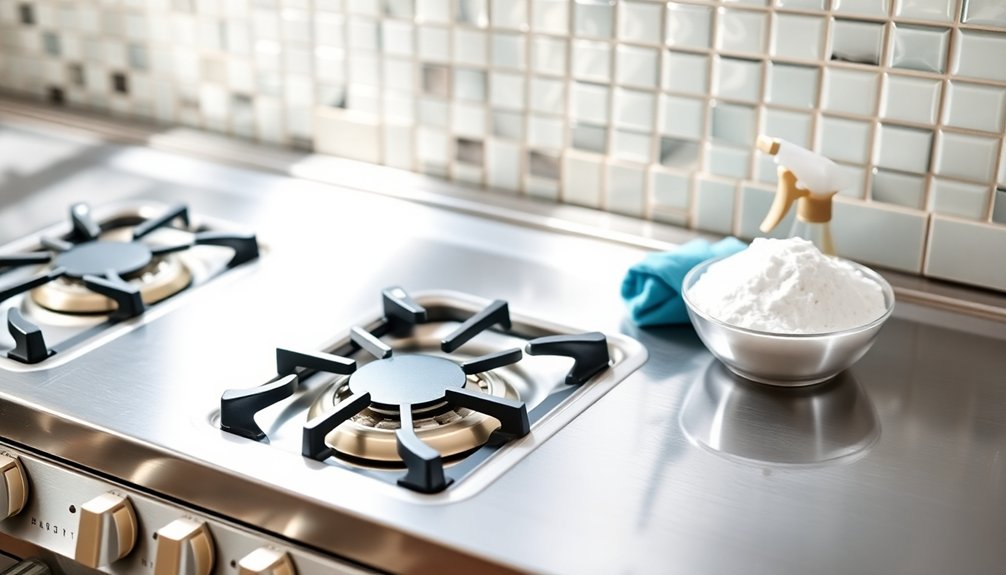
A sparkling gas stove top can transform your kitchen’s appearance and guarantee peak performance. Start by consulting your owner’s manual and ensuring all controls are off.
Remove the grates and burner caps, soaking them in warm, soapy water to loosen grease stains. For deep cleaning, use a gas range cleaner or a mixture of vinegar and water, letting it sit on tough stains for a few minutes.
- Carefully scrape stubborn stains with a single-edged scraper at a low angle.
- Wipe the area clean afterward.
- Regularly check burner heads for ideal gas flow.
- Dry the stove top thoroughly to prevent streaks.
Incorporating eco-friendly alternatives like baking soda and vinegar can enhance your cleaning routine.
Enjoy a clean, efficient cooking space!
How to Keep Your Stovetop Looking Cleaner Longer
To keep your stovetop looking cleaner longer, tackle spills right after cooking to prevent stubborn grease from forming.
Using stovetop covers can also help minimize mess and reduce cleaning time.
Plus, setting up a regular maintenance schedule guarantees your stovetop stays in great shape with minimal effort. Additionally, understanding smoke points can help you choose the right oils for cooking, reducing the amount of grease that splatters onto your stovetop.
Immediate Spill Cleanup
Cleaning up spills right after cooking is essential for keeping your stovetop looking pristine. Immediate spill cleanup prevents grease from baking on and makes future cleaning easier.
Always have a damp microfiber cloth or sponge nearby, ready to tackle grease splatters as they happen. Here are some quick tips to maintain your stovetop:
- Use a splatter guard while cooking to minimize mess.
- Wipe down the stovetop and backsplash after each session.
- Regularly check for grease accumulation and address it promptly.
- Create a habit of immediate cleanup to prevent stubborn stains.
- Keep your cleaning supplies within reach for quick access.
Use Stovetop Covers
Using stovetop covers can transform your cooking experience by keeping your stovetop cleaner for longer.
These covers act as a barrier against splatters, greatly reducing grease accumulation during cooking. By regularly covering your pots and pans, you minimize airborne grease particles that settle on your stovetop and surrounding surfaces, helping you maintain a clean kitchen.
Plus, many stovetop covers are dishwasher-safe, making cleanup a breeze and ensuring hygiene for repeated use. They also help retain heat and moisture in your dishes, enhancing cooking efficiency.
Incorporating stovetop covers into your routine can lead to less frequent and intense deep cleaning sessions, allowing you to enjoy cooking without worrying about excessive mess.
Regular Maintenance Schedule
Establishing a regular maintenance schedule can greatly enhance the appearance and cleanliness of your stovetop.
By committing to a few simple practices, you can keep your cooking area looking pristine.
- Wipe down the stovetop daily after cooking to prevent grease from hardening.
- Schedule a weekly deep clean with appropriate cleaners for your stovetop type.
- Regularly check and soak burner heads and grates in warm, soapy water.
- Use splatter guards or lids while cooking to minimize mess.
- Establish a routine that targets high-contact areas to prevent buildup.
These steps make cleaning appliances much easier and guarantee your stovetop remains in top shape, reducing the need for extensive cleaning in the future.
Tips for Maintaining a Pristine Backsplash
To keep your backsplash looking pristine, it’s crucial to tackle spills and splatters right after cooking. Wiping them down immediately prevents grease buildup, making future cleanings easier.
Use a splatter guard or lid while cooking to minimize airborne grease particles that settle on your backsplash. Regularly clean range hood filters to guarantee efficient air circulation and reduce grease splatter.
If you have a natural stone backsplash, applying a sealant or polish can help repel grease and stains, simplifying your cleaning routine. Establish a routine cleaning schedule, performing a thorough cleaning weekly and a deep clean seasonally, especially after heavy cooking sessions. Using a reliable disinfectant spray cleaner can further ensure your surfaces are not only clean but also germ-free.
With these tips and the right cleaning products, your backsplash will remain spotless and inviting.
Conclusion
Now that you’ve got the lowdown on cleaning your stovetop and backsplash, it’s time to put those tips into action. With a little effort and the right tools, you can keep your kitchen looking spick and span, just like your grandma did back in the day. Remember, a clean kitchen not only looks great but also makes cooking a joy. So roll up your sleeves and get to it—you’ve got this!