When it comes to whitening your kitchen floor, grout pens and grout cleaners each have their perks. Grout pens offer quick fixes with customizable colors but only provide a temporary solution. On the other hand, grout cleaners tackle deep stains effectively, delivering longer-lasting results. Regular use of cleaners can help maintain that fresh look. To make the best choice for your kitchen, consider how each product fits your needs, and you’ll find more insights ahead.
Understanding Grout Discoloration
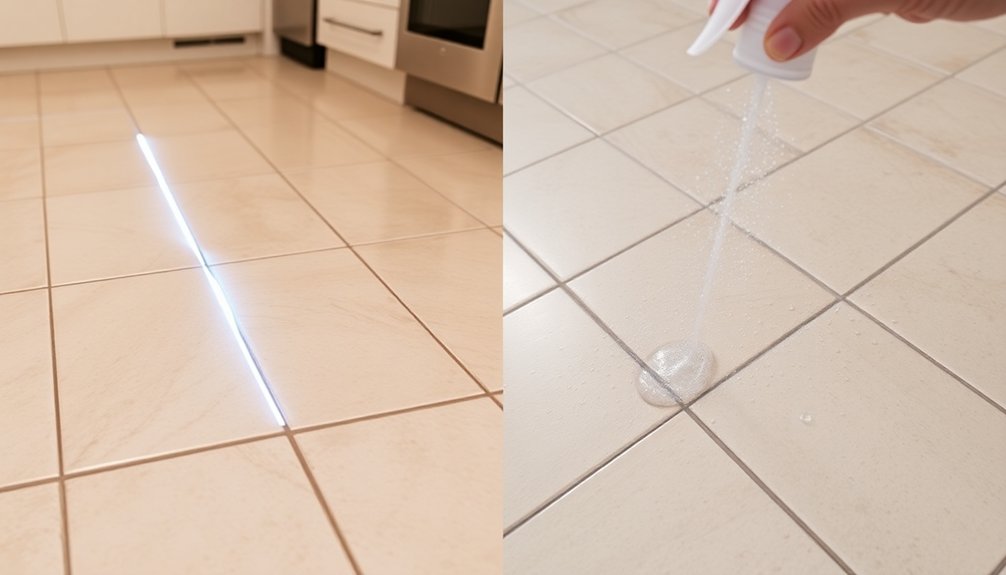
When you notice grout discoloration, it’s often the result of dirt, mold, and mildew building up over time, especially in high-traffic areas like kitchens and bathrooms.
White grout can quickly become stained as aging sealers fail, allowing moisture and grime to penetrate, resulting in dirty grout that’s tough to clean.
As sealers age, white grout easily stains, allowing moisture and grime to create tough-to-clean discoloration.
Dark grout is a popular choice for many homeowners because it hides stains better, keeping your space looking cleaner for longer.
To combat this problem, regular cleaning and maintenance are essential.
Using a grout cleaner or diluted vinegar can help lift the dirt and restore your grout’s original color.
Staying proactive with your cleaning routine will help prevent unsightly discoloration and keep your tiles looking fresh. Additionally, regular sealing of grout can prevent stains, dirt buildup, and moisture penetration, ensuring your grout remains in excellent condition.
The Benefits of Using Grout Pens
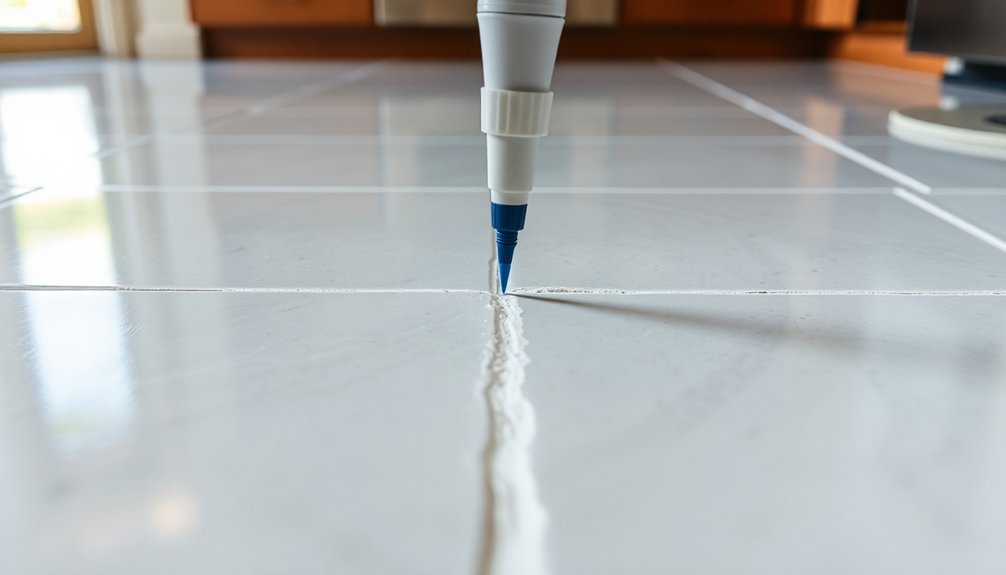
Although traditional cleaning methods can restore some grout lines, grout pens offer a quick and effective way to enhance the appearance of discolored grout.
With a grout pen, you can achieve bright white grout without the hassle of extensive scrubbing. Here are some benefits you’ll love:
- Fast results: Apply the pen, wipe away excess, and see instant transformation.
- Customizable options: Choose from up to 11 colors to fit your style.
- Water-resistant: Enjoy durability even in high-traffic areas.
- Cost-effective: Tackle both small touch-ups and larger projects affordably.
Using a grout pen not only revives your tiled spaces but also brings a fresh, clean look to your kitchen that you’ll be proud of. Additionally, opting for non-toxic cleaners ensures a safe environment while enhancing the overall cleanliness of your home.
How to Properly Use a Grout Pen

To properly use a grout pen, you need to start with a clean surface, ensuring the grout lines are free from mold and mildew. Once you’ve prepped the area, apply the ink evenly and take care of any excess quickly. Regular maintenance of the nib will also help keep your application smooth and effective. Additionally, it’s important to clean surfaces and appliances before applying the grout pen to ensure the best results.
Preparation and Cleaning Steps
Before you plunge into using a grout pen, it’s essential to prepare the surface properly. Start with thorough cleaning to eliminate mold and mildew, ensuring the grout is completely dry. This step is important for effective application.
Here’s how to prep:
- Use a strong cleaner to tackle dirt and stains.
- Test the grout pen on a small, hidden area first.
- Shake the pen and push down on the nib to release ink.
- Wipe away any excess paint immediately.
Once you apply the grout pen, allow it to dry for at least 24 hours before exposing it to water.
Regular maintenance will help keep your grout looking fresh and prevent discoloration. Happy cleaning!
Application Techniques and Tips
Using a grout pen effectively involves a few straightforward techniques that can make a big difference in your results.
First, make sure your grout is thoroughly cleaned and dry to promote good adhesion. When applying the grout pen, draw along the grout lines like you’re coloring, and promptly wipe away any excess ink on the tiles for a clean finish.
If you’re tackling larger areas, consider using multiple grout pens, as one may not suffice. Always test the pen on an inconspicuous spot first to make certain you like the color.
Finally, keep an eye on the nib’s wear during application; replace it when needed for smooth lines.
Follow these application techniques for the best outcome!
Maintenance and Longevity Considerations
After mastering application techniques for grout pens, it’s important to contemplate how to maintain your newly refreshed grout lines.
Regular maintenance can guarantee they look great for years to come. Here are some tips to keep in mind:
- Always clean the grout lines thoroughly before applying the grout pen.
- Test the pen on a small area first to verify you’re happy with the color.
- Allow at least 24 hours of drying time before using the area.
- Use gentle cleaning methods, like diluted vinegar, to avoid discoloration.
Exploring Grout Cleaners: Options and Effectiveness
When it comes to tackling stubborn grout stains, choosing the right cleaner can make all the difference. Zep Grout Cleaner & Brightener stands out as the most effective grout cleaner, boasting a perfect user satisfaction rating.
Choosing the right cleaner is crucial for stubborn grout stains, and Zep Grout Cleaner & Brightener leads the way with unmatched effectiveness.
Its watery solution targets grout lines directly, requiring some scrubbing and a waiting time of about three minutes for ideal results. However, be cautious—Zep’s strong acidic nature means you should wear gloves and eye protection during use.
If you’re looking for quick touch-ups, homemade solutions like a hydrogen peroxide and baking soda paste can work, but they often fall short on heavily soiled grout. Regular disinfection prevents harmful bacteria buildup, while Zep truly shines in the battle against tough stains, as other methods may only provide minimal improvements.
Step-By-Step Guide to Cleaning Grout With Cleaners
Cleaning grout effectively involves a straightforward process that can yield impressive results. Start by applying a strong cleaner to remove mold and mildew, ensuring the surface is dry for better adhesion.
Here’s a quick guide:
- Mix hydrogen peroxide and baking soda to create a paste.
- Apply the paste to the grout and let it sit for a few minutes.
- For deeper cleaning, use Zep Grout Cleaner & Brightener, which only requires about 5.5 minutes.
- Always wear safety goggles and gloves when handling strong cleaners.
Regular maintenance with diluted vinegar or a microfiber mop will keep your grout looking fresh. Consistent maintenance promotes a tidy kitchen and ensures a safe and healthy environment.
With these steps, you’ll transform your kitchen floor and enjoy a cleaner, brighter space!
Comparing Longevity: Grout Pens vs. Grout Cleaners
While grout pens can quickly enhance the appearance of your grout, they often offer only a temporary fix. You might find yourself needing to reapply a grout pen every few months, especially in high-traffic areas like your kitchen.
On the other hand, grout cleaners, like Zep Grout Cleaner & Brightener, provide immediate results by removing deep-set stains and grime. These cleaners can penetrate grout pores, offering longer-lasting results if used consistently.
While grout pens cover about 40 meters of grout, their longevity is compromised by moisture and traffic. In contrast, regular use of a grout cleaner can maintain your tile’s aesthetics more sustainably over time, making it the better choice for ongoing grout maintenance. Additionally, understanding the importance of regular cleaning can significantly improve your overall kitchen hygiene and appearance.
Common Mistakes to Avoid When Using Grout Products
Using grout products effectively can make a significant difference in your home’s appearance, but common mistakes can lead to disappointing results.
To achieve the best outcome with your grout pen and tile grout, avoid these pitfalls:
- Not cleaning the grout thoroughly beforehand, affecting adhesion.
- Overlooking the need to seal crackle-glaze tiles, risking stains.
- Skipping a test on a small area first, which may lead to color mismatches.
- Neglecting to check the nib of the grout pen, resulting in uneven application.
Additionally, regular maintenance of grout lines can prevent mold and mildew growth, ensuring long-lasting results.
Real User Experiences: Grout Pen and Cleaner Reviews
When homeowners tackle grout maintenance, real user experiences reveal valuable insights about grout pens and cleaners. Many users praise grout pens for their ability to whiten and refresh grout lines with minimal effort, covering about 40 meters of grout.
However, they also mention that while these pens create a quick aesthetic fix, reapplication is often needed every few months, especially in kitchens and bathrooms.
Reapplication of grout pens is often necessary every few months, particularly in high-use areas like kitchens and bathrooms.
On the other hand, grout cleaners like Zep Grout Cleaner & Brightener receive rave reviews for their effectiveness in tackling tough stains, often achieving a 5/5 rating.
Users recommend using cleaners for deeper grime removal in high-traffic areas, emphasizing the importance of thorough cleaning before applying a grout pen for the best results. Additionally, using eco-friendly cleaning products can further enhance the cleanliness of your kitchen while being mindful of health and the environment.
Tips for Maintaining Clean Grout After Treatment
To keep your grout looking fresh after treatment, establish a regular cleaning schedule that fits your lifestyle. Using a protective sealant can help shield your grout from dirt and moisture, while steering clear of harsh chemicals will prevent damage. Additionally, maintaining proper kitchen grease removal practices can contribute to a cleaner environment and prevent unsightly stains on your grout.
Regular Cleaning Schedule
Establishing a regular cleaning schedule is essential for keeping your grout looking fresh and preventing grime buildup. Aim for weekly cleanings to maintain that pristine appearance.
Here are some tips to help you stay on track:
- Use a diluted vinegar solution for effective cleaning without damage.
- Incorporate a microfiber mop to gently clean floors and avoid scratches.
- Regularly inspect grout lines for mold or discoloration.
- Touch up any issues promptly with a grout pen or cleaner.
Use Protective Sealant
Applying a protective sealant after treating your grout is essential for maintaining its fresh appearance and preventing future stains. A good sealant helps guard against mildew and discoloration, extending the life of your grout color treatment.
Make sure to choose a sealant compatible with the grout pen or colorant you used, as some can interfere with adhesion or finish. After application, follow the manufacturer’s instructions regarding curing time; avoid moisture and heavy foot traffic until it’s fully set.
Regularly maintain your sealed grout with gentle, non-abrasive cleaners to preserve its look and prevent dirt buildup. Consider reapplying the sealant every 6 to 12 months, depending on foot traffic and moisture exposure, for ongoing protection.
Avoid Harsh Chemicals
While maintaining clean grout after treatment, you should steer clear of harsh chemicals that can damage both the grout and your tiles.
Instead, opt for gentle, non-toxic cleaners that preserve the integrity of your surfaces. Incorporate these tips into your cleaning routine:
- Use diluted vinegar cautiously on sealed grout to prevent mold.
- Clean with microfiber mops for effective, damage-free results.
- Regularly wipe down tiles to minimize grime buildup.
- Avoid abrasive scrubbing tools that can wear down grout paint.
Conclusion
In the battle between grout pens and grout cleaners, both have their strengths. If you need a quick fix and long-lasting brightness, grout pens can be your best friend. However, for deep cleaning and restoring original color, grout cleaners might be the way to go. Ultimately, your choice depends on your needs—instant results or thorough cleansing. Whichever route you take, don’t forget to maintain your grout to keep that fresh look shining for years to come!