To choose the right vacuum, assess your cleaning needs, like frequency and surface types. Decide between bagged or bagless models based on your household’s allergy concerns. Explore design options, from upright to robotic vacuums, depending on your space and lifestyle. Maintain your vacuum by cleaning filters and emptying dustbins regularly. Use proper techniques, like overlapping passes for thorough cleaning. Keep an eye on performance to know when it’s time for a replacement. Discover more tips to enhance your cleaning routine.
Understand Your Cleaning Needs
How often do you find yourself vacuuming? Understanding your cleaning needs starts with evaluating your cleaning frequency.
If you have pets or kids, you might need to vacuum daily, while a less active household could manage once a week.
Think about the specific surfaces in your home, too. Carpets collect dust and debris differently than hardwood or tile floors. Each surface requires a tailored approach for effective cleaning.
If you’ve got a mix of surfaces, consider a vacuum that’s versatile enough to handle them all. Knowing your cleaning habits and the type of flooring you have will help you choose the right vacuum, ensuring your home stays clean and comfortable without unnecessary effort. Additionally, choosing a vacuum certified by the Carpet and Rug Institute ensures effective soil removal and dust containment.
Explore Different Vacuum Types
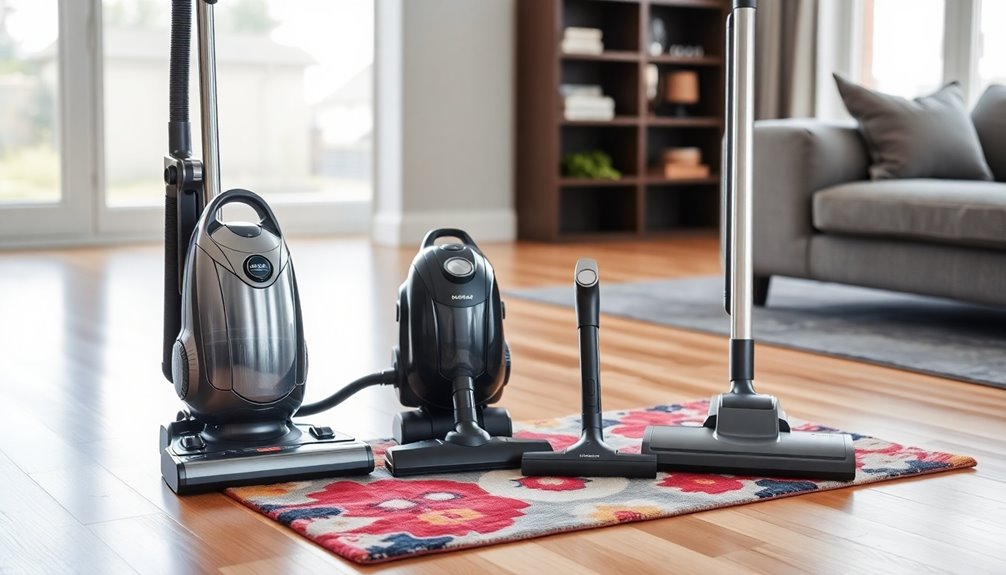
Knowing your cleaning needs sets the stage for exploring different vacuum types. You’ll find two main categories: bagged vs. bagless vacuums.
Bagged vacuums typically offer better filtration, trapping dust and allergens, making them ideal for allergy sufferers. On the other hand, bagless models save you money on bags and are easier to empty, but they may require more frequent filter cleaning.
Consider the vacuum attachments available, too. Tools like crevice nozzles and upholstery brushes enhance your vacuum’s versatility, allowing you to tackle various surfaces and tight spaces effectively. Additionally, selecting a vacuum with multiple attachments can further improve its effectiveness in cleaning different areas of your home.
Think about what you’ll clean most often and choose a vacuum that fits those needs while incorporating the right attachments for a thorough clean.
Compare Upright vs. Canister Vacuums
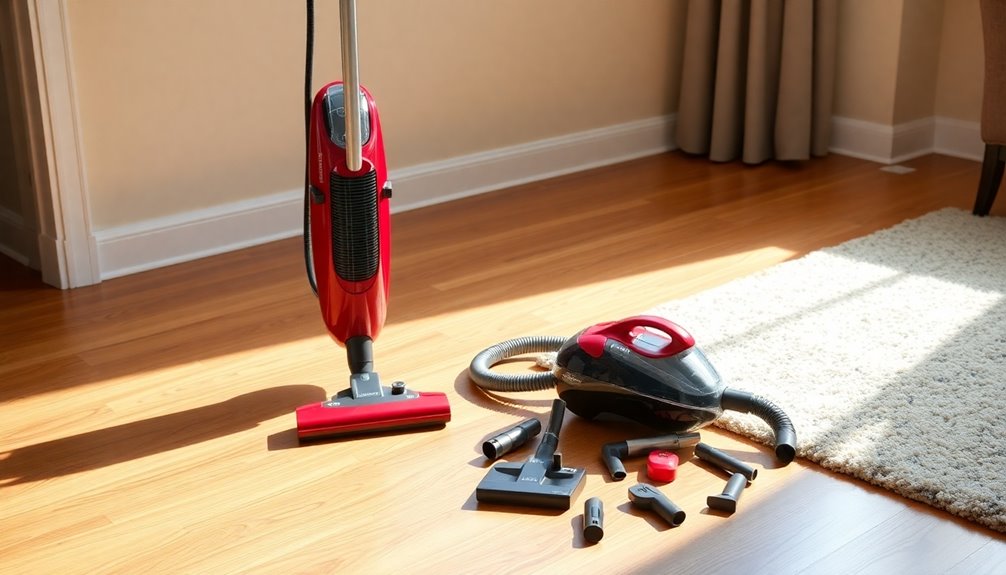
When deciding between upright and canister vacuums, it’s important to evaluate your specific cleaning needs and the layout of your home.
Upright vacuums offer advantages like powerful suction and ease of use on carpets, making them a great choice for large, open spaces. Their design allows you to cover more ground quickly.
On the other hand, canister vacuums provide versatility; they excel at reaching tight corners, under furniture, and on various surfaces, including hardwood and upholstery.
If you have a mix of floor types or need to clean above-floor areas, a canister vacuum might be ideal. Additionally, consider the availability of attachments like crevice tools which enhance the vacuum’s ability to tackle different cleaning challenges.
Ultimately, consider your cleaning habits and the spaces you’ll tackle to determine which type suits you best.
Discover the Benefits of Robotic Vacuums
While traditional vacuums require your active involvement, robotic vacuums offer a hands-free cleaning experience that fits seamlessly into your busy lifestyle.
These devices provide robotic convenience, allowing you to focus on other tasks while they efficiently clean your floors. Equipped with smart technology, robotic vacuums navigate around furniture and obstacles, ensuring a thorough clean without your supervision.
You can easily schedule cleaning sessions through a smartphone app, which makes it perfect for managing your time. Plus, many models come with advanced features like mapping and automatic dirt disposal. Additionally, similar to electric spin scrubbers, robotic vacuums enhance cleaning efficiency by utilizing smart navigation techniques.
With a robotic vacuum, you’ll enjoy a cleaner home with minimal effort, making it an ideal choice for anyone seeking efficiency and ease in their cleaning routine.
Evaluate Handheld and Stick Vacuums
Robotic vacuums excel at handling daily floor maintenance, but there are times when you need a more versatile cleaning solution.
That’s where handheld and stick vacuums come in. Both options offer unique benefits that can enhance your cleaning routine.
- Handheld advantages: Perfect for quick clean-ups and hard-to-reach areas, they’re lightweight and easy to maneuver.
- Stick versatility: These vacuums combine power and convenience, allowing you to switch from floors to above-ground surfaces with ease.
- Compact storage: Both styles are typically easier to store than traditional vacuums, saving you valuable space.
Incorporating time-saving cleaning hacks into your routine can further enhance the efficiency of using handheld and stick vacuums.
Set Your Vacuum Budget
Setting a budget for your vacuum is vital to finding the right fit for your needs without overspending. Start by researching the vacuum price range that aligns with your requirements. Prices can vary greatly, so it’s important to identify what you can comfortably spend.
Consider your cleaning habits and the areas you’ll be vacuuming to help determine how much you should allocate. Luckily, there are plenty of budget-friendly options available that still deliver great performance. Regular vacuuming is crucial for cleanliness, with HEPA filters trapping allergens to improve indoor air quality.
Don’t shy away from looking at customer reviews and ratings to guarantee you’re getting the best value for your money. A well-planned budget allows you to make an informed decision, ensuring you invest wisely in a vacuum that meets your expectations.
Identify Key Features to Look For
Once you’ve established your budget, it’s time to focus on the key features that will make a vacuum suitable for your cleaning needs.
Pay attention to the vacuum features that directly impact performance, especially suction power, which is vital for effective cleaning.
Here are three essential features to take into account:
- Filtration System: Look for HEPA filters if you have allergies or pets.
- Weight and Maneuverability: A lightweight vacuum makes it easier to handle and store.
- Attachments and Versatility: Confirm it comes with tools for different surfaces, such as upholstery or crevices.
Additionally, consider how regular maintenance can extend vacuum lifespan and enhance performance over time.
Tips for Choosing the Right Vacuum Brand
How do you choose the right vacuum brand when there are so many options available? Start by researching brand reputation.
Look for brands that consistently receive positive reviews and have a track record of reliability. Check online forums and customer feedback to gain insights into real experiences.
Next, consider warranty options. A good warranty not only shows that a brand stands behind its product but also provides peace of mind in case of defects or issues.
Additionally, think about your specific needs—some brands excel in pet hair removal, while others focus on allergen filtration. Furthermore, ensure the brand offers a variety of vacuum attachments to cater to different cleaning tasks.
Learn How to Use Your Vacuum Properly
Using your vacuum correctly is key to getting the best results.
You’ll want to master proper techniques and keep up with maintenance and care to guarantee it lasts. Additionally, using a vacuum with a soft brush attachment can enhance dirt removal effectiveness.
Let’s explore how to optimize your vacuuming experience!
Proper Vacuum Techniques
A proper vacuum technique can make all the difference in maintaining a clean home. To maximize your vacuum’s effectiveness, focus on these essential practices:
- Use vacuum attachments: Don’t forget to utilize those handy attachments for corners, upholstery, and hard-to-reach areas. They can enhance your cleaning efficiency considerably.
- Employ effective carpet cleaning techniques: Move the vacuum slowly in a straight line, then make a few overlapping passes to guarantee you capture all the dirt and debris.
- Maintain a consistent height: Adjust the vacuum’s height according to your carpet type, assuring ideal suction and preventing damage to your flooring.
Maintenance and Care Tips
To keep your vacuum running smoothly and effectively, regular maintenance is crucial. Start by checking and replacing the filters as needed; this guarantees maximum suction and air quality. A clean filter can drastically improve your vacuum’s performance.
Next, store your vacuum properly—avoid damp areas and make sure it’s upright in a cool, dry place. This helps prolong the lifespan of your machine.
Additionally, inspect the brush rolls and remove any tangled hair or debris, which can hinder performance.
Finally, remember to empty the dustbin or replace bags regularly. By taking these simple steps, you’ll maintain your vacuum’s efficiency and make certain it’s always ready to tackle dirt and dust when you need it most.
Maintain Your Vacuum for Optimal Performance
While keeping your vacuum clean might seem like a chore, regular maintenance is essential for ensuring it performs at its best.
By taking a few moments to care for your vacuum, you’ll enhance its efficiency and longevity. Here are some key maintenance tips:
- Change vacuum bags regularly: Full bags can restrict airflow and reduce suction power.
- Clean or replace filters: Clogged filters can hinder performance, so check them often and clean or swap them out as needed.
- Inspect cleaning accessories: Regularly examine brushes and attachments for clogs or wear, ensuring they’re in top condition. Also, remember that regular maintenance of your cleaning tools, like vacuums and mops, is crucial for preserving their functionality and effectiveness.
Troubleshoot Common Vacuum Issues
If your vacuum’s lost suction power or is making strange noises, it’s time to troubleshoot.
You might’ve clogged filters or hoses that need cleaning.
Let’s explore these common issues and how to fix them.
Loss Of Suction Power
A vacuum cleaner’s loss of suction power can be frustrating, but diagnosing the issue doesn’t have to be complicated.
To tackle suction loss causes, start by checking a few key areas:
- Dust bin or bag: Empty or replace it if it’s full.
- Attachments: Confirm they’re securely connected and free from debris.
- Power source: Verify the vacuum’s plugged in and the outlet works.
Clogged Filters And Hoses
Loss of suction power can often lead to another common issue: clogged filters and hoses. If you notice your vacuum isn’t picking up dirt like it used to, it’s time for some troubleshooting.
Start with filter cleaning; dirty filters can greatly impede airflow. Depending on your vacuum type, you may need to wash or replace them regularly.
Next, perform a thorough hose inspection. Look for any blockages, tears, or kinks that might restrict airflow. Clear any debris you find, and verify the hose is properly attached at both ends.
Regular maintenance of your vacuum’s filters and hoses not only enhances performance but also prolongs the life of your appliance. Keep these areas clean, and you’ll enjoy efficient cleaning every time.
Unusual Noises While Operating
Have you ever noticed your vacuum making strange noises while it’s running? Unusual vacuum sounds can be a sign of underlying issues that need your attention. Ignoring these noise causes can lead to bigger problems down the line.
Here are a few common reasons for those strange sounds:
- Blocked hoses or filters: Debris can restrict airflow, causing the vacuum to strain.
- Worn-out belts: A frayed or broken belt can produce a high-pitched squeal or grinding noise.
- Loose parts: Check for any screws or components that might be rattling around or have come undone.
When you hear odd noises, take a moment to troubleshoot. Addressing these issues early can extend your vacuum’s lifespan and keep it running smoothly.
Maximize Efficiency With Vacuuming Techniques
How can you make your vacuuming routine more effective? Start by establishing consistent vacuuming patterns.
For instance, use a systematic approach, like moving in straight lines or following a grid, to guarantee you cover every inch of your floors. This method reduces the chance of missing spots and saves time.
Additionally, consider your cleaning frequency. If you vacuum regularly, like once or twice a week, you’ll prevent dirt and debris from building up, making each session quicker and easier.
Don’t forget to adjust your vacuum settings according to the surface you’re cleaning, whether it’s carpet or hardwood.
Know When It’s Time to Replace Your Vacuum?
It’s essential to recognize the signs that your vacuum might need replacing.
If you notice a decline in performance or see obvious wear and tear, it’s time to assess whether it’s worth repairing.
Keeping an eye on these indicators can save you time and frustration in the long run.
Signs Of Wear And Tear
As your vacuum ages, you’ll likely notice certain signs that indicate it’s time for a replacement. Recognizing these wear indicators can help you maintain a clean home and extend your vacuum’s lifespan.
Here are some key signs to watch for:
- Excessive noise: If it’s louder than usual, something may be malfunctioning.
- Frequent clogs: If you’re constantly dealing with blockages, the suction power may be compromised.
- Burning smell: A burning odor could signify overheating or a motor issue.
When you notice these signs, it’s time to evaluate whether a new vacuum is a better investment than repairing your old one.
Performance Decline Indicators
When do you know it’s time to say goodbye to your vacuum? Pay attention to signs like suction loss; if it’s struggling to pick up dirt and debris, it could be time for a change.
Also, consider the state of the filters. If you’ve replaced them frequently and still experience reduced performance, your vacuum might be nearing its end.
Unusual noises or overheating are other red flags that shouldn’t be ignored.
If you find yourself constantly repairing or maintaining it, that’s a strong indicator that it’s time to invest in a new model.
Conclusion
In choosing the right vacuum and using it effectively, remember that “an ounce of prevention is worth a pound of cure.” By understanding your cleaning needs and exploring different vacuum types, you can make an informed decision. Regular maintenance will keep your vacuum running smoothly, while effective techniques will enhance your cleaning efficiency. Stay aware of its performance, and don’t hesitate to replace it when necessary. With the right approach, your home will always be spotless!