To clean and revive your microfiber couch, start by checking the care tag for cleaning codes. Vacuum thoroughly to lift surface dirt, and then use water-based or solvent-based cleaning solutions as indicated. Always test your cleaners on a hidden area first. After cleaning, refresh the fabric’s nap by brushing it gently. To keep your couch looking its best, regular maintenance is important. If you want more tips and methods, keep exploring further.
Verify the Fabric Care
How can you guarantee your microfiber couch stays in top shape? The key is to confirm the fabric care before you start cleaning.
Always check the care tag for specific instructions. Look for codes like “W” for water-based cleaners or “S” for solvent-based options. If you find “W-S,” you have the flexibility to use either cleaning method.
If the care tag is missing, it’s usually safe to go with a solvent-based cleaner for your microfiber upholstery. Understanding these care codes helps you avoid potential damage, like discoloration or loss of structural integrity. Regular maintenance enhances longevity and aesthetic appeal, ensuring your upholstery remains in great condition.
Lift Surface Dirt
After confirming the fabric care instructions, it’s time to lift surface dirt from your microfiber couch.
Start by thoroughly vacuuming the entire surface, including cushions and crevices, to remove loose dust and debris. A vacuum is essential for tackling most dirt, but you might need a soft-bristled brush to dislodge any stubborn particles that the vacuum couldn’t pick up, especially in stitched seams where grime often accumulates.
Thoroughly vacuum your microfiber couch, including cushions and crevices, to eliminate loose dust and tackle stubborn dirt effectively.
If you still see dirt, repeat the vacuuming process to guarantee your couch is truly clean.
For added freshness, sprinkle baking soda over the couch and work it into the fabric, letting it sit overnight before vacuuming it up the next day. Regularly lifting surface dirt helps maintain your couch’s appearance and longevity, while using gentle cleaners can prevent damage to the fabric over time.
Cleaning Solutions for a Microfiber Couch
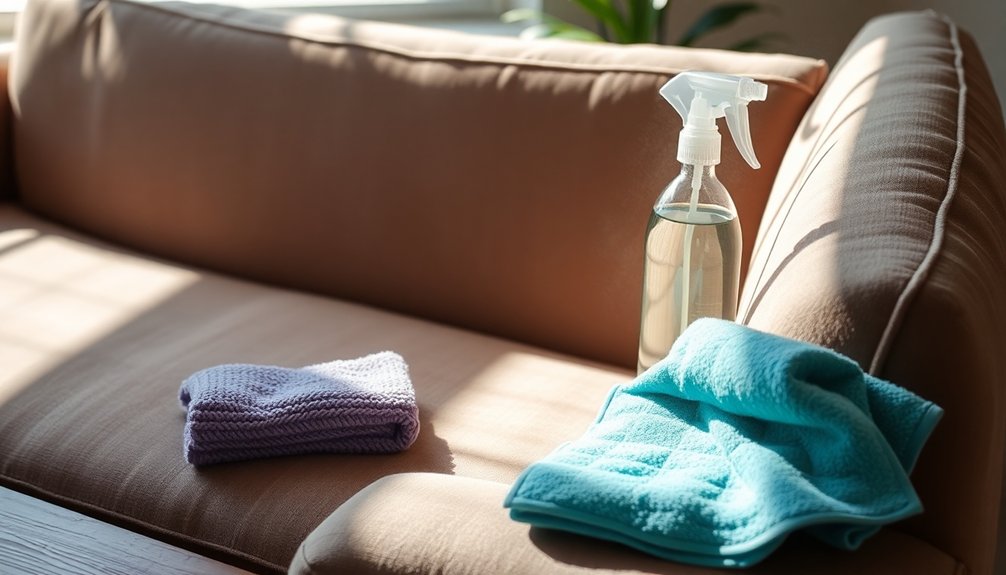
When it comes to cleaning a microfiber couch, choosing the right cleaning solution is essential.
You’ll find water-based and solvent-based options, each suited for different care tags on your couch.
Understanding these solutions will help you tackle stains effectively while preserving the fabric. Additionally, understanding fabric type ensures effective cleaning and helps you select the most suitable cleaner.
Water-Based Solutions
If you’ve got a microfiber couch labeled with a “W,” using water-based solutions can effectively tackle stains and dirt.
To create your cleaning solution, mix one quart of warm water with a tablespoon of mild dish soap in a spray bottle. Apply this mixture with a damp sponge or cloth, but be careful not to soak the fabric, as that could cause damage.
Work in small sections, starting from the top and moving downward to prevent dirty suds from running into cleaned areas. After cleaning, rinse the area with a damp microfiber cloth to remove any soapy residue, and let the fabric air-dry completely.
Always test the solution on a small, inconspicuous spot first to verify there’s no color change.
Solvent-Based Solutions
For microfiber couches marked with an “S,” using a solvent-based solution like undiluted rubbing alcohol can effectively eliminate stubborn stains and dirt without soaking the fabric.
Always test the rubbing alcohol on a small, inconspicuous area first, ensuring no color transfer occurs.
When you’re ready to clean, apply the alcohol lightly with a spray bottle, and use a sponge or soft-bristled upholstery brush to gently lift soil from the damp fabric.
Clean in small sections, rinsing your cleaning tool regularly to avoid dirt buildup.
After you’re done, let the couch air-dry completely.
Finally, use a soft-bristle brush to fluff the fabric and restore its texture, leaving your microfiber couch looking refreshed and clean.
Test First, Then Clean
How can you guarantee your microfiber couch remains in top condition while cleaning? Always test first!
Before applying any cleaning techniques, choose a hidden area of your couch and spray a 1-inch square with your cleaning solution. Blot lightly and let it dry completely to check for any color transfer. If there’s no change, you can safely clean microfiber using the same solution.
Use a sponge or soft brush to gently blot away soil, ensuring you don’t saturate the fabric. This method helps remove any remaining dirt without risking damage.
Regularly testing new products is essential since microfiber can react differently to various agents, keeping your couch looking fresh and vibrant for years to come. Additionally, it’s important to identify fabric type to select suitable cleaning methods that won’t damage your upholstery.
Refresh the Nap
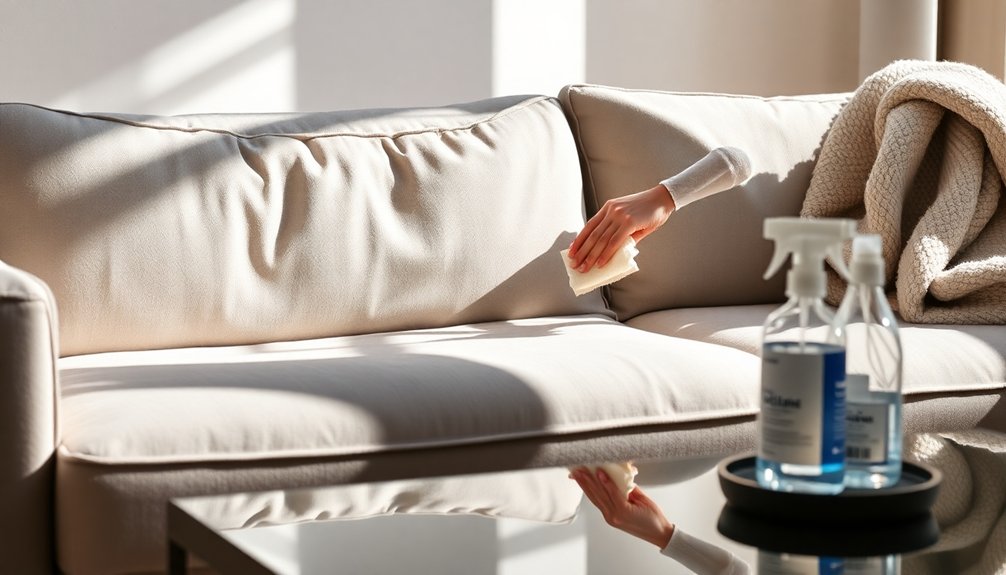
After ensuring your microfiber couch is clean and dry, it’s time to revitalize the nap and restore its soft texture.
Grab a soft-bristle brush and gently rub it in circular motions across the fabric. This rejuvenating technique lifts the nap, enhancing both the appearance and softness of your couch.
Regular brushing is key; it not only keeps the texture looking fresh but also prolongs the lifespan of your furniture. Incorporating proper cleaning techniques helps maintain a hygienic environment and contributes to the overall longevity of your upholstery.
Regular brushing not only maintains a fresh texture but also extends the life of your furniture.
Make it a habit to perform this simple task periodically, especially after deep cleaning.
With just a few minutes of care, you can maintain that luxurious feel and look of your microfiber couch, ensuring it stays inviting for years to come.
How Often to Clean a Microfiber Couch
To keep your microfiber couch looking its best, you’ll want to establish a regular cleaning routine.
Vacuuming weekly helps eliminate dirt and allergens, while treating spills right away prevents stains from setting in.
Don’t forget to deep clean seasonally, especially if your couch sees a lot of action from kids or pets. Regular vacuuming can remove up to 80% of dirt and debris, ensuring your couch stays fresh and comfortable.
Regular Vacuuming Schedule
Regularly vacuuming your microfiber couch is essential for keeping it looking fresh and free from allergens. Aim to vacuum weekly to effectively remove dirt, dust, and allergens that accumulate in the fabric.
Don’t forget to focus on crevices, seams, and under the cushions for a thorough clean. If you have a high-use couch, consider a deep cleaning on a monthly or seasonal basis to maintain its appearance and hygiene.
Always check the manufacturer’s care label for specific cleaning guidelines, as different microfiber fabrics may require unique approaches.
Immediate Stain Treatment
As soon as a spill occurs, addressing it promptly can make all the difference in keeping your microfiber couch stain-free.
For immediate stain treatment, grab a clean cloth and blot the area gently to absorb as much liquid as possible. Avoid rubbing, as that can push the stain deeper into the upholstery.
If necessary, you can use a mild soap solution, but always check the manufacturer’s care label for specific cleaning guidelines tailored to your couch.
Regularly treating spills not only helps maintain your couch’s appearance but also prolongs its lifespan.
Seasonal Deep Cleaning Tips
While you mightn’t think about it often, maintaining your microfiber couch with seasonal deep cleaning is vital for its longevity and appearance.
To keep it looking fresh, vacuum your couch weekly to remove dirt and dust. For high-use couches, aim for deep cleaning at least once a month. If your couch sees less use, seasonal deep cleaning will suffice.
Always check the manufacturer’s care label for cleaning codes; a “W” indicates it can handle water-based cleaning solutions. This method not only preserves the fabric’s stain-resistant properties but also enhances hygiene by removing allergens.
Consider hiring professional cleaners periodically for tough stains and deep-seated dirt to guarantee your couch remains in great shape for years to come.
How to Deodorize Your Microfiber Couch
To keep your microfiber couch smelling fresh, start by giving it a thorough vacuuming. Use an upholstery brush attachment to remove loose dirt, dust, and debris from every corner and crevice, including under the cushions.
Next, sprinkle a light, even layer of baking soda across the entire couch. This will help absorb any odors effectively. Allow the baking soda to sit for at least 15 minutes for light odors, or up to 24 hours for stronger smells. Avoid using the couch during this time for ideal deodorizing. Utilizing gentle dabbing motions can also help prevent any damage to the microfiber while cleaning.
Afterward, vacuum the baking soda off, ensuring complete removal. If any odors linger, consider repeating the process or using a specialized upholstery cleaner safe for microfiber fabrics.
Conclusion
Just like a weary traveler rejuvenates by resting under a gentle rain, your microfiber couch deserves a revitalizing cleanse to restore its vibrant spirit. By tending to its needs and nurturing its fibers, you breathe new life into your living space. So, gather your cleaning tools and initiate this journey of revival, transforming your couch into a cozy sanctuary once more. With each care session, you’ll weave a tapestry of comfort that invites you to relax and unwind.