To clean hardwood floors without damaging the finish, use a microfiber mop and pH-balanced cleaner designed for wood. Always sweep or vacuum first to remove dirt and grit. When mopping, keep the cloth damp—not soaking—and dry the floor thoroughly afterwards. Avoid harsh chemicals and excessive water, as they can harm both the finish and the wood itself. By maintaining a consistent cleaning routine, you can guarantee your floors stay beautiful. Discover more effective tips for proper care.
Why Regular Cleaning Is Essential for Hardwood Floors
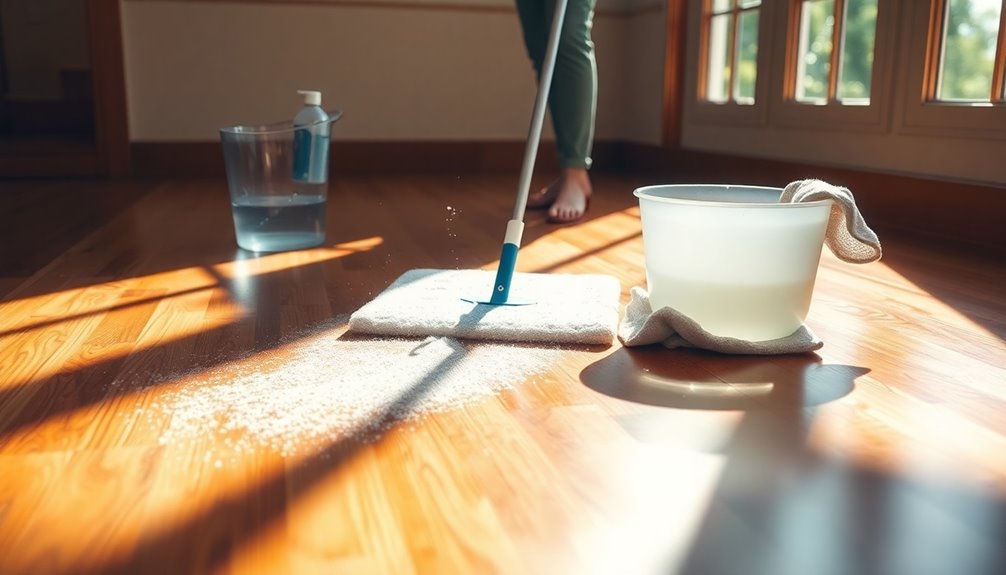
While you might think hardwood floors can withstand the test of time, regular cleaning is essential to preserve their beauty and durability.
The importance of maintenance can’t be overstated; without it, dirt accumulation can lead to scratches and dullness. Each day, dust, pet hair, and grime settle on your floors, gradually damaging the finish.
By establishing a consistent cleaning routine, you protect your investment and keep your floors looking pristine. Regularly removing debris not only enhances their appearance but also extends their lifespan. Additionally, using pH-balanced, non-toxic cleaners helps maintain the integrity of the finish without causing damage.
Remember, neglecting maintenance might cost you more in the long run as you deal with potential refinishing or replacement.
Choosing the Right Cleaning Tools and Products
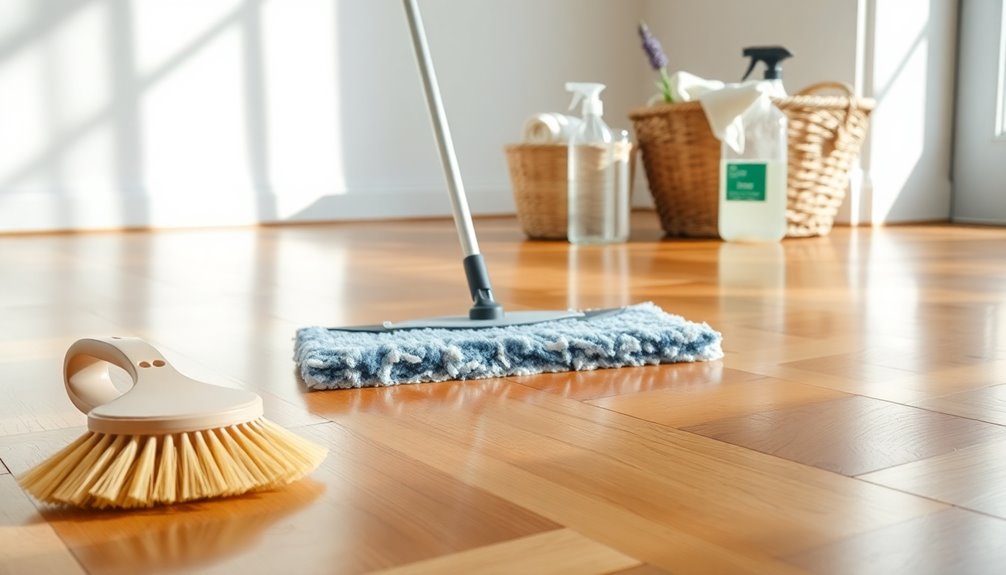
When it comes to cleaning hardwood floors, selecting the right tools and products is crucial for achieving the best results.
You’ll want to make sure you’re using appropriate cleaning supplies and floor mops that won’t damage your floor’s finish.
Here are four key items to take into account:
- Microfiber Mop: It traps dust and dirt without scratching the surface.
- pH-Balanced Cleaner: Look for a cleaner specifically formulated for hardwood to avoid dulling the finish.
- Soft-Bristled Brush: For tough spots, a soft-bristled brush helps lift dirt without causing harm.
- Bucket: Use a bucket for mixing your cleaner and water, making sure you don’t soak the floor.
Additionally, using eco-friendly cleaning agents can help maintain the integrity of your hardwood floors while promoting a healthier living environment.
Step-by-Step Guide to Cleaning Hardwood Floors Safely
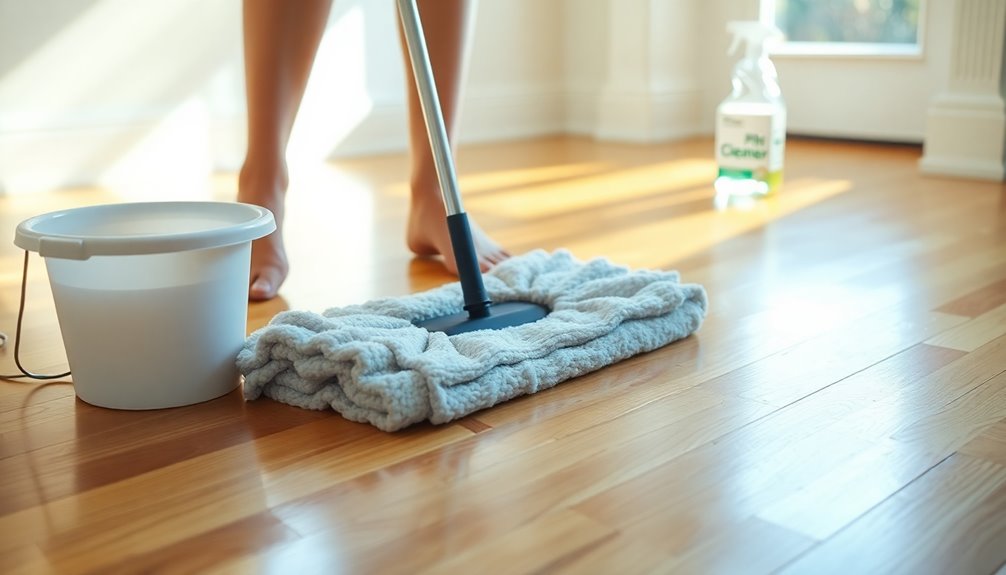
To keep your hardwood floors looking their best, you need to choose the right cleaner and use soft cleaning tools. It’s important to avoid harsh chemicals and abrasive materials that can damage the finish. After cleaning, make sure to dry the floors thoroughly to prevent any water damage. Regular maintenance with best hardwood floor cleaner machines can help preserve the appearance and longevity of your floors.
Choose the Right Cleaner
Choosing the right cleaner for your hardwood floors is essential for maintaining their beauty and longevity.
Using the wrong product can damage the finish, so consider these cleaner types and natural alternatives:
- pH-Balanced Cleaners: These are specifically formulated for wood and won’t strip the finish.
- Vinegar and Water Solution: A natural alternative that’s effective for light cleaning—mix one cup of vinegar with a gallon of water.
- Oil-Based Soaps: Great for conditioning the wood while cleaning.
- Commercial Wood Floor Cleaners: Confirm they’re labeled safe for your flooring type.
Always test any cleaner in a small area first to avoid potential damage.
Your floors will thank you for it!
Use Soft Cleaning Tools
Using the right cleaner is just the start; the tools you choose to clean your hardwood floors can make a big difference too.
Opt for soft cleaning tools to prevent scratching and damaging the finish. Start with a microfiber mop, which effectively traps dust and dirt without leaving streaks or residue.
For deeper cleaning, use a soft bristle brush to gently scrub away stubborn spots. These brushes are designed to be gentle on your floors while still providing the scrubbing power you need.
Remember, harsh tools can harm your hardwood’s surface, so it’s important to stick with softer options.
Dry Thoroughly After Cleaning
After cleaning your hardwood floors, it’s crucial to dry them thoroughly to prevent water damage and warping.
Here are some effective drying techniques to guarantee proper moisture control:
- Use a Soft Dry Mop: Gently run a dry microfiber mop across the floor to absorb excess moisture.
- Open Windows: Increase airflow by opening windows or using fans to help evaporate any lingering dampness.
- Towel Dry: For stubborn wet spots, use a soft, absorbent towel to blot the area gently, avoiding any scrubbing.
- Avoid Direct Heat: Keep heaters or direct sunlight away from the floor, as intense heat can cause the wood to crack.
Common Mistakes to Avoid When Cleaning Hardwood Floors
When it comes to cleaning hardwood floors, overlooking common mistakes can lead to damage and decreased longevity. One major pitfall isn’t adhering to a proper cleaning frequency. If you wait too long between cleanings, dirt and grime can build up, making it harder to maintain your floors.
Additionally, using the wrong cleaning products can strip the finish; always opt for pH-balanced cleaners specifically designed for hardwood. Another mistake is neglecting your maintenance routine. Regularly sweeping or vacuuming helps prevent scratches, while applying a suitable sealant can protect the finish. Furthermore, using a microfiber mop can significantly enhance dirt removal effectiveness without harming the floor.
Finally, avoid excessive water; too much moisture can warp your floors. By steering clear of these mistakes, you can keep your hardwood floors looking beautiful for years to come.
How to Handle Stains and Spills on Hardwood?
When spills happen on your hardwood floors, acting fast is essential to prevent lasting damage.
Use safe cleaning solutions to tackle stains without harming the finish.
Let’s explore the best ways to handle those pesky spills and keep your floors looking great. Regular cleaning and prevention are essential to avoid stubborn grease, which can also apply to maintaining your hardwood floors.
Immediate Action Required
Quick action is essential when dealing with stains and spills on hardwood floors. For emergency spills, you need to act fast to prevent lasting damage.
Here are some quick fixes to follow:
- Blot the Spill: Use a soft cloth or paper towel to absorb as much liquid as possible. Avoid rubbing, as it can spread the stain.
- Use Water Sparingly: Dampen the cloth slightly with water to clean the area, but don’t soak the wood.
- Apply a Mild Soap: If the stain persists, use a few drops of mild dish soap mixed with water.
- Dry Thoroughly: Wipe the area dry immediately after cleaning to prevent moisture damage.
Safe Cleaning Solutions
While it’s important to act quickly on spills, using the right cleaning solutions can make all the difference in preserving your hardwood floors.
For everyday messes, consider eco-friendly options like a mixture of equal parts vinegar and water. This homemade cleaner effectively cuts through grime without harming the finish.
If you’re dealing with stubborn stains, try a paste made from baking soda and water; gently rub it on the spot and wipe clean. Always test any solution in an inconspicuous area first to verify it won’t damage the surface.
Remember, avoid harsh chemicals or abrasive scrubbing pads, as they can scratch or dull your floors.
With these safe cleaning solutions, you’ll keep your hardwood looking beautiful for years to come.
Tips for Maintaining the Finish of Your Hardwood Floors
Maintaining the finish of your hardwood floors is essential for preserving their beauty and longevity.
By following these tips, you can keep your floors looking stunning for years to come:
- Use a High-Quality Floor Polish: Regularly apply a floor polish designed for hardwood to enhance shine and protection.
- Avoid Excessive Water: Keep moisture to a minimum when cleaning, as water can damage the finish and wood.
- Utilize Protective Coatings: Consider applying protective coatings to guard against scratches and wear.
- Place Mats and Rugs: Use mats at entryways and rugs in high-traffic areas to reduce dirt and debris.
- Invest in specialized devices for cleaning: These tools help maintain hardwood surfaces while enhancing their luster without causing damage.
When to Call in a Professional for Hardwood Floor Care
How can you tell when it’s time to call in a professional for hardwood floor care? If you notice deep scratches, significant discoloration, or water damage, it’s best to consult an expert.
A professional assessment can pinpoint issues you might overlook and recommend the right solutions. If your floors look dull despite your cleaning efforts, they may need floor refinishing to restore their original beauty.
Don’t wait until the damage worsens; addressing problems early can save you time and money in the long run. When in doubt, reaching out to a professional guarantees your hardwood floors get the care they deserve, keeping them looking stunning for years to come.
Trust the experts to help maintain your investment.
Conclusion
In summary, keeping your hardwood floors clean doesn’t have to be an intimidating task. By choosing the right tools and following the steps outlined, you can maintain their beauty without damaging the finish. Remember, an ounce of prevention is worth a pound of cure—so regular maintenance is key. If you ever feel overwhelmed, don’t hesitate to call in a professional. With a little care, your floors will shine for years to come!