To clean your kitchen using only lemon and salt, start by sprinkling coarse salt on surfaces like cutting boards and greasy pans. Scrub with half a lemon, allowing the mixture to sit for a bit to tackle stains and grease. You can also soak vegetables in a lemon juice and salt solution to keep them fresh. For more effective cleaning tips and techniques that will enhance your kitchen’s cleanliness, keep exploring!
The Power of Lemon and Salt in Cleaning

When it comes to natural cleaning solutions, lemon and salt pack a powerful punch.
Lemon juice contains citric acid, which breaks down soap scum, hard water deposits, and food stains while offering antibacterial properties. When you combine lemon with coarse salt, you get an abrasive agent that scrubs away stubborn residues effectively.
Lemon juice’s citric acid breaks down tough stains, while coarse salt acts as an abrasive scrubber for effective cleaning.
This dynamic duo not only cleans surfaces but also leaves a revitalizing lemony scent in your kitchen, making cleaning a more pleasant experience. You can use lemon and salt on various surfaces, from stainless steel sinks to greasy pans.
Regularly incorporating this natural cleaning method helps maintain hygiene and prevents odors and stains without relying on harsh chemicals. Additionally, using natural cleaning agents like lemon and salt can promote a healthier home environment.
Effective Techniques for Cleaning Cutting Boards
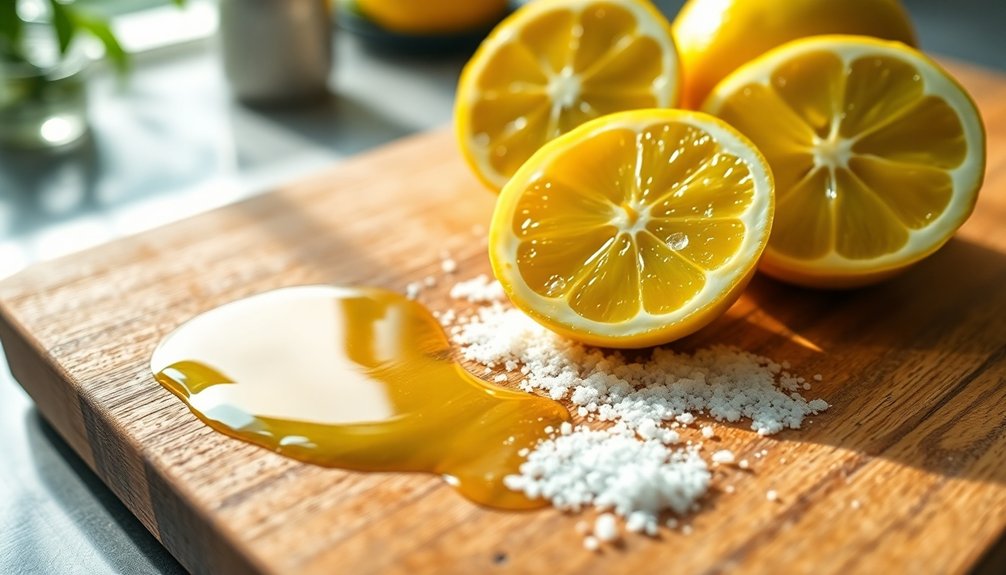
Cleaning cutting boards effectively is essential for maintaining kitchen hygiene.
For wooden cutting boards, start by sprinkling coarse salt evenly over the surface. This salt acts as an abrasive, helping lift stains and dirt.
Take half a lemon and use it to scrub the salt into the board. The citric acid released during this scrubbing action breaks down grime and odors.
Let the lemon and salt mixture sit for about 5 minutes, then scrape off the residue with a bench scraper, collecting the gray sludge formed.
Rinse the board thoroughly with warm water using a clean sponge to guarantee all salt and lemon residue is gone. Regular maintenance, such as using kosher salt and lemon for stubborn stains, ensures the longevity of your cutting board.
Utilizing Lemon and Salt for Greasy Pans and Stains

After tackling cutting boards, it’s time to address those greasy pans that can be a headache to clean.
Start by sprinkling coarse salt over the surface of the pan. Next, squeeze fresh lemon juice on top to create an effective abrasive paste. Allow this lemon and salt mixture to sit for 10 to 30 minutes, helping to break down tough grease and food stains. Using this method can be particularly beneficial due to its eco-friendly options, which reduce reliance on harsh chemicals.
Sprinkle coarse salt on the pan, add fresh lemon juice, and let it sit for 10 to 30 minutes to tackle stubborn grease.
Then, gently scrub the pan using the cut side of the lemon, which enhances the cleaning power of the citric acid while the salt provides abrasion. Finally, rinse the pan thoroughly with warm water to remove any lemon and salt residue.
For stubborn stains, repeat the process or let the mixture sit longer for even better results.
Additional Kitchen Uses for Lemon and Salt
While many people know lemon and salt are great for tackling greasy pans, they also have a variety of other useful applications in the kitchen.
You can effectively clean and deodorize your vegetables by soaking them in a solution of lemon juice and salt water for 15 minutes, removing bacteria and pesticides.
When cooking rice, adding lemon juice prevents stickiness and enhances fluffiness, especially in dishes like biryani.
For polishing stainless steel sinks, sprinkle salt, apply lemon juice, and rinse for a sparkling finish.
If you have food stains on pots and pans, cover the area with salt, squeeze lemon juice over it, let it soak, and scrub gently for a clean result. Additionally, using lemon and salt can help with natural degreasers that are effective for maintaining kitchen hygiene.
Maintaining Freshness and Odor Control in Your Kitchen
To keep your kitchen smelling fresh and inviting, incorporating lemon and salt into your routine can work wonders.
Incorporating lemon and salt into your kitchen routine can create a fresh and inviting atmosphere.
These natural ingredients help deodorize and maintain a pleasant atmosphere. Here are some effective tips:
- Slice a lemon and place it in your fridge to absorb unpleasant odors.
- Rub lemon juice on plastic food storage boxes to eliminate stains and refresh them.
- Soak vegetables in a lemon juice and salt mixture for 15 minutes to clean and enhance their freshness.
- Additionally, using EPA-certified disinfectants can further ensure that your kitchen surfaces remain clean and germ-free.
Conclusion
As you wipe down your kitchen, the fresh scent of lemon mingles with the gritty texture of salt, transforming your space into a sparkling oasis. With each scrub, stubborn stains vanish, leaving behind gleaming surfaces that shine like a sunlit morning. You’ve harnessed nature’s power, turning simple ingredients into your cleaning allies. Embrace the freshness and let your kitchen radiate cleanliness, inviting joy and inspiration into every meal you create. Your culinary haven has never felt so alive!