To clean mold from your dishwasher seals, start by putting on rubber gloves and gathering a soft brush, white vinegar, or a mold-killing spray. Wipe down the seals to remove loose debris, then apply the cleaning solution to any visible mold. Gently scrub with the brush and rinse with a damp cloth. Afterward, dry the seals thoroughly. To keep mold from coming back, consider some preventive measures. There’s much more to ensuring a mold-free dishwasher.
Why Mold Grows on Dishwasher Seals
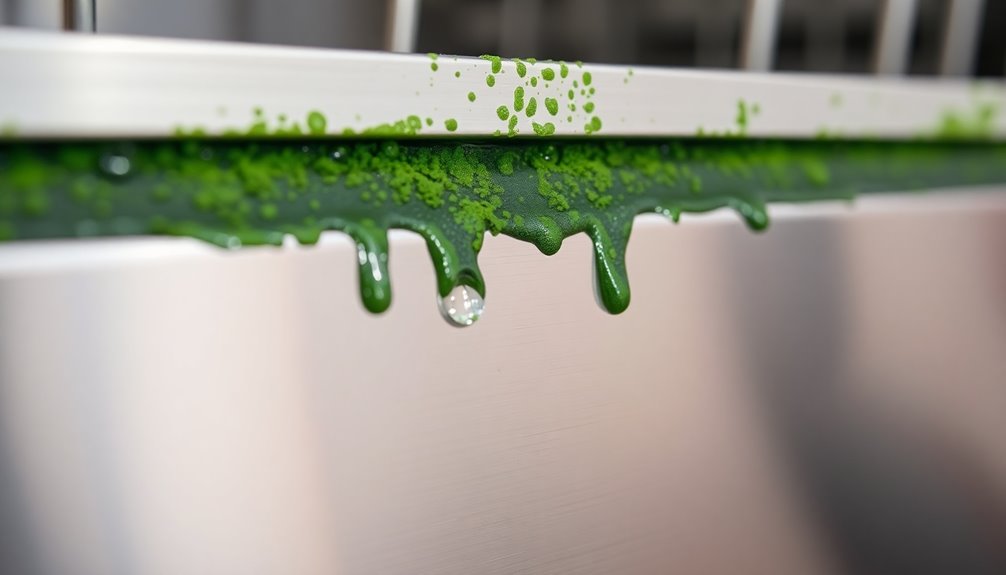
Mold grows on dishwasher seals primarily due to the warm, moist environment created during the washing cycle.
When you run your dishwasher, it generates high levels of humidity, which, combined with food particles and residues left behind, creates the perfect breeding ground for mold growth.
Seals and gaskets often trap moisture, making them susceptible to mold accumulation.
If you don’t regularly clean these areas, the damp conditions will encourage mold to thrive.
Additionally, using the dishwasher without sufficient drying time can exacerbate the problem, as lingering humidity remains trapped.
To combat this, you should guarantee proper ventilation and consider running a cleaning cycle with vinegar or specialized cleaners to minimize mold risk and keep your dishwasher seals in good condition. Regular cleaning also helps extend equipment lifespan and ensures a more efficient kitchen environment.
Signs You Have Mold in Your Dishwasher
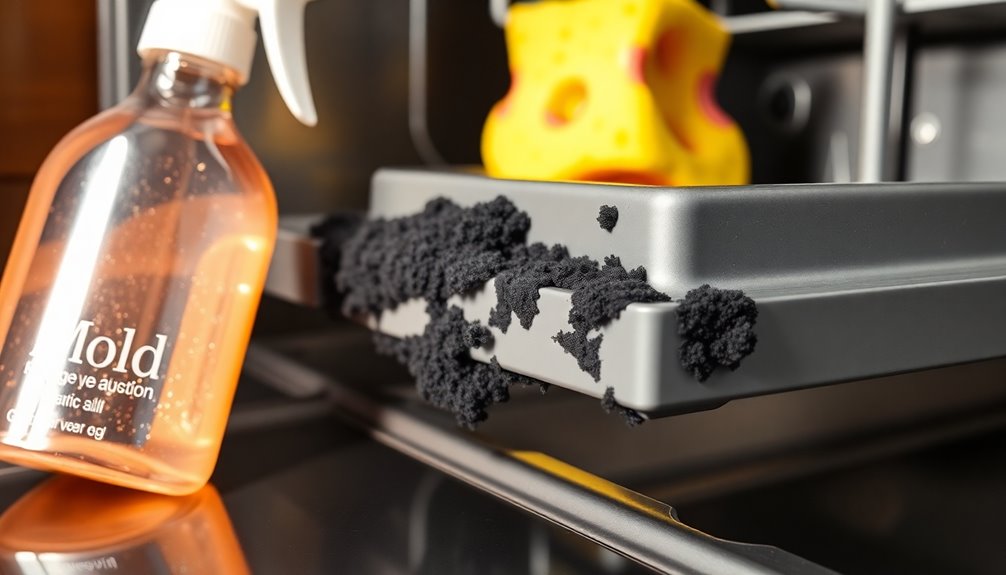
How can you tell if there’s mold lurking in your dishwasher? Start with a thorough dishwasher inspection.
Look for dark spots or fuzzy patches on the seals and interior surfaces—these are often clear signs of mold. If you notice a musty odor when you open the door, that’s another indication that mold could be present.
Look for dark spots or fuzzy patches in your dishwasher; these could signal mold. A musty odor is another clear warning sign.
Pay attention to any food residue or grime that seems to accumulate despite regular cleaning; this can contribute to mold growth. Additionally, if your dishes come out with a strange taste or smell, it’s time for some mold detection. Regular checks will help you spot problems early and keep your dishwasher clean and safe for use. Don’t ignore these warning signs! Implementing a regular cleaning routine will significantly reduce the risk of mold buildup in your dishwasher.
Essential Supplies for Cleaning Mold
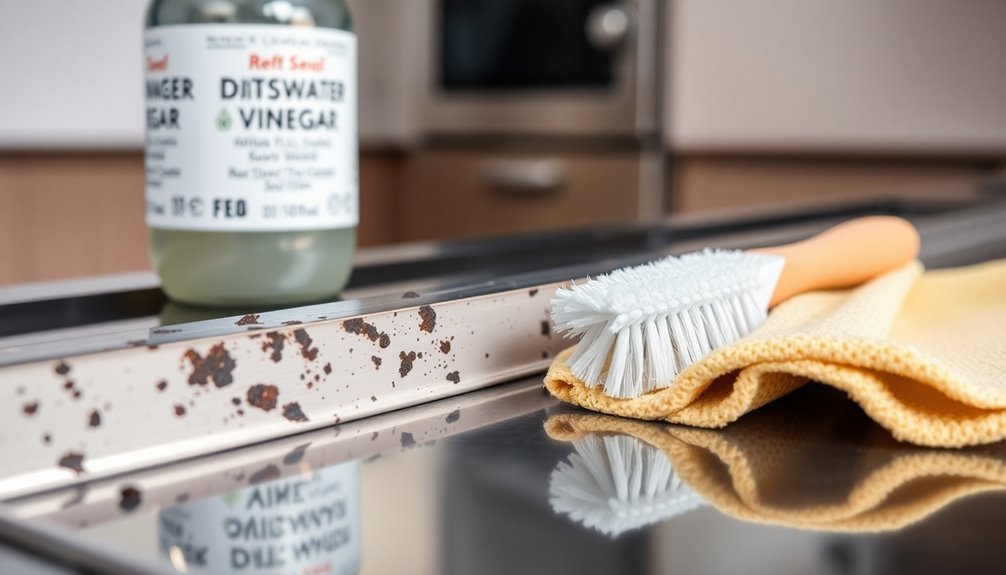
To effectively tackle mold in your dishwasher, you’ll need a few essential supplies. Start with a good pair of rubber gloves to protect your hands.
Next, grab a soft brush or sponge for scrubbing the seals. You’ll also need white vinegar or a mold-killing spray, as these cleaning supplies can effectively eliminate mold and mildew. Baking soda can be useful too, as it helps absorb odors while providing gentle abrasion for tough spots. Don’t forget a microfiber cloth for drying and polishing the seals afterward.
Finally, consider using a mold prevention product to keep future growth at bay. With these supplies in hand, you’re ready to tackle that mold and maintain a clean dishwasher. Additionally, using natural remedies like vinegar can enhance your cleaning process and provide a safer approach to mold removal.
Step-by-Step Guide to Cleaning Dishwasher Seals
Cleaning your dishwasher seals doesn’t have to be an intimidating task; just follow these simple steps for effective results.
First, gather your supplies: a soft cloth, a toothbrush, and a mold removal solution, such as vinegar or a commercial cleaner.
Start by wiping down the seals with the cloth to remove loose debris. Next, apply your mold removal solution, targeting any visible mold spots.
Use the toothbrush to gently scrub the seals, focusing on crevices where mold hides. Rinse the area with a damp cloth to remove any cleaning solution.
Finally, dry the seals thoroughly to prevent future mold growth. Incorporating these dishwasher maintenance tips can keep your appliance running efficiently and mold-free for longer! Additionally, using eco-friendly methods can help maintain a cleaner environment while keeping your dishwasher seals in good condition.
Tips for Preventing Mold Growth
Maintaining your dishwasher seals is just the first step in keeping mold at bay. For effective mold prevention, confirm you regularly run your dishwasher on a hot cycle, even if it’s empty. This helps eliminate any lingering moisture that mold loves.
After each wash, leave the door slightly ajar to allow air circulation, which promotes dishwasher hygiene.
Additionally, check and clean the filter frequently to avoid food buildup, which can contribute to mold growth. Using a dishwasher-safe cleaner or vinegar monthly can also help keep your appliance fresh. Regular maintenance, such as cleaning the filter and spray arms, is essential to ensure optimal performance and hygiene.
Finally, inspect seals for any signs of wear or damage, as these can trap moisture. By taking these steps, you’ll greatly reduce the chances of mold lurking in your dishwasher.
How to Maintain Your Dishwasher for Longevity
Regular maintenance can greatly extend your dishwasher’s lifespan and keep it running efficiently. To guarantee peak performance, create a maintenance schedule that includes routine cleaning and inspections.
After each use, wipe down the door seals and check for food debris. Regularly clean the filter to prevent clogs and maintain proper drainage. Pay attention to your dishwasher usage; avoid overloading it, as this can lead to poor cleaning results and strain the motor.
Every few months, run a maintenance cycle with a dishwasher cleaner to eliminate buildup. Additionally, inspect the hoses for wear and tear, replacing them as needed. Consistent maintenance not only ensures efficiency but also helps avoid costly repairs associated with neglecting routine cleaning.
Following these steps will help you enjoy a long-lasting, efficient dishwasher.
Natural Cleaning Solutions for Mold Removal
If you want to effectively tackle mold in your dishwasher seals, consider using natural cleaning solutions that are both safe and effective.
Start with a vinegar solution by mixing equal parts water and white vinegar in a spray bottle. Spray it directly on the seals and let it sit for a few minutes before wiping it away.
Create a simple vinegar solution by mixing equal parts water and vinegar, then spray it on the seals for effective mold removal.
For tougher mold, sprinkle baking soda on the affected area and scrub gently with a damp cloth.
You can also use hydrogen peroxide; just apply it directly to the mold and let it sit before rinsing.
To add a pleasant scent and boost cleaning power, mix in a few drops of essential oils, like tea tree or lavender. Additionally, vinegar is known for its effectiveness against bacteria and odors, making it a great choice for cleaning mold.
When to Call a Professional for Dishwasher Issues?
If you notice persistent mold growth despite regular cleaning, it might be time to call a professional. Unusual noises during operation or frequent error codes can signal deeper issues that you shouldn’t ignore. Trusting an expert can save you time and prevent further damage to your dishwasher. Additionally, addressing mold growth quickly is crucial for maintaining a hygienic environment and preventing health risks associated with mold exposure.
Persistent Mold Growth
Although you may have tried various cleaning methods, persistent mold growth in your dishwasher can signal a deeper issue that needs professional attention.
If you’ve noticed mold returning despite your efforts, it could be due to underlying problems like seal deterioration or persistent moisture.
Consider calling a professional if you experience:
- Continuous mold despite regular cleaning
- Water pooling or leaks, indicating seal failure
- Unpleasant odors that won’t go away
Ignoring these signs can lead to more significant issues down the line, including damage to your appliance or even health risks.
Don’t hesitate to consult an expert who can identify the root cause and provide a long-lasting solution. Your dishwasher should be a clean and efficient appliance—make sure it stays that way!
Unusual Noises During Operation
Persistent mold issues aren’t the only signs your dishwasher might need professional help.
If you hear unusual sounds during operation, it’s time to pay attention. These noises, like grinding, rattling, or buzzing, can indicate underlying operational issues. They might stem from a malfunctioning motor, a blocked pump, or even loose parts.
Ignoring these sounds can lead to bigger problems down the line. If the noises persist despite your troubleshooting efforts, don’t hesitate to call a professional.
They can diagnose the issue accurately and prevent further damage to your appliance. Remember, timely intervention can save you money and extend your dishwasher’s lifespan, ensuring it runs smoothly for years to come.
Frequent Error Codes
Frequent error codes on your dishwasher can be frustrating and confusing, often signaling that something’s not right.
While you can try some troubleshooting tips, there are times when it’s best to call a professional. Here are a few common error codes that may require expert attention:
- Error Code E1: Indicates a water leak or drainage issue.
- Error Code E3: Signifies a temperature sensor problem.
- Error Code E4: Points to a door latch malfunction.
If you encounter these codes and simple troubleshooting doesn’t help, don’t hesitate to reach out to a technician.
They can diagnose and fix the problem, ensuring your dishwasher runs smoothly again.
Understanding Dishwasher Seal Types and Their Care
To keep your dishwasher running smoothly, it’s crucial to understand the different seal types and their care. Common materials can affect durability, so regular maintenance is key to preventing issues. Watch for signs of seal damage to avoid costly repairs down the line. Incorporating regular maintenance can significantly extend the life of your dishwasher seals.
Common Seal Materials
Understanding the various seal materials in your dishwasher is essential for effective maintenance and mold prevention.
Knowing whether you have silicone seals or rubber seals can help you choose the right cleaning methods and products. Here’s a quick overview of these common seal materials:
- Silicone Seals: Flexible, durable, and resistant to extreme temperatures, silicone seals can last longer but may require gentle cleaning to avoid damage.
- Rubber Seals: Often more affordable, rubber seals can degrade faster and are prone to mold growth if not maintained properly.
- Hybrid Seals: Some dishwashers use a combination of materials, providing benefits from both silicone and rubber.
Importance of Regular Maintenance
Regular maintenance of your dishwasher seals is essential for preventing mold and guaranteeing longevity. By understanding the different seal types, you can tailor your care routine effectively.
Incorporate preventive measures like regular inspections and cleanings into your maintenance checklist. Check for debris and food particles that can accumulate in the seals, leading to mold growth. Wipe down the seals with a mild cleaner and a soft cloth to keep them in prime condition. Avoid using harsh chemicals that could damage the material.
Additionally, verify the dishwasher is properly closed during cycles to prevent moisture buildup. By committing to these simple maintenance steps, you’ll extend the life of your dishwasher and maintain a clean, mold-free environment.
Signs of Seal Damage
If you notice any unusual signs around your dishwasher seals, it’s essential to address them quickly.
Keeping an eye on seal integrity through regular visual inspections can prevent bigger issues down the line.
Here are some signs of seal damage to look for:
- Cracks or Tears: Any visible damage can compromise the seal’s effectiveness.
- Mold Growth: If you spot mold, it might indicate moisture retention due to seal failure.
- Water Leaks: Puddles around your dishwasher suggest that the seals aren’t doing their job.
Acting promptly can save you from costly repairs and keep your dishwasher running smoothly.
If you find any of these signs, consider replacing the seals to maintain peak performance.
Common Mistakes to Avoid When Cleaning
Although cleaning your dishwasher seals may seem straightforward, many people make common mistakes that can hinder the process.
One major error is using harsh chemicals that can damage the seals rather than clean them. Opt for gentle solutions like vinegar or baking soda instead.
Another pitfall is employing overcleaning techniques; scrubbing too hard can wear away the seal material, leading to leaks.
Overcleaning can be detrimental; excessive scrubbing may damage seals and cause leaks.
It’s also important not to neglect the corners and crevices, as mold can easily hide there.
Finally, remember to rinse the seals thoroughly after cleaning to remove any residue. Regular cleaning with vinegar solutions helps maintain the seals and prevents mold growth.
Benefits of a Mold-Free Dishwasher
Maintaining mold-free dishwasher seals not only extends the lifespan of your appliance but also enhances its performance.
When you prioritize mold removal, you guarantee thorough dishwasher hygiene, which leads to cleaner dishes and a healthier kitchen environment.
Here are some benefits of keeping your dishwasher mold-free:
- Improved Cleaning Efficiency: A clean seal helps your dishwasher function at peak performance, guaranteeing dishes come out spotless every time.
- Fewer Health Risks: Mold can release spores that may affect your health; keeping your dishwasher mold-free reduces potential allergies and illnesses.
- Fresh Odor: Regular maintenance prevents musty smells, keeping your kitchen smelling fresh and inviting.
Conclusion
So, there you have it! Cleaning mold from your dishwasher seals is easier than convincing your in-laws that your cooking skills are exceptional. With the right supplies and a bit of elbow grease, you’ll have a sparkling, mold-free dishwasher in no time. Just remember, a clean seal means less chance of funky smells and more room for your questionable leftovers. So roll up your sleeves and tackle that mold – your future self (and your dinner guests) will thank you!