To clean your walls without damaging the paint, first identify your wall finish and choose gentle cleaning methods accordingly. Remove items from the walls and dust them with a soft cloth. Use a mild soap solution with a soft sponge for washing, and tackle stains with baking soda paste or rubbing alcohol. Always test your cleaners in a hidden spot first. Following these tips will help keep your walls looking fresh, and there’s more you can learn to maintain them effectively.
Understanding Wall Finish Types
When you’re cleaning walls, understanding the different wall finish types is essential for protecting your paint.
Wall finishes can vary in durability, and knowing their characteristics helps you choose the right cleaning methods. Flat and eggshell finishes are less resistant to scrubbing, while semigloss and glossy finishes can handle stronger cleaning agents.
If you’ve used latex paint, you’re in luck—it’s usually easier to clean than oil-based paints, which might need specific solutions like vinegar.
For high-traffic areas, opt for higher gloss finishes as they’re more washable and resistant to stains.
Remember, newly painted walls should cure for at least two weeks before any washing to avoid damage.
Regular maintenance will keep your paint looking fresh longer. Additionally, using eco-friendly cleaners can enhance your cleaning routine while being gentle on your walls.
Preparing the Room for Cleaning
Before you start cleaning your walls, make sure to prepare the room properly to avoid any mishaps.
Begin by removing all paintings, lamps, and objects from the walls. This step not only prevents damage but also gives you better access.
Next, move furniture away from the walls to create a clear space for cleaning and to avoid spills on your items.
Dust the walls using a tack cloth or cheese cloth to remove loose dirt and debris, ensuring the surface is ready for a thorough clean.
Don’t forget to protect the floor by laying down drop cloths, newspaper, or old towels to catch any drips from your cleaning solution. Additionally, ensure that your cleaning tools are well-maintained for efficient cleaning practices during the process.
An organized workspace will make the process smoother and more efficient.
Basic Washing Techniques
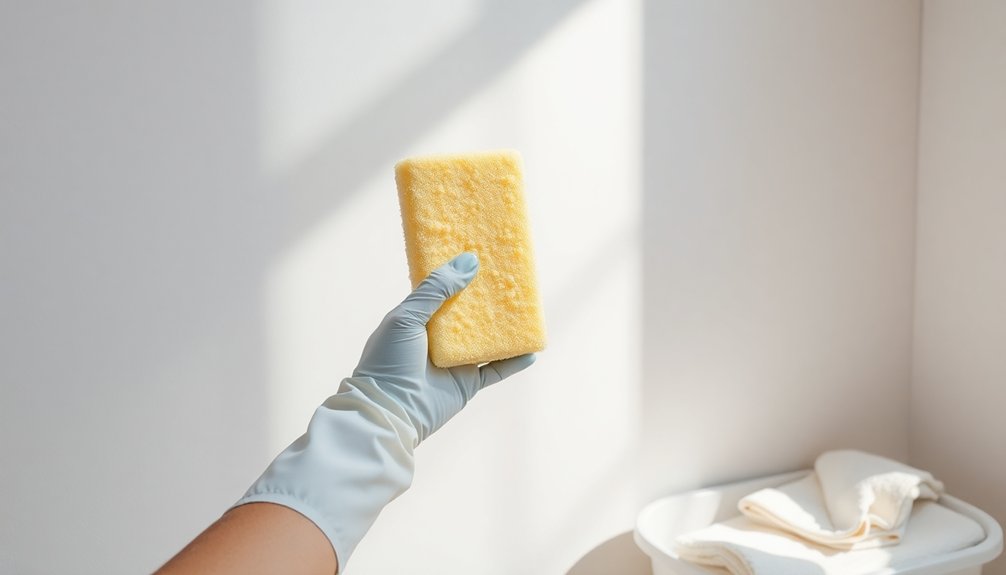
Before you start washing your walls, assess the finish to choose the right cleaning method.
Gather your supplies, including a gentle soap solution and a soft cloth, to guarantee you don’t damage the paint.
With everything ready, you can wash with care, keeping the process effective yet gentle. Additionally, consider using non-toxic cleaners to ensure a safe cleaning experience for your family and the environment.
Assess Wall Finish
To effectively clean your walls without damaging the paint, start by evaluating the type of wall finish you have—whether it’s flat, eggshell, semigloss, or glossy.
Each wall finish type impacts your cleaning method. Flat and eggshell finishes are less durable, so use a mixture of mild detergent and water, avoiding hard scrubbing to prevent damage.
In contrast, semigloss and glossy finishes are more durable and can handle stronger degreasing cleaners, making them ideal for tougher stains and high-traffic areas.
Always test any cleaning solution on a small, inconspicuous area first to verify it won’t harm the paint.
If your walls are newly painted, wait at least two weeks before washing to protect the finish.
Gather Cleaning Supplies
Cleaning your walls effectively requires the right supplies to guarantee you don’t damage the paint. Start by gathering essential cleaning supplies: rubber gloves for hand protection, a vacuum cleaner with a brush attachment to dust the walls, and two buckets—one for your cleaning solution and one for rinsing.
For your cleaning solution, mix gentle dish soap or mild detergent with clean water to make sure it’s effective yet safe. Use a non-abrasive sponge or soft cloth for gentle scrubbing, avoiding anything that could scratch the paint.
Remember to dust the walls first to remove any surface dirt that might cause scratches during cleaning. Always test your cleaning solution on an inconspicuous area to check for any adverse reactions.
Wash With Care
When washing your walls, it’s important to take into account the type of paint finish to choose the right technique. For flat and eggshell finishes, opt for mild cleaning methods, while glossy finishes can handle stronger solutions.
Here are some tips to keep in mind:
- Use a soft cloth with a mixture of mild dish soap and warm water.
- Scrub gently in circular motions to avoid damaging the paint.
- Rinse the area with a clean, damp cloth to eliminate soap residue.
- For tough stains, apply a baking soda paste gently.
- Always test cleaning solutions on a small, inconspicuous area first.
Effective Spot Cleaning Methods

Even if you’ve got stubborn stains on your walls, you don’t have to worry about damaging the paint while tackling them. Start by dabbing the stains with a damp rag or a non-abrasive sponge to lift the mark gently.
For tougher stains, like crayon or permanent markers, apply rubbing alcohol to a cloth and use a soft touch to avoid harming the painted surface. You can also make a baking soda paste by mixing baking soda with water; apply it softly and scrub gently.
Always test any cleaning solution on a small, inconspicuous area first. Once you’ve cleaned the stains, rinse the area with a damp cloth to eliminate any residue and prevent streaks on your walls. Additionally, maintaining a clean environment can help reduce harmful bacteria that may contribute to respiratory issues and skin irritations.
Touch-Up Techniques for Stains
When tackling stains on your walls, the first step is to identify the type of stain you’re dealing with.
Once you know what you’re up against, use appropriate cleaning solutions before moving on to touch-up paint if needed. Regular cleaning routine will help you achieve a seamless repair that blends in perfectly.
Identify Stain Type
How can you effectively tackle stains on your walls without risking damage to the paint? The first step is to identify the stain type, as different stains require specific approaches.
Here are some tips to help you clean without damaging your walls:
- For crayon marks, use a baking soda paste with a soft cloth.
- Dab stubborn stains like ink with rubbing alcohol, applying a gentle touch.
- Always test any cleaning solution on an inconspicuous area first.
- Rinse the cleaned area with a damp cloth to remove residue.
- Remember, effective cleaning techniques vary with different stains.
Use Appropriate Solutions
After identifying the type of stain, you can choose the right cleaning solution to tackle it effectively.
For minor stains, start with mild soap and water, using a gentle scrub to clean walls without damaging painted surfaces.
If you encounter stubborn stains, consider a baking soda paste, applying it gently with a non-abrasive sponge.
For tougher issues like permanent marker, test an all-purpose cleaner or rubbing alcohol on a hidden spot first.
Always remember to rinse with a clean cloth afterward to eliminate any residue.
Avoid using harsh chemicals or abrasive materials that could harm your paint.
Address spills immediately by dabbing, rather than rubbing, to prevent spreading or damaging the paint finish.
Apply Touch-Up Paint
Touching up your walls can restore their appearance and keep your space looking fresh. To guarantee a seamless touch-up, follow these steps:
- Use leftover paint from the original can for color consistency.
- Stir the original paint gently to avoid settled components affecting the finish.
- Match your application method: use a brush for brushed areas and a roller for rolled ones.
- Feather the edges of the touch-up area to blend the new paint with the old.
- Allow the touch-up paint to dry completely before evaluating the final look.
Frequency of Wall Cleaning
Regularly cleaning your walls is key to maintaining a fresh and inviting home. Ideally, you should clean the wall at least once a year to remove accumulated dust, dirt, and stains or marks. However, for high-traffic areas like hallways and kitchens, aim for a cleaning routine every three to six months. If your walls are freshly painted, wait at least two weeks before attempting any cleaning to allow the paint to cure properly. Promptly addressing stains or marks as they occur can prevent them from setting, making deep cleaning easier later. Additionally, areas near cooking spaces could benefit from quarterly cleaning due to grease buildup, helping to keep your walls looking their best. Incorporating efficient cleaning practices into your routine can further enhance the longevity of your paint and overall home cleanliness.
Preventive Measures for Wall Maintenance
To keep your walls looking pristine, it’s essential to adopt preventive measures that minimize wear and tear. Start by choosing washable paint finishes, like satin or semi-gloss, especially in high-traffic areas.
Incorporate regular dusting routines using a vacuum with a brush attachment or a soft cloth to prevent grime buildup and extend the life of your paint. Here are some effective tips:
- Use protective coverings in spill-prone areas
- Place mats in entryways to minimize dirt transfer
- Encourage family members to clean hands before touching walls
- Regularly inspect for early signs of wear or damage
- Address issues promptly to maintain a vibrant appearance
Additionally, consider using natural cleaning agents like vinegar and baking soda for spot cleaning, as they are effective and eco-friendly. These simple steps will help keep your walls looking fresh and clean for years to come!
Conclusion
In the grand scheme of things, keeping your walls clean doesn’t have to be an intimidating task. By understanding your wall finish, preparing your space, and using the right techniques, you can maintain their beauty without risking damage. Remember, a little regular upkeep goes a long way in preventing bigger issues down the line. So, roll up your sleeves and tackle those walls—your home will thank you for it!