To easily clean your oven and stovetop, start by gathering eco-friendly supplies like baking soda and vinegar. Clear away any cookware, then apply a baking soda paste for tough stains. Consider steam cleaning with lemons or vinegar to loosen grime effortlessly. Don’t forget to wipe down surfaces regularly to prevent buildup. With these simple techniques, you can achieve a sparkling clean kitchen. Want to discover more tips and tricks? Just keep exploring!
The Importance of Regular Oven and Stovetop Cleaning
When you neglect to clean your oven and stovetop regularly, you not only risk unpleasant odors and smoke during cooking but also compromise the efficiency of your appliances.
Regular oven cleaning is crucial to prevent grease and food buildup that can lead to malfunctions and costly repairs. A clean oven enhances its lifespan and guarantees a safer cooking environment by reducing fire hazards associated with accumulated debris. Additionally, regular polishing can enhance visibility and aesthetic appeal, making your kitchen more inviting.
Regular oven cleaning prevents costly repairs and enhances safety by reducing fire hazards from grease and food buildup.
Depending on your cooking habits, you should clean your oven four to six times a year if you cook daily, while occasional users might only need to clean it once or twice annually.
Ultimately, maintaining a clean cooking space promotes better hygiene and improves your overall culinary experience.
Eco-Friendly Cleaning Alternatives
If you’re looking for effective ways to clean your oven and stovetop without harsh chemicals, eco-friendly alternatives are your best bet. Natural ingredients like baking soda and vinegar can tackle grease, while simple DIY recipes, such as a mix of water and Dr. Bronner’s soap, provide safe cleaning solutions. Additionally, these natural methods ensure a safer environment for families and pets, making your kitchen not only clean but also healthy. Let’s explore these options to keep your kitchen fresh and sustainable.
Natural Cleaning Ingredients
Using natural cleaning ingredients can transform your oven and stovetop cleaning routine into an eco-friendly task that’s both effective and safe.
Baking soda is a fantastic choice; mix it with water to create a paste that targets stubborn stains. Apply it, let it sit overnight, and watch burnt-on food lift away.
Vinegar serves as a powerful natural degreaser—just spray it on to loosen dirt for easy wiping.
For the oven, simmer quartered lemons in water; the steam softens food particles and eliminates odors.
Additionally, consider eco-friendly options like Dr. Bronner’s soap or Sal Suds, which clean effectively and biodegrade quickly.
These natural ingredients not only enhance your cleaning method but also protect the environment.
DIY Cleaning Recipes
Creating your own eco-friendly cleaning recipes can make the process of cleaning your oven and stovetop both simple and effective.
For tough grime, mix baking soda with water to form a paste, apply it to the dirty areas, and let it sit overnight before wiping clean.
You can also combine equal parts distilled white vinegar and water in a spray bottle for a great glass cleaner.
For a fizzling reaction that tackles stubborn stains, mix baking soda with vinegar and apply it to the affected surfaces.
Finally, simmer quartered lemons in water for 15 minutes, then place the pot in the oven to loosen grime, making it easier to clean your oven.
Safe Products Recommendations
When it comes to cleaning your oven and stovetop, choosing safe products can make all the difference. For effective and eco-friendly results, consider safe products recommendations like Dr. Bronner’s soap, which is biodegradable and non-toxic.
You can create a DIY all-purpose cleaning spray by mixing 1 quart of water with ¼ cup of Dr. Bronner’s soap. For a streak-free shine on glass surfaces, mix equal parts distilled white vinegar and water.
Baking soda is a fantastic natural abrasive; make a paste with water to tackle tough stains without harsh chemicals. Keep multiple bottles of these homemade eco-friendly cleaners handy in your kitchen to encourage regular cleaning while being kind to the environment.
Preparing for Your Cleaning Session
Before you immerse yourself in cleaning your oven and stovetop, it’s essential to prepare properly. Start by gathering your supplies: baking soda, vinegar, all-purpose cleaner, soft cloths, and sponges. This’ll streamline the process and make it more efficient.
Next, clear the stovetop of any cookware and debris to create an unobstructed area for cleaning. Make certain both the stovetop and oven are completely cool to prevent burns and guarantee your safety during the oven clean.
Don’t forget to read the manufacturer’s instructions for your specific appliances; they may have unique cleaning recommendations or restrictions. If you’re using strong cleaning agents, consider wearing gloves to protect your skin and enhance your comfort while you clean. Additionally, regular maintenance can help prevent grime buildup and make cleaning sessions easier.
Effective Cleaning Techniques for Ovens
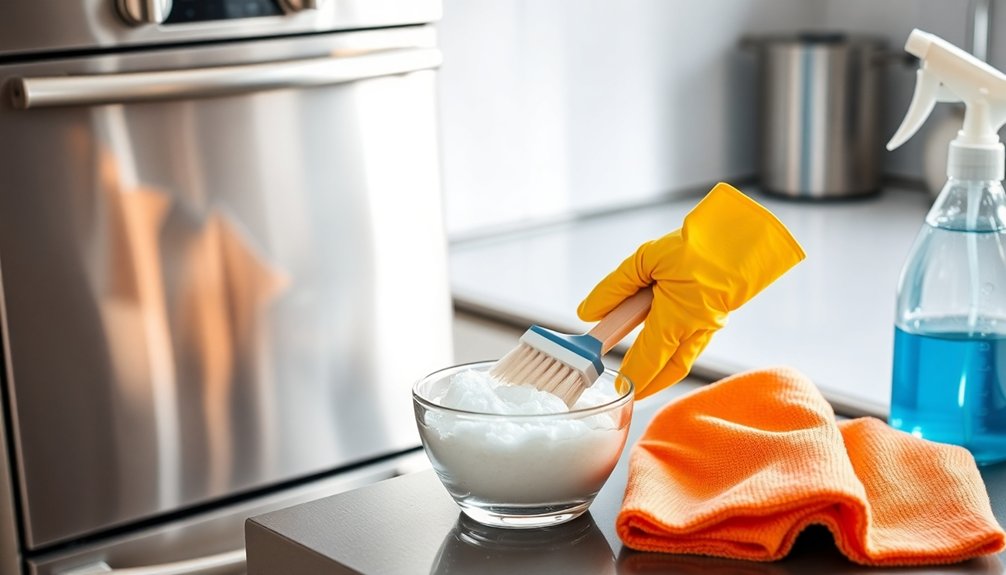
When it comes to cleaning your oven, the self-cleaning feature is a powerful tool that can save you time and effort. If you prefer a more natural approach, using a baking soda paste can tackle stubborn stains without harsh chemicals. Additionally, regular cleaning maintains a hygienic kitchen environment to promote healthier cooking practices. Let’s explore both methods to keep your oven sparkling clean.
Self-Cleaning Oven Process
If you’re looking for an efficient way to clean your oven, the self-cleaning process is a game changer.
Self-cleaning ovens use high temperatures, around 800-900°F, to turn food residues into ash, making deep cleaning a breeze. Before starting the self-clean cycle, remove the oven racks and wipe away any grease to guarantee peak performance and avoid damaging the racks.
The cycle lasts several hours, so it’s best to stay home to monitor it and ventilate any odors. After the cycle, simply wipe away the ash residue with a damp cloth or sponge.
Always follow your manufacturer’s instructions, as different models may have specific functionalities and safety precautions to keep in mind.
Natural Cleaning Solutions
After utilizing the self-cleaning feature, you might want to explore natural cleaning solutions for maintaining your oven’s cleanliness.
Start by creating an effective cleaning paste with baking soda and water. Apply it to stubborn stains, letting it sit overnight before scraping it off with a plastic scraper.
For a steam clean, simmer quartered lemons in water and place the pot in the oven for an hour to loosen grime.
To clean your oven windows, mix distilled white vinegar and water in a 1:1 ratio for a streak-free shine.
Finally, use a blend of Dr. Bronner’s soap and water as a safe all-purpose cleaner for oven racks and stovetops.
Regularly incorporate these techniques for a healthier, cleaner oven.
Steam Cleaning: A Quick and Easy Solution
Steam cleaning offers a quick and easy way to keep your oven and stovetop looking fresh, as it uses water vapor to loosen grime and grease without harsh chemicals.
To get started, fill a pot with water and add quartered lemons or vinegar. Simmer for 15 minutes, then place the pot in your oven for an hour.
This method works wonders for regular maintenance between deep cleans, softening residue without the harsh conditions of self-cleaning cycles. Plus, it reduces the need for scrubbing and leaves a pleasant scent. Additionally, using natural cleaning solutions can enhance the effectiveness of your steam cleaning routine.
After the steam cleaning session, all you need is a simple wipe-down with a damp cloth, ensuring your oven needs are met with minimal effort for a cleaner cooking environment.
Cleaning Your Stovetop: Best Practices
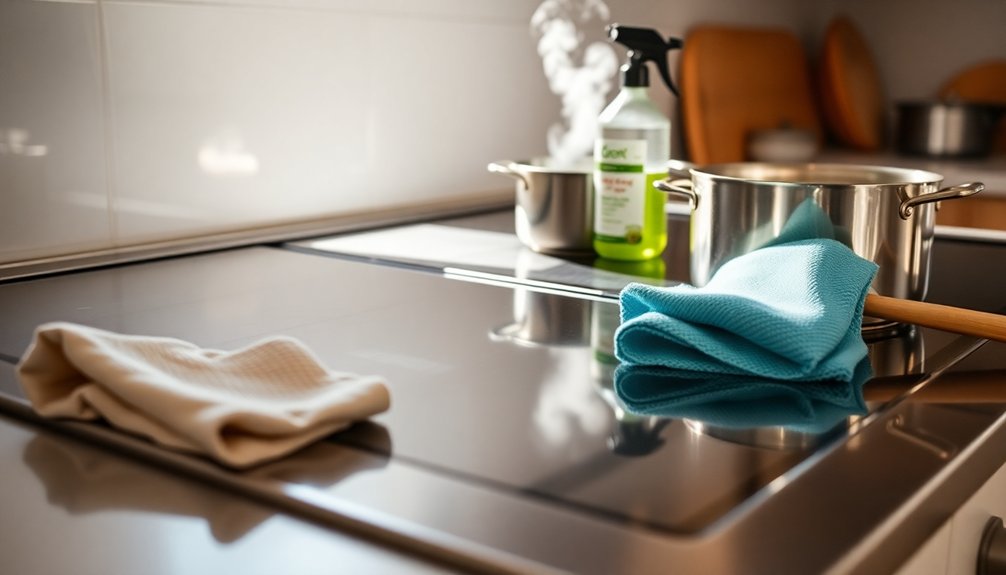
While maintaining a clean stovetop might seem like a chore, adopting a few best practices can make it manageable and even enjoyable. Start by wiping down your stovetop after each use to prevent grease and food buildup, simplifying future cleaning.
For tough stains, mix baking soda and vinegar to create a paste, apply it, and let it sit before gently scrubbing with a soft cloth. Don’t forget to regularly clean removable parts like burner caps and grates; they can often go in the dishwasher or soak in warm soapy water. Additionally, regular maintenance reduces the frequency of deep cleaning, making it easier to keep your stovetop pristine.
Avoid abrasive cleaners that scratch surfaces—opt for non-toxic options instead. Schedule routine deep cleaning sessions every few weeks or after heavy cooking to maintain your stovetop’s appearance and efficiency.
Maintaining a Clean Oven and Stovetop
To keep your oven and stovetop in top shape, regular maintenance is key. Most families should aim to deep clean their oven once or twice a year. However, if you use your oven daily, you might need to clean it four to six times a year.
Utilize the self-clean cycle on modern ovens; it can greatly reduce the effort required for deep cleaning. Additionally, wipe down your stovetop after each use to prevent tough stains and grime from building up.
Keeping cleaning supplies handy for quick touch-ups can also make a big difference. Not only will regular maintenance improve your kitchen’s appearance, but it’ll also extend the lifespan of your appliances, ensuring you get better cooking results over time. Furthermore, scheduling maintenance every three months for optimal oven performance prevents grease and food residue buildup, ensuring efficiency.
Recommended Products for Natural Cleaning
When it comes to cleaning your oven and stovetop naturally, there are a few standout products that can make the task easier and more effective.
Dr. Bronner’s soap is an eco-friendly choice that breaks down grease without harsh chemicals. You can create a versatile GIY All-Purpose Cleaning Spray by mixing 1 quart of water with ¼ cup of Dr. Bronner’s soap or 1 tablespoon of Sal Suds.
For your oven racks, warm soapy water with Sal Suds or Pure-Castile Magic Soap works wonders. Additionally, for a streak-free shine on your oven windows, combine distilled white vinegar and water in a 1:1 ratio. Regular use of eco-friendly products not only cleans effectively but also supports a sustainable lifestyle.
Tips for Keeping Your Kitchen Sparkling Clean
Keeping your kitchen sparkling clean doesn’t have to be an intimidating task, especially when you incorporate simple habits into your routine.
Here are three effective tips to help you maintain a pristine space:
- Wipe down surfaces: After each use, quickly clean your stovetop with a damp cloth and all-purpose cleaner. This prevents buildup and makes routine deep cleaning easier.
- Schedule deep cleanings: Aim for a thorough cleaning every 2 to 3 months. If you use your oven daily, do this more often to keep it efficient and hygienic. Regular maintenance prevents buildup and odors in your kitchen, ensuring a safe and healthy environment.
- Use baking soda: For tough stains, mix baking soda with water to form a paste, apply it overnight, and rinse in the morning for ideal results.
Conclusion
So, you’ve finally tackled that grimy oven and stovetop, only to realize you’re now an expert in kitchen cleaning. Ironically, the hardest part wasn’t the scrubbing or the elbow grease; it was overcoming the urge to let all that gunk slide until the next big meal. Remember, keeping your kitchen clean isn’t just about appearances—it’s about enjoying your cooking space. Embrace the sparkle, and who knows? Maybe you’ll even find cooking a little more enjoyable after all.