Composting your kitchen cleaning waste is a great way to reduce landfill impact and enrich your garden soil. Start by collecting vegetable peels, coffee grounds, and eggshells. Use a countertop compost bin with an airtight lid to keep odors in check. If you don’t have a yard, consider vermicomposting or community composting programs. Regularly turn your compost for aeration and maintain moisture. There are more techniques and tips to explore that can enhance your composting journey.
Understanding the Importance of Composting Food Scraps

Understanding the importance of composting food scraps is essential if you want to make a positive impact on the environment. By composting, you greatly reduce methane emissions from landfills, which helps combat climate change.
Did you know that around 60% of household waste is organic? This means there’s a great opportunity for you to manage waste sustainably.
When you compost your food scraps, you enrich your garden’s soil, sequestering carbon and providing essential nutrients as a powerful soil amendment. Furthermore, incorporating eco-friendly cleaning practices into your routine can further minimize waste and enhance your sustainability efforts.
Plus, by engaging with your community to source food scraps, you can enhance your composting efforts and promote shared sustainability practices.
Every small action counts, and composting is a simple yet effective way to make a difference.
Recommended Materials for Composting
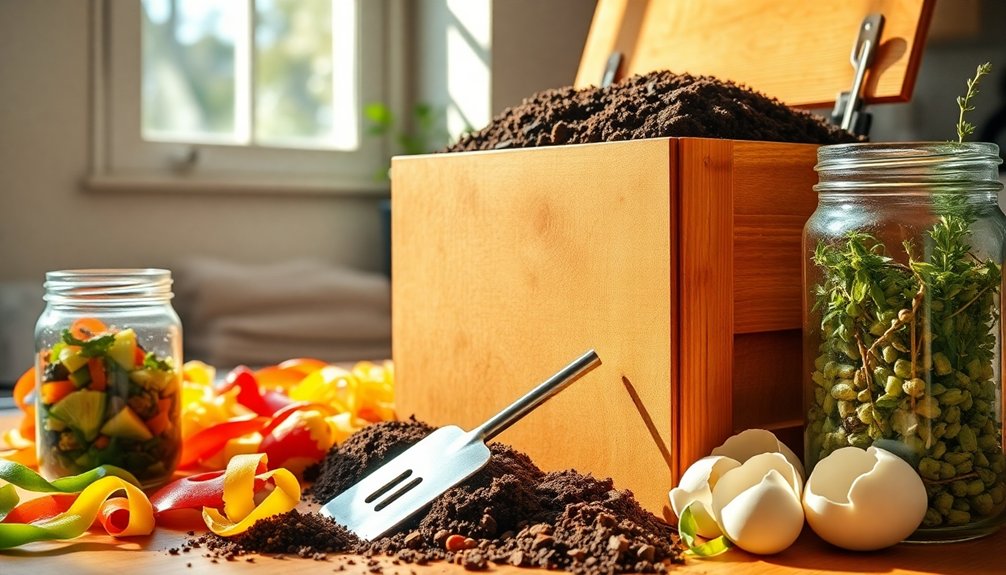
Composting can be a rewarding process, especially when you know what materials to include.
Start with kitchen scraps like fruit and vegetable peels, coffee grounds, eggshells, and tea bags, as they add valuable nutrients to your compost bins. You can also toss in clean paper products, like paper towels and shredded newspapers, which provide essential carbon.
Garden clippings, including grass and leaves, balance the nitrogen-rich kitchen scraps, creating a healthy mix. Additionally, organic matter like hair, pet fur, and vacuum cleaner bags can enrich your compost.
Just remember to avoid meat, dairy, and oils, as these attract pests and create odors that can ruin your composting efforts. For optimal results, consider using eco-friendly tools that help maintain a balanced compost environment.
Happy composting!
Composting Methods for Those Without a Yard
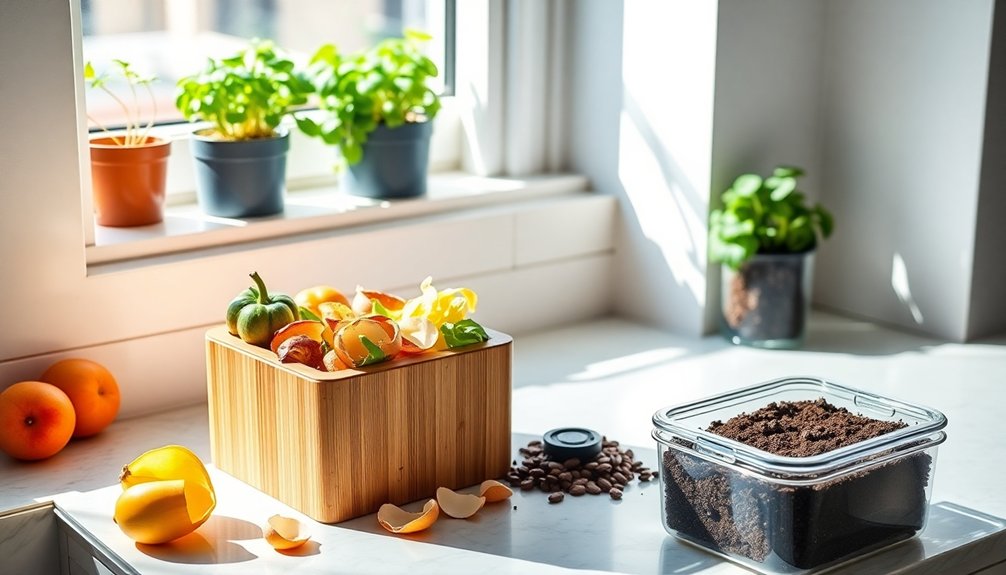
You can explore indoor methods like vermicomposting or Bokashi bins, or connect with community composting initiatives through curbside bins and local gardens. These solutions make it easy for you to reduce waste and contribute to sustainable practices right from your home. Additionally, incorporating eco-friendly cleaning products can further minimize your environmental impact while maintaining a clean kitchen.
Indoor Composting Solutions
While many people believe composting is only for those with backyards, indoor composting solutions offer a practical alternative for apartment dwellers and urban residents.
Vermicomposting uses red worms to efficiently break down your kitchen waste, making it perfect for small spaces. Alternatively, Bokashi composting employs fermentation, allowing you to compost a wider range of food scraps, including dairy and meat, with a special bran mix.
Using a countertop compost bin with an airtight lid helps contain odors and pests while storing your kitchen waste.
Plus, consider the ShareWaste app, which connects you to local composters who’ll gladly accept your scraps.
These methods appreciably reduce organic waste, promoting sustainable practices even in urban settings.
Community Composting Options
For those without a yard, community composting options provide a practical way to reduce kitchen waste and contribute to local sustainability efforts.
Many cities offer curbside green bins for organic waste, making it easy for urban dwellers to recycle their food scraps. Additionally, you can find community gardens that have designated compost bins where you can drop off your kitchen waste.
Platforms like ShareWaste connect you with local composters who welcome your food scraps for their composting projects.
If you prefer a more hands-on approach, consider vermicomposting or using Bokashi bins indoors. These methods allow you to effectively manage kitchen waste while contributing positively to your community’s composting initiatives.
Composting Techniques for Backyard Enthusiasts
When you’re ready to compost in your backyard, you’ll want to explore effective methods that suit your space. Keeping your compost healthy is key, so knowing how to maintain it and troubleshoot any issues will make your experience smoother. Incorporating natural cleaning solutions while composting can help minimize waste and contribute to a healthier environment. Let’s look at the best practices to guarantee your compost thrives.
Effective Composting Methods
Composting kitchen waste can be a rewarding way to enrich your garden, and there are several effective methods to choose from.
Here are a few techniques you can try:
- Heap or Bin Method: Create a designated compost pile where you mix green materials, like your kitchen scraps, with brown matter, such as dried leaves.
- Trench Composting: Dig a trench in your garden, bury your kitchen waste, and let it decompose underground, enriching your soil without attracting pests.
- Regular Turning: Turn your compost pile every few weeks to aerate the materials and speed up the decomposition process.
- Moisture Control: Keep your compost damp but not soggy by adding water as needed, ensuring ideal conditions for microbial growth.
Choose a method that fits your lifestyle!
Maintaining Compost Health
Maintaining healthy compost is essential for guaranteeing that your kitchen waste breaks down efficiently and enriches your garden.
To achieve this, regularly turn your compost pile every 2-4 weeks to aerate it, speeding up decomposition and preventing odors.
Keep a balanced mix of green and brown materials in a 1:3 ratio, which guarantees nutrient density. Your compost should feel like a damp sponge, so be ready to water it during dry spells.
Use a compost thermometer to monitor the internal temperature, aiming for 130°F to 160°F to optimize microbial activity.
Incorporate food scraps like vegetable peels and coffee grounds, but be sure to avoid adding oily or dairy products to maintain compost health and deter pests.
Troubleshooting Common Challenges
Even the most dedicated backyard composters encounter challenges now and then.
To troubleshoot common issues with your compost, keep these tips in mind:
- Turn your compost pile regularly to aerate it and speed up decomposition.
- Maintain a balanced mix of green (nitrogen-rich) and brown (carbon-rich) materials at a 2:1 ratio.
- Monitor moisture levels; your compost should feel like a wrung-out sponge.
- If unpleasant odors arise, it might be too wet or lacking aeration.
Add dry browns and turn the pile to resolve this.
Pit Composting: An Easy and Effective Method
If you’re looking for a simple and effective way to turn kitchen waste into nutrient-rich compost, pit composting might be the solution for you. This method involves digging a hole in your garden or backyard where you can bury your kitchen scraps and organic waste.
It requires minimal maintenance since the natural decomposition happens underground, thanks to soil organisms. To make the most of your pit, layer green materials like vegetable peels with brown materials such as dried leaves, ensuring a good carbon-to-nitrogen balance. Incorporating natural cleaning practices can help reduce waste by utilizing kitchen scraps in your compost.
Keep an eye on moisture levels; adding water can help speed up decomposition. Not only does pit composting recycle food waste, but it also enriches your soil, enhancing nutrient availability for your plants.
Exploring Hugelkultur for Enhanced Soil
After exploring the simplicity of pit composting, you might want to contemplate hugelkultur as another innovative approach to enhancing soil health.
Consider hugelkultur as a creative and effective method to boost your soil health after trying pit composting.
This method involves burying decomposing wood and organic materials to create large compost beds that improve soil quality and moisture retention.
- Utilizes food scraps and yard waste effectively
- Enhances soil aeration and drainage
- Reduces the need for chemical fertilizers
- Retains moisture for plants, minimizing watering frequency
- Additionally, it supports sustainable practices that contribute to a healthier planet.
Composting Dog Waste Safely
Composting dog waste safely is essential for maintaining a healthy garden and environment. To do this, you need a dedicated composting system specifically designed for dog waste. This keeps harmful pathogens from pet feces contained and prevents health risks associated with improper composting.
Remember, dog waste should never go in your regular compost pile, as it can attract pests and create unpleasant odors. Use a specialized dog waste compost bin, as recommended in Michelle Balz’s book *No-Waste Composting*, to guarantee effective composting. Additionally, consider using eco-friendly solutions to ensure that your composting practices are sustainable and safe for the environment.
Regularly turn the waste and maintain moisture levels to aid decomposition. Allow the compost to mature for at least six months before using it in your garden, assuring that harmful pathogens are eliminated.
Composting During the Winter Months
Even though winter brings chilly temperatures, you can still keep your composting efforts alive and effective.
While microbial activity slows down, the natural thawing and refreezing cycles help maintain decomposition.
Here are some tips for winter composting:
- Insulate your compost pile with straw or leaves to retain heat.
- Use snow as a natural insulator to prevent spoilage.
- Turn the pile more frequently to aerate and promote decomposition.
- Continue adding kitchen waste like coffee grounds, vegetable scraps, and grass clippings. Regularly using non-toxic cleaners can also contribute to a healthier compost by ensuring that any food waste is free from harmful chemicals.
Conclusion
Composting your kitchen cleaning waste not only reduces landfill waste but also enriches your garden soil. Did you know that composting just half of your kitchen scraps can divert over 1,000 pounds of waste from landfills each year? By incorporating simple composting techniques, you can make a positive impact on the environment while creating nutrient-rich soil for your plants. So, whether you have a yard or not, get started today and watch your garden thrive!