To create an eco-friendly dishwashing routine, start by using your dishwasher whenever it’s fully loaded and select the eco-settings. Scrape plates before washing to boost efficiency and avoid clogging. Try to wash dishes right after use to prevent food from hardening. If you don’t have a dishwasher, consider soaking dishes in a sink bath with minimal soap. Finally, embrace air-drying to save energy and discourage bacteria. There’s more to discover about enhancing your dishwashing routine.
Use a Dishwasher
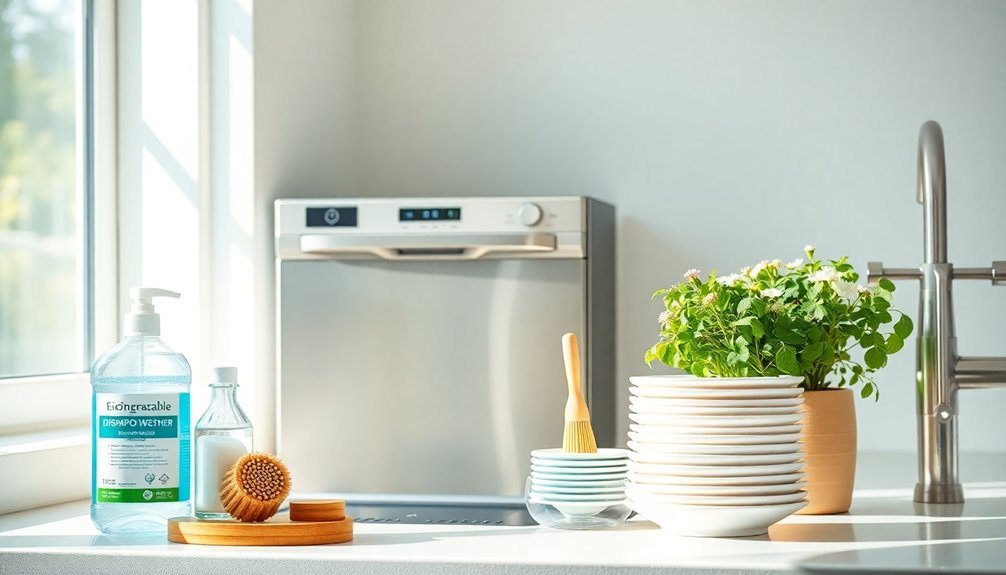
Using a dishwasher not only saves you time but also greatly reduces your water usage.
An ENERGY STAR-rated dishwasher can help you save over 3,870 gallons of water each year compared to hand washing. While hand washing can use up to 27 gallons, a dishwasher typically uses just 3 to 5 gallons per load. This makes it an environmentally friendly choice.
An ENERGY STAR-rated dishwasher saves over 3,870 gallons of water annually, using just 3 to 5 gallons per load.
To maximize efficiency, fill your dishwasher before running it. Many modern dishwashers feature eco-friendly settings that further minimize water and energy consumption. Additionally, using eco-friendly cleaners like Seventh Generation All-Purpose Cleaner can enhance your dishwashing routine’s sustainability.
Plus, if you skip the heated dry option and let your dishes air dry, you enhance your dishwashing routine’s sustainability.
Using a dishwasher is a simple yet effective way to contribute to a greener planet.
Run the Dishwasher Only When Full and Choose Eco-Settings

To maximize the eco-friendliness of your dishwashing routine, run your dishwasher only when it’s completely full. This practice considerably boosts water and energy efficiency, using as little as 3 gallons of water per load compared to 27 gallons for hand washing.
When you load the dishwasher, practice efficient loading to guarantee that dishes aren’t blocking the spray arms, which helps with ideal cleaning.
Additionally, choose eco-friendly settings on your dishwasher. These settings limit water and soap usage during each cycle, reducing your environmental impact.
Avoid high-temperature washes and heated drying, as these increase resource consumption. Instead, opt for lower temperatures and air-drying methods, further enhancing your sustainable dishwashing routine. Incorporating water-saving techniques can significantly contribute to a greener household.
Scrape Plates Before Cleaning
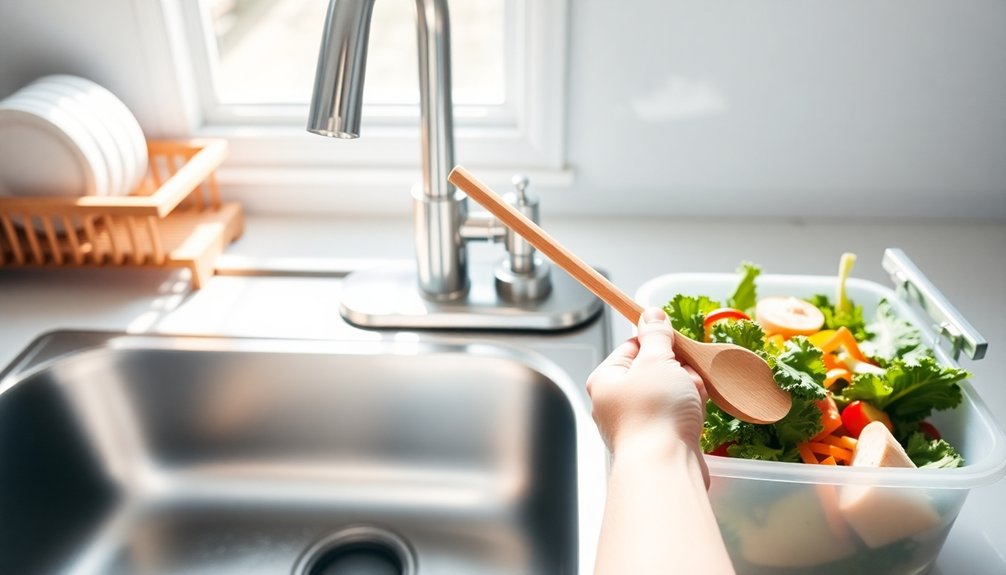
Scraping food debris off your plates before loading them into the dishwasher boosts cleaning efficiency and can even enhance your eco-friendly practices.
By taking this simple step, you not only help your dishwasher save energy but also reduce water usage considerably. A cleaner dish means less reliance on excessive soap and scrubbing during hand washing, which is better for the environment.
Plus, scraping food debris minimizes the risk of clogging the dishwasher filter, ensuring better performance and longevity of your appliance. This practice also prevents unpleasant odors and bacterial growth, making your cleaning routine more pleasant.
Ultimately, by removing food residues beforehand, you contribute to a reduced environmental impact, making your dishwashing routine both effective and sustainable. Additionally, maintaining a safe and healthy cooking environment is essential to prevent harmful bacteria and other health risks associated with grease buildup.
Wash Dishes Right After Use
Washing dishes right after use makes cleaning a breeze since food won’t harden.
With a good scrubber, you can tackle residue quickly, cutting down on soap and water use.
Plus, keeping on top of your dishes helps maintain a tidy kitchen and boosts your eco-friendly efforts. Additionally, using non-toxic cleaners can further enhance your kitchen’s cleanliness while ensuring safety for your family and the environment.
Immediate Cleaning Benefits
Although it may seem tempting to let dirty dishes pile up, tackling them immediately after use offers numerous benefits that make your cleaning routine more efficient.
Immediate cleaning prevents food residue from hardening, allowing you to clean dishes with less scrubbing and dish soap. This practice can greatly lower water usage since softer residue requires less rinsing compared to dried-on food. By using a quality dish scrubber or wooden dish brush right after use, you enhance your cleaning efficiency while minimizing resource consumption.
Additionally, prompt dishwashing keeps your kitchen tidy, reducing the chances of attracting pests and odors from leftover food. This eco-friendly way to wash dishes encourages a mindful approach to sustainability, making it a win-win for you and the environment.
Efficient Cleaning Techniques
To make your dishwashing routine even more efficient, tackle those dirty dishes right after you use them. Washing dishes immediately prevents food from hardening, making cleanup easier and cutting down on scrubbing and soap usage.
Plus, when you clean right away, you take advantage of softer food residues, saving you time and effort. Use a quality dish scrubber or wooden dish brush to enhance your cleaning efficiency and minimize water usage—this aligns perfectly with zero waste principles.
Immediate cleaning not only keeps your kitchen tidy and hygienic but also conserves water, promoting an eco-friendly dish routine. By adopting these techniques, you contribute to a healthier planet while maintaining a clean home.
Consider a Sink Bath
If you want to make your dishwashing routine more eco-friendly, consider trying a sink bath. This method involves blocking the sink drain and filling it with warm, soapy water.
By soaking your dishes, you prevent food from hardening, making scrubbing easier and more effective. Plus, you’ll use a small amount of dish soap diluted in water, enhancing cleaning efficiency while reducing overall soap usage.
A sink bath is particularly water-efficient, especially if you don’t have a dishwasher, as it allows you to wash multiple dishes at once without wasting water.
After soaking, rinsing your dishes with hot water guarantees they’re completely clean, eliminating bacteria and aiding in proper drying to prevent mold and odors. Additionally, using natural cleaning agents can further enhance the eco-friendliness of your dishwashing routine.
Use Eco-Friendly Dish Soap
After soaking your dishes in a sink bath, the next step in your eco-friendly dishwashing routine is choosing the right dish soap.
Opt for biodegradable or plant-based dish soap to minimize your environmental impact. Conventional soaps often contain harmful synthetic chemicals that can damage ecosystems.
Consider solid or refillable options to cut down on plastic waste. If you’re feeling adventurous, you can even make DIY dish soap using common ingredients like vinegar, baking soda, and lemon oil.
Look for brands like Fillaree, 7th Generation, Ecover, and Ecos, which offer eco-friendly choices free from toxic ingredients harmful to health and marine life.
Always verify your dish soap is fully biodegradable to prevent harmful residues from entering water systems. Additionally, selecting dish soaps that are EPA Safer Choice certified ensures that you are using products that meet strict environmental and health standards.
Embrace Air-Drying Techniques
While using a dishwasher can be convenient, embracing air-drying techniques is a simple yet effective way to enhance your eco-friendly dishwashing routine.
By air-drying your dishes, you greatly reduce energy consumption since you won’t need the heat-dry setting, which often boosts resource usage. Utilizing natural sunlight not only saves energy but helps sanitize your dishes, thanks to the sun’s ultraviolet rays.
Studies show that air-drying prevents bacterial growth more effectively than cloths or paper towels, which can harbor germs. To maximize cleanliness, make sure to space your dishes properly during air-drying for better airflow. Additionally, using natural disinfectants like vinegar can further enhance the sanitization of your dishes during the washing process.
Choosing this method also contributes to a sustainable routine by cutting down on disposable paper towels and reducing plastic waste associated with drying materials.
Conclusion
By adopting these eco-friendly dishwashing practices, you’re not just saving water and energy, but also contributing to a healthier planet. Remember, “a little goes a long way.” So, whether you’re using your dishwasher wisely or opting for eco-friendly soap, every small change counts. Embrace these habits and watch your kitchen routine transform into a sustainable effort. With each dish washed, you’re making a positive impact—one plate at a time!