To create a weekly cleaning schedule you’ll actually follow, start by evaluating your cleaning needs and prioritize essential tasks. Break down your duties by room, focusing on high-traffic areas first, and set realistic goals for what you can tackle in a week. Choose specific days for different chores, make use of apps and tools to stay organized, and find ways to enjoy the process, like playing music or rewarding yourself. There’s more to explore on fine-tuning your routine!
Why a Weekly Cleaning Schedule Is Essential for a Tidy Home
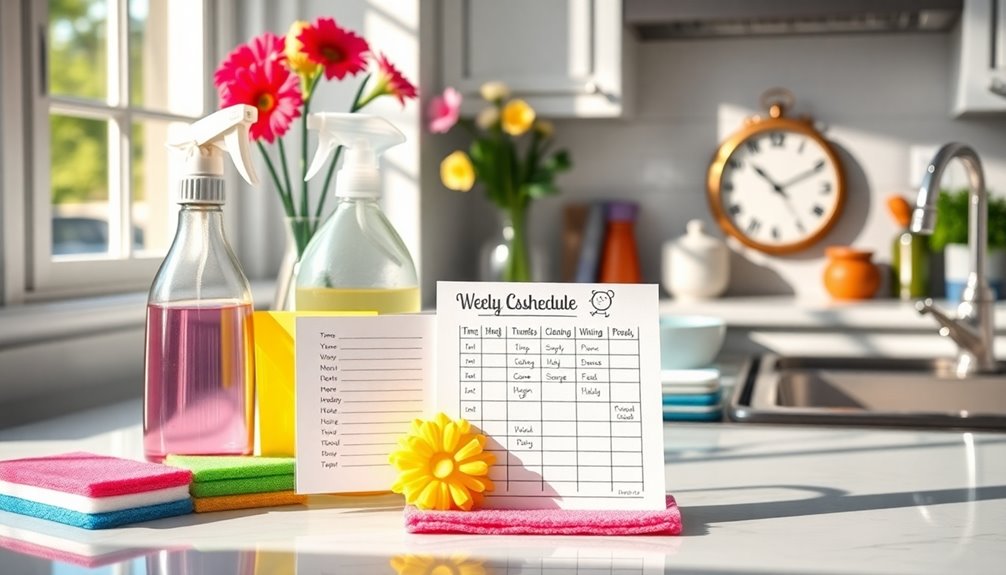
Creating a weekly cleaning schedule isn’t just a good idea; it’s essential for maintaining a tidy home. When you establish a routine, you boost your cleaning motivation and create a tidy mindset that makes it easier to keep your space organized.
A schedule helps you prioritize tasks, ensuring you don’t overlook important areas. You’ll find that breaking cleaning down into manageable chunks reduces overwhelm and makes the process feel less intimidating.
Plus, by dedicating specific days to certain chores, you’ll develop consistency and build habits that last. Embracing a structured approach allows you to enjoy a cleaner, more inviting environment while freeing up your time for things you love. Incorporating a chore chart can help visualize responsibilities and enhance accountability within the family.
Assessing Your Cleaning Needs: What’s Most Important?

How do you determine what cleaning tasks deserve your attention first? Start by identifying your cleaning priorities.
Think about essential tasks that impact your daily life the most, like kitchen cleanliness or bathroom hygiene. Consider areas that tend to accumulate dirt or clutter quickly.
Identify the cleaning tasks that most affect your daily life, prioritizing areas like the kitchen and bathroom that gather dirt quickly.
Make a list of tasks that need regular attention and rank them based on urgency and importance. You might find that vacuuming or laundry is a higher priority than dusting or window cleaning. By focusing on what truly matters, you’ll create a more manageable cleaning schedule that keeps your home tidy. Incorporating a consistent cleaning schedule can help avoid overwhelming tasks and keep your home in order.
How to Break Down Your Cleaning Tasks by Room
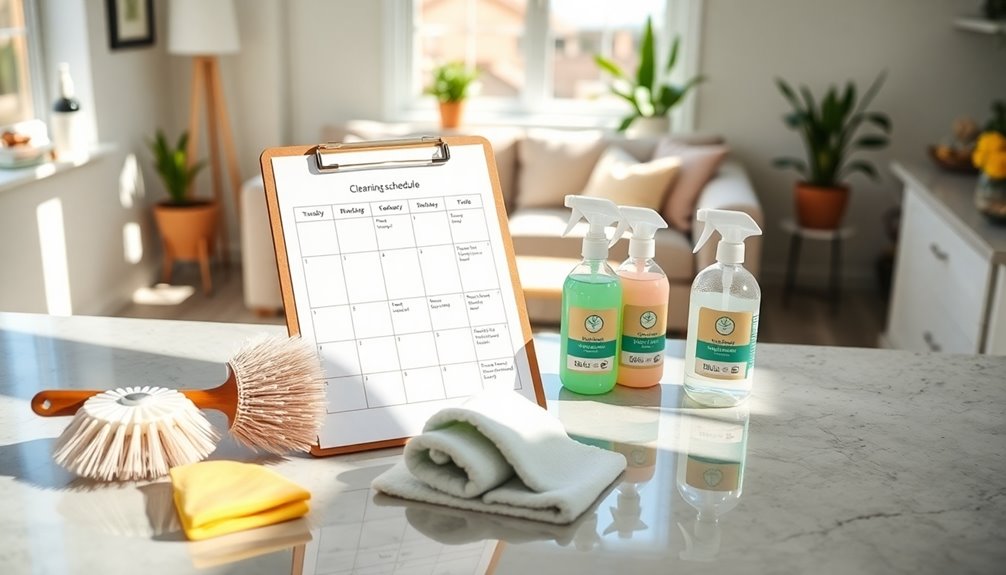
As you tackle your cleaning schedule, breaking down tasks by room can make the process more manageable. Start by identifying room-specific tasks that need attention. For instance, in the kitchen, focus on wiping down surfaces and cleaning appliances. In the bathroom, prioritize scrubbing sinks and toilets.
Next, set your cleaning priorities for each room based on usage and visibility. High-traffic areas like the living room might require more frequent dusting and vacuuming, while less-used spaces can be cleaned less often.
Create a checklist for each room to guarantee you don’t miss anything. By organizing your tasks this way, you’ll stay focused and motivated, making your weekly cleaning routine easier to follow and more effective. Additionally, consider incorporating a systematic layout to improve overall productivity in your cleaning efforts.
Setting Realistic Goals: What Can You Accomplish in a Week?
What can you realistically accomplish in a week when it comes to cleaning? Setting realistic expectations is key to creating a cleaning schedule you’ll actually stick to.
Start by identifying your weekly priorities. For instance, focus on high-traffic areas like the kitchen and living room, while leaving less frequently used spaces for later. You might tackle vacuuming and dusting one day, and then bathroom cleaning another.
Aim for a balance that fits your lifestyle; don’t overload your schedule. Remember, it’s better to complete a few tasks well than to overwhelm yourself with an unrealistic list. Additionally, incorporating a Master Cleaning Schedule can help ensure you cover all necessary areas systematically.
Choosing the Right Days for Different Cleaning Tasks
When planning your cleaning schedule, start by evaluating your availability throughout the week. You’ll want to prioritize high-traffic areas on days when you have more time to tackle them. This approach guarantees that your home stays tidy and manageable, even on your busiest days. Additionally, adopting a structured cleaning schedule can help you maintain consistency and balance responsibilities throughout the week.
Assess Your Availability
To create an effective weekly cleaning schedule, you need to contemplate your availability and energy levels throughout the week.
Start by evaluating your daily commitments and identifying which days you can dedicate to cleaning tasks. If you have busy weekdays, consider reserving lighter tasks for those days and saving more intensive cleaning for weekends when you have more time.
This approach aligns with your cleaning goals and enhances your time management. For instance, if you’re more energetic on Saturday mornings, tackle deep cleaning then. Conversely, if evenings are better for you, schedule quick clean-ups after dinner.
Prioritize High-Traffic Areas
Once you’ve assessed your availability, it’s time to focus on where to direct your cleaning efforts.
Prioritizing high-traffic areas will make a significant difference in your home’s overall cleanliness. Here’s how to set your cleaning priorities:
- Entryways: Keep these areas tidy since they’re the first impression.
- Kitchens: Regularly clean countertops and floors to combat spills and crumbs.
- Living Rooms: Dust and vacuum often to maintain a welcoming space.
- Bathrooms: Sanitize high-use surfaces to guarantee hygiene.
How to Prioritize Your Cleaning Tasks Effectively
While a clean home boosts your mood and well-being, figuring out where to start can be overwhelming. To prioritize your cleaning tasks effectively, first identify your cleaning priorities.
Consider the areas that need the most attention, like kitchens and bathrooms, and focus on their task importance. Make a list of tasks, ranking them by urgency and frequency. For instance, daily tasks like dishwashing and sweeping should take precedence over monthly deep cleaning. Additionally, remember that deep cleaning involves a thorough process targeting every nook and cranny to ensure optimal cleanliness.
You can also assess how messy each area is; the messier the space, the higher its priority. By breaking down your tasks this way, you’ll create a manageable cleaning schedule that guarantees your home stays inviting and organized without feeling like a chore.
Creating a Daily Cleaning Checklist for Quick Tidying
Creating a daily cleaning checklist can streamline your routine and make tidying up feel effortless.
By breaking down your daily tasks, you’ll find it easier to maintain a clean space. Here are some quick tips to get you started:
- Make the Bed: Start your day with this simple task for an instant feeling of accomplishment.
- Wipe Down Surfaces: Spend a few minutes cleaning kitchen counters and bathroom sinks.
- Tidy Up Clutter: Put away items that don’t belong in common areas to keep your space organized.
- Sweep or Vacuum High-Traffic Areas: Quick cleaning here can make a big difference in your home’s appearance.
Incorporating daily decluttering strategies can help maintain organization and prevent overwhelming messes.
With these manageable daily tasks, keeping your home clean becomes a breeze!
Incorporating Deep Cleaning Tasks Into Your Schedule
To keep your home in top shape, you’ll want to incorporate deep cleaning tasks into your routine.
Start by prioritizing high-traffic areas and scheduling monthly deep cleanings to tackle those tougher spots. Regular maintenance prolongs freezer lifespan and efficiency, with cleaning recommended every 3 to 6 months. Breaking tasks into smaller segments makes it easier to manage without feeling overwhelmed.
Prioritize High-Traffic Areas
Since high-traffic areas in your home tend to accumulate dirt and clutter quickly, prioritizing these spaces in your cleaning schedule is essential.
Focus on maintaining kitchen cleanliness and bathroom maintenance to keep your home inviting.
Here are four key areas to prioritize:
- Kitchen: Wipe down surfaces and sanitize high-touch areas daily.
- Bathroom: Clean sinks and toilets regularly to prevent buildup.
- Entryway: Sweep or vacuum to eliminate dirt tracked in from outside.
- Living Room: Dust and tidy up frequently to create a welcoming atmosphere.
Schedule Monthly Deep Cleaning
While regular cleaning keeps your home tidy, scheduling monthly deep cleaning tasks is crucial for tackling areas that often get overlooked.
To incorporate deep cleaning into your routine, choose a specific day each month dedicated to these tasks. Create a list of monthly tasks, like cleaning behind appliances, washing windows, or scrubbing grout.
By designating a day, you guarantee these important chores don’t slip through the cracks. You can even rotate tasks to avoid feeling overwhelmed. For instance, focus on one room each month or alternate between different tasks.
This way, you maintain a clean home and prevent dirt buildup. Stick to your schedule, and you’ll find that deep cleaning becomes a manageable part of your life.
Break Tasks Into Segments
Breaking tasks into segments can make deep cleaning feel less intimidating and more achievable. By focusing on smaller, manageable cleaning segments, you’ll make your task breakdown simpler and more effective.
Here’s how to do it:
- Choose a Room: Pick one room each week to deep clean.
- List Specific Tasks: Break down the cleaning tasks like dusting, vacuuming, and mopping.
- Set a Timer: Allocate a specific time for each task to maintain focus and motivation.
- Reward Yourself: After completing your cleaning segments, treat yourself to something nice.
Tips for Balancing Daily, Weekly, and Monthly Cleaning
To maintain a clean and organized home, it’s essential to balance daily, weekly, and monthly cleaning tasks effectively. Start by tackling daily chores like washing dishes and wiping surfaces—these small tasks keep your space tidy and boost your cleaning motivation.
Next, allocate specific days for weekly tasks such as vacuuming and laundry. Use a timer to manage your time effectively; it’ll help you stay focused and make cleaning less overwhelming.
For monthly chores, like deep cleaning the fridge or organizing closets, schedule them on your calendar. This way, you can plan around them, ensuring you don’t neglect these larger tasks. Additionally, establishing a cleaning schedule can foster accountability and develop lasting cleaning habits over time.
How to Adapt Your Schedule for Family or Roommates?
When you’re sharing your space with family or roommates, it’s essential to get everyone involved in planning the cleaning schedule.
Assign specific responsibilities to each person to guarantee tasks are covered and everyone contributes.
Using a shared calendar can help keep everyone on the same page and make coordination a breeze. Additionally, incorporating a weekly cleaning checklist can ensure that all areas of the home receive attention and help maintain overall cleanliness.
Involve Everyone In Planning
Involving everyone in planning your cleaning schedule not only fosters a sense of teamwork but also guarantees that each person’s preferences and availability are considered.
Collaborative planning is key to ensuring that everyone feels invested in the process. Here’s how to get started:
- Gather Input: Hold a meeting to discuss cleaning preferences and schedules.
- Discuss Priorities: Identify which areas need the most attention and agree on tasks.
- Create a Draft: Make an initial schedule based on the input, keeping flexibility in mind.
- Review Together: Go over the draft with everyone, making adjustments as needed.
Assign Specific Responsibilities
Assigning specific responsibilities is essential for creating an effective cleaning schedule that suits everyone’s needs. To guarantee your cleaning routine runs smoothly, delegate tasks based on each person’s preferences and strengths.
For instance, if someone enjoys vacuuming, let them take that on. Sharing responsibilities not only lightens the load but also fosters a sense of teamwork. You might consider rotating tasks weekly, so no one feels stuck with the same chores.
Be clear about who’s responsible for what, and communicate openly about any changes or challenges. This way, everyone feels accountable and invested in maintaining a clean home.
Use Shared Calendars
To effectively adapt your cleaning schedule for family or roommates, using shared calendars can be a game changer.
Here are some shared calendar benefits that promote collaborative cleaning:
- Visibility: Everyone can see who’s responsible for what, reducing confusion.
- Accountability: Assign tasks with deadlines; it encourages everyone to stay on track.
- Flexibility: Easily adjust schedules when conflicts arise, ensuring no cleaning task is overlooked.
- Communication: Use comments or reminders to discuss changes and ask for help when needed.
Tools and Apps to Help You Stay on Track With Cleaning
Staying organized is key to maintaining a clean home, and the right tools and apps can make all the difference.
Consider using productivity apps that offer cleaning reminders to keep you on track. Apps like Todoist or Google Keep let you create checklists for daily, weekly, or monthly tasks. You can set reminders that ping your phone when it’s time to clean, ensuring nothing gets overlooked.
If you prefer something more visual, try Trello or Asana, which allow you to organize tasks into boards. These tools not only help you manage your cleaning schedule but also make it easier to see your progress.
With the right support, you’ll find it much easier to stick to your cleaning routine.
Making Your Cleaning Routine Enjoyable: Music and Rewards
Cleaning doesn’t have to feel like a chore; you can make it enjoyable with the right mindset and some fun elements.
Here’s how to spice up your cleaning routine:
- Create Cleaning Playlists: Curate upbeat music that energizes you. Your favorite tunes can turn tidying up into a dance party!
- Set a Timer: Challenge yourself by racing against the clock. It makes tasks feel like a game.
- Implement Reward Systems: Treat yourself after completing tasks. Whether it’s a snack, a break, or a favorite show, rewards motivate you to keep going.
- Involve Others: Invite family or friends to join in. Cleaning together makes it more social and enjoyable.
Adjusting Your Schedule for Busy Weeks: Is Flexibility Key?
While a structured cleaning schedule can keep your home tidy, life’s unpredictability often demands flexibility. If you lead a busy lifestyle, it’s essential to embrace flexible scheduling.
When unexpected events arise, don’t stress if you can’t stick to your original plan. Instead, prioritize tasks based on urgency and importance. You might need to swap cleaning days or shorten your to-do list.
Consider setting aside a few minutes each day for quick clean-ups, which can be more manageable than dedicating hours on a weekend. By adapting your cleaning routine to fit your week, you’ll maintain a sense of order without feeling overwhelmed.
Evaluating and Tweaking Your Cleaning Schedule Regularly
To keep your cleaning schedule effective, it’s essential to track your progress regularly.
As your life changes, you might need to adjust tasks or timelines to fit your new routine.
Stay flexible and revisit your schedule to guarantee it works for you.
Track Your Progress
As you implement your weekly cleaning schedule, it’s essential to track your progress regularly to guarantee it meets your needs.
Progress tracking isn’t just about keeping tabs; it’s also a way to find motivation boosters that keep you engaged.
Here’s how to effectively monitor your cleaning journey:
- Set Clear Goals: Define what you want to achieve each week.
- Use a Checklist: Mark off tasks as you complete them for instant satisfaction.
- Reflect Weekly: Take a moment to assess what worked and what didn’t.
- Celebrate Milestones: Reward yourself for sticking to your schedule, no matter how small the win.
Adjust For Life Changes
Tracking your progress helps you stay motivated, but life can throw unexpected changes your way.
Whether you’re facing a new job, a family commitment, or other life shifts, it’s essential to adjust your cleaning schedule accordingly. Don’t hesitate to tweak your routine; flexibility is key.
When unexpected events pop up, take a moment to reassess what you can realistically accomplish each week. If your personal commitments increase, prioritize tasks and consider simplifying your schedule.
Remember, it’s not about perfection but maintaining a clean space that works for you. By regularly evaluating and adjusting your cleaning schedule, you can adapt to life’s changes without feeling overwhelmed.
Stay proactive, and keep your cleaning routine manageable!
Conclusion
Creating a weekly cleaning schedule might seem like a chore, but it’s actually the secret to a stress-free home—who knew? You’ll find that the more organized you are, the less time you spend cleaning and the more you can enjoy your tidy space. Ironically, by planning your cleaning, you’ll discover you have more time for the things you love. So go ahead, embrace the schedule; after all, who wouldn’t want to spend less time cleaning and more time living?