To deep clean your kitchen in just two hours, start by gathering your cleaning supplies and decluttering countertops. Clean your refrigerator, oven, and microwave, then wipe down all surfaces, including cabinets and backsplashes. Sanitize your sink and faucets, followed by sweeping and mopping the floors. Finally, organize your kitchen essentials for easy access. Stick to these steps, and you’ll have a sparkling kitchen in no time. There’s even more you can do to maintain that freshness!
Gather Your Cleaning Supplies and Tools
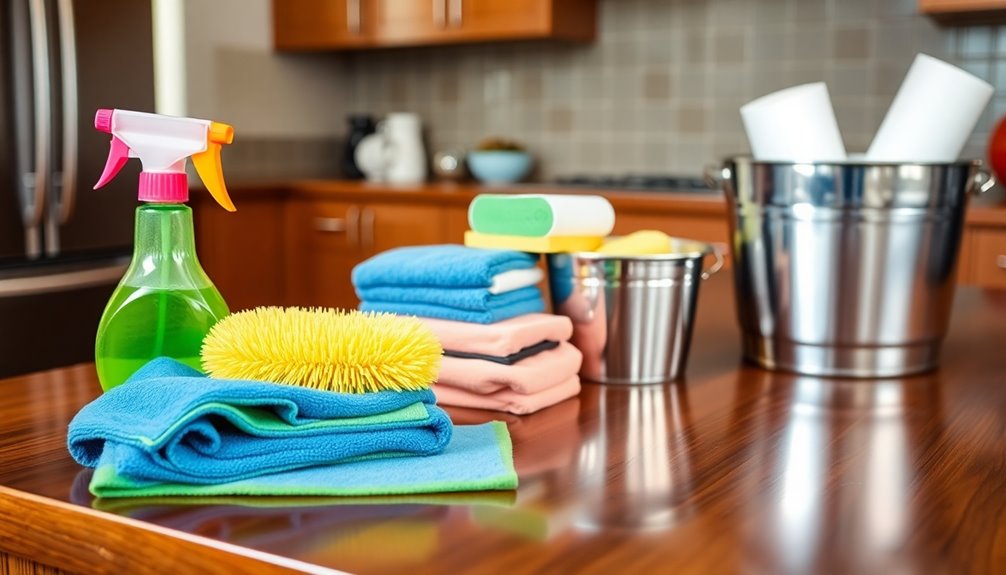
Before you plunge into deep cleaning your kitchen, it’s essential to gather your cleaning supplies and tools. Start with a cleaning checklist to guarantee you don’t miss anything.
Gather your cleaning supplies and create a checklist to ensure a thorough kitchen deep clean.
You’ll need vital tools like microfiber cloths, sponges, and a sturdy scrub brush. Don’t forget a bucket, a mop, and your favorite all-purpose cleaner. If you have specific areas that need special attention, grab additional products like oven cleaner or stainless steel polish.
Check for gloves to protect your hands, and consider a vacuum for crumbs and debris. Having everything ready will make the deep cleaning process smoother and more efficient. Investing in quality, especially eco-friendly options, guarantees a safer living environment and contributes to a sustainable and healthy household.
With your supplies in hand, you’ll be well-prepared to tackle that kitchen and make it shine!
Declutter Your Countertops and Pantry
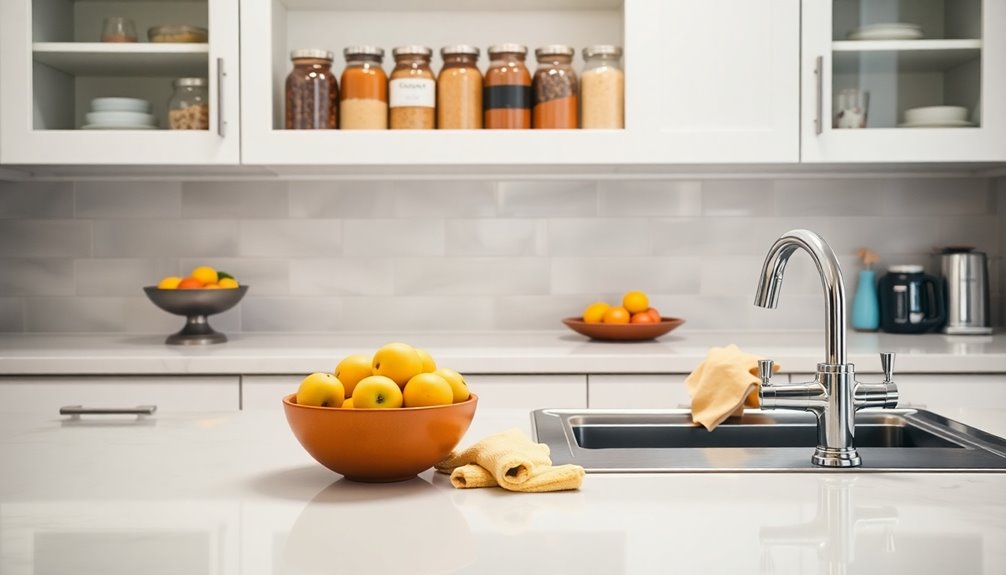
To create a fresh and inviting kitchen space, start by clearing your countertops completely.
Next, organize your pantry essentials and make sure everything has a designated spot.
Don’t forget to toss out any expired items that could be taking up valuable space. Additionally, consider implementing a color-coded system to easily identify and organize similar pantry items, enhancing your overall kitchen organization.
Clear Surfaces Completely
A clutter-free kitchen starts with clear surfaces, making it essential to declutter your countertops and pantry.
Begin by removing everything from your surfaces, including small appliances, utensils, and decor. This gives you a chance to clean the surface materials thoroughly using effective cleaning techniques.
Next, evaluate what you truly need and what can be stored away. Aim for a minimalist approach to create a more functional space.
- Wipe down countertops with a suitable cleaner for the surface material.
- Sort through pantry items, discarding expired goods.
- Keep only essential items within easy reach for everyday use.
Organize Pantry Essentials
With your surfaces cleared, it’s time to tackle the pantry. Start by grouping similar items together; this makes pantry organization a breeze.
Place canned goods, grains, and snacks in designated areas. Use clear containers for ingredients like flour and sugar—this not only looks great but also helps you see what you have at a glance.
Next, consider essential storage solutions like tiered shelves or lazy Susans for easy access to all your items.
Don’t forget to label everything; this saves time when you’re cooking. Finally, keep frequently used items at eye level, so you can grab them quickly.
With everything neatly organized, you’ll enjoy a more functional kitchen and make cooking much more enjoyable!
Discard Expired Items
Expired items cluttering your countertops and pantry can quickly derail your kitchen’s organization. To regain control, start with a thorough pantry inspection.
Check expiration dates on everything—canned goods, spices, and snacks. Toss out any expired food to create a cleaner, more efficient space.
Here are some common items to look out for:
- Old spices that’ve lost their flavor
- Canned goods with rust or bulging tops
- Snacks that have long passed their best-by date
Clean the Appliances: Refrigerator, Oven, and Microwave
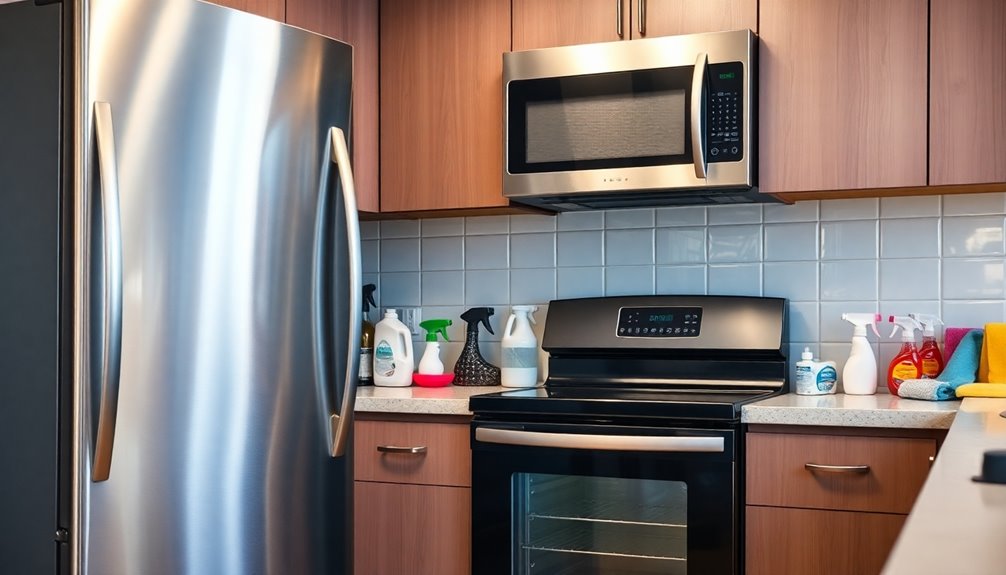
While you might think cleaning your kitchen ends with wiping down surfaces, tackling your appliances—like the refrigerator, oven, and microwave—is essential for a truly deep clean.
Start with your refrigerator: remove all items, discard expired ones, and wipe down shelves with a natural cleaner.
For your oven, don’t forget to check for spills; use a mixture of baking soda and water for tough stains. Regular cleaning prevents grime buildup and simplifies future cleaning efforts.
Finish with the microwave by heating a bowl of water and vinegar for five minutes, making it easy to wipe away grime.
Following these appliance maintenance tips guarantees your energy efficient appliances run smoothly and last longer, saving you money in the long run.
A clean kitchen means a healthier home!
Wipe Down Surfaces: Cabinets, Countertops, and Backsplash
After tackling your appliances, it’s time to focus on the surfaces that make up your kitchen.
Maintaining kitchen hygiene starts with wiping down your cabinets, countertops, and backsplash. Use a suitable cleaner for each surface material to avoid damage.
Ensure kitchen hygiene by regularly wiping down cabinets, countertops, and backsplashes with appropriate cleaners for each surface.
- For wood cabinets, opt for a gentle cleaner that won’t strip the finish.
- Use a multi-surface spray on laminate or quartz countertops for a thorough clean.
- For tile backsplashes, a mixture of vinegar and water works wonders on grime.
As you wipe down these areas, pay attention to corners and edges where dirt tends to accumulate. Additionally, be sure to rinse surfaces with a damp cloth after cleaning to eliminate any residual cleaning agents that could cause buildup.
Sanitize the Sink and Faucets
One of the most essential steps in deep cleaning your kitchen is sanitizing the sink and faucets. Start by emptying your sink of any dishes and debris.
Use a mixture of warm water and dish soap to scrub the sink thoroughly, focusing on any stains. For sink sanitization techniques, you can apply a solution of equal parts water and white vinegar, letting it sit for a few minutes before rinsing.
Next, tackle the faucets. Use a soft cloth and a gentle cleaner to wipe down the handles and spout. For stubborn spots, try a baking soda paste. Regular sanitization helps prevent the buildup of harmful bacteria that can thrive in damp conditions.
Finish by rinsing everything with warm water and drying with a clean towel. Your sink and faucets will shine and be germ-free!
Sweep and Mop the Floors Effectively
Once your sink and faucets are sparkling clean, it’s time to focus on the floors. Start by sweeping to gather up loose dirt and debris. Use a broom or a vacuum designed for hard surfaces to guarantee thorough dirt removal.
Once you’ve collected the larger mess, it’s time to mop.
Here’s what you’ll need for effective floor cleaning:
- A bucket with warm water
- A suitable floor cleaner (make sure it’s safe for your floor type)
- A microfiber mop for an efficient clean
Dip your mop into the solution, wring it out, and begin mopping from one corner of the kitchen to the exit. This method keeps dirt from spreading and guarantees your floors shine! Additionally, remember to sweep or vacuum daily to prevent dirt accumulation, especially in high-traffic areas.
Organize and Restock Your Kitchen Essentials
Now that your floors are spotless, it’s time to focus on organizing and restocking your kitchen essentials.
Start by evaluating what you have, categorizing items for easy access, and identifying what needs replenishing. Regular purging helps maintain a clean and fresh fridge to prevent odors, and this approach will help streamline your cooking process and keep your kitchen running smoothly.
Assess Your Current Inventory
A well-organized kitchen sets the stage for efficient cooking and meal prep.
Start by evaluating your kitchen inventory to identify what essential items you have and what you need to restock. This step guarantees you’re prepared for any recipe and minimizes last-minute grocery runs.
- Check your pantry for staples like rice, pasta, and canned goods.
- Look through your spice rack to see if you have the basics like salt, pepper, and herbs.
- Review your utensil drawer for tools like measuring cups, spatulas, and knives.
Categorize Kitchen Essentials
To successfully organize and restock your kitchen essentials, start by dividing items into clear categories. This will streamline your process and make it easier to find what you need.
Consider kitchen categories like cookware, utensils, pantry staples, and cleaning supplies. Gather all essential items within these categories and assess their condition.
For example, check if you have enough pots and pans, or if your spatulas are in good shape. Discard anything damaged or expired, then group similar items together.
Label containers or shelves to maintain organization. By categorizing your kitchen essentials, you’ll create a more efficient space that supports your cooking needs and helps you keep track of what you have on hand.
Restock Smartly and Efficiently
Once you’ve categorized your kitchen essentials, it’s time to restock smartly and efficiently.
Begin by making a shopping list based on what you need, focusing on items that fit your cooking style. This method promotes smart shopping, ensuring you only buy what’s necessary.
Consider organizing your items for efficient storage, making it easy to grab what you need when cooking. Use clear bins or labels to categorize similar items together.
- Dry goods: pasta, rice, and beans
- Canned items: tomatoes, beans, and soup
- Spices: basil, cumin, and paprika
Maintain Your Clean Kitchen: Tips for the Future
While deep cleaning your kitchen provides a fresh start, maintaining that cleanliness requires consistent effort. Establishing good kitchen habits is key. Wipe down surfaces daily, and wash dishes immediately after use to prevent buildup.
Create a cleaning schedule that includes weekly tasks like mopping floors and monthly ones like organizing your pantry. This keeps dirt and clutter at bay. Regularly clean high-touch areas to reduce the risk of germs spreading throughout your kitchen.
Don’t forget to declutter regularly; toss expired items and donate what you no longer need. Involve your family in these routines, encouraging teamwork to make upkeep easier.
Conclusion
By dedicating just two hours to deep clean your kitchen, you can create a healthier and more inviting space. A study found that a clean kitchen can reduce the spread of bacteria by up to 80%, considerably lowering your risk of foodborne illnesses. Now that you’ve tackled this task, maintain your kitchen’s cleanliness with regular upkeep. Remember, a tidy kitchen not only looks great but also inspires you to cook more meals at home, promoting a healthier lifestyle.