To get rid of fruit flies, you can choose between traps and sprays. Traps are eco-friendly, easy to make, and target infestations without chemicals. They capture multiple flies, helping to break their breeding cycle. On the other hand, sprays can provide immediate results but may pose safety risks for pets and leave residues. Weighing the pros and cons of each method can help you decide the best approach. If you’re curious about effective DIY traps, keep exploring!
Understanding the Fruit Fly Problem
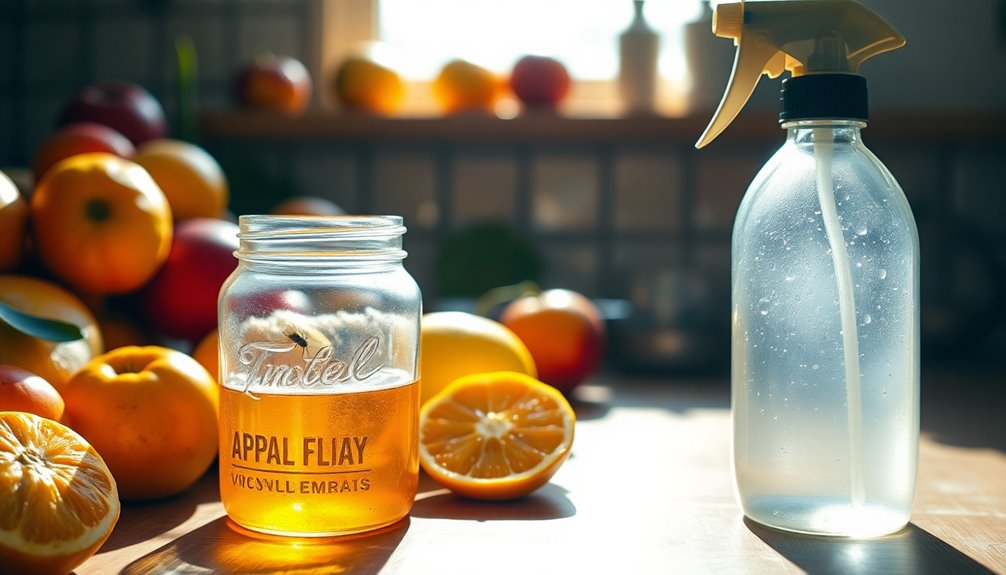
When you spot a few tiny flies buzzing around your kitchen, it’s easy to dismiss them as a minor annoyance.
However, understanding the fruit fly lifecycle is essential to tackling this problem effectively. These pests reproduce rapidly, with females laying hundreds of eggs on decaying fruits or vegetables. Within just a week, those eggs hatch into larvae, further multiplying your fruit fly problem.
Understanding the rapid reproduction of fruit flies is crucial, as females can lay hundreds of eggs in just a week.
Their common habitats include kitchens, especially around overripe produce or spilled drinks. If you don’t address the initial infestation, you could find yourself dealing with a much larger swarm in no time.
Keeping your kitchen clean and monitoring for ripe foods is key to breaking the lifecycle and preventing these pesky flies from taking over your space. Additionally, regular cleaning of trash cans can help reduce the organic waste that attracts fruit flies.
Why Traps Are a Popular Choice
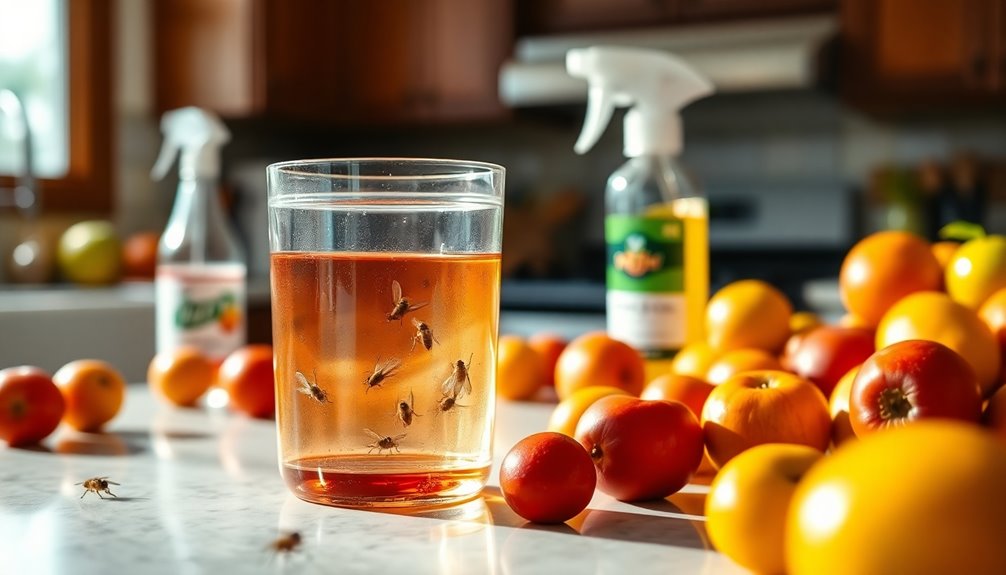
Traps are a popular choice because they’re simple to set up and can be highly effective. You can find a variety of store-bought options, but many people prefer homemade solutions that use common household items. These DIY traps not only save you money but also allow you to customize them to your needs. The trap effectiveness stems from their ability to attract and capture fruit flies, breaking their breeding cycle. Plus, they’re less intrusive than sprays, which can leave behind unwanted chemicals. By utilizing traps, you can efficiently manage fruit fly populations while creating a safer environment for your home and family. Additionally, using eco-friendly methods not only helps control pests but also contributes to a healthier home environment.
How to Create Effective DIY Fruit Fly Traps
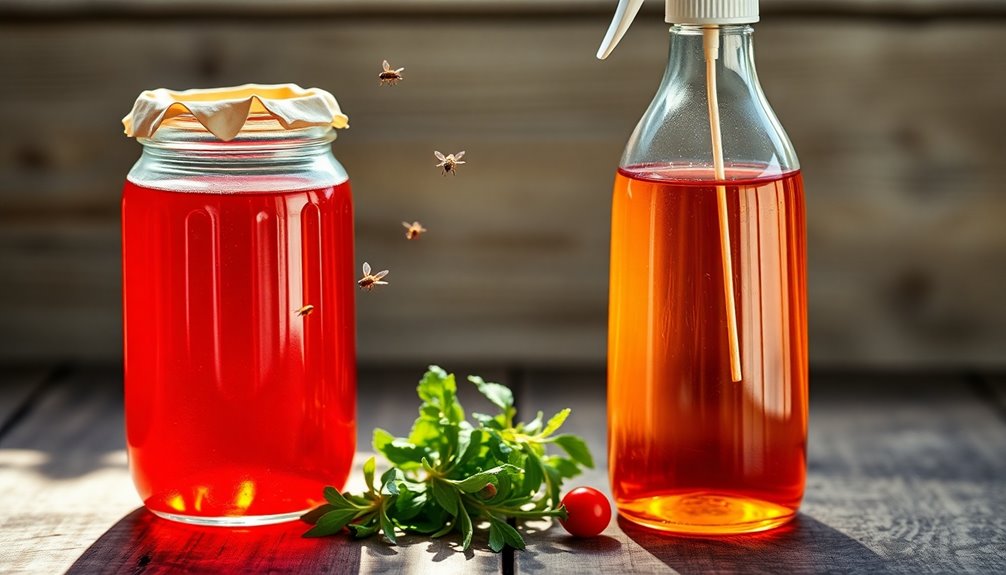
Creating effective DIY fruit fly traps can be a game changer in your battle against these pesky pests.
Start by gathering your DIY trap materials, like a jar, plastic wrap, and a rubber band. For effective bait choices, consider using apple cider vinegar, red wine, or overripe fruit.
Gather essential materials like a jar, plastic wrap, and a rubber band, and choose effective bait such as apple cider vinegar or overripe fruit.
Pour a small amount of your chosen bait into the jar, then cover it tightly with plastic wrap, securing it with a rubber band. Poke small holes in the wrap; this lets fruit flies enter while preventing their escape.
Place your trap near areas where you’ve spotted flies. Regularly check and replace the bait to keep your traps effective. Additionally, you might want to use vinegar in your cleaning routine, as it can help eliminate any lingering odors that attract fruit flies.
With this simple setup, you’ll be well on your way to eradicating those annoying fruit flies!
The Benefits of Using Fruit Fly Traps
Fruit fly traps offer a straightforward and effective solution for managing these annoying pests. One of the biggest benefits is their trap effectiveness—these traps lure fruit flies in and keep them from reproducing. You’ll notice a significant reduction in their numbers with consistent use.
Placement is vital for maximizing results; set traps near fruit bowls, garbage cans, or any areas where you’ve spotted fruit flies. This strategic trap placement guarantees that you target the problem areas directly.
Plus, using traps is a non-toxic approach, making it safe for homes with children and pets. Overall, fruit fly traps help you regain control of your space, allowing you to enjoy a fruit fly-free environment without resorting to harsh chemicals. Additionally, maintaining a consistent folding technique for your linens can contribute to a more organized home, reducing clutter that may attract pests.
Exploring Common Fruit Fly Sprays
When you’re tackling a fruit fly problem, using sprays can be an effective solution.
You’ll want to understand the active ingredients in these products and how to apply them properly for the best results.
Let’s compare the different application methods to find what works best for you. Regular use of DIY non-toxic cleaners promotes a hygienic environment while prioritizing family safety.
Active Ingredients Explained
While dealing with an influx of fruit flies can be frustrating, understanding the active ingredients in common sprays can help you make informed decisions about pest control.
Many sprays contain pyrethroids, which are synthetic chemicals that disrupt the nervous system of insects, leading to their quick demise.
Other active ingredients may include insecticidal soaps that work by suffocating the flies through chemical reactions with their outer membranes.
You might also encounter natural options like essential oils, which can repel fruit flies without harsh chemicals.
Knowing these active ingredients allows you to choose a spray that aligns with your preferences for safety and effectiveness, ensuring you tackle the problem without compromising your environment.
Application Methods Compared
To effectively tackle a fruit fly problem, you’ll want to explore various application methods of common sprays. Different application techniques can greatly impact how well the sprays work. For instance, direct spraying onto the flies yields immediate results, while a fine mist can cover a broader area, increasing the likelihood of contact.
When conducting an effectiveness comparison, consider the timing and frequency of application. Spraying during peak activity hours often leads to better results. Additionally, some sprays require reapplication after rain or cleaning, while others offer longer-lasting effects.
Ultimately, choosing the right application method not only helps you eliminate fruit flies faster but also guarantees you’re using your chosen product efficiently.
Pros and Cons of Using Sprays for Fruit Flies
When it comes to using sprays for fruit flies, you’ll find both benefits and drawbacks. While they can offer immediate results, you also need to take into account safety concerns for your pets and the potential residue left behind. Additionally, it’s important to consider the safety commitment of the ingredients used in these sprays to ensure they do not pose health risks. Weighing these factors can help you decide if sprays are the right choice for your situation.
Immediate Effectiveness of Sprays
If you’re facing a fruit fly invasion, sprays can provide an immediate solution to help you regain control of your kitchen. You’ll notice spray effectiveness right away, as these products often kill flies on contact. This can give you immediate results, reducing the population quickly.
However, keep in mind that while sprays can zap those pesky flies, they mightn’t eliminate the source of the problem, like rotting fruit or hidden breeding grounds. Additionally, frequent application may be necessary for ongoing control, which can be inconvenient.
Balancing the immediate benefits with potential long-term issues is key. Ultimately, sprays can be a powerful tool in your arsenal, but they work best when combined with other strategies for long-lasting success.
Safety Concerns for Pets
While sprays can quickly reduce fruit fly populations, they also raise safety concerns for pets in your home. Many commercial insect sprays contain chemicals that can be harmful to your furry friends.
To guarantee pet safety, consider these points:
- Toxic Ingredients: Some sprays contain ingredients that can be toxic if ingested or inhaled by pets.
- Reactivity: Pets may have allergic reactions to certain chemicals, leading to discomfort or health issues.
- Exposure: Even after application, lingering spray can pose risks if pets come into contact with treated surfaces.
If you’re worried about your pet’s safety, explore alternative methods like traps or natural repellents. Keeping your home pest-free doesn’t have to compromise your pet’s well-being.
Residue and Cleanup Issues
Sprays can effectively eliminate fruit flies, but they often leave behind residue that requires careful cleanup. After using a spray, you’ll need to focus on residue management to guarantee your surfaces are safe and clean.
Depending on the spray, you might find sticky or oily spots that attract more pests if not addressed. To tackle this, implement effective cleanup strategies like wiping surfaces with a damp cloth and using mild soap to remove any lingering chemicals.
It’s vital to read the product label for specific instructions on cleanup. While sprays can quickly reduce your fruit fly problem, the follow-up cleanup is essential for maintaining a pest-free environment and preventing future infestations.
When to Choose Traps Over Sprays?
Choosing traps over sprays can be a smart decision when you want a targeted approach to fruit fly control. Traps offer higher trap effectiveness by catching the flies directly, while sprays might disperse throughout the area, potentially harming beneficial insects.
Here are three scenarios when traps are your best bet:
- Localized Infestations: If you notice fruit flies concentrated in one area, traps can effectively target that spot without affecting the entire environment.
- Food Safety Concerns: Traps don’t introduce chemicals into your food space, making them safer around produce.
- Long-Term Solutions: Traps can continuously catch flies without the need for frequent reapplication, unlike sprays that may have limited spray efficiency. Additionally, maintaining a clean home can help prevent future infestations by minimizing attractants.
Tips for Preventing Future Fruit Fly Infestations
To prevent future fruit fly infestations, it’s essential to adopt proactive measures in your kitchen and living areas.
Start by ensuring your kitchen cleanliness is a top priority. Regularly clean countertops, tables, and floors to eliminate food residues. Dispose of overripe fruits and vegetables promptly, as these attract fruit flies. Keep trash bins tightly sealed and take out the garbage frequently.
Consider storing fruits in the refrigerator rather than on countertops. Additionally, check for any leaks or moisture buildup, since fruit flies thrive in damp environments. Maintaining a clean environment can foster a soothing atmosphere in your kitchen, which helps deter pests.
Finally, use screens on windows and doors to prevent flies from entering your home. By implementing these preventative measures, you’ll greatly reduce the chances of a fruit fly invasion in the future.
Final Thoughts: Which Method Works Best for You?
How do you know which method works best for you in tackling fruit flies? It really depends on your situation and preferences. Here are a few factors to weigh:
- Trap effectiveness: If you’re dealing with a significant infestation, traps can be more effective at capturing multiple flies at once.
- Spray safety: If you have pets or children, you might prefer sprays that are safer and less toxic. Always check labels for safety information.
- Convenience: Traps can be set and forgotten, while sprays require regular application. Choose what fits your lifestyle best.
Ultimately, it’s about balancing effectiveness and safety. Additionally, using natural alternatives to cleaning agents can help reduce the presence of fruit flies by eliminating their food sources.
Balancing effectiveness and safety is key in your approach to managing fruit flies.
Experiment with both methods to see which one gives you the best results in your home.
Conclusion
In the battle against fruit flies, choosing between traps and sprays depends on your needs. For instance, if you’re hosting a summer barbecue and notice a swarm, setting up a few DIY traps can quickly reduce their numbers without the harsh chemicals. Alternatively, if you need a fast solution for a sudden invasion, a spray might do the trick. Ultimately, combining both methods and practicing prevention will keep your home fruit fly-free and enjoyable all season long.