To make a natural ant repellent spray for your kitchen, mix one cup of water with two tablespoons of vinegar and add 10-15 drops of peppermint or tea tree essential oil. Shake it well in a clean spray bottle. Spray directly on ant trails and entry points. Reapply every few days or after cleaning, especially in high-risk areas like countertops and pantries. Stick around to discover more tips on keeping your home pest-free!
Why Choose a Natural Ant Repellent Spray?
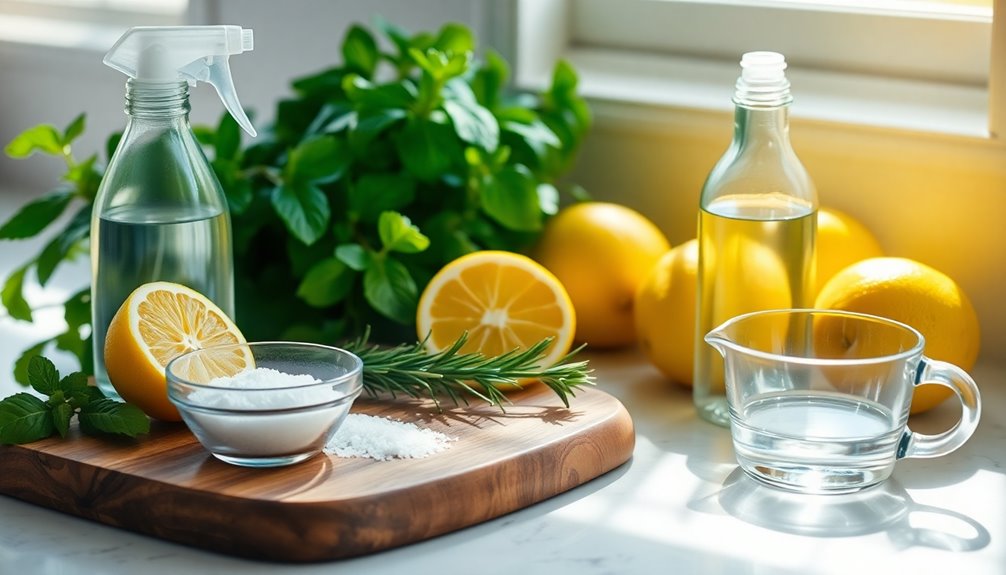
When you’re dealing with an ant problem, choosing a natural ant repellent spray can be a smart and safe solution. Unlike chemical alternatives, these sprays use natural ingredients that won’t harm your family or pets.
You can feel good about applying them around your kitchen, ensuring a safe cooking environment. Many natural repellents contain essential oils like peppermint or vinegar, which effectively deter ants without compromising kitchen safety.
Applying natural ant repellents around your kitchen ensures safety while effectively deterring ants with ingredients like peppermint and vinegar.
Plus, making your own spray allows you to control the ingredients, avoiding harmful chemicals. By opting for a natural approach, you’re not only addressing the ant issue but also promoting a healthier living space. Incorporating natural biodegradable ingredients in your spray further enhances its effectiveness while being environmentally friendly.
Embracing natural ant repellents is a proactive step towards maintaining a safe and inviting kitchen.
Common Ant Species Found in Kitchens
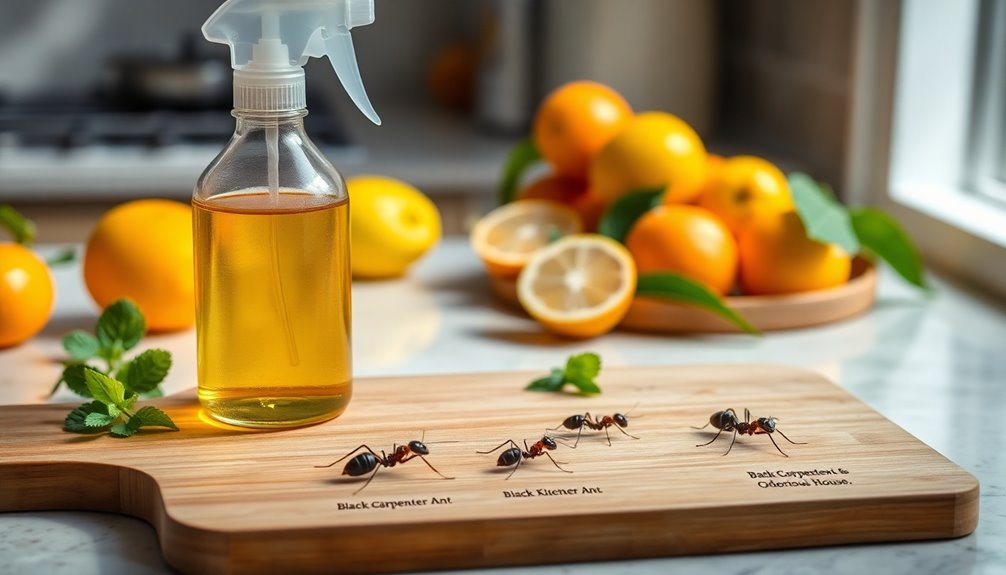
Kitchens often attract various ant species, each with its unique habits and preferences. The most common ant types you’ll encounter are the sugar ant, carpenter ant, and odorous house ant.
Sugar ants are drawn to sweet foods, making your pantry a prime target. Carpenter ants, on the other hand, prefer to nest in wood, and their presence can indicate moisture issues.
Odorous house ants emit a distinct smell when crushed and often swarm around food sources. Understanding kitchen ant behavior helps you identify the problem quickly. Implementing eco-friendly methods can also help in managing pest problems without harmful chemicals.
Ingredients You Need for Your Ant Repellent

To tackle the ant problem in your kitchen, you’ll want to create an effective natural repellent spray. The right ingredients make all the difference. Here’s what you’ll need:
- Vinegar solutions: Acts as a strong base to disrupt ant trails.
- Water: Dilutes the mixture for safe application.
- Herbal essential oils: Choose oils like peppermint, tea tree, or lavender for their repellent properties.
- Spray bottle: A clean, empty bottle to hold your solution.
- Measuring cups: For accurate proportions of each ingredient.
Using a clean spray bottle helps prevent dirt buildup that can interfere with your solution’s effectiveness.
With these items, you can whip up a powerful, natural ant repellent that’s safe for your kitchen.
Get ready to reclaim your space from those pesky ants!
How to Measure Your Ingredients Correctly
Measuring your ingredients correctly is essential for creating an effective ant repellent spray. Start by gathering your measuring tools, such as measuring cups and spoons, to guarantee accuracy.
Measuring your ingredients accurately is crucial for a successful ant repellent spray. Gather your tools for precision.
When it comes to ingredient ratios, precision is key; using too much or too little of any component can affect the spray’s potency. For instance, if your recipe calls for a 1:1 ratio of vinegar to water, stick to that to maintain effectiveness.
Take your time and double-check your measurements, especially when mixing multiple ingredients. Remember, consistency in measuring will yield better results and help you tackle those pesky ants more efficiently. Incorporating natural elements, like eco-friendly ingredients, helps ensure your repellent is safe for both your kitchen and the environment.
With careful measurement, you’ll create a reliable natural repellent for your kitchen.
Step-by-Step Guide to Making the Spray
Now that you’ve measured your ingredients, it’s time to make your ant repellent spray. You’ll want to choose your natural ingredients wisely and follow clear mixing instructions. Plus, knowing how to store your spray properly will help it last longer and work effectively. Additionally, opting for non-toxic detergents can contribute to a healthier home environment while you tackle pest control naturally.
Choose Natural Ingredients Wisely
While creating a natural ant repellent spray, selecting the right ingredients is essential for effectiveness and safety. You’ll want to focus on natural components that deter ants without harming your kitchen environment. Here are some ingredients to evaluate:
- Essential oils (like peppermint or tea tree) for their strong scents
- Vinegar solutions to disrupt ant trails
- Water as a base for your spray
- Dish soap to help the mixture adhere
- Lemon juice for its acidity and fresh scent
Mixing Instructions Explained Clearly
Once you’ve chosen your natural ingredients, it’s time to mix them together to create your ant repellent spray.
Start by gathering a clean spray bottle. Pour 1 cup of water into the bottle, then add 2 tablespoons of your chosen homemade ingredients, like vinegar or essential oils.
If you’re using essential oils, add about 10-15 drops for a potent mixture. Next, secure the lid tightly and shake well to combine all the ingredients thoroughly.
This simple process of mixing guarantees you have an effective, eco-friendly solution ready to use. Remember to label your spray bottle clearly, so you know it’s for ant repellent.
Now, you’re all set to tackle those pesky ants in your kitchen!
Storage Tips for Longevity
To guarantee your natural ant repellent spray stays effective for as long as possible, proper storage is essential.
The right container types and conditions can greatly impact its shelf life. Here are some tips to help you store your spray effectively:
- Use dark glass bottles to protect against light degradation.
- Store the spray in a cool, dry place away from heat sources.
- Make sure the container is tightly sealed to prevent contamination.
- Label the bottle with the creation date to track its freshness.
- Shake the spray gently before each use to mix any settled ingredients.
Following these guidelines will guarantee your ant repellent remains potent and ready to tackle any unwelcome visitors in your kitchen.
Best Practices for Storing Your Natural Spray
To keep your natural ant repellent spray effective, choose the right container. Opt for a dark glass bottle to protect it from light, and make sure it has a tight seal to prevent leaks. Store it in a cool, dry place for maximum longevity. Additionally, consider using non-toxic ingredients to promote eco-friendliness and enhance the safety of your homemade spray.
Proper Container Selection
Choosing the right container for your natural ant repellent spray can make all the difference in its effectiveness and longevity.
You want a container that doesn’t react with your ingredients and has an efficient spray nozzle for easy application.
Consider these container materials and features:
- Glass: Non-reactive and eco-friendly, perfect for long-term storage.
- High-density polyethylene (HDPE): Durable plastic that resists chemicals.
- Amber or cobalt bottles: Protects contents from UV light damage.
- Trigger spray nozzle: Offers better control and coverage.
- Labeling: Clearly mark your container for easy identification.
Ideal Storage Conditions
While you might think that any cool, dark place will suffice, storing your natural ant repellent spray under ideal conditions is essential for maintaining its potency. Aim for a suitable temperature between 60°F and 75°F (15°C to 24°C) to guarantee the ingredients remain effective.
Avoid areas that experience temperature fluctuations, like near ovens or windows.
Additionally, keep an eye on humidity levels; a dry environment is best. Excess moisture can lead to mold or degradation of your spray, reducing its effectiveness.
Store your spray in a dark cabinet or cupboard, away from direct sunlight. By following these best practices, you’ll guarantee that your natural ant repellent remains strong and ready to tackle any pest problem.
How to Apply the Ant Repellent Effectively
Applying your natural ant repellent effectively can make a significant difference in keeping these pests at bay.
To achieve the best results, consider the following application techniques and spray frequency:
- Identify problem areas before spraying.
- Spray directly on ant trails and entry points.
- Reapply every few days or after heavy cleaning to maintain effectiveness.
- Use a fine mist for even coverage without saturating surfaces.
- Store the spray properly to preserve its potency for future use. Additionally, using eco-friendly solutions can enhance your pest control efforts while being gentle on the environment.
Key Areas to Target in Your Kitchen
When it comes to keeping ants out of your kitchen, you’ll want to focus on common entry points and high-risk food areas.
Check around windows, doors, and cracks in the walls where ants might sneak in.
Don’t forget to secure food sources, as these can attract unwanted visitors. Additionally, disposing of food scraps properly can help minimize the risk of attracting ants and other pests.
Common Ant Entry Points
Ants can easily infiltrate your kitchen, so it’s crucial to identify common entry points to keep them at bay.
Understanding ant behavior helps you pinpoint where they might access your space, especially when they’re on the hunt for food sources.
Here are key areas to check:
- Cracks and gaps in walls
- Openings around windows and doors
- Spaces beneath kitchen appliances
- Plumbing entry points and pipes
- Vents and air ducts
High-Risk Food Areas
Once you’ve identified common entry points for ants, it’s time to focus on high-risk food areas in your kitchen.
Start with your pantry, where spilled grains or open packages can attract these pests. Make certain your food storage is airtight; use glass or plastic containers with tight seals.
Next, check countertops and tables. Crumbs or sticky spills can easily lure ants. Regular kitchen cleanliness is essential—wipe surfaces daily and clean up any food debris immediately.
Don’t forget about the garbage bins; they should have lids and be emptied frequently.
How Often Should You Reapply the Spray?
To keep your home ant-free, you should reapply the natural ant repellent spray regularly. The reapplication frequency depends on various factors like humidity, temperature, and the effectiveness duration of your spray.
Generally, aim for reapplication every few days or after cleaning surfaces. Here are some guidelines to take into account:
- Check the effectiveness duration of your spray; it typically lasts 3-7 days.
- Reapply after heavy rain or humidity, as moisture can dilute the spray.
- If you notice ants returning, think about increasing the frequency.
- Clean areas where you’ve sprayed to maintain effectiveness.
- Monitor high-risk food areas for signs of ants and reapply as needed. Additionally, consider using eco-friendly products that can enhance your overall cleaning routine while being safe for the environment.
Troubleshooting: What If Ants Persist?
If ants keep showing up despite your efforts, it’s time to take a closer look at their trails. You may need to reinforce your spray application and check for any entry points you haven’t sealed. Additionally, consider ensuring that you allow the spray to remain wet for effectiveness as this can enhance its repellent properties.
Identify Ant Trails
Although you may have tried various natural repellents, ants can persist if you haven’t identified their trails.
Understanding ant behavior is essential for effective trail identification. Look for signs of their paths to target your efforts.
Here’s how to identify those pesky trails:
- Observe the ants’ movement patterns.
- Check near food sources and entry points.
- Look for pheromone trails, usually a line of ants.
- Inspect areas where you’ve seen ant activity before.
- Follow the trails back to their nests.
Reinforce Spray Application
Sometimes, despite your best efforts, ants may still invade your space after using a natural repellent spray. To boost spray effectiveness, consider adjusting your application techniques.
First, shake the bottle well before each use to guarantee the ingredients mix properly. Apply the spray directly onto ant trails and around entry points, ensuring thorough coverage. Reapply after rain or heavy cleaning, as these actions can wash away the repellent.
If you notice persistent ants, try using a higher concentration of your natural ingredients or combine different repellents for enhanced results. Experimenting with various application techniques can help you find the most effective method for your specific ant problem, keeping your kitchen ant-free.
Seal Entry Points
To effectively combat persistent ant invasions, you need to seal off entry points around your home. These small openings can be the gateways for ants, so addressing them is essential.
Here are some steps to create natural barriers and seal gaps effectively:
- Inspect windows and doors for cracks.
- Use caulk or weatherstripping to seal gaps.
- Fill holes in walls or foundation with expandable foam.
- Verify vents have screens to keep ants out.
- Keep food containers tightly sealed to prevent attracting ants.
Additional Natural Remedies for Ant Control
When you’re looking for effective ways to deter ants, several additional natural remedies can complement your homemade spray.
Consider using herbal solutions like peppermint or tea tree oil, which ants dislike. You can easily mix these oils with water and spray them around entry points.
Another option is to create homemade traps using a mixture of sugar and borax. The sugar attracts ants, while the borax disrupts their digestive system. Place these traps in areas where you’ve noticed ant activity.
Additionally, diatomaceous earth can be sprinkled in problem areas; it’s safe for pets but deadly to ants.
Benefits of Going Chemical-Free in Pest Control
Using natural remedies not only helps in controlling ant populations but also offers significant benefits for your home and health.
By choosing chemical-free pest control, you’re embracing eco-friendly alternatives that safeguard your environment.
Here are some chemical-free benefits you’ll enjoy:
- Healthier indoor air quality: No harsh chemicals lingering in your home.
- Safety for pets and children: Natural ingredients are less harmful.
- Environmental protection: Reduced risk of harming local wildlife.
- Cost-effective solutions: Many natural remedies are budget-friendly.
- Sustainable practices: Promotes a greener lifestyle for you and future generations.
How to Prevent Future Ant Infestations
Even if you’ve successfully dealt with an ant problem, it’s vital to take proactive steps to prevent future infestations.
Start by implementing preventive measures like sealing cracks and crevices around windows and doors. Regularly check for any gaps that might allow ants to enter your home.
Maintaining strict kitchen hygiene is imperative; clean up spills and crumbs immediately, and store food in airtight containers. Don’t forget to take out the trash frequently and keep your countertops clean.
Additionally, consider using natural deterrents like vinegar or essential oils to create a barrier.
Eco-Friendly Cleaning Tips for a Pest-Free Home
A clean home is your first line of defense against pests. By adopting eco-friendly cleaning habits, you can maintain a pest-free environment while supporting sustainable living.
A tidy home safeguards against pests and embraces eco-friendly practices for a sustainable lifestyle.
Here are some tips to keep in mind:
- Use vinegar and water as a natural all-purpose cleaner.
- Employ baking soda for deodorizing and scrubbing surfaces.
- Opt for essential oils like tea tree or peppermint for their pest-repelling properties.
- Choose eco-friendly products that are safe for your family and pets.
- Regularly declutter and organize spaces to minimize pest hiding spots.
FAQs About Natural Ant Repellent Sprays?
What should you know about natural ant repellent sprays? First, their effectiveness can vary based on the ingredients used. Essential oils like peppermint or tea tree oil are popular choices since they disrupt ants’ scent trails, making it harder for them to navigate.
You’ll also appreciate the natural ingredient benefits—they’re safer for your family and pets compared to chemical options.
Another common question is how often to apply the spray. It’s best to reapply after cleaning or if you notice ants returning.
Finally, remember that while natural sprays can deter ants, they mightn’t eliminate an infestation. If you see persistent problems, consider combining your spray with other pest control methods for better results.
Conclusion
By crafting your own natural ant repellent spray, you’re not just warding off unwelcome guests; you’re echoing the wisdom of ancient herbalists who relied on nature’s bounty for protection. With a few simple ingredients, you can reclaim your kitchen without the harsh chemicals. Remember, prevention is key—maintain cleanliness and be vigilant. Embrace this eco-friendly approach, and you’ll find that a harmonious home is within reach, much like the balance sought by those who revered the earth.