To make a natural wood polish for shiny, healthy furniture, simply mix 1/2 cup of olive oil with 1/4 cup of fresh lemon juice in a clean jar and shake well. Apply it using a soft, lint-free cloth in circular motions and buff it with a dry cloth for a beautiful shine. Test it on a small area first for compatibility. Want to learn more about enhancing your eco-friendly cleaning routine?
Why Choose Natural Wood Polish?
When you want to protect and enhance your wooden furniture, choosing natural wood polish offers numerous benefits that synthetic options simply can’t match.
Natural wood furniture polish is made from non-toxic ingredients, reducing your exposure to harmful chemicals found in commercial cleaning products. By opting for DIY Natural Wood solutions, you improve indoor air quality without synthetic fragrances or additives.
Plus, using eco-friendly, sustainable ingredients like olive oil and lemon juice not only minimizes packaging waste but also makes it cost-effective for regular use. Regular application helps moisturize wood surfaces, preventing drying and maintaining a healthy shine. Additionally, using natural solutions promotes healthier indoor air quality, contributing to a safer living environment.
Ultimately, natural wood polish contributes to the longevity and beauty of your furniture while aligning with environmentally conscious practices.
Key Ingredients for Natural Wood Polish
Natural wood polish relies on a few key ingredients that work together to nourish and protect your wooden surfaces. Here’s what you’ll need for a homemade wood polish recipe:
Natural wood polish combines essential ingredients to nourish and protect your wooden surfaces with a simple homemade recipe.
- Olive oil: Moisturizes and restores wood’s natural luster.
- Lemon juice: Acts as a natural cleaner, lifting grime and brightening surfaces.
- Essential oils: Add pleasant scents and boost antibacterial properties; lemon or cedarwood are great choices.
- Beeswax: Optional, but it creates a protective barrier against moisture and dust, enhancing shine and durability.
- Natural ingredients: These components align with eco-friendly practices, avoiding synthetic chemicals. Additionally, using natural cleaning solutions can lead to a healthier indoor environment while maintaining your furniture.
How to Make Your Own Natural Wood Polish
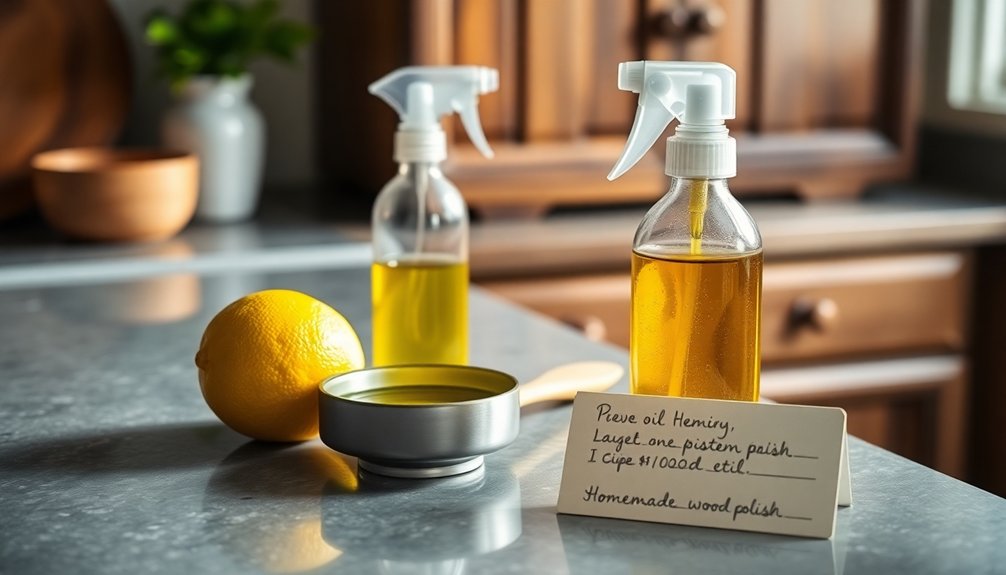
Creating your own wood polish is a simple and rewarding process that enhances the beauty of your furniture while being kind to the environment.
To make a natural furniture polish, mix 1/2 cup of olive oil with 1/4 cup of fresh lemon juice in a clean jar, then shake well to combine.
For added protection, consider making a beeswax polish by melting 1/4 cup of beeswax pellets, mixing in 1/2 cup of olive oil, and 1 tablespoon of lemon juice.
Use a soft, lint-free cloth to apply the homemade wood polish, rubbing it into the wood in circular motions for an even finish.
Always test the polish on a small, hidden area before full application for compatibility. Additionally, using natural ingredients like vinegar and baking soda can further enhance your cleaning routine while being eco-friendly.
Simple Olive Oil and Lemon Polish
To make a Simple Olive Oil and Lemon Polish, you’ll need just two main ingredients: olive oil and fresh lemon juice. This combination not only moisturizes your wood but also cleans and brightens it effectively. Non-toxic cleaners are a great alternative to harsh chemicals, ensuring the safety of your family while maintaining the beauty of your furniture. Let’s explore how to apply this polish for the best results and guarantee your furniture shines beautifully.
Ingredients Overview
A simple yet effective solution for maintaining your wood furniture is the olive oil and lemon polish. This DIY cleaner combines just two natural ingredients to create a powerful furniture polish recipe.
Here’s what you’ll need:
- 1/2 cup of olive oil, to moisturize and restore luster
- 1/4 cup of fresh lemon juice, for natural cleaning and brightening
- A clean jar, to mix and store your polish
- A soft cloth, for even application
- A clean, dry cloth, for buffing to a shine
To make the polish, shake the ingredients in the jar.
Remember to test a small area of your wooden furniture first to verify compatibility and avoid damage.
Enjoy your shiny, healthy surfaces!
Application Techniques
Apply your olive oil and lemon polish with care to achieve a beautiful shine on your wooden furniture.
To start, mix 1/2 cup of olive oil with 1/4 cup of fresh lemon juice in a clean jar. Shake well to combine your essential DIY homemade furniture polish.
Use a soft, lint-free cloth to apply a small amount of the polish. Rub it into the wood using circular motions for even coverage.
After applying, buff the surface with a clean, dry cloth to enhance shine and remove any excess polish, preventing buildup.
Remember to test the mixture on a hidden area first. Regularly polishing your furniture every few months helps maintain its beauty and prolongs its life without synthetic chemicals.
Optional Beeswax Polish for Extra Protection
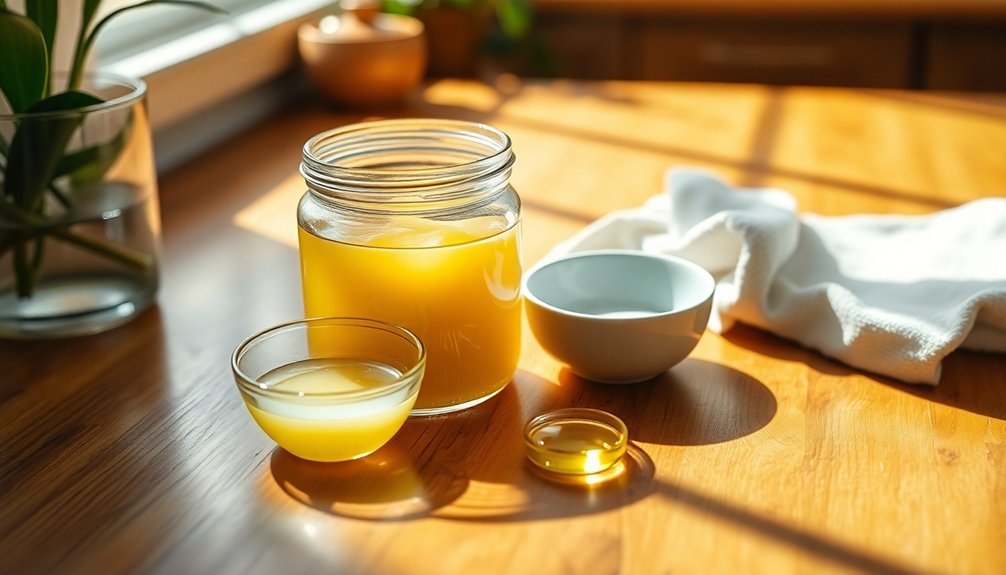
While protecting your wood furniture, consider using an optional beeswax polish that not only enhances its beauty but also provides a durable barrier against moisture and dust.
Here’s how to create it:
- Melt 1/4 cup of beeswax pellets in a double boiler.
- Mix in 1/2 cup of olive oil for nourishment and 1 tablespoon of lemon juice for shine.
- Customize the scent with essential oils to suit your preferences.
- Once combined, pour the mixture into a jar and let it cool until solid yet spreadable.
When applying, use a soft cloth to rub it into the wood, ensuring a protective barrier that keeps your furniture looking its best. Additionally, using eco-friendly cleaners can help maintain the overall condition of your wood surfaces.
Remember to test for compatibility with your wood finish first!
Tips for Using Natural Wood Polish
To achieve the best results when using natural wood polish, it’s essential to start with a compatibility test on a small, inconspicuous area of your furniture. This guarantees the cleaner won’t damage the finish.
Use soft, lint-free cloths, like microfiber, to apply the polish; they help prevent scratching the wood surface. Remember to apply the polish sparingly—just a little goes a long way to avoid buildup and maintain a clean, natural finish.
For ideal results, polish your furniture every few months or as needed, depending on its condition and exposure to dust and moisture. Additionally, regular maintenance helps to prevent scratches and maintain the overall appearance of your furniture.
Also, avoid using natural wood polish on unfinished or waxed surfaces without prior testing, as it may adversely affect the finish.
Benefits of DIY Natural Wood Polish
Using DIY natural wood polish not only saves you money but also creates a healthier indoor environment. Additionally, opting for eco-friendly cleaning products ensures that your wood polish is free from harmful chemicals, promoting both your health and the environment.
Healthier Indoor Environment
Creating a healthier indoor environment becomes easier when you switch to DIY natural wood polish. By using homemade furniture polish made from non-toxic ingredients, you promote healthier indoor air quality and create a safer space for your family and pets.
Here are some benefits you’ll enjoy:
- Eliminate harmful synthetic chemicals and fragrances
- Reduce the overall chemical load in your home
- Nourish the wood while enhancing the appearance of furniture
- Encourage eco-friendly practices by minimizing packaging waste
- Support better respiratory health and well-being
With a simple blend of olive oil and lemon juice, you not only maintain your furniture but also contribute to a sustainable and inviting home environment.
Make the switch today for a cleaner, greener lifestyle!
Cost-Effective Cleaning Solution
Making your own natural wood polish not only helps maintain a healthier indoor environment but also serves as a cost-effective cleaning solution.
DIY natural wood polish can be crafted using common pantry ingredients like olive oil and vinegar, making it a budget-friendly alternative to expensive commercial products. You’ll save money while achieving high-quality results, as many store-bought wood cleaners can run upwards of $10 for a small bottle.
Regular use of this homemade wood cleaner enhances the appearance of your furniture while avoiding harmful synthetic chemicals. Plus, you get to customize the scent and ingredients, ensuring that your polish aligns perfectly with your preferences—all while keeping your cleaning costs low and your home healthy.
Explore More Zero Waste Home Care Tips
Adopting zero waste home care practices can transform your living space into a more sustainable environment.
By using natural cleaners and homemade solutions, you can reduce waste while creating a healthier home. Here are some tips to get you started:
- Whip up a wood cleaner recipe using vinegar or ACV and coconut oil.
- Ditch synthetic fragrances in favor of essential oils for a fresh scent.
- Use microfiber cloths for dusting and polishing, extending your furniture’s life.
- Experiment with baking soda for deodorizing and scrubbing.
- Join local or online zero waste communities for support and inspiration.
- Incorporate eco-friendly methods to maintain a cleaner environment and promote sustainability.
These best natural practices not only save money but also promote a cleaner, greener lifestyle.
Embrace the change today!
Conclusion
By using natural wood polish, you’re not just cleaning your furniture; you’re releasing a magical elixir that transforms dull surfaces into radiant masterpieces! Imagine your wood gleaming like it’s been kissed by sunlight, enchanting everyone who enters your home. Plus, you’re crafting a potion so pure, it makes Mother Nature herself proud! So, grab those ingredients and get polishing—your furniture deserves to shine like the stars, and you’re the wizard behind the magic!