To pet-proof your cleaning routine, avoid products with bleach, ammonia, and phenols, as they can irritate your pet’s skin and respiratory system. Look for eco-friendly alternatives, like vinegar and water or Castile soap, which are safe and effective. Always check labels for pet-safe symbols and non-toxic claims. Monitor your pet’s health after cleaning, watching for signs of distress. Want to know more about safe cleaning practices and products?
Common Household Cleaners to Avoid Around Pets
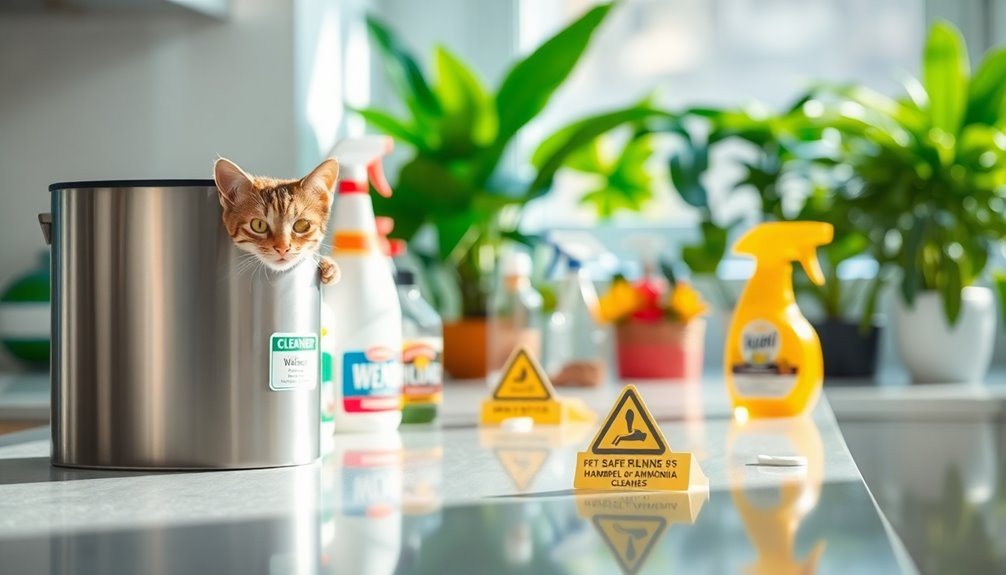
When you’re cleaning your home, it’s important to take into account the safety of your pets, since many common household cleaners can be harmful to them.
Avoid using products containing bleach, ammonia, or phenols, as these can irritate your pet’s skin and respiratory system. Instead, opt for eco-friendly options that provide a safer environment.
Look for pet-safe surfaces, like vinegar or baking soda, which can effectively clean without the risks associated with harsh chemicals.
Always check labels for non-toxic certifications and choose brands that prioritize pet safety in their formulations. Additionally, consider using products from brands like Thrive Market that focus on sustainable ingredients and non-toxic cleaning solutions.
Understanding Toxic Ingredients in Cleaning Products
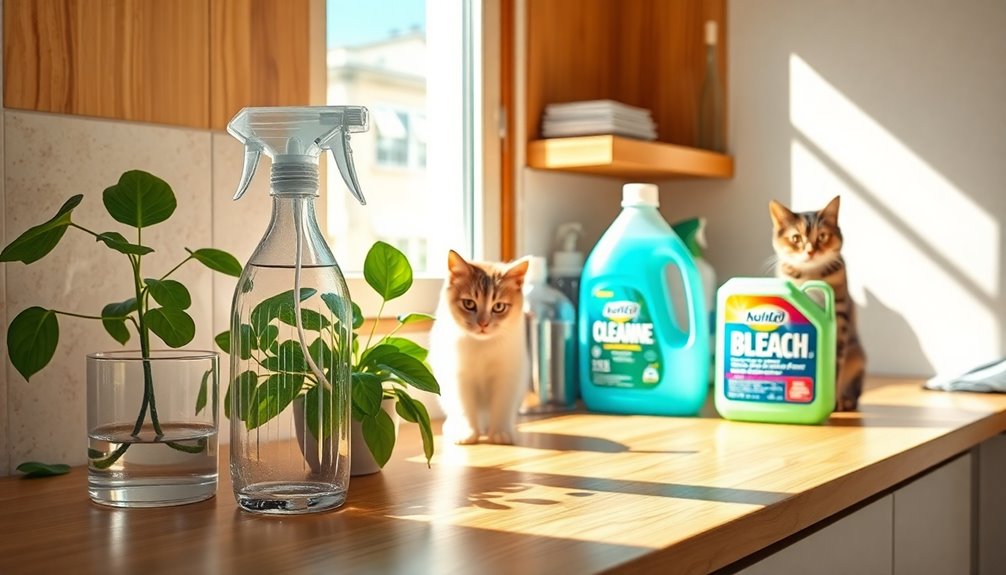
When you’re cleaning your home, it’s essential to know what’s in your products.
Many common cleaning ingredients can be toxic to pets, but there are safe alternatives available.
Understanding these harmful components will help you create a safer environment for your furry friends. Regular use of non-toxic cleaners promotes a hygienic environment while prioritizing family safety.
Common Toxic Ingredients
Cleaning products can be a hidden danger for your pets if you’re not careful. Many commonly used cleaning agents contain toxic ingredients that can harm your furry friends.
For example, ammonia and bleach are frequent offenders, often found in surface cleaners and disinfectants. These substances can cause respiratory issues and irritation if inhaled. Additionally, products with phosphates can create digestive problems if ingested.
You should also be wary of phenols, which are present in some disinfectants and can lead to severe health issues in animals. Always check labels and avoid these harmful ingredients to guarantee pet safety in your home.
Being informed about toxic ingredients is vital for maintaining a safe environment for your beloved pets.
Safe Alternatives Available
Being aware of harmful ingredients is just the first step in ensuring a safe home for your pets. The good news is, there are plenty of eco-friendly products and non-toxic solutions that work just as effectively as conventional cleaners.
For everyday tasks, consider using a mixture of vinegar and water for surfaces or baking soda for deodorizing. Castile soap is a great all-purpose cleaner that’s safe for both you and your furry friends.
Look for brands that clearly label their products as pet-safe or natural. You’ll find that many eco-friendly products are readily available, providing a safer environment without sacrificing cleanliness.
Safe Cleaning Alternatives for Pet Owners
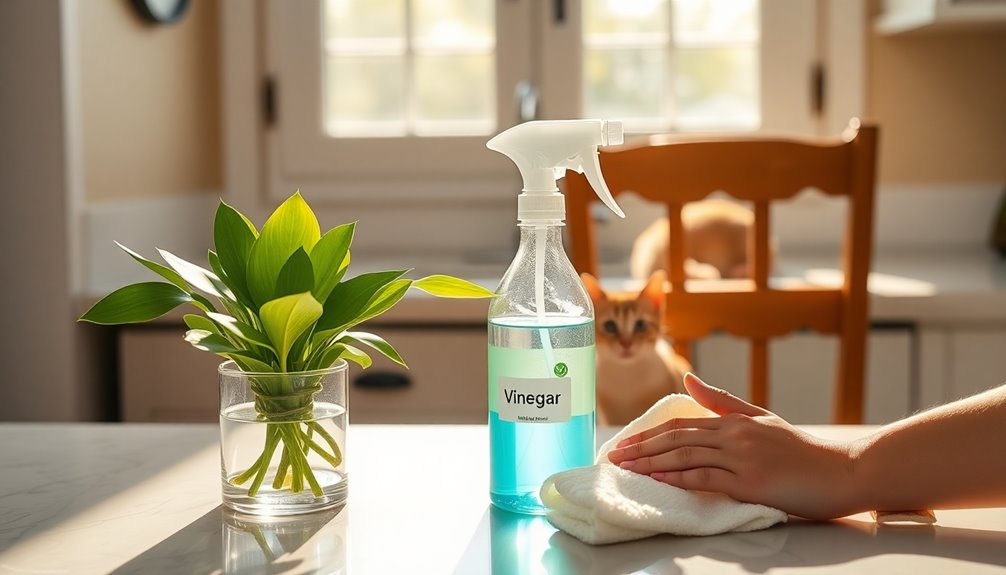
How can you keep your home spotless while ensuring your furry friends stay safe? Opt for eco-friendly products that are safe for both your pets and the environment.
Vinegar and baking soda are excellent natural cleaners that tackle stains and odors without harmful chemicals. For disinfecting surfaces, a solution of water and castile soap works wonders while promoting cleaning safety.
You can also use essential oils like lavender or lemon, but be cautious—some oils can be toxic to pets, so always research beforehand. Avoid harsh chemicals and opt for biodegradable options to create a healthy home for your pets. Additionally, consider using products from B Corp certified companies that prioritize sustainability and safety in their formulations.
How to Read Labels for Pet-Safe Products?
When you’re shopping for cleaning products, understanding labels is essential for keeping your pets safe.
Start by checking the ingredient lists; avoid products with harmful chemicals like bleach, ammonia, or phthalates. Look for natural ingredients, which are less likely to harm your furry friends.
Pay attention to label symbols as well; a pet-safe symbol can indicate that a product is safe for use around animals. If you see “non-toxic” or “pet-friendly,” those are good signs, but always double-check the ingredient list to be sure.
Don’t forget to research unfamiliar ingredients online. Additionally, opting for eco-friendly cleaning solutions can help ensure that your cleaning routine is safe for both your home and your pets. By being vigilant and informed, you can choose products that effectively clean your home while protecting your beloved pets from harmful substances.
Cleaning Tips for Homes With Pets
While keeping your home clean can be a challenge with pets around, a few simple strategies can make a big difference.
Start by establishing a cleaning schedule that fits your routine. Regularly vacuuming and sweeping helps manage pet hair and dander, keeping your space fresh.
Establish a cleaning schedule that suits your routine to effectively manage pet hair and dander.
Invest in pet-friendly products that are safe for your furry friends; this way, you won’t have to worry about harmful chemicals during your cleaning sessions.
Spot clean messes immediately to prevent stains and odors from setting in.
Also, designate a specific area for your pets to play and relax, minimizing the mess in other parts of your home. Incorporate eco-friendly scrub brushes made from sustainable materials to ensure a safe cleaning environment for both your pets and the planet.
Natural Cleaning Solutions You Can Make at Home
Keeping your home clean doesn’t just involve regular vacuuming and sweeping; it also means choosing the right cleaning solutions. You can easily make effective natural cleaners at home using simple ingredients.
For a versatile vinegar solution, mix equal parts of water and white vinegar in a spray bottle. This solution works wonders on countertops and windows without harming your pets.
Another great option is baking soda. Sprinkle it on carpets or upholstery to neutralize odors, then vacuum it up after a few hours. You can also create a paste with baking soda and water to tackle tough stains.
These homemade cleaners not only keep your space fresh but are also safe for your furry friends, giving you peace of mind. Plus, using natural ingredients like vinegar and baking soda promotes eco-friendly products that are effective without harsh chemicals.
Recognizing Signs of Chemical Exposure in Pets
When you clean your home, it’s essential to keep an eye on your pets for any unusual behavior. Changes in their habits or physical symptoms like drooling or vomiting can signal chemical exposure. Recognizing these signs early can help you protect your furry friends from harmful effects. Additionally, using natural wood polish can reduce the risk of chemical exposure, creating a safer environment for your pets.
Behavioral Changes in Pets
Recognizing behavioral changes in your pets is essential, especially if they’ve been exposed to cleaning chemicals. You might notice increased pet anxiety if your furry friend suddenly hides, shakes, or becomes overly aggressive.
Changes in appetite or sleep patterns can also signal distress. Pay attention to their body language; a fearful pet may cower, tuck their tail, or avoid eye contact.
If your pet seems restless or excessively vocal, it could indicate they’re uncomfortable in their environment. These subtle cues are vital for identifying potential chemical exposure.
Always err on the side of caution—if you suspect your cleaning routine might be affecting your pet, consider safer alternatives to protect their well-being. Your pet’s happiness depends on a safe home!
Physical Symptoms to Watch
Your pet’s physical health can provide important clues about their exposure to cleaning chemicals. Watch for symptoms like excessive drooling, vomiting, or diarrhea, as these can indicate chemical ingestion.
Sneezing, coughing, or difficulty breathing may signal respiratory distress caused by fumes. Pay attention to changes in pet behavior, such as lethargy or unusual agitation, which could accompany physical symptoms.
Symptom identification is vital; if you notice any of these signs, consult your veterinarian immediately. It’s important to be proactive in monitoring your pet’s health, especially after cleaning.
Conclusion
By pet-proofing your cleaning routine, you’re not just keeping your furry friends safe; you’re also creating a harmonious home reminiscent of a gentle spring day. As you steer clear of toxic cleaners and embrace natural alternatives, you’re channeling the spirit of a wise old sage who knows that safety and cleanliness go hand in hand. Remember, a little mindfulness in your cleaning habits can lead to a healthier environment for both you and your beloved pets.