To prepare and clean your patio furniture for summer, start by inspecting each piece for damage like cracks and rust. Clean surfaces with mild detergent tailored to wood, metal, or plastic. Don’t forget to vacuum fabric cushions and wash them according to instructions. Rinse everything thoroughly and let it dry completely. Finally, apply protective treatments to prevent wear and tear. Want to guarantee your outdoor space stays in top shape? There’s more you can do!
Initial Inspection of Patio Furniture
Before you immerse yourself in summer fun, it’s vital to inspect your patio furniture to confirm it’s safe and ready for use.
Start with a thorough initial inspection, checking for any signs of wear, such as cracks, rust, or corrosion on outdoor furniture materials.
Begin with a detailed inspection, looking for signs of wear like cracks, rust, or corrosion on your outdoor furniture.
Verify all screws, nuts, and bolts are tightened to maintain structural integrity, as loose fittings can lead to accidents.
Don’t forget to examine cushion covers for holes or mildew; repairing or replacing them is essential for comfort and hygiene.
Assess wood finishes, noting any areas that might need sanding or re-staining to protect against moisture and UV damage.
Finally, verify furniture frames are clean and dry, as dirt can hide potential damage and affect their appearance. Additionally, consider using storage bins and baskets to keep your outdoor area organized and enhance accessibility for summer essentials.
Cleaning Different Materials
When it comes to cleaning your patio furniture, each material requires a different approach.
You’ll want to use the right techniques for wood, metal, and plastic to keep them looking their best.
Let’s explore how to effectively care for each type. Regular maintenance enhances longevity and shine of your patio furniture, preventing grime buildup and ensuring they remain visually appealing throughout the summer.
Wood Furniture Care
To keep your wooden patio furniture looking great and lasting longer, it’s essential to follow a proper cleaning and maintenance routine.
Start by using a mild soapy solution and a soft-bristle brush to gently scrub away dirt, rinsing with clean water afterward. Regularly inspect your wooden furniture for signs of wear, like cracks or splintering, and re-stain when raindrops are absorbed instead of forming beads.
Tighten screws annually and re-stain as needed, especially for woods like acacia and eucalyptus that can crack. Cover your furniture when not in use to protect it from the elements.
Finally, incorporate sanding and applying fresh sealant to safeguard against moisture and UV damage, ensuring your furniture stays beautiful through every season.
Metal Maintenance Tips
Metal patio furniture can add a sleek touch to your outdoor space, but it requires regular maintenance to keep it looking its best.
Start by inspecting metal furniture for rust or corrosion, especially after winter exposure. Use sandpaper to remove any rust spots before beginning the cleaning process.
Clean the surfaces with soapy water, using a soft-bristled brush or sponge, and rinse thoroughly to prevent rust formation from soap residue.
After cleaning, apply a rust-inhibitor or a fresh coat of rust-resistant paint to protect against future damage.
For aluminum furniture, a gentle wash with mild detergent helps maintain its shine.
Don’t forget to regularly check screws, nuts, and bolts for tightness to guarantee structural stability.
Plastic Cleaning Methods
Although plastic furniture is often seen as low-maintenance, it still requires regular cleaning to keep it looking fresh and vibrant.
Start by mixing dish soap with warm water to create a gentle cleaning solution. Use a soft cloth or sponge to apply the soapy water, making sure to clean all crevices where dirt can hide.
For tough stains, make a paste with baking soda and water, apply it to the stain, let it sit for 10-15 minutes, then scrub gently.
After scrubbing, rinse thoroughly with a garden hose or clean water to remove all soap residues, preventing any dulling of the plastic’s finish.
Regularly cleaning your plastic furniture will help maintain its appearance and longevity.
Preparing Fabric Cushions
Before you enjoy your outdoor space, check your fabric cushions for any signs of damage. Once you’ve inspected them, give them a good clean and make sure they’re completely dry to prevent mildew. Regular maintenance, including vacuuming upholstered chairs, will help keep your cushions looking fresh all summer long.
Inspect for Damage
Inspecting your fabric cushions for damage is essential to guaranteeing they’re ready for summer use. Start by checking for visible signs of wear, like tears, fraying, or discoloration. If you find any issues, consider whether repairs or replacements are needed.
Next, inspect seams and zippers for damage, as these areas often wear out first. Pay attention to mildew or mold, especially if cushions have been stored improperly; treat affected areas with a vinegar and baking soda mixture.
Confirm all cushion covers are removable, and check their cleaning instructions to avoid damaging the fabric. Finally, when not in use, store cushions in a cool, dry place to maintain their shape and prolong their lifespan.
Clean and Dry
To guarantee your fabric cushions are summer-ready, start by removing the covers and vacuuming them to get rid of dirt and pollen that can accumulate in crevices.
For any mildew stains on non-removable covers, pretreat with a mixture of vinegar and baking soda to lift those stubborn marks.
Wash removable cushion covers according to the manufacturer’s instructions, usually in a washing machine on a gentle cycle, and air-dry to maintain their shape.
Make sure all cushions are completely dry before storing them to prevent mildew growth.
Ideally, store them in a cool, dry place using TOSTERÖ storage bags or boxes. This helps preserve the shape and appearance of your outdoor cushions, giving them a fresh coat for summer enjoyment.
Rinsing and Drying Furniture
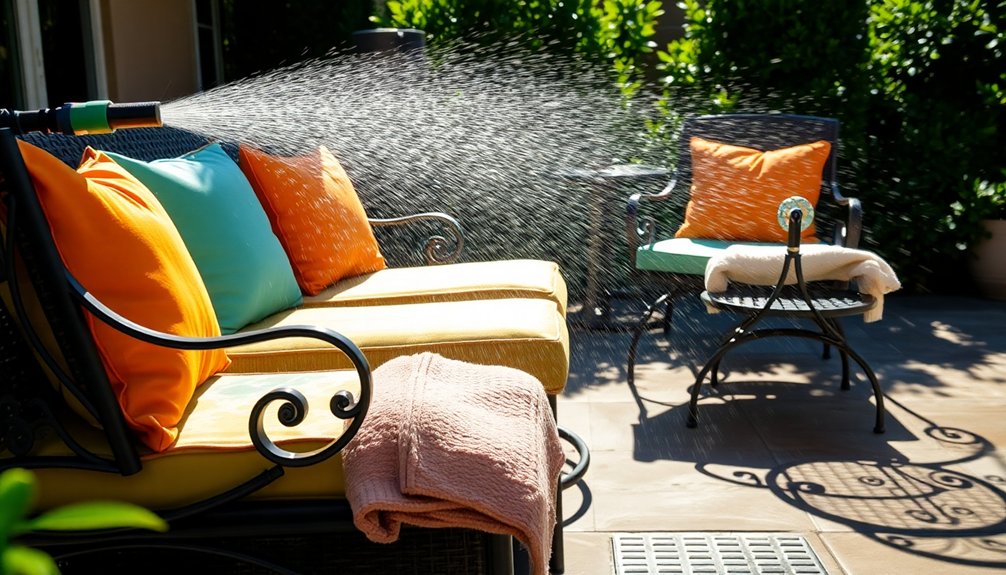
Once you’ve cleaned your patio furniture with a mild soapy solution, it’s crucial to rinse each piece thoroughly with a garden hose.
This step removes soap residue, preventing discoloration or damage over time. Use a spray nozzle for even rinsing, keeping a distance of about two feet to avoid excessive pressure.
Rinsing thoroughly with a garden hose eliminates soap residue, safeguarding your furniture from discoloration and damage.
For metal furniture, dry the surfaces completely with a soft cloth to avoid rust, especially in joints and crevices where moisture can linger.
Allow wooden furniture to air dry in a shaded area to prevent warping or cracking.
Finally, lay cushions and fabric covers flat or hang them to dry completely, as any remaining moisture can lead to mildew growth and unpleasant odors. Additionally, it’s important to maintain regular cleaning routines to ensure your furniture stays in great condition throughout the summer months.
Inspecting for Damage
After rinsing and drying your patio furniture, take a moment to look for any signs of damage that could affect its safety and longevity.
Inspecting carefully is essential, especially for structural integrity. Here are some key areas to check:
- Look for cracks in wood or rust on metal.
- Check cushions for signs of mildew or mold.
- Examine screws, bolts, and fittings for looseness and tighten as necessary.
- Inspect wooden surfaces for weathering or peeling paint.
- Assess cushions for water damage or fading from sun exposure. Regular inspections can help maintain the aesthetic appeal of your furniture and prolong its lifespan.
Applying Protective Treatments
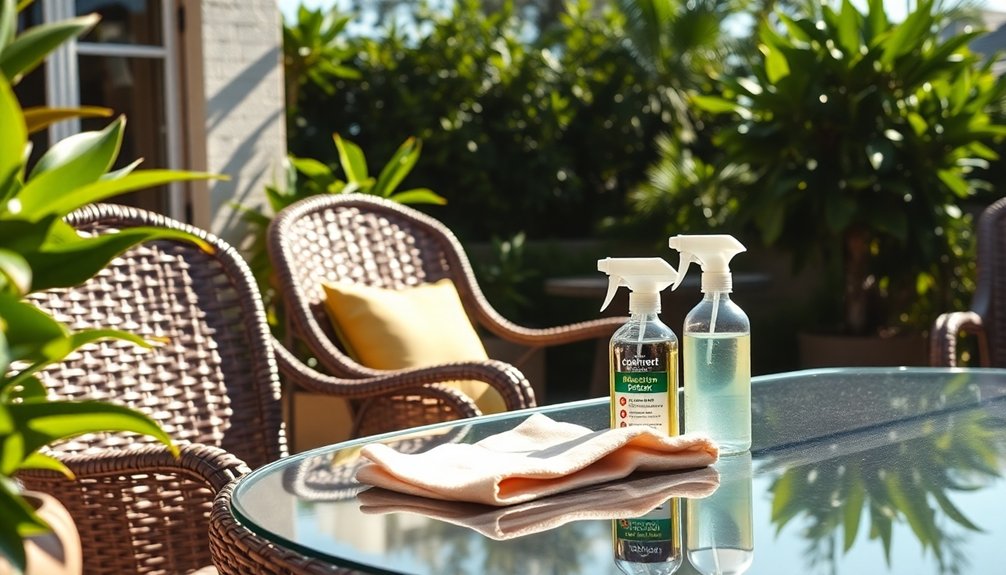
As you prepare your patio furniture for summer, applying protective treatments is essential to guarantee it withstands the elements.
Start with wooden furniture by applying a protective sealant to shield it from moisture and UV damage.
For metal pieces, use a rust-inhibitor spray to prevent corrosion from rain and humidity.
Treat fabric cushions and pillows with a water and stain repellent spray to resist moisture and combat mildew growth during humid weather.
Don’t forget to regularly apply a protective coating on all-weather wicker furniture to enhance its resistance to fading.
Finally, for composite wood furniture, use a specialized cleaner and sealant to protect against stains and keep the surface smooth and resilient against the elements. Regular maintenance helps avoid dirt and grime buildup that can compromise your furniture’s appearance and longevity.
Storing Off-Season Items
To keep your patio furniture in top shape during the off-season, it’s crucial to store items properly.
Start by cleaning outdoor furniture to guarantee everything is thoroughly cleaned and dried. This step prevents mold and mildew during storage for months. Use high-quality, waterproof furniture covers for added protection. Regular cleaning prevents grime and stains from building up on your furniture.
Here are some tips for effective storage:
- Store cushions and pillows separately in breathable bags or boxes.
- Tighten any loose screws or fittings before storing.
- Consider stacking furniture, but do it securely to avoid scratches.
- Keep items in a cool, dry place indoors.
- Regularly check on your items to verify they remain in good condition.
Following these steps will help maintain your furniture’s integrity until summer returns.
Maintaining Your Outdoor Space
Maintaining your outdoor space is essential for creating an inviting atmosphere for summer gatherings.
Regularly inspect your furniture for signs of wear, like rust on metal frames or cracks in wood, ensuring safety and stability. Clean surfaces using mild detergent for wood and metal, and an all-purpose cleaner for plastic and resin.
Don’t forget to protect cushions by washing them as per manufacturer instructions and letting them dry completely to prevent mildew. Invest in waterproof covers to shield your furniture from harmful UV rays and unexpected rain, prolonging its lifespan. Additionally, implementing time-saving strategies for cleaning can help maintain your outdoor furniture effortlessly.
Finally, establish a routine for maintenance, tightening screws and re-staining wooden furniture when necessary to keep your outdoor space looking fresh and welcoming throughout the season.
Tips for Summer Readiness
Before the summer heat sets in, it’s important to get your patio furniture ready for the season. Start by inspecting all pieces for structural integrity and rust, especially after winter.
Prepare your patio furniture for summer by checking for rust and structural integrity after winter.
Remove any loose dirt and give it a good cleaning to make sure everything’s in tip-top shape. Here are some quick tips:
- Use soap and water for metal outdoor furniture.
- Clean plastic surfaces with an all-purpose cleaner.
- For wooden furniture, stick to a mild soapy solution. Regular cleaning prevents dirt and grime accumulation.
- Wash outdoor fabric cushion covers as per instructions.
- Apply weatherproof covers when not in use.
Conclusion
As you settle into your freshly cleaned patio, the sun warming your face and a gentle breeze rustling the leaves, you’ll feel the satisfaction of a job well done. Your sparkling furniture beckons, inviting friends and family to gather, share stories, and create memories. With a little effort, you’ve transformed your outdoor space into a summer sanctuary. So kick back, sip that iced tea, and bask in the joy of a season filled with laughter and sunshine!