To wash your pillows and duvets the right way, check care labels first. Machine wash on a gentle cycle with warm water and natural detergent, adding half a cup of white vinegar to eliminate odors. If hand washing, gently squeeze them in lukewarm water with detergent. After rinsing, reshape and dry on low heat with dryer balls to prevent mildew. Regular washing and proper maintenance keep them fresh and free of allergens. Discover more tips to enhance your washing routine!
How Often Should You Wash Pillows?
You should wash your pillows at least every three to six months to keep them clean and fresh. Regular washing helps reduce the buildup of dust mites and dead skin cells, which can negatively impact your sleep quality.
Washing your pillows every three to six months is essential for a cleaner, healthier sleep environment.
If you use pillowcases, they’ll offer an extra layer of protection against dirt and bacteria, potentially extending the time between washes. However, latex and memory foam pillows aren’t machine washable, so you’ll need to hand wash those as needed.
Consistent maintenance not only keeps your pillows fluffy but also prolongs their lifespan. By staying on top of your washing routine, you’ll guarantee a healthier and more comfortable sleeping environment. Incorporating non-toxic cleaning solutions into your washing routine ensures a safer and healthier sleep space.
Don’t overlook this simple task for your well-being!
How to Machine Wash Pillows
Washing pillows doesn’t have to be an intimidating task, especially when most types, like cotton, feathers, and fiberfill, can go right into the washing machine.
Always check the care instructions before you start. Set your machine to a gentle cycle using warm water and add a natural detergent along with 1/2 cup of white vinegar to help eliminate odors.
To keep your pillows fluffy during drying, toss in tennis balls or dryer balls on a low heat setting. Remember to wash two pillows at a time to balance the load and prevent damage. Regularly washing your pillows every three to six months can greatly reduce allergens, promoting better sleep hygiene and a healthier sleeping environment. Additionally, maintaining a regular cleaning schedule for your bedding can further enhance overall cleanliness in your bedroom.
How to Hand-Wash Pillows
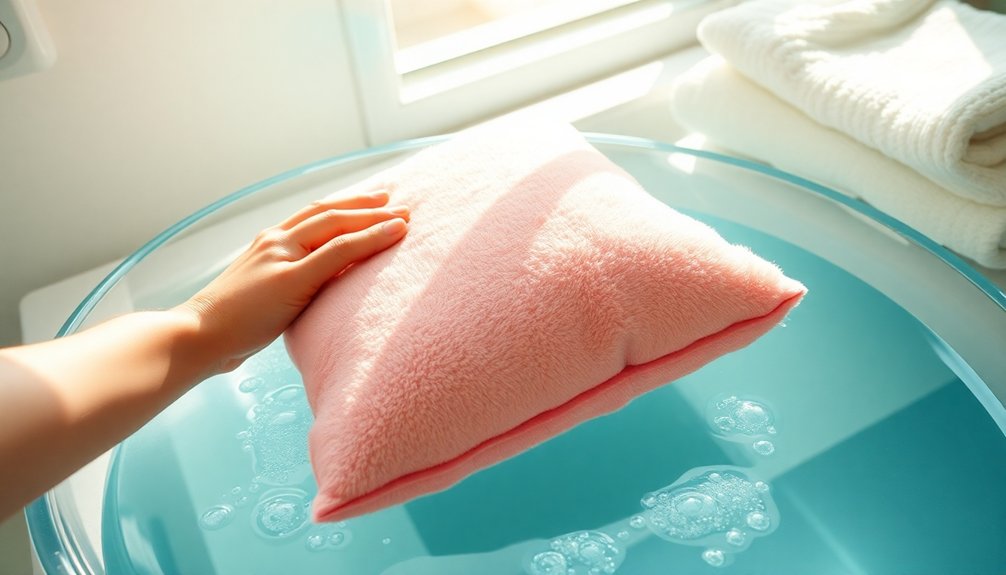
Hand-washing pillows can be a gentle and effective way to keep them clean, especially for delicate materials.
Start by filling a clean bathtub or basin with lukewarm water, then add natural detergent and a splash of white vinegar to break down dirt.
Submerge the pillows and gently squeeze and press them, paying attention to any stained areas. Rinse thoroughly with clean water multiple times to guarantee all soap is gone.
After rinsing, reshape the pillows to maintain their form. Finally, lay them flat to air dry, avoiding direct sunlight to prevent material degradation.
Always check the care label for specific washing instructions, as some pillows may need special handling. Additionally, maintaining a regular cleaning routine for your bedding can help promote a hygienic sleeping environment.
How to Remove Odors From Pillows
If your pillows have developed stubborn odors, sunlight is your best friend.
Just place them outside for a few hours, flipping them occasionally to maximize exposure.
You can also sprinkle baking soda on them, let it sit, and then vacuum it off to absorb those unwanted smells. Regular cleaning and the use of homemade cleaners can help maintain a fresh and inviting environment for your pillows.
Sunlight Exposure Benefits
Sunlight exposure is a powerful ally in eliminating odors from your pillows. By placing them in direct sunlight for a few hours, you can harness the natural disinfecting properties of UV rays, making it an effective method for odor removal.
Don’t forget to flip your pillows occasionally to guarantee even exposure, maximizing the benefits. For an added boost, sprinkle baking soda on the pillows before sunbathing; it absorbs odors and enhances the deodorizing process.
After sun exposure, vacuum your pillows with a brush attachment to remove any remaining baking soda and refresh the fabric. Regular sunlight exposure not only aids in odor removal but also helps reduce bacteria buildup, keeping your pillows fresh and clean.
Baking Soda Method
To effectively remove odors from your pillows, start by evenly sprinkling baking soda over their surface.
Let it sit for at least 15-30 minutes to absorb the odors fully. After the time’s up, shake off the excess powder.
Use a vacuum with a brush attachment to remove any remaining baking soda residue, ensuring your pillows feel fresh.
For deeper odor removal, consider placing your pillows in direct sunlight for a few hours after applying baking soda. The UV rays help eliminate bacteria and odors.
To keep your pillows in top condition, regularly freshen them with baking soda every few months, combining this method with regular washing to reduce buildup of odors and allergens.
How Often to Replace Pillows

Many people overlook the importance of replacing their pillows regularly, but doing so is essential for maintaining a healthy sleep environment.
Ideally, you should replace pillows every 1-2 years if you notice signs of wear, like lumps, flattened areas, or persistent odors. Memory foam and latex pillows usually last 2-3 years, while down and feather pillows can last up to 5 years with proper care.
Regularly assess pillow condition by folding them in half; if they don’t spring back, it’s time to replace them. If you have allergies or respiratory issues, consider replacing your pillows more frequently. Additionally, regular changes to your bedding, including pillows, can significantly reduce allergens such as dust mites and pet dander.
Also, pillows older than 10 years should be tossed out, as they can accumulate bacteria and lose their support.
How to Maintain Pillows
Maintaining your pillows is essential for a comfortable and healthy sleep environment. Regularly wash your pillows every three to six months to reduce dust mites, dead skin, and odors.
Using pillow protectors can shield pillows from skin cells and bacteria, so make certain to wash these covers bi-weekly for ideal hygiene. Periodically air out your pillows in sunlight to refresh their materials and eliminate odors.
Avoid eating in bed and keeping pets on your pillows to prevent dirt and allergens from accumulating. When washing and drying your pillows, confirm you remove any excess water to maintain their shape and quality. Additionally, implementing a 10-minute tidy-up routine can help keep your sleeping area clean and organized.
Finally, store unused pillows in a cool, dry place to prevent mildew growth and extend their lifespan.
Washing Duvet Inserts & Comforters
Keeping your bedding clean goes beyond just maintaining pillows; it’s also important to wash duvet inserts and comforters regularly. Aim to launder them every season, and use duvet covers that you can wash every 1-2 months, depending on your lifestyle.
Always check the care tags before laundering to guarantee you’re following the proper washing methods, as some inserts may need special care. When washing, use a gentle wash cycle with cold water and medium or low spin settings to protect the fabric and filling.
Wash duvet covers separately to prevent tangling. For drying, opt for low heat and add dryer balls to fluff the filling. Remember to remove the duvet halfway through to shake and redistribute any clumped materials. Additionally, regularly purging expired items from your bedding storage can help maintain freshness and cleanliness.
Stain Treatment for Pillows and Duvets
When a spill happens or an unexpected stain appears on your pillows or duvets, addressing it promptly can make all the difference.
Start with a gentle stain treatment by applying a stain solution directly to the affected area. Use a stain brush to work it in thoroughly for maximum effectiveness. Let the treatment sit for a bit to allow it to penetrate the fabric.
For heavily soiled items, consider soaking them in lukewarm water mixed with detergent before washing. Always check the care labels for specific instructions to avoid damage. Additionally, regular cleaning of bedding items ensures a hygienic sleep environment.
After treating the stains, place your pillows or duvets in the washing machine on a gentle cycle to remove any residue, leaving them clean and fresh.
Drying Process for Pillows and Duvets
When drying your pillows and duvets, using an air fluff or low heat cycle is key to preventing mildew. Adding wool dryer balls or clean tennis balls helps fluff the filling and guarantees even drying. Remember to check periodically and follow care label instructions for the best results. Additionally, opting for eco-friendly materials in your bedding can enhance the drying process by reducing moisture retention.
Proper Drying Techniques
To achieve the best results in drying your pillows and duvets, use an air fluff or low heat cycle in the dryer. This helps avoid damage to the filling and fabric.
To enhance the drying process, add wool dryer balls or clean tennis balls to the dryer; they’ll help fluff and redistribute the filling.
Remember to remove your pillows or duvet halfway through the drying cycle to shake them out, ensuring even drying, especially for feather-filled items.
Continue drying until there’s no moisture left to prevent mold and mildew buildup. Thorough drying is essential, as any remaining moisture can lead to unpleasant odors and damage your bedding.
Importance of Fluffing
After mastering proper drying techniques, you’ll want to focus on fluffing your pillows and duvets.
Fluffing pillows during the drying process helps maintain their shape and prevents the filling from clumping, guaranteeing maximum comfort. To effectively fluff, toss in wool dryer balls or clean tennis balls; they work wonders in redistributing the filling.
Remember to remove your pillows and duvets from the dryer halfway through the cycle to shake them up—this enhances fluffiness and promotes even drying. Always make certain they’re completely dry before use to avoid mold and mildew growth.
Regular fluffing not only maintains loft and softness but also extends the lifespan of your bedding by preventing moisture-related breakdown.
Tips for Freshening Up Your Pillows and Duvets
Freshening up your pillows and duvets can greatly enhance your sleep environment, so don’t overlook this essential task.
Start by airing out your pillows in direct sunlight for a few hours, flipping them occasionally to kill odors and bacteria. Sprinkle baking soda on your pillows to absorb unwanted smells, letting it sit for 15 minutes before vacuuming.
For a quick refresh, use a hand steamer to eliminate dust mites. Don’t forget to wash your pillowcases bi-weekly and replace them after an illness to reduce bacteria buildup. Additionally, maintaining a clean and hygienic bathing environment is essential for overall health, as it helps minimize the spread of harmful bacteria.
After washing or steaming, always remember fluffing your pillows to maintain their shape and comfort, creating the inviting sleep space you deserve. You might also consider using white vinegar in your laundry for extra freshness.
Conclusion
Now that you know the ins and outs of washing your pillows and duvets, you can give them the refresh they deserve. By treating them with a little love and care, you’ll not only extend their lifespan but also enjoy a cozy, clean sleep environment. So, don’t let dust bunnies and mysterious odors linger any longer—embrace the joy of fresh bedding and drift off into dreamland with a smile, knowing you’ve done right by your sleep essentials!