To improve your indoor air quality, start by installing a UV light air cleaner and using a whole house dehumidifier. Keep your home clean and consider getting an air purifier with HEPA filters. Avoid smoke indoors, guarantee proper ventilation, and add house plants for natural air filtration. Maintain humidity levels with a whole house humidifier to stay comfortable. Follow these tips to breathe easier, and you’ll discover even more helpful strategies for a healthier home environment.
Install a UV Light Air Cleaner
Installing a UV light air cleaner can greatly enhance your home’s air quality. These systems use ultraviolet light to effectively kill or inactivate airborne pathogens, such as bacteria and viruses, markedly improving indoor air quality. Whether you choose to install UV light air cleaners within your HVAC system or as standalone units, you’ll guarantee continuous air purification throughout your home. This is especially important in high-traffic areas where germs can accumulate. Regular maintenance and bulb replacement are essential to keep these systems working efficiently, as the UV light intensity diminishes over time. Additionally, combining UV light air cleaners with non-toxic cleaning solutions can further reduce the presence of allergens and pollutants in your home environment.
Use a Whole House Dehumidifier
Maintaining ideal indoor humidity levels is essential for your home’s comfort and air quality, and a whole house dehumidifier can help you achieve that.
By keeping humidity levels between 30-50%, this system prevents mold growth and enhances overall comfort. It effectively reduces excess moisture, alleviating issues related to allergens and respiratory problems caused by dampness and mold spores.
The whole house dehumidifier pulls in humid air, removes moisture, and circulates drier air throughout your home, which can lead to lower energy costs by allowing your HVAC system to operate more efficiently. Additionally, maintaining a clean environment through effective dusting techniques can further enhance your indoor air quality.
Regular maintenance, like cleaning or replacing filters, guarantees peak performance and prolongs the unit’s lifespan, making it a smart investment for year-round indoor air quality management.
Use a Whole House Humidifier
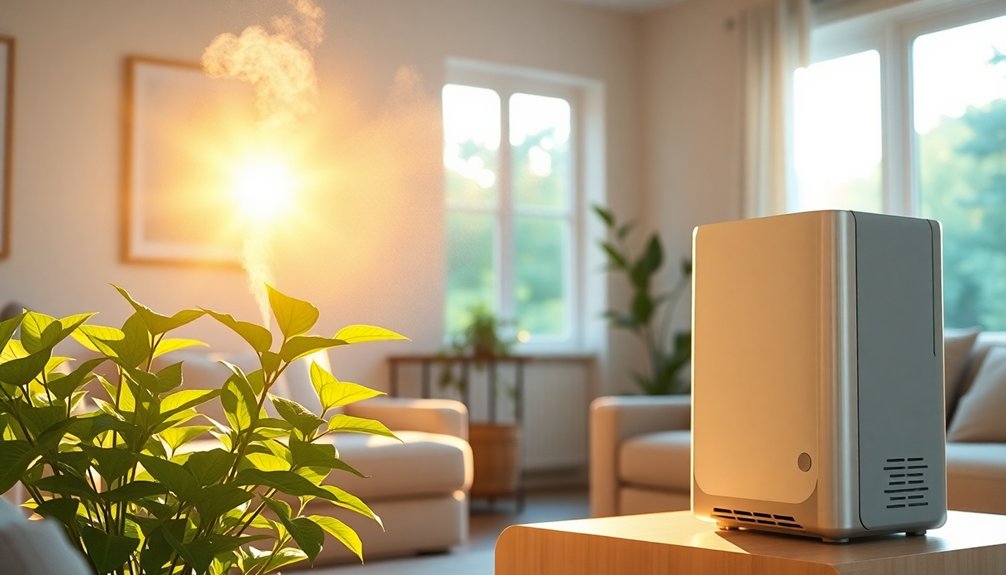
When winter arrives and indoor air becomes dry, a whole house humidifier can make a significant difference in your comfort and health. By maintaining ideal humidity levels between 30-50%, it helps improve indoor air quality and minimizes respiratory issues.
Here are some benefits of using a whole house humidifier:
- Reduces mold growth by balancing moisture levels.
- Alleviates dry skin and static electricity.
- Provides consistent humidity throughout all rooms with proper ventilation.
- Leads to energy savings by allowing lower thermostat settings.
- Requires regular maintenance, like cleaning and filter replacement, to maintain efficiency.
Additionally, using natural cleaning agents such as vinegar and baking soda in conjunction with a humidifier can further enhance the overall air quality of your home.
Investing in a whole house humidifier not only enhances your comfort but also supports a healthier home environment.
Avoid Smoke
To keep your indoor air clean, it’s crucial to avoid smoke from cigarettes, candles, and burning wood. Establishing a smoke-free environment not only protects your health but also enhances the air quality for everyone in your home. Proper ventilation in areas like fireplaces can further minimize harmful emissions, ensuring a safer living space. Maintaining regular cleaning of surfaces helps reduce dust and allergens, contributing to a healthier indoor environment.
Smoke-Free Environment Benefits
Creating a smoke-free environment is essential for your health and well-being, as it dramatically lowers indoor air pollutants. By eliminating tobacco smoke, you can considerably reduce health risks and improve indoor air quality.
Here are some benefits of maintaining a smoke-free home:
- Reduces exposure to over 7,000 harmful chemicals in tobacco smoke
- Lowers the risk of respiratory diseases and cardiovascular problems
- Protects vulnerable populations like children and the elderly
- Prevents long-lasting contamination of surfaces and fabrics
- Enhances overall respiratory health
Using an air quality monitor can help you track improvements in your environment.
Proper Ventilation Importance
Proper ventilation plays an essential role in maintaining a healthy indoor environment, especially by minimizing the presence of harmful smoke. By ensuring proper ventilation, you dilute indoor pollutants like smoke from tobacco, candles, and cooking, which boosts your indoor air quality.
Installing exhaust fans in kitchens and bathrooms can effectively remove smoke and moisture, preventing harmful particles from accumulating. Regularly opening windows allows fresh outdoor air to flow in, flushing out toxins and creating a smoke-free environment.
Additionally, using air quality sensors can help you monitor smoke-related pollutants and adjust your ventilation practices accordingly. Emphasizing proper ventilation is key to achieving a healthier living space for you and your loved ones.
Keep the Home Clean
Keeping your home clean is essential for maintaining good indoor air quality. By implementing a few simple practices, you can greatly reduce airborne contaminants and improve air quality.
Maintaining a clean home is crucial for enhancing indoor air quality and reducing airborne contaminants.
Here are some effective tips to keep your air clean:
- Vacuum regularly with a HEPA filter to capture dust, pet dander, and allergens.
- Wash bedding and fabrics in hot water weekly to eliminate dust mites.
- Remove shoes at the entrance to prevent dirt and pesticides from entering.
- Use natural cleaning supplies to minimize exposure to harmful chemicals.
- Regularly groom pets to reduce dander and shedding.
- Establish daily cleaning routines to maintain a tidy environment and foster control over living space cleanliness.
Groom Pets Regularly
Although it might seem like a chore, grooming your pets regularly can make a significant difference in your home’s air quality. By reducing pet dander, hair, and allergens, you can help combat indoor air pollution.
Frequent baths not only keep your pets clean but also lower airborne particles that can trigger respiratory issues for sensitive individuals. Remember to clean pet areas, including bedding and toys, to minimize the accumulation of allergens.
Vacuuming with a HEPA filter is vital for effectively capturing pet-related allergens, preventing them from becoming airborne. Investing in hair-repellent car seat covers can minimize hair accumulation in your vehicle, further contributing to a cleaner home environment. Don’t forget that reptiles and birds can also shed particles, so regular cleaning and care are essential.
Taking these steps will lead to a healthier environment for you and your pets.
Use Home Filters
To improve your home’s air quality, using effective home filters is essential. These filters capture airborne particles like dust, pollen, and pet dander before circulating air throughout your home.
Effective home filters are vital for capturing dust, pollen, and pet dander, enhancing your home’s air quality.
Here are some key points to reflect on:
- Regularly change HVAC filters every 1-3 months for ideal airflow.
- Use HEPA filters to trap 99.97% of particles, including allergens and smoke.
- Choose filters with a higher MERV rating to enhance air quality, ensuring they’re compatible with your HVAC system.
- Clogged filters can lead to increased utility bills and strain on your HVAC system.
- Maintaining clean filters helps prevent the recirculation of trapped pollutants, improving indoor air quality. Additionally, using natural disinfectants can contribute to a healthier indoor environment by reducing harmful airborne chemicals.
Investing in quality home filters is a simple step towards breathing easier at home.
Schedule Regular HVAC Maintenance
Scheduling regular HVAC maintenance not only boosts your system’s efficiency but also guarantees clean air circulates throughout your home.
By having professionals conduct inspections at least once or twice a year, you can make sure that dust and allergens are kept at bay. They’ll clean your ducts and filters, which is vital since clogged filters can drastically reduce airflow and increase your energy bills.
Timely filter changes are a key part of HVAC maintenance that directly impacts your indoor air quality. Plus, regular check-ups help prevent breakdowns, extending your system’s lifespan. Additionally, using specialized tools during maintenance ensures that all components function optimally and remain free of dirt buildup.
Get an Air Purifier
An air purifier can be a game-changer for improving your indoor air quality.
With the right model, you can considerably reduce harmful airborne particles and create a healthier environment.
Consider these features when choosing an air purifier:
- HEPA filters remove up to 99.97% of airborne particles as small as 0.3 microns.
- Activated carbon filters eliminate odors and volatile organic compounds (VOCs) from household products.
- Portable models work wonders in smaller spaces with limited ventilation.
- Regular filter replacement is essential for maintaining peak efficiency.
- The EPA suggests using air purifiers alongside other strategies to maximize your indoor air quality.
Additionally, using eco-friendly cleaning products can further enhance the quality of your indoor air by reducing harmful chemical residues.
Investing in an air purifier is a practical step to breathe easier and improve your indoor air!
Add House Plants
Adding house plants is a simple yet effective way to improve your indoor air quality. Plants like peace lilies and snake plants not only filter out harmful toxins but also enhance humidity levels, making your home more comfortable. To maximize their benefits, choose the right spots for them and enjoy the fresh air they bring. Incorporating indoor plants like snake plants can help enhance air quality, contributing to a healthier living environment.
Air-Purifying Plant Options
While many might overlook the power of houseplants, incorporating air-purifying varieties like peace lilies, spider plants, and snake plants can greatly enhance your indoor air quality.
These plants effectively filter out common VOCs, helping to improve your home’s atmosphere. They also boost humidity levels, which can alleviate respiratory discomfort and dry skin.
Here are some excellent options to evaluate:
- Peace Lily: Removes mold spores and VOCs.
- Spider Plant: Great for eliminating formaldehyde.
- Snake Plant: Produces oxygen at night, improving air quality.
- Boston Fern: Excellent for increasing humidity.
- Rubber Plant: Filters toxins and is low maintenance.
Placement for Maximum Benefit
To truly maximize the benefits of your air-purifying plants, thoughtful placement is key.
Position houseplants like peace lilies, spider plants, and snake plants in areas with limited ventilation to filter indoor pollutants effectively. Place them near gas stoves or cleaning supply cabinets, where they can absorb volatile organic compounds (VOCs) more efficiently.
Grouping multiple plants together not only enhances their air-purifying capabilities but also increases humidity, promoting healthier indoor air quality.
In high-traffic areas, larger plants can help reduce airborne dust and allergens, contributing to a cleaner atmosphere for breathing.
Keep Pollutants Outside
Keeping pollutants outside is essential for maintaining a healthy indoor environment. By taking simple steps, you can greatly improve your indoor air quality and reduce the infiltration of outdoor air pollution.
Consider these tips:
- Keep windows closed on days with high outdoor air pollution.
- Regularly check and replace HVAC filters with a MERV-13 rating every 1-3 months.
- Implement proper sealing around windows and doors to block allergens.
- Use entry mats to trap dirt, pesticides, and other contaminants.
- Establish a no-shoe policy indoors to limit the transfer of pollutants from footwear.
Proper Ventilation
Proper ventilation plays an essential role in keeping your indoor air fresh and healthy.
You can benefit from natural ventilation by simply opening windows and doors when the weather permits, or consider mechanical ventilation options for consistent airflow year-round.
Both methods help reduce pollutants and enhance your overall indoor air quality.
Benefits of Natural Ventilation
Natural ventilation offers a simple yet effective way to enhance indoor air quality, as it brings in fresh outdoor air while helping to expel indoor pollutants.
By incorporating natural ventilation, you can greatly improve your home’s environment. Here are some key benefits:
- Reduces indoor pollutants and lowers harmful gas concentrations.
- Opening windows for just 10 minutes daily boosts air circulation.
- Regulates humidity levels, preventing mold growth.
- Decreases reliance on mechanical cooling and heating, saving energy.
- Enhances cognitive function and productivity with a fresher living space.
Embracing natural ventilation creates a healthier indoor environment, ensuring you breathe easier at home.
Mechanical Ventilation Options
While natural ventilation is a great way to improve air quality, mechanical ventilation options can provide a more controlled and consistent airflow throughout your home.
These systems actively exchange indoor air with fresh outdoor air, effectively reducing pollutants and moisture. You can choose whole-house systems or localized options, enhancing energy efficiency by tailoring airflow to your needs.
Heat recovery ventilators (HRVs) and energy recovery ventilators (ERVs) transfer heat and humidity between incoming and outgoing air, ensuring comfort without compromising indoor air quality.
Properly installed mechanical ventilation markedly lowers the risk of respiratory issues.
Don’t forget that regular maintenance, including cleaning ducts and filters, is essential for peak performance and to prevent dust and allergens from accumulating.
Conclusion
Improving your indoor air quality doesn’t have to be overwhelming. By taking simple steps like adding houseplants or investing in an air purifier, you can breathe easier at home. Did you know that certain plants can naturally filter toxins? It’s true! So, while you enjoy the beauty of nature indoors, you’re also enhancing your air quality. Remember, a little effort goes a long way in creating a healthier living space. Let’s make your home a refreshing change!