To prevent cross-contamination in your kitchen, always use separate cutting boards for raw meats and vegetables. Keep your tools sanitized and wash your hands before handling food. Store perishable items below 40°F (4°C) in airtight containers, and label them to track freshness. Regularly clean your kitchen with EPA-approved disinfectants to maintain hygiene. These practices create a safer cooking environment. Stick around to uncover more essential tips for keeping your kitchen spotless and safe!
Understanding Cross-Contamination: What You Need to Know
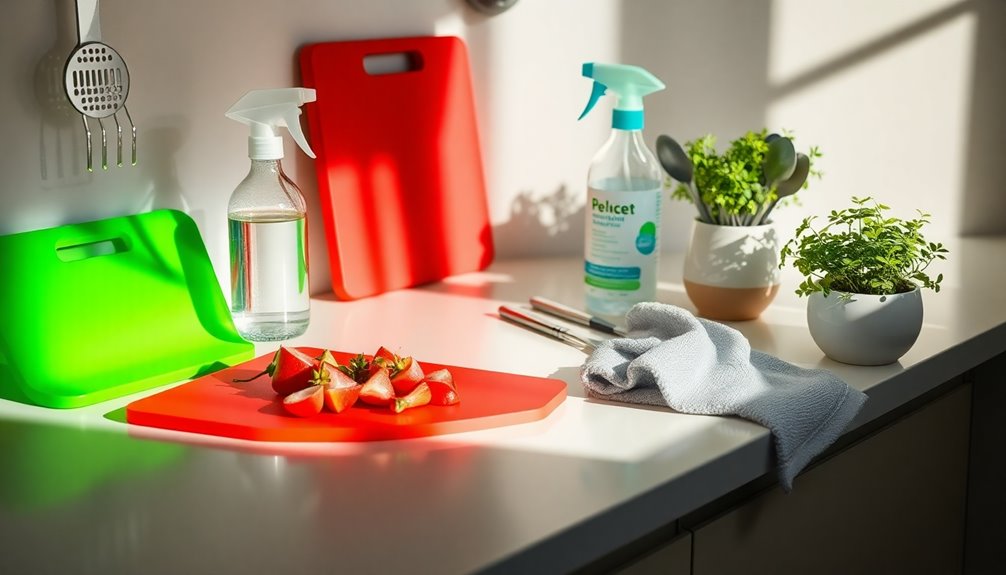
When you’re preparing food in your kitchen, understanding cross-contamination is crucial for keeping your meals safe.
Cross-contamination occurs when harmful bacteria from one food item transfer to another, often due to improper handling or storage. Common cross-contamination causes include using the same cutting board for raw meat and vegetables or not washing your hands after touching raw ingredients.
These practices can lead to foodborne illnesses, which can make you and your loved ones very sick. To minimize this risk, always use separate utensils and surfaces for different food types, and keep raw and cooked foods apart. Additionally, maintaining proper grease removal is essential to prevent unpleasant odors and unsanitary kitchen conditions that can also contribute to cross-contamination.
Essential Kitchen Tools to Prevent Cross-Contamination
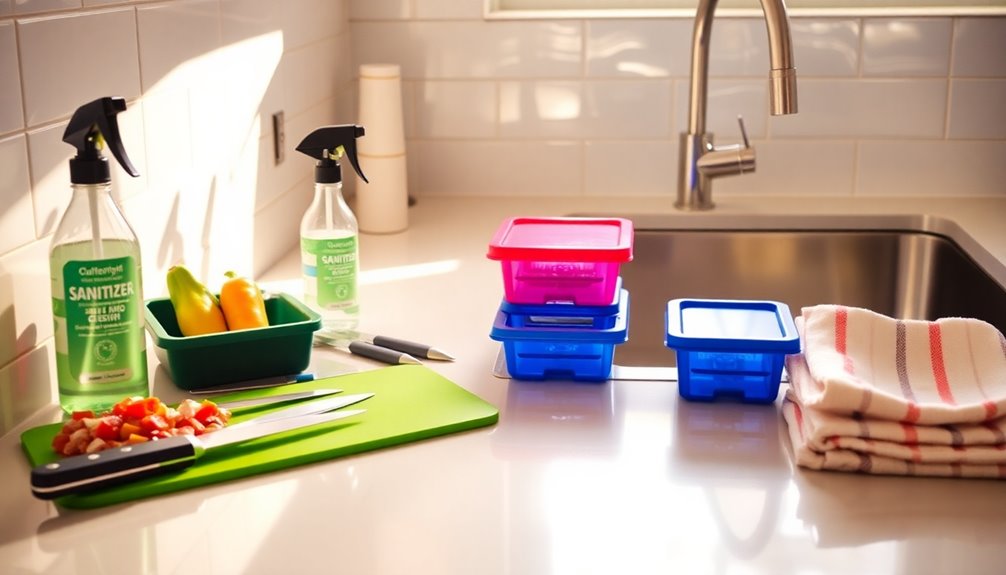
To effectively prevent cross-contamination in your kitchen, having the right tools at your disposal makes a significant difference.
Start by investing in color coded cutting boards, which help you easily identify and separate food types—like raw meats, vegetables, and cooked foods. Each color serves a specific purpose, reducing the risk of mixing them up.
Additionally, using separate food utensils for different tasks is vital. Designate specific knives, spoons, and spatulas for raw and cooked ingredients. This way, you minimize the chances of bacteria spreading from one food item to another. Regularly sanitizing your utensils with soap and water cleaning ensures that any potential contaminants are eliminated.
With these essential kitchen tools, you can maintain a safer cooking environment and enjoy peace of mind while preparing your meals.
Safe Food Storage Practices for a Hygienic Kitchen
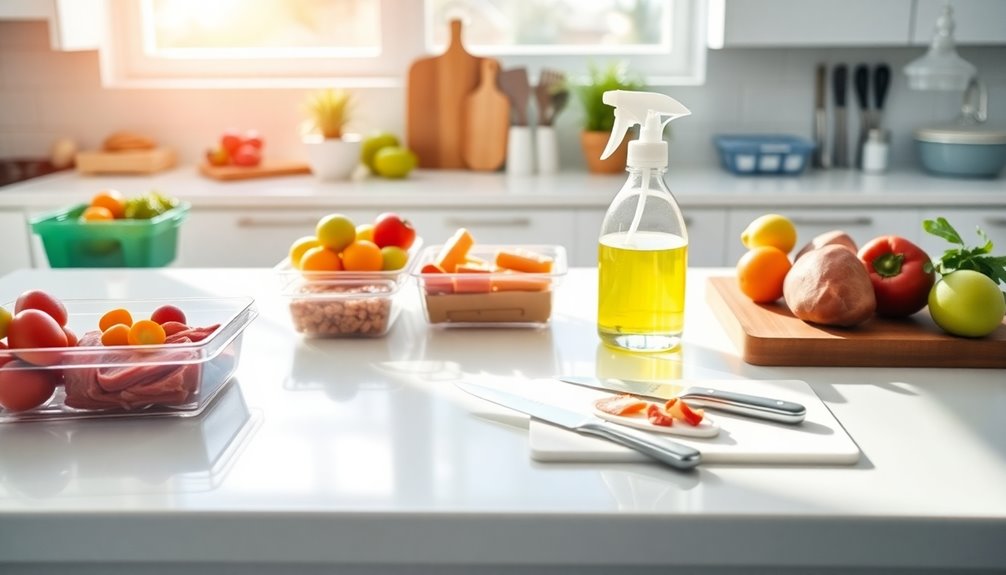
Proper food storage is essential for maintaining a hygienic kitchen, and following a few key practices can make a big difference.
First, always store perishable items in the refrigerator at the right temperature—ideally below 40°F (4°C). Use airtight containers to keep food fresh and prevent contamination. Label items with dates to track freshness, and prioritize using older items first.
For dry goods, keep them in cool, dark places, and guarantee they’re sealed to avoid pests. Additionally, separating raw and cooked foods helps mitigate the risk of cross-contamination. Regularly cleaning and organizing your kitchen storage areas will further enhance food safety and hygiene.
Finally, regularly check your pantry and fridge for expired items. By focusing on proper food storage and temperature control, you’ll create a safer, more hygienic kitchen environment.
Best Cleaning Products for Kitchen Hygiene
When it comes to kitchen hygiene, choosing the right cleaning products is vital. You’ll want to stock up on essential disinfectants and safe surface sanitizers that effectively eliminate germs without harming your food prep areas. Additionally, opting for eco-friendly products can help reduce environmental impact while ensuring a clean kitchen. Let’s explore the top options that keep your kitchen clean and safe.
Essential Disinfectants And Cleaners
A clean kitchen is essential for maintaining food safety and overall health, and using the right disinfectants and cleaners makes all the difference.
Focus on effective disinfectant types like bleach, hydrogen peroxide, and quaternary ammonium compounds, as they each target different germs. When choosing cleaners, pay attention to their effectiveness against bacteria and viruses. Look for products labeled as EPA-approved for the best results.
Remember, a multi-surface cleaner can simplify your routine, but verify it’s suitable for kitchen surfaces. Always follow the manufacturer’s instructions for usage and contact time to maximize cleaner effectiveness.
Regular cleaning with these products will help you prevent cross-contamination, keeping your kitchen safe and hygienic for cooking and food preparation.
Safe Surface Sanitizers
Using safe surface sanitizers is essential for keeping your kitchen hygienic and preventing the spread of germs.
To guarantee sanitizer effectiveness, choose products that meet regulatory standards and have proven results against common pathogens. Always check the label for surface compatibility, as some sanitizers may damage countertops or appliances.
For non-porous surfaces, look for quaternary ammonium compounds or hydrogen peroxide-based options, which are effective and safe for most kitchen materials.
Remember to follow the manufacturer’s instructions, including contact time, to maximize effectiveness.
Regularly sanitizing high-touch areas, like countertops and handles, will help maintain a clean environment.
Proper Food Preparation Techniques to Avoid Contamination
While it might seem straightforward, proper food preparation techniques play an essential role in preventing contamination in your kitchen.
Start with safe food handling practices, like washing your hands and using separate cutting boards for raw meats and vegetables. This minimizes the risk of cross-contamination.
When it comes to cooking techniques, make sure you cook foods to their recommended temperatures to kill harmful bacteria. Use a food thermometer to be precise.
Always store leftovers in airtight containers and refrigerate them promptly. Additionally, avoid leaving food out for extended periods, as this can encourage bacterial growth. Regularly disinfecting surfaces with non-toxic cleaners is also crucial for maintaining a safe cooking environment.
The Importance of Regular Kitchen Maintenance
Regular kitchen maintenance is essential for keeping your cooking space safe and efficient.
By sticking to daily cleaning routines, maintaining your equipment, and ensuring safe food storage, you can prevent potential hazards. Additionally, regular maintenance of appliances like dishwashers can significantly enhance overall kitchen hygiene.
Let’s explore how these practices can make a big difference in your kitchen hygiene.
Daily Cleaning Routines
To keep your kitchen a safe and pleasant space, establishing daily cleaning routines is essential. By incorporating daily sanitization into your schedule, you minimize the risk of cross-contamination.
Start each day by wiping down countertops and high-touch surfaces with a disinfectant. Remember to clean cutting boards and utensils after each use, especially when switching between raw and cooked foods.
Set a cleaning schedule that includes sweeping and mopping the floors, ensuring they’re free from spills and crumbs. Regularly check your fridge for expired items and clean spills promptly.
These simple habits not only maintain hygiene but also create a more enjoyable cooking environment. Stick to your routine, and you’ll see the positive impact on your kitchen’s overall cleanliness.
Equipment Maintenance Schedule
Maintaining your kitchen equipment is just as important as keeping surfaces clean. Regular equipment checks help identify wear and tear before they lead to bigger issues.
Create a maintenance schedule that includes routine inspections, cleaning, and repairs. By documenting these checks in maintenance logs, you can track the condition of your equipment over time and guarantee nothing falls through the cracks.
This proactive approach not only extends the lifespan of your tools but also enhances food safety. Remember, well-maintained equipment performs better and reduces the risk of cross-contamination.
Make it a habit to review and update your maintenance logs regularly, so you stay on top of your kitchen hygiene game. Your team—and your customers—will appreciate it!
Safe Food Storage
While you might focus on cleaning surfaces and equipment, safe food storage is equally vital for maintaining a hygienic kitchen. Proper refrigerator organization helps prevent cross-contamination and guarantees that food stays fresh longer. Keep raw meats on the bottom shelf to avoid drips onto other foods, and store fruits and vegetables separately.
Don’t forget about food labeling; it’s important for tracking freshness and preventing spoilage. Use clear labels with dates, so you know when to use items or toss them out.
Regularly check your pantry and fridge to eliminate expired products, and maintain a clutter-free environment. By prioritizing safe food storage practices, you’ll create a healthier kitchen and minimize the risk of foodborne illnesses.
Tips for Educating Others About Kitchen Hygiene
Educating others about kitchen hygiene can be a rewarding experience, especially when you see the positive changes they make. Start by organizing kitchen workshops where you can demonstrate safe practices hands-on. Use engaging activities to keep participants interested and reinforce key concepts.
Consider hosting hygiene seminars to explore deeper into topics like cross-contamination and proper food storage. Share real-life examples to highlight the importance of hygiene in preventing foodborne illnesses. Encourage questions and discussions to make everyone feel involved. Additionally, emphasize the need for proper grease cleanup to maintain a safe and healthy cooking environment.
Conclusion
By following these kitchen hygiene practices, you can greatly reduce the risk of cross-contamination and keep your food safe. For instance, imagine hosting a dinner party and using separate cutting boards for raw meat and veggies. Not only does this keep your guests safe, but it also impresses them with your culinary skills. Remember, a clean kitchen is a happy kitchen, so stay vigilant and make hygiene a priority every day.