To clean your living room upholstery, rugs, and curtains, start by checking fabric codes for safe cleaning methods. Use vacuum attachments to remove dirt and pet hair regularly. For stains, blot them gently and use fabric-safe cleaners. Deep clean upholstery with steam cleaners for water-safe fabrics and freshen with baking soda. Don’t forget to sanitize curtains according to their fabric type. Maintaining a regular cleaning routine guarantees everything stays fresh and healthy. Discover more tips and techniques to keep your space immaculate!
How to Check the Fabric Code for Cleaning
How can you find the fabric code for your upholstery? Start by checking the fabric tag usually located under the seat cushions.
You’ll find cleaning codes like “W” for water-based cleaners, “S” for solvent-based, “WS” for both, and “X,” which means only vacuuming is allowed. Knowing these codes is essential for selecting the right cleaning solution.
Before applying any upholstery cleaner, always test it on a small hidden area to check for colorfastness. Additionally, adhering to the fabric cleaning codes can help ensure effective and safe cleaning methods for your upholstery.
If you don’t see the code, reach out to the manufacturer or look up the care instructions for suitable cleaning methods.
Following the specific recommendations tied to your fabric code can help you avoid damaging your upholstery while keeping it clean and fresh.
Vacuuming Techniques for Upholstery and Rugs
Vacuuming upholstery and rugs is essential for maintaining a clean and healthy home.
Vacuuming upholstery and rugs is crucial for a tidy and healthy living environment.
Using the right techniques makes a significant difference in your living space. Here are some tips to enhance your vacuuming routine:
- Use an upholstery attachment to effectively remove dirt, dust, and pet hair.
- Focus on seams, creases, and under cushions for a thorough clean.
- Vacuum rugs in multiple directions to guarantee all dirt is lifted.
- Don’t forget to clean the underside of manageable rugs.
- Move furniture occasionally to access hidden areas during cleaning.
Incorporating regular cleaning schedules can help prevent the buildup of dirt and allergens in your living space.
Spot Cleaning Stains Effectively
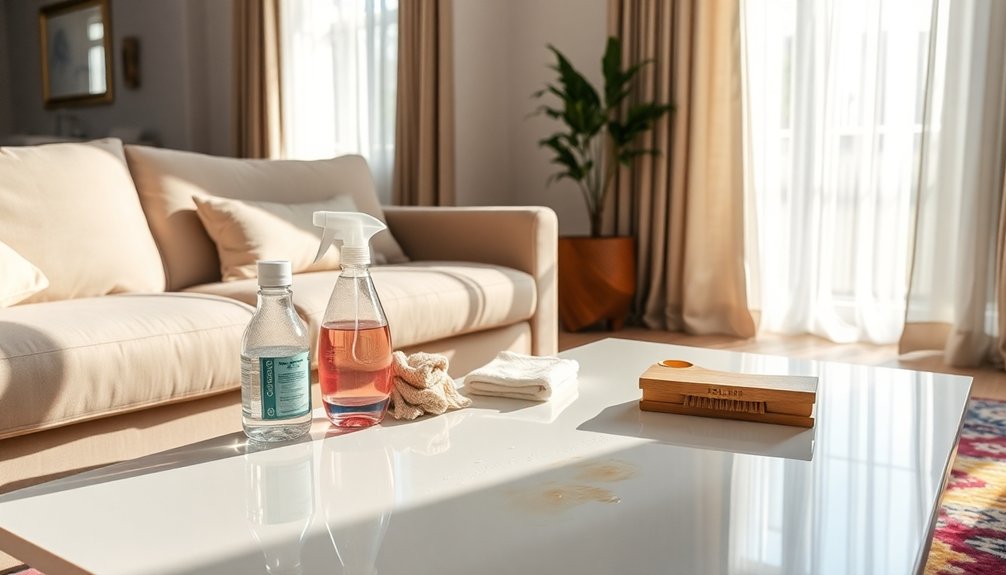
When you spot a stain, it’s essential to use fabric-safe cleaning solutions to avoid damage. Blotting is your best friend; gently lift the stain from the edges to the center without over-saturating the fabric. For more stubborn stains, consider using natural cleaners like lemon juice and baking soda for effective stain removal. Let’s explore how to tackle different types of stains effectively.
Fabric-Safe Cleaning Solutions
To effectively tackle stains on upholstery, rugs, and curtains, it’s crucial to understand the fabric type and the appropriate cleaning solutions. Always check the upholstery code on your furniture label before choosing a cleaner.
Here are some fabric-safe cleaning solutions:
- A mix of warm water, dish soap, and white vinegar for fabric furniture
- Solvent-based spot cleaners for oil-based stains
- Dedicated upholstery cleaners for tough stains like wine or coffee
- A damp cloth with mild soap for leather furniture
Conduct a spot test on a hidden area to verify safety.
These cleaning supplies act as effective cleaning agents, guaranteeing you maintain your upholstery while deep cleaning. An upholstery attachment can help reach those tricky spots!
Blotting Techniques for Stains
Effective stain removal starts with proper blotting techniques that can make a significant difference in preserving your upholstery.
When tackling stains, always use a clean, dry microfiber cloth to absorb excess liquid without spreading it further.
For water-based stains, gently dab the area with warm water and dish soap, then blot dry to lift the stain.
For oil-based stains, apply an appropriate cleaning solvent as per the upholstery cleaning code, working from the edges toward the center.
Remember, rubbing can damage fabric fibers and push stains deeper.
Always perform a spot test on an inconspicuous area first to verify the cleaning solution doesn’t affect the fabric’s color or texture.
Spot clean carefully to maintain your soft surfaces and keep them looking their best.
Deep Cleaning Methods for Upholstered Furniture
Deep cleaning upholstered furniture can revive its appearance and extend its lifespan. Start by thoroughly vacuuming your couches and upholstered items to eliminate dirt and debris, paying special attention to seams and crevices.
If your fabric has a cleaning code of W or WS, use a fabric-safe steam cleaner or upholstery shampooer, moving slowly to allow the heat to break down grime effectively.
For stains, spot cleaning your upholstery with a mixture of warm water, dish soap, and white vinegar works wonders. Always test any cleaner on an inconspicuous area first to avoid damage. Regularly applying fabric protectants can help maintain the cleanliness of your upholstery and prevent future stains.
- Vacuum thoroughly
- Use a steam cleaner
- Spot treat stains
- Test cleaner first
- Allow to air dry completely
Deodorizing and Freshening Upholstery
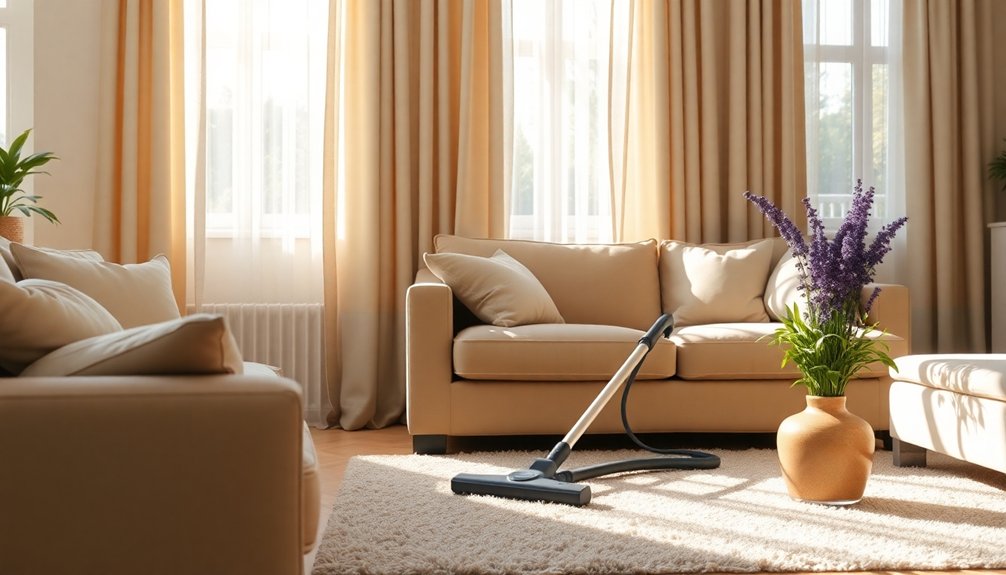
To keep your upholstery smelling fresh, try using a DIY freshening powder made from baking soda. Regular deodorizing is key, especially in homes with pets or kids, so make it part of your cleaning routine. With just a little effort, you can easily maintain a clean and inviting living space. Homemade furniture deodorizers are a cost-effective solution that not only eliminate odors but also allow for customizable scents using your favorite essential oils.
DIY Freshening Powder
You can easily freshen up your upholstery by making a DIY upholstery freshening powder that tackles odors while adding a delightful scent.
This simple mix of baking soda and essential oil not only absorbs unwanted smells but also helps maintain a cleaner environment, especially in homes with pets or kids.
Here’s how to do it:
- Combine baking soda with a few drops of your favorite essential oil.
- Sprinkle the mixture evenly over your upholstered furniture.
- Let it sit for at least 15 minutes for maximum deodorizing.
- Vacuum up the powder to reveal fresh-smelling upholstery.
- Store pre-made jars for quick access when needed.
Regular use of this powder enhances the overall hygiene and longevity of your furniture.
Regular Deodorizing Tips
Keeping upholstery fresh and odor-free doesn’t stop with a DIY freshening powder. Regular deodorizing is key to maintaining that inviting atmosphere in your home.
Mix baking soda with a few drops of essential oils to create your own upholstery freshening powder. Simply sprinkle it over your furniture, let it sit for at least 15 minutes, and vacuum it up to eliminate odors effectively. This routine is especially beneficial in homes with pets or children.
You can also opt for pre-made upholstery freshening powders for convenience. Incorporating deodorizing into your cleaning routine not only keeps your upholstery smelling great but also contributes to a fresher environment overall, enhancing the appeal of your living space.
Cleaning Rugs: Tips for a Thorough Refresh
Rugs can accumulate dust and debris, making regular cleaning essential for their upkeep. To guarantee your rugs stay fresh and last longer, follow these tips for a thorough clean:
- Shake out rugs outside to eliminate surface dust before vacuuming.
- Vacuum thoroughly in multiple directions, including the underside, to get rid of trapped dirt and allergens.
- Deep clean rugs seasonally using a rug cleaner or hire a professional service.
- In sandy climates, aim for regular vacuuming 2-3 times a week to prevent dirt buildup.
- Spot clean heavily soiled areas promptly with suitable cleaning solutions to preserve quality.
- Consider using a steam cleaner to effectively remove dirt and allergens from your rugs, as proper steam cleaner technique can ensure deep cleaning without damaging the fabric.
Sanitizing Curtains and Soft Furnishings
After ensuring your rugs are clean and fresh, it’s time to turn attention to curtains and soft furnishings, which can also harbor dust and allergens.
First, check the fabric care labels on your curtains; some may be machine washable while others require specific sanitizing techniques. For machine-washable curtains, using Lysol Laundry Sanitizer during the wash cycle effectively eliminates bacteria and odors.
If your curtains aren’t washable, apply a disinfecting spray like Clorox Fabric Sanitizer according to label instructions.
Don’t forget your throw pillows! Regularly wash removable covers or use fabric-safe sanitizing products on non-washable items. Regular use of DIY non-toxic cleaners can also contribute to a healthier living environment by reducing allergens.
Always perform a test on an inconspicuous area to avoid potential damage or discoloration to your soft furnishings.
Maintenance Tips for Long-lasting Cleanliness
To secure your upholstery, rugs, and curtains stay fresh and clean, it’s essential to establish a regular maintenance routine. Here are some effective maintenance tips to help you keep everything in top shape:
- Vacuum upholstered furniture at least once a month to remove dust, allergens, and pet hair.
- Rotate cushions weekly to maintain their shape and prevent uneven wear.
- Sprinkle baking soda on upholstery and rugs to absorb odors, letting it sit for 15 minutes before vacuuming.
- Deep clean upholstery and rugs at least once or twice a year, especially if you have pets or children.
- Use throw blankets on sofas to protect upholstery from spills and pet hair.
- Regularly vacuum dining chairs to remove loose dirt and enhance the longevity of your furnishings.
With these simple steps, you’ll guarantee long-lasting cleanliness and enhance the life of your furnishings.
Conclusion
Cleaning your living room’s upholstery, rugs, and curtains doesn’t have to feel like a chore. Think of it as giving your space a revitalizing breath of air, much like a spring breeze sweeping through an open window. By following the right techniques and maintaining a schedule, you can keep your furnishings looking and feeling their best. After all, a clean home isn’t just a reflection of your style; it’s a sanctuary for you and your loved ones.