Organizing deep pantry shelves can seem intimidating, but it’s manageable! Start by incorporating DIY pullout drawers to enhance access. Group similar items together in clear containers for easy visibility. Establish a zoning system to sort categories like snacks and spices, making navigation a breeze. Embrace flexibility by adjusting your storage solutions as needed. With these strategies, you’ll create an organized pantry that inspires creativity. There’s much more you can do to achieve pantry perfection!
The Challenge of Organizing Deep Pantry Shelves
Organizing deep pantry shelves can be frustrating, especially when items get hidden and forgotten at the back. You might find that accessing everything becomes a challenge, and previous efforts to organize a pantry feel wasted.
Makeshift solutions like shelf risers only provide temporary relief, leaving you feeling overwhelmed by clutter. To tackle this issue effectively, consider using clear containers that enhance visibility, allowing you to quickly spot what you need.
Temporary solutions can lead to clutter; opt for clear containers to improve visibility and access in your pantry.
Additionally, grouping similar items together can simplify your food storage process. Installing pullout drawers is another excellent strategy, giving you easy access to items without the hassle of reaching deep into your pantry. Utilizing vertical spaces can further maximize storage and improve organization in your pantry.
These strategies will help you regain control and maintain order in your deep pantry shelves.
DIY Pullout Drawers on Pantry Shelves
If you’re looking for a solution to the accessibility issues in your deep pantry shelves, DIY pullout drawers might be just what you need.
These drawers enhance pantry organization by allowing you to easily access and retrieve pantry items without reaching into the depths of your shelves. The ideal dimensions of around 20 inches wide by 21 inches deep fit snugly within standard pantry spaces.
You can customize pullout drawers to store various pantry items like snacks, spices, and tea, improving visibility and reducing clutter. This straightforward DIY project streamlines your cooking process by making it quicker to grab necessary ingredients, ultimately enhancing your pantry’s functionality and maximizing your storage space. Additionally, implementing a one in, one out rule can help maintain the organization of your newly created space.
Pantry Organization Tips
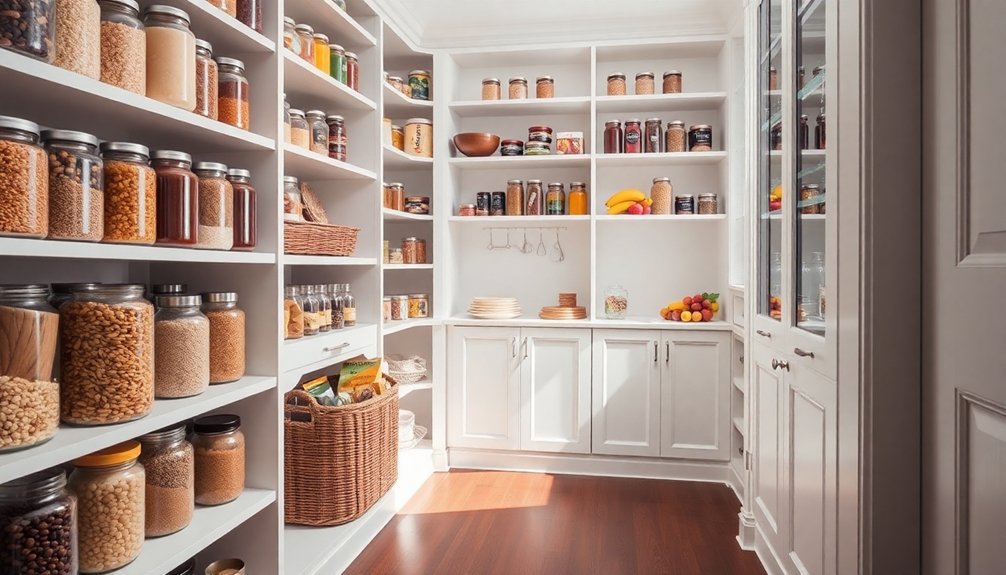
To keep your pantry organized, start by categorizing your items into groups like grains, snacks, and condiments. Using clear containers not only improves visibility but also helps you maximize space. This approach makes it easy to find what you need and keeps everything tidy. Additionally, consider using drawer dividers to further enhance organization and maintain structure within your pantry.
Categorize Pantry Items
When you categorize pantry items, you create a more efficient and enjoyable cooking experience. Start by grouping similar food items into designated zones, like snacks, grains, pasta, and baking supplies. This organization helps maintain order in your pantry space.
Use bins to store these categories, and don’t forget to label them clearly. Labels guarantee that everyone in your household can easily locate what they need, enhancing overall efficiency.
Store frequently used items at eye level and toward the front of your deep pantry closet, while placing less common items toward the back. Regularly assess your inventory and adjust your organization as needed to keep your pantry tidy and functional.
Utilize Clear Containers
Utilizing clear containers can transform your deep pantry into a model of organization and efficiency. By decanting bulk snacks, nuts, cookies, and cereals into clear containers, you enhance visibility and prevent staleness, making it easy to identify contents at a glance.
These containers help you better organize pantry items, serving as a visual reminder of what you have, which reduces the chances of overbuying and food waste. Select containers that fit your pantry’s depth to maximize space and guarantee accessibility.
Group similar items within clear containers to create designated zones, simplifying meal prep. Maintaining a tidy appearance with clear containers promotes organization and encourages regular checks, guaranteeing you use items before they expire.
Establish a Zoning System
To make your pantry truly functional, establishing a zoning system is key. Designate specific shelf areas for categories like baking, snacks, or canned goods, and prioritize keeping frequently used items at eye level. Group similar items together to streamline your pantry and make everything easy to find. Additionally, utilizing specialized storage solutions can further enhance the organization and accessibility of your pantry items.
Designate Specific Shelf Areas
Creating an organized pantry starts with designating specific shelf areas for different categories, like baking, snacks, and canned goods. This zoning system helps you efficiently organize deep pantry shelves.
Place frequently used items at eye level and near the front for easy access and visibility, while storing less frequently used items toward the back. Use broad categories for labels to simplify navigation and guarantee everyone in the family can find and return items to their designated spots.
Line up multiple containers of the same item, positioning the oldest expiration dates in front to minimize waste. Regularly scoot items forward when replenishing to maintain order and prevent anything from being forgotten.
An efficient layout is key to your pantry’s success!
Prioritize Eye-Level Items
Once you’ve designated specific shelves for different categories, it’s time to focus on prioritizing eye-level items.
Position frequently used items at eye level and toward the front of your shelves for maximum visibility and easy access. This strategy not only enhances your organization project but also guarantees you grab essentials without digging through the pantry.
Use pantry labels to identify these key items clearly. Store less frequently used items toward the back, streamlining access to what you need most often.
Organize similar containers in a line and place those with the oldest expiration dates in front to avoid waste. Regularly scoot items forward when replenishing to maintain that clear zoning system and keep everything accessible.
Group Similar Items Together
A well-organized pantry relies on grouping similar items together, which helps streamline your cooking and snacking routines.
Establish a zoning system by designating specific shelves for baking, snacks, and canned goods. This way, you can easily find what you need. Use clear pantry bins and labels for each category, allowing everyone in your household to see everything at a glance.
Keep frequently used items at eye level and toward the front while tucking less-used items toward the back. Line up multiple containers of the same item, placing the oldest expiration dates in front.
Regularly scoot items forward when restocking to prevent clutter and guarantee an organized pantry that maximizes your vertical space.
Use Clear, Deep Containers
Clear, deep containers are a game-changer when it comes to organizing your pantry. They provide maximum visibility of items, ensuring nothing gets lost in the back of deep shelves.
When you select containers, choose ones that nearly match the depth of your pantry for ideal space usage. Group similar items together in these clear containers, making it easy to identify and access what you need quickly.
Opt for containers with handles for effortless pulling and scanning, enhancing your overall organization system. Plus, maintaining clear bins simplifies cleaning up spills, keeping your pantry hygienic. Regularly check and restock cleaning supplies to maintain organization and effectiveness.
With these containers, you’ll find that a well-organized pantry not only looks appealing but also functions seamlessly.
Embrace Flexibility Over Perfection
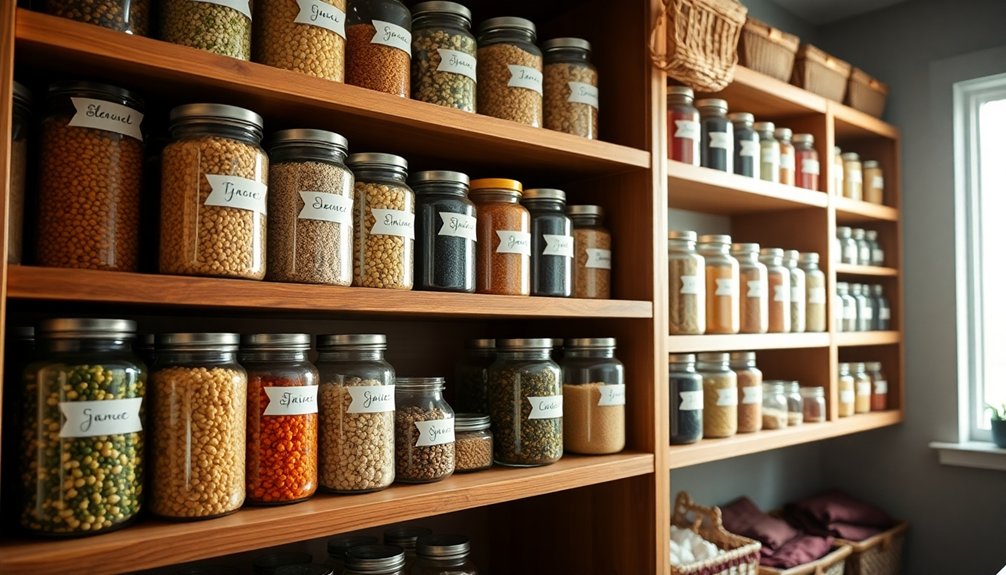
While clear, deep containers help streamline your pantry, embracing flexibility in your organization approach guarantees it remains practical over time.
By allowing for adjustments as your cooking habits and inventory change, you make certain your system stays relevant. Consider allocating extra space for future needs; this adaptable environment makes it easy to incorporate new items without disrupting organization.
Utilize versatile products like removable labels and adjustable shelving to enhance usability, especially if you’re renting. Implement practical solutions, like tiered shelving, to encourage ongoing organization.
Regularly reassessing and reorganizing pantry contents promotes a flexible approach, preventing clutter and making certain efficient use of space as your needs evolve. Incorporating seasonal cleaning tasks into your routine can also help maintain an organized pantry.
Embrace flexibility, and your pantry can adapt alongside you.
The Benefits of an Organized Pantry
When your pantry is organized, you reveal a multitude of benefits that enhance your cooking and meal planning experience.
An organized pantry makes it easier to track inventory, helping you identify ingredients that need to be used or restocked, which ultimately reduces food waste.
With visible ingredients easily accessible on your deep shelves, you’ll find inspiration for new meal ideas and elevate your creativity in the kitchen.
This streamlined approach not only speeds up the cooking process but also makes meal prep less stressful. Additionally, implementing designated spaces for your pantry items can further enhance organization and ease of access.
Maximizing Storage Solutions
To maximize storage solutions in your deep pantry, start by evaluating your space and making adjustments that enhance accessibility.
Add as many shelves as possible to create more surface area for storage. Measure the width, depth, and height of each shelf to guarantee that bins and baskets fit securely.
Utilize bins that fill the full depth of the pantry for efficient organization. Incorporate can risers to keep canned goods visible and easily accessible, preventing items from being forgotten at the back.
Consider pull-out drawers for better organization and visibility of small items like snacks and spices. Additionally, implementing pull-out shelves can enhance accessibility and organization within your pantry.
Essential Tools and Resources
Getting organized in your deep pantry requires the right tools and resources to streamline the process.
Start by visiting stores like The Container Store, Target, and Walmart for pantry bins that fit your needs. IKEA’s adjustable shelving can enhance accessibility, making it easier to reach items on deep shelves.
Opt for dishwasher-safe canisters to keep your pantry hygienic and easy to maintain. Use a Cricut Joy to create custom labels for your containers, ensuring everything is clearly identified.
Finally, invest in extra-large turntables for those hard-to-reach spots, perfect for organizing sauces and baking essentials. Additionally, consider using clear storage containers to improve visibility and streamline meal prep, ensuring that you can easily locate and access ingredients.
With these tools, you’ll maximize your storage and make your deep pantry both functional and appealing.
Conclusion
So, there you have it—your deep pantry doesn’t have to be a black hole of chaos. With a few clever tricks and some clear containers, you can transform it into a culinary wonderland. Just remember, while perfection is overrated, a pantry that doesn’t resemble a food crime scene is a goal worth pursuing. After all, nothing says “I’ve got my life together” like knowing exactly where that elusive jar of pickles is hiding!