You might be surprised to learn how often you should wash your bedding. Most people don’t realize that weekly washing is vital to minimize allergens and bacteria. Using the right water temperature is key; hot water can kill dust mites while other fabrics need cold. Don’t skip gentle detergents or fabric softener to keep your bedding fresh and soft. Plus, remember to store seasonal bedding properly to avoid moisture buildup. Discover why these rules are essential to your health and comfort.
Why You Should Wash Your Bedding More Often

While you might think changing your sheets every few weeks is enough, washing your bedding more often can greatly improve your sleep environment.
Regularly cleaning your sheets and pillowcases enhances bed hygiene, reducing the buildup of allergens and bacteria. Over time, bedding can collect dust mites, sweat, and skin cells, creating a breeding ground for bacteria.
Regularly washing your sheets and pillowcases boosts hygiene, curbing allergens and bacteria for a healthier sleep environment.
By washing your bedding weekly, you’ll minimize the risks associated with these unwanted guests, leading to better sleep quality. Plus, fresh sheets feel amazing against your skin! Additionally, properly caring for duvet covers can further enhance your overall bedding cleanliness and comfort.
When you prioritize cleanliness, you not only create a healthier sleeping space but also promote a more restful night.
The Right Temperature for Washing Pillows and Bedding
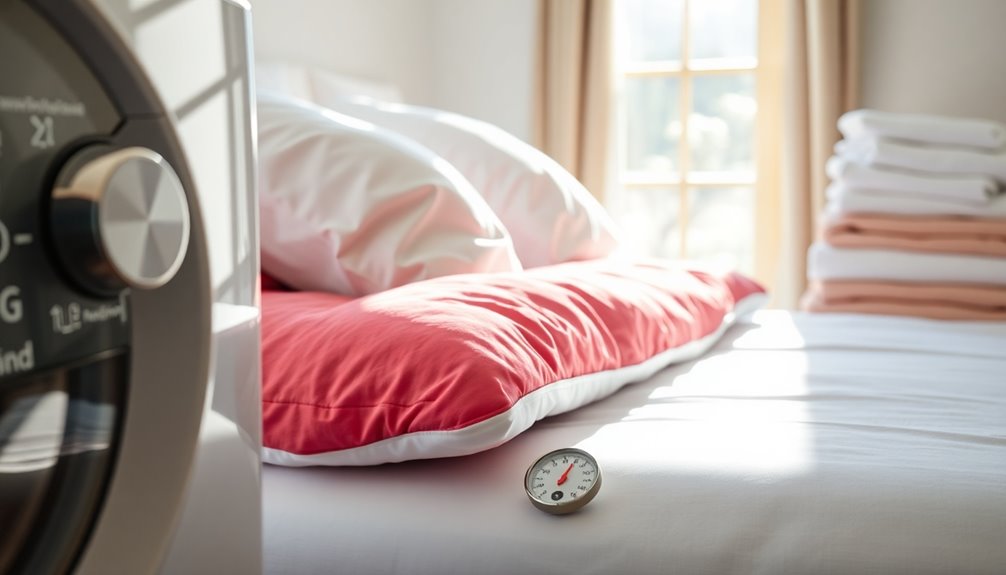
Choosing the right temperature for washing your pillows and bedding is essential for maintaining both cleanliness and fabric integrity.
Ideally, you should use hot water, around 130°F (54°C), to effectively eliminate dust mites and allergens. However, always check the care labels first, as some materials require cooler settings to avoid damage.
For delicate fabrics like silk or lace, cold water is best to preserve their texture.
When using washing techniques, like gentle cycles for fragile items, you guarantee they last longer while remaining fresh and clean. Additionally, using non-toxic cleaners can further ensure that your bedding is free from harmful chemicals while being safe for your family.
How to Properly Clean Different Pillow Materials
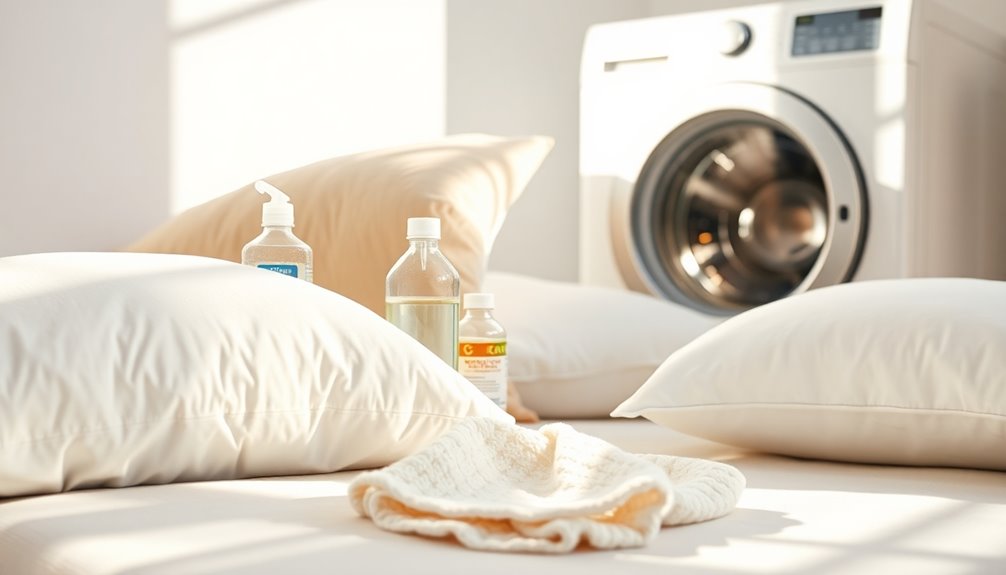
Cleaning pillows isn’t a one-size-fits-all task; it depends on the material.
You’ll need to approach down and feather, synthetic fiber, and memory foam pillows differently to keep them in top shape. Regular cleaning reduces allergens like dust mites and helps maintain the quality of your bedding.
Down And Feather Pillows
Down and feather pillows require special care to maintain their softness and longevity. When cleaning, always check the care label first.
You can usually machine wash them on a gentle cycle using a mild detergent. To guarantee proper down care, add a couple of tennis balls to the dryer. This helps redistribute the filling and prevents clumping.
During the drying process, make sure to fluff the pillows regularly to maintain their shape and comfort. Avoid using too much heat, as it can damage the feathers.
Finally, protect your investment by using pillow protectors and airing them out regularly to keep them fresh. Following these steps will help you enjoy your down and feather pillows for years to come.
Synthetic Fiber Pillows
While synthetic fiber pillows are often more durable and easier to care for than their down counterparts, they still require proper cleaning to maintain their shape and hygiene.
To guarantee your pillows last, follow these effective washing techniques:
- Use a gentle cycle with cold water to preserve synthetic fiber durability.
- Add mild detergent to avoid harsh chemicals.
- Dry on low heat, adding dryer balls to fluff.
- Check for any signs of wear and tear regularly.
- Replace pillows every 1-2 years for ideal comfort.
Memory Foam Pillows
Since memory foam pillows offer excellent support and comfort, it’s important to know how to clean them properly to maintain their shape and hygiene.
Start by removing the pillowcase and any protective covers. Spot clean stains using a mild detergent and warm water, applying it with a soft cloth. Avoid soaking the pillow, as excess moisture can damage the foam.
For deeper cleaning, sprinkle baking soda on the pillow, let it sit for a few hours, and then vacuum it off. Regularly air out your pillow to keep it fresh.
The Importance of Using a Gentle Detergent
When washing your pillows and bedding, using a gentle detergent is essential. It helps prevent fabric damage and keeps your pillows fresh for longer. Plus, a mild detergent guarantees you won’t irritate your skin or allergies, making sleep more comfortable. Additionally, adhering to care label instructions ensures optimal results and maintains the quality of your bedding.
Prevent Fabric Damage
To keep your bedding in top shape, it’s vital to use a gentle detergent that won’t harm the fabric. Harsh chemicals can damage fibers, leading to wear and tear.
By choosing the right cleaning techniques, you guarantee your bedding lasts longer and feels cozy. Consider the following benefits of gentle detergents:
- Preserves softness and texture
- Maintains vibrant colors
- Reduces allergens and irritants
- Extends the lifespan of your fabrics
- Minimizes fading and fraying
Using a gentle detergent is an important part of fabric care. It not only protects your bedding but also enhances your sleeping experience.
Maintain Pillow Freshness
Maintaining your pillows’ freshness is essential for a comfortable night’s sleep, and using a gentle detergent plays a crucial role in this process.
Harsh chemicals can break down pillow fibers, leading to reduced support and comfort. When you choose a gentle detergent, you not only protect the integrity of your pillows but also help eliminate stubborn bedding odors.
A gentle formula effectively cleans without leaving behind residue that can irritate your skin or create lingering smells. It’s important to follow the care instructions for your specific pillow type, ensuring you preserve its shape and freshness.
Why You Shouldn’t Skip the Fabric Softener
Many people underestimate the importance of fabric softener in their laundry routine, but skipping it can lead to less than cozy results.
You might think it’s unnecessary, but fabric softener benefits your bedding in several ways:
- Enhanced softness: Feel the difference on your skin.
- Reduced static cling: Say goodbye to annoying shocks.
- Fresher scent: Enjoy a delightful aroma that lasts longer.
- Improved durability: Help your fabrics withstand washing frequency.
- Easier ironing: Minimize wrinkles and save time.
Additionally, using fabric softener can help prevent buildup of oils and residues, ensuring your bedding remains fresh and absorbent over time.
How to Avoid Overloading Your Washing Machine
Using fabric softener can make your bedding feel luxurious, but it won’t matter if you’re cramming everything into the washing machine.
To keep your bedding fresh and clean, always respect your machine’s capacity. Overloading not only risks damaging your bedding but can also throw off the load balance, leading to inefficient washing.
Aim to wash only a few items at a time, ensuring they’ve enough space to move freely. This helps the detergent reach every corner and rinse out properly. Regular maintenance, such as cleaning the filter, can also enhance the efficiency of your washing machine.
If you’re washing bulky items like comforters, divide them into smaller loads. By doing this, you’ll maximize your washing machine’s efficiency and keep your bedding in top shape for years to come.
The Best Way to Dry Your Pillows and Bedding
How do you guarantee your pillows and bedding dry thoroughly without losing their shape? The secret lies in proper pillow drying and bedding drying techniques.
Start by using a low heat setting and tossing in a few dryer balls or clean tennis balls to maintain fluffiness.
Here are some tips to keep in mind:
- Check for moisture: Confirm everything’s completely dry to prevent mildew.
- Rotate regularly: Give pillows a gentle shake every 30 minutes.
- Avoid overloading: Don’t cram the dryer, as this hinders airflow.
- Use a drying rack: Air-drying can be effective for delicate materials.
- Monitor closely: Keep an eye on progress to avoid heat damage.
Thorough drying is crucial to maintain bedding quality, ensuring you enjoy fresh, fluffy bedding and pillows ready for a cozy night’s sleep!
How Frequently Should You Replace Your Pillows?
Maintaining fresh, fluffy pillows is just as important as guaranteeing they dry properly. On average, you should replace your pillows every 1 to 2 years, depending on their material and usage.
Keep an eye out for replacement signs like lumps, flattening, or any persistent odor. If your pillow feels more like a pancake than a cloud, it’s time for a change.
The pillow lifespan can vary; for instance, memory foam may last longer than feather pillows. You’ll sleep better on a supportive pillow that maintains its shape. A clean pillow contributes to overall home organization and enhances your quality of sleep.
Don’t underestimate the impact of a good pillow on your quality of sleep. Regularly assess your pillows and replace them when needed to guarantee a restful slumber.
Why You Shouldn’t Ignore Pillow and Bedding Stains
Ignoring pillow and bedding stains can lead to serious issues, both for your health and the longevity of your sleep essentials. Neglecting these stains compromises pillow hygiene and can result in unwelcome consequences.
Here’s why you shouldn’t overlook them:
- Allergens can thrive, causing respiratory issues.
- Bacteria and germs can multiply, increasing illness risk.
- Unpleasant odors can develop, making sleep uncomfortable.
- Stains can lead to fabric deterioration, shortening lifespan.
- Poor bedding maintenance can disrupt your sleep quality.
- Regular washing of duvet covers is essential to maintain hygiene and reduce allergens.
The Benefits of Using Pillow Protectors
Using pillow protectors can make a big difference in your sleeping environment. They help reduce allergens, extend the lifespan of your pillows, and simplify your maintenance routine. With just a simple addition, you can enhance both comfort and cleanliness. Additionally, using pillow protectors regularly contributes to a hygienic sleeping environment, which is essential for overall well-being.
Allergy Reduction Benefits
While it might seem like a small detail, investing in pillow protectors can markedly reduce allergy symptoms for many people.
These protectors act as a barrier against common allergen sources that trigger your immune response.
By using them, you can experience:
- Fewer nighttime sneezes and coughing fits
- Reduced irritation from dust mites and pet dander
- Enhanced sleep quality, leading to better overall health
- A cleaner sleeping environment, free from allergens
- Peace of mind knowing you’re taking steps to protect your health
Extended Pillow Lifespan
When you invest in pillow protectors, you’re not just enhancing your sleep environment; you’re also considerably extending the lifespan of your pillows.
These protectors act as a barrier against dust mites, spills, and sweat, which can all contribute to wear and tear. By incorporating this simple step into your bedding care essentials, you can greatly improve pillow longevity.
To maximize the benefits, choose protectors that are breathable and easy to clean.
Regularly washing your protectors guarantees that they remain effective in shielding your pillows. Plus, using pillow protectors can save you money in the long run, as you won’t need to replace your pillows as often.
Follow these pillow longevity tips, and enjoy a fresher, longer-lasting sleep experience.
Easier Maintenance Routine
Pillow protectors make it easier to maintain your bedding by considerably reducing the need for frequent washing.
With protectors in place, you can streamline your laundry schedule and save time.
Here are some emotional benefits you’ll experience:
- Less Stress: Fewer washes mean less laundry anxiety.
- Time-Saving: Spend your free time on what you love, not washing pillows.
- Improved Hygiene: Protectors guard against allergens and dust mites, promoting better sleep.
- Cost-Effective: Reducing the need for cleaning tools saves you money in the long run.
- Peace of Mind: Knowing your bedding is safe and clean allows for worry-free relaxation.
How to Refresh Bedding Without Washing
Revitalizing your bedding without a full wash can be a game changer, especially if you’re short on time. One effective method is to sprinkle baking soda over your sheets and pillows.
It absorbs odors and moisture, leaving your bedding feeling fresh. Let it sit for about 15 minutes, then vacuum it up to remove any residue.
For an added touch of fragrance, mix a few drops of your favorite essential oils with water in a spray bottle. Lightly mist your bedding after vacuuming the baking soda.
This not only enhances the scent but also creates a relaxing atmosphere. By using these simple techniques, you can keep your bedding feeling clean and inviting without the hassle of frequent washing.
The Role of Humidity in Bedding Care
Humidity plays an essential role in how you care for your bedding, as high levels can promote the growth of mold and dust mites.
High humidity can lead to mold and dust mites, making proper bedding care crucial for a healthy sleeping environment.
Understanding humidity effects and practicing humidity control can keep your sleeping environment healthy.
Consider these tips to maintain ideal bedding care:
- Use a dehumidifier in humid climates to reduce moisture.
- Wash your bedding regularly to eliminate allergens.
- Choose breathable materials like cotton and linen.
- Air out your bedding on sunny days to kill germs.
- Avoid heavy blankets that trap moisture.
Why You Should Vacuum Your Mattress Regularly
Vacuuming your mattress regularly is essential for maintaining a healthy sleep environment.
It helps remove dust mites and eliminates allergens that can trigger discomfort or allergies.
Plus, keeping your mattress clean can greatly extend its lifespan, saving you money in the long run.
Remove Dust Mites
Have you ever considered how many dust mites might be lurking in your mattress?
These microscopic pests can wreak havoc on your health. Regular vacuuming is crucial for dust mite prevention and allergen reduction. Here’s why you should take action:
- Dust mites thrive in warm, humid environments.
- They feed on dead skin cells, which accumulate in your bedding.
- One mattress can host millions of these critters!
- Vacuuming removes their habitat, helping you breathe easier.
- A clean mattress contributes to better sleep quality.
Taking the time to vacuum your mattress not only keeps dust mites at bay but also guarantees a healthier, more restful sleeping environment.
Don’t underestimate the impact of a clean mattress on your overall well-being!
Eliminate Allergens Effectively
Keeping your mattress free from dust mites is just the beginning of creating a healthier sleep environment.
Regularly vacuuming your mattress helps eliminate allergens that can trigger allergy symptoms, such as sneezing and itchy eyes. By using a vacuum with a HEPA filter, you can trap tiny particles and dust mites that regular vacuums might miss.
Aim to vacuum your mattress every couple of months, or more often if you suffer from allergies. Don’t forget to vacuum the sides and edges, where dust accumulates.
After vacuuming, consider using a mattress protector to keep dust mites at bay. A clean mattress not only enhances your sleep quality but also reduces allergy symptoms, allowing you to wake up refreshed.
Extend Mattress Lifespan
While you mightn’t think about it often, regularly vacuuming your mattress can greatly extend its lifespan. This simple task helps maintain mattress protection and guarantees you enjoy quality sleep for years to come.
Here are some longevity tips to keep in mind:
- Reduces dust mites and allergens, creating a healthier sleep environment.
- Prevents buildup of dirt and debris, maintaining mattress integrity.
- Enhances your sleep quality by keeping your mattress fresh.
- Increases overall comfort, making your bed a cozy retreat.
- Saves you money by delaying the need for a replacement.
How to Remove Allergens From Pillows and Bedding
Regularly removing allergens from your pillows and bedding is essential for maintaining a healthy sleeping environment. Dust mites, pet dander, and mold are common allergen sources that can accumulate over time.
To combat these, use effective cleaning techniques. Wash your pillowcases and sheets weekly in hot water to kill dust mites. Consider using allergen-proof covers on your pillows and mattresses to provide an added layer of protection.
For pillows, check the care label; many can be machine washed or spot cleaned. Don’t forget to vacuum your mattress and bedding every few months using a vacuum with a HEPA filter.
The Best Way to Store Seasonal Bedding
When you’re ready to store your seasonal bedding, it’s important to do so properly to maintain its quality and freshness.
Effective seasonal storage not only protects your investments but also enhances your bedding organization. Here are some tips to help you:
- Clean your bedding before storage to avoid odors and stains.
- Use breathable bags or bins to prevent moisture buildup.
- Label each container so you know what’s inside when it’s time to switch.
- Avoid damp areas; choose a cool, dry location to keep your bedding safe.
- Consider using cedar chips to ward off pests naturally.
Why You Shouldn’t Use Bleach on Your Bedding
Using bleach on your bedding can pose serious risks, including damaging the fabric and causing harmful fumes.
You mightn’t realize that there are safer, effective alternatives to keep your bedding bright and clean.
Let’s explore why it’s best to skip the bleach and what options you have instead.
Dangers Of Chlorine Bleach
Although bleach is often seen as a powerful cleaning agent, it can be particularly harmful to your bedding. The chlorine hazards associated with bleach can affect not just your fabrics but also your health.
Here’s why you should think twice before using it:
- It can irritate your skin and respiratory system.
- The strong fumes can trigger allergies or asthma attacks.
- It can weaken fibers, leading to premature wear.
- The harsh chemicals can leave a lingering odor.
- It’s harmful to the environment, affecting water systems.
Instead, consider bleach alternatives like vinegar or baking soda.
These options are gentler on your bedding and safer for your health, helping you maintain a clean and cozy sleep environment without the risks associated with bleach.
Fabric Damage Risks
Chlorine bleach may seem like a quick fix for tough stains, but it can wreak havoc on your bedding’s fabric. Using bleach can weaken fibers, leading to fraying and holes over time.
Instead of enhancing fabric care, it diminishes the lifespan of your sheets and pillowcases. Many people don’t realize that bleach can also cause discoloration, leaving unsightly yellow or faded patches.
If you want to maintain your bedding’s quality, it’s essential to choose safer cleaning techniques. Opt for gentle detergents or natural alternatives instead.
These options can effectively tackle stains without risking your fabric’s integrity. Protect your investment in comfort by steering clear of bleach and embracing better cleaning practices for your bedding.
Alternative Whitening Solutions
When it comes to whitening your bedding, there are plenty of alternatives that are both effective and fabric-friendly. Instead of using harsh bleach, try these gentler options that won’t damage your linens:
- Baking soda: Brightens and deodorizes.
- Vinegar solution: Removes stains and softens fabric.
- Lemon juice: Natural whitener with a fresh scent.
- Hydrogen peroxide: Gentle yet effective stain remover.
- Borax: Boosts cleaning power without harsh chemicals.
These alternatives not only keep your bedding looking fresh and bright, but they also protect the integrity of the fabric.
How to Clean Your Mattress Properly
To keep your mattress fresh and hygienic, start by removing all bedding and vacuuming the surface thoroughly. This is essential for effective mattress care.
Use an upholstery attachment to reach crevices and remove dust mites. Next, apply a gentle cleaning solution—like a mix of water and mild detergent—onto a cloth, and gently blot any stains.
Avoid soaking the mattress, as excess moisture can lead to mold. Once you’ve finished cleaning, let the mattress air dry completely before putting on fresh bedding.
Incorporating these cleaning techniques into your routine can prolong your mattress’s lifespan and guarantee a healthier sleeping environment. Regular maintenance will help keep your mattress feeling like new for years to come.
The Impact of Pets on Bedding Cleanliness
Even with a well-maintained mattress, having pets can greatly affect the cleanliness of your bedding.
Pet hair, dander, and odors can build up quickly, making it vital to stay on top of cleaning. Here are some common challenges you might face:
- Pet hair clings stubbornly to fabric, making it hard to keep your bedding pristine.
- Odor control becomes important when pets spend time on your bed.
- Pets can bring dirt and allergens from outside, worsening air quality.
- Frequent washing is necessary, but it can wear out fabrics faster.
- You might find yourself constantly battling stains and smells.
Conclusion
In the grand tapestry of your home, clean bedding weaves comfort and health together. By following these cleaning rules, you’re not just preserving your pillows and sheets—you’re crafting a sanctuary for restful nights. Embrace the gentle art of care, and let your bedding breathe freshness like a spring breeze. Remember, every wash is a step closer to a peaceful retreat, where dreams flourish and your well-being thrives. So, plunge into these practices and let cleanliness reign supreme!